
 Jia Lissa
The global amusement industry is currently navigating a period of unprecedented transformation, characterized by the rapid transition from electromechanical systems to sophisticated microprocessor-based television games. At the forefront of this evolution is Sega Enterprises, Ltd., a company that has strategically positioned itself as a bridge between the engineering prowess of Japan and the expansive consumer market of the United States. In a comprehensive disclosure regarding the company’s current trajectory and future business policies, Hayao Nakayama, Sega’s Executive Vice President in charge of marketing and Representative Director, has detailed a vision that emphasizes technological innovation, aggressive intellectual property protection, and a unique dual-operational model. This strategic roadmap comes as Sega reports robust financial growth, with sales for the fiscal year ending April 1979 reaching 24 billion yen and a declared income of 5.37 billion yen, signaling its emergence as a dominant force in the international leisure sector.
The Corporate Architecture of a Transnational Giant
To understand Sega’s current market posture, one must examine its complex corporate lineage within the Gulf & Western (G&W) Corporation conglomerate. Since 1974, Sega has operated under the umbrella of G&W, a New York-based powerhouse ranked 52nd in the United States with annual sales exceeding 5.3 billion dollars. While G&W is traditionally associated with heavy manufacturing, energy, and the automotive sector—recently making headlines with its "dream battery" development—its leisure division, which includes Paramount Pictures, provides a high-profile platform for Sega’s entertainment ventures.
The organizational structure is a sophisticated multi-tiered arrangement. Sega of America (Sega Enterprises Inc.) serves as the immediate parent to Sega of Japan (Sega Enterprises Ltd.), effectively making the Japanese wing a "grandchild company" of the G&W Group. This structure has facilitated a seamless exchange of technology and capital. The acquisition of Gremlin Industries in 1976 and Esco Trading in 1979 further bolstered this ecosystem. Gremlin, based in San Diego, functions as a vital R&D and manufacturing hub for the North American market, while Sega Japan maintains control over domestic operations and the broader Asian market. This synergy allows for a "best of both worlds" approach, where Japanese hardware efficiency meets American software creativity.
Financial Performance and Operational Scale
Sega’s fiscal health reflects the booming demand for arcade entertainment. The 24 billion yen in sales reported for 1979 represents a period of steady, aggressive growth. The company’s infrastructure has expanded to include 1,200 employees and a vast logistical network comprising three major branch offices in Sapporo, Osaka, and Fukuoka, supported by 89 operational offices nationwide. This scale allows Sega to function not just as a manufacturer of hardware, but as a primary operator of the venues where those machines are played.

Mr. Nakayama addressed the inherent tensions in this dual role. In the Japanese amusement industry, the line between manufacturer and operator is historically blurred, with most major players starting in the operations sector. Sega, however, maintains that its primary identity is that of a manufacturer. Nakayama asserted that while the company operates a large number of game centers to leverage economies of scale and ensure long-term sustainability, its fundamental duty is to protect and support independent operators. The company’s operational philosophy focuses on a "greatest common denominator" approach—maintaining consistent revenue through high-quality, attentive service rather than short-term speculative gains.
The Technological Pivot: A 70-80% Focus on TV Games
The most significant strategic shift within Sega is the decision to allocate 70% to 80% of its developmental resources toward television-based video games. This move aligns with a global trend where visual novelty and interactive entertainment are replacing traditional mechanical amusements. According to Nakayama, the strength of modern game machines lies in their ability to provide unique, ever-changing entertainment values that only digital displays can facilitate.
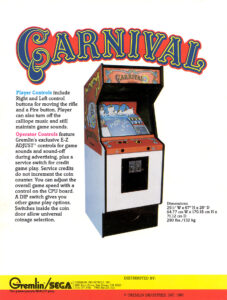
This pivot has placed Sega/Gremlin in direct competition with other industry titans such as Atari and Midway. The international market has effectively become a duopoly between Japanese and American firms, with Europe serving primarily as a consumer base. Sega’s strategy involves a sophisticated licensing and cross-pollination model. For instance, the company licenses products from other Japanese developers, such as Astro Fighter, for international distribution, while its own titles like Carnival and Mini Monaco have seen varying degrees of success across different continents.
Regional Market Disparities and the Cabinet Conflict
A point of particular interest in Sega’s market analysis is the divergent reception of products in Japan versus the West. The title Mini Monaco, a racing game featuring a compact cabinet design, proved to be a significant success in the United States and Europe due to its spatial efficiency and competitive two-player features. Conversely, it failed to gain traction in Japan. Similarly, Carnival, which introduced the industry’s first "bonus round" mechanic, received critical acclaim and high earnings in the U.S. (outperforming even Atari’s Missile Command in some regions) but was met with a lukewarm response domestically.
These disparities have forced Sega to reconsider its hardware formats. In Japan, the "table-type" machine remains the dominant form factor, largely due to its integration into coffee shops and smaller urban game centers. While Sega has attempted to revive the "upright" cabinet—arguing that it offers more aesthetic and added value—the market demand continues to favor the tabletop style. Nakayama noted that while the company will not abandon upright machines, it must prioritize tabletop production to satisfy current domestic demand, describing the process as a period of necessary "trial and error."

The Legal Frontier: Combating the "Invader" Legacy
The shadow of the 1978 "Invader" boom continues to loom over the industry. The massive success of Taito’s Space Invaders led to a surge in unauthorized "clones" or copycat machines, a practice that was initially tolerated due to supply shortages and a lack of clear legal precedent regarding software copyright. However, Sega is now leading a charge to formalize intellectual property protections in the digital age.
Nakayama emphasized that the era of "defiant copying" must come to an end. While TV game copyrights are still being established in Japanese courts, trademarks are already recognized, and Sega is increasingly utilizing "unfair competition" laws to target counterfeiters. A pivotal legal victory occurred in the United States when Sega/Gremlin successfully sued Exidy over infringements related to the game Head-On. This case has empowered manufacturers to confront copycats more aggressively.
The executive warned that the proliferation of copy products is not a victimless crime; it directly inflates the cost of future research and development. To counter this, Sega is investing in "un-copyable" hardware—sophisticated circuit designs and proprietary components that are difficult and expensive for counterfeiters to replicate. This move toward high-tech security, while increasing the initial cost of the machines, is viewed as a necessary step to ensure the industry’s professional integrity and the profitability of legitimate operators.
Diversification into Leisure and Hospitality
Beyond the arcade floor, Sega is exploring the intersection of gaming and dining. The launch of "PJ Pizzazz," a pizza restaurant chain incorporating arcade games, reflects a broader trend toward family-oriented entertainment centers. This model, managed by the Sega of America division, aims to diversify the company’s revenue streams and introduce the Sega brand to a wider demographic.
In addition to digital games, Sega remains committed to the traditional amusement sectors. The company continues to supply high-quality pinball machines through its relationships with Williams and Stern. Furthermore, Sega is revitalizing its "medal game" lineup—machines that use tokens for play—by improving and repurposing existing hardware to offer operators lower-cost entry points into the market. Titles such as Blackjack, Faro II, and Punto Banco are currently undergoing optimizations to ensure they meet modern standards of engagement and reliability.
Strategic Outlook and Industry Implications
As the 1980s begin, Sega’s trajectory suggests a move toward becoming a vertically integrated entertainment conglomerate. By strengthening its regional distribution networks and "training" local distributors to handle specialized sales strategies, the company is preparing for a market that is becoming increasingly diverse and expansive.
The implications of Sega’s 1980 business policy are profound for the broader technology sector. The company’s emphasis on microprocessor technology and the legal protection of software sets a precedent that will likely define the home console and personal computer markets in the coming decade. Nakayama’s vision is one of a "balanced" industry—one where technological novelty is matched by legal rigor and operational sustainability.
In conclusion, Sega Enterprises is no longer merely a purveyor of coin-operated novelties; it is a sophisticated transnational entity navigating the complexities of global trade, digital law, and consumer psychology. With a firm grip on both the Japanese and American markets and a clear focus on the burgeoning TV game sector, Sega is poised to lead the "Golden Age" of arcades into a new era of digital entertainment. The company’s ability to harmonize its manufacturing goals with its operational responsibilities will be the ultimate litmus test for its continued dominance in the rapidly shifting landscape of global leisure.








