Ganda Hendra Perkasa
The echoes of GDC 2026, the industry’s premier annual gathering, are still resonating, but the focus has now shifted dramatically backward in time. Today marks the momentous unveiling of a newly digitized collection of audio recordings from the 1989 Computer Game Developers Conference (CGDC), offering an unparalleled window into the nascent stages of the computer game industry. This remarkable archive, meticulously preserved and made accessible, captures the intellectual exchange and burgeoning camaraderie of a community on the cusp of seismic transformation.
The significance of these recordings cannot be overstated. The 1989 CGDC, held at the Sunnyvale Hilton Hotel in May, represented only the third iteration of this pivotal event. The very survival of these audio tapes, painstakingly dubbed by GDC co-founder Tim Brengle, is a testament to foresight and dedication. In an era where digital archiving was rudimentary at best, the effort to preserve these discussions speaks volumes about the perceived importance of the burgeoning computer game landscape. The content captured within these recordings provides an invaluable historical document, illuminating the challenges, aspirations, and foundational ideas that shaped the industry we know today.
A Tightly-Knit Community Forging an Industry
The computer game development scene in 1989 was a far cry from the sprawling, globalized ecosystem of the 21st century. Estimates suggest that CGDC 1989 drew an intimate gathering of approximately 300 attendees. This was not an event for the masses, but rather a conclave for a dedicated and often interconnected group of pioneers. The recordings bear witness to this intimacy, with speakers frequently addressing individuals in the audience by name, a practice that underscores the close-knit nature of this formative community. This personal touch highlights a shared journey, where developers and publishers often operated in a collaborative, albeit competitive, environment, united by a common passion and a shared vision for the future of interactive entertainment.
The impact of this small but dedicated gathering is amplified when one considers the caliber of individuals who participated. The roster of speakers reads like a who’s who of early computer game luminaries. These are the architects and visionaries who laid the groundwork for genres, pioneered new technologies, and established the business models that would define the industry for decades to come. Among the voices captured on these tapes are industry titans such as Danielle Bunten Berry, Bing Gordon, Chris Crawford, Richard Garriott, and Steve Cartwright. Their presence at CGDC 1989 signifies the event’s early gravitas and its role as a crucial forum for knowledge exchange and industry discourse.
Glimpses into the Past: Featured Sessions and Their Significance
The newly released collection offers a treasure trove of insights, with several talks standing out for their historical and thematic relevance.
"The Golden Days of Computer Games": Nostalgia in its Infancy
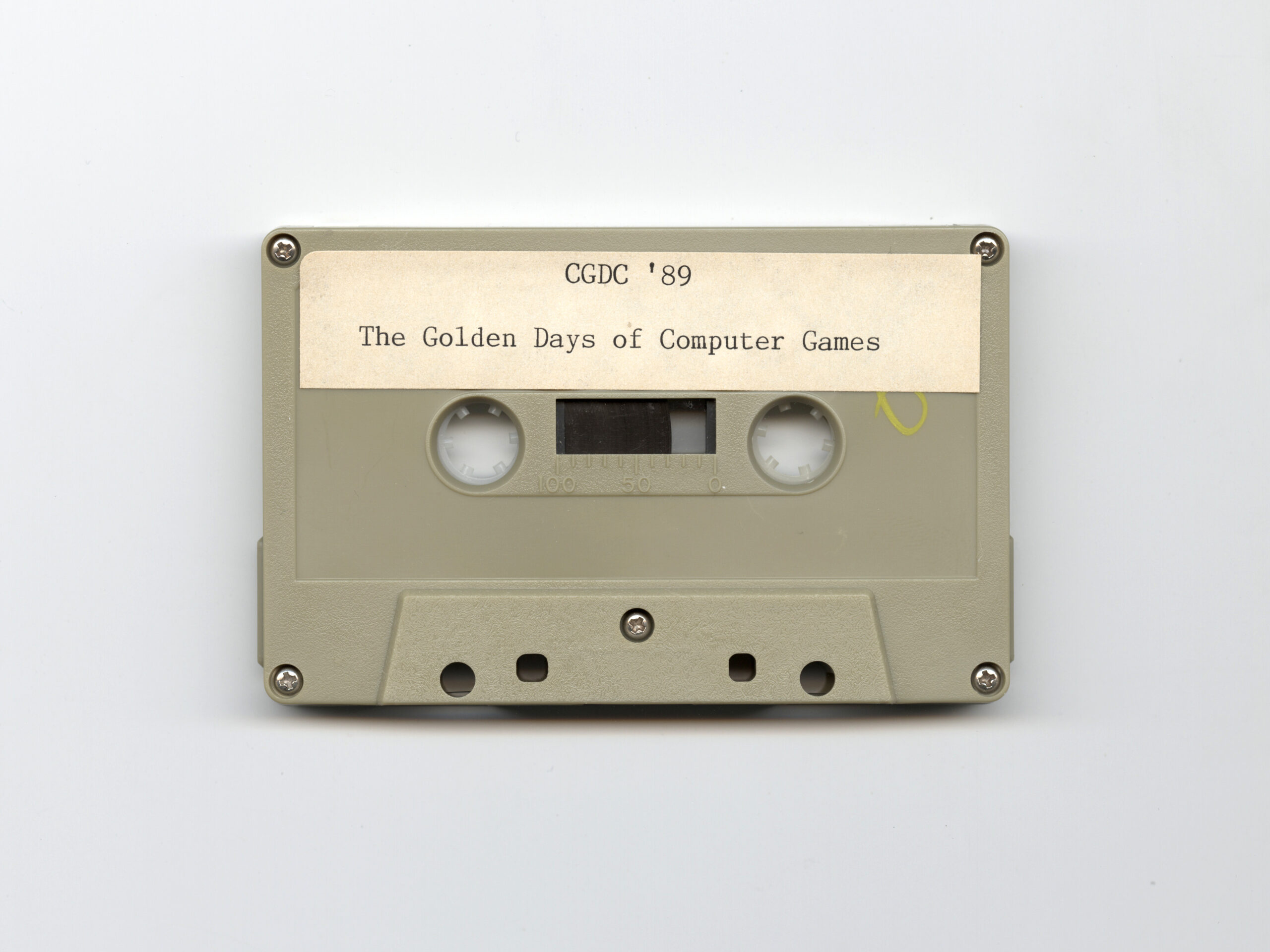
One of the most compelling sessions is the panel titled "The Golden Days of Computer Games." What is striking is the very notion of "golden days" being discussed in 1989, with speakers referring nostalgically to the early 1980s. This period, characterized by developers hand-packaging their creations in Ziploc bags and a general uncertainty about the commercial viability of computer games, represents a stark contrast to the multi-billion dollar industry that was beginning to emerge. The panel, featuring luminaries Dani Bunten, Steve Cartwright, Chris Crawford, Jon Freeman, and Richard Garriott, offers a poignant reflection on the industry’s humble beginnings and the rapid pace of its evolution. It serves as a potent reminder that even in its infancy, the industry was capable of introspection and appreciating its own historical trajectory.
"Movies and Games: Living with a License": The Complexities of IP
The intersection of film and video games has long been a source of both creative opportunity and commercial challenge. The panel "Movies and Games: Living with a License" delves into these complexities, with four game producers discussing the intricacies of working with intellectual property derived from other media. The discussion reportedly includes insights into the development of the Three Stooges computer game, offering a behind-the-scenes look at a specific licensed project. Furthermore, the session is noted for revealing industry gossip surrounding "tumultuous licensed projects," with mentions of the Barbie game for the Commodore 64, indicating that the challenges of adapting popular brands for interactive experiences were already a significant concern for developers and publishers. This foreshadows the ongoing debates and strategies surrounding video game adaptations that continue to this day.
"The Press and Games": Navigating Media Relations
The relationship between game developers and the media has always been a critical component of industry success. The session "The Press and Games" brings together Johnny Wilson, an editor from Computer Gaming World, and Charlotte Taylor-Skeel, the public relations manager for Accolade. Their joint discussion highlights the early recognition of the symbiotic, and sometimes contentious, relationship between publishers and the press. In 1989, developers were already actively contemplating how to effectively communicate their creations to the public through journalistic channels. This session provides valuable context for understanding the evolution of game marketing and public relations strategies.
"Interactive Storytelling": Early Explorations in Narrative
Dave Albert of Electronic Arts presents "Interactive Storytelling," a session that begins as a lecture on narrative construction and evolves into a dynamic, Socratic dialogue with the audience. This approach underscores the experimental nature of game design at the time, where developers were actively seeking new ways to engage players through compelling stories. The recording offers a fascinating glimpse into these early explorations, with Albert engaging members of the audience, potentially including prominent figures like Brenda Laurel or Brenda (Garno) Romero, depending on who was present. The interactive nature of this talk reflects a burgeoning understanding of player agency and narrative immersion.
"The Publishers’ Panel": Facing the "Slump" and Nintendo’s Dominance
Concluding CGDC 1989 was "The Publishers’ Panel," featuring prominent American computer game executives. This session provides a candid perspective on the industry from the business side, with a particular focus on what was then termed "the slump" in the US computer game market. The recordings capture a fiery debate, most notably featuring Trip Hawkins, who articulates a strong critique of Nintendo’s closed ecosystem practices. Hawkins’ assertion that the NES "is not gonna go on forever" is particularly prescient, reflecting a tension between established console dominance and the growing potential of the personal computer as a gaming platform. This panel offers invaluable insights into the economic anxieties and strategic considerations that shaped the industry’s commercial landscape.
A Nearly Complete Archive and Lingering Mysteries
While the newly digitized collection is remarkably comprehensive, it is understood to be missing only two recorded talks from CGDC 1989. The exact nature and content of these missing sessions remain unknown, adding an element of historical intrigue. Furthermore, it is believed that 22 roundtable discussions, including one reportedly featuring counterculture icon Timothy Leary, were not recorded. The absence of these discussions leaves a void in our understanding of the informal exchanges and potentially more experimental conversations that may have taken place. Nevertheless, the available recordings offer the closest one can get to experiencing the atmosphere of the Sunnyvale Hilton with 300 game designers at the forefront of their craft.
Collaborative Preservation and Future Endeavors
The successful cataloging and digitization of this crucial archive were made possible through a significant collaborative effort. The Department of Special Collections at Stanford University Libraries provided invaluable assistance by sharing a copy of the CGDC 1989 program from the Steve Meretzky papers. This program served as a vital reference point for identifying and organizing the audio recordings.
The Game Developers Conference deserves commendation for granting permission to share these historic recordings. Special acknowledgment is extended to GDC co-founder Tim Brengle, whose personal dedication to manually dubbing these tapes decades ago has now yielded a profound historical resource. The 37-year delay in their public release only accentuates the significance of their eventual accessibility.
These recordings are now freely available as part of an expanding digital library dedicated to video game history research materials. Such projects, crucial for understanding the evolution of interactive entertainment, are sustained by public support. The investment in new audio digitization equipment for this initiative signifies a commitment to preserving and sharing further historical artifacts, ensuring that the legacy of game development continues to be documented and accessible for future generations. This undertaking not only preserves the past but also enriches the ongoing narrative of the video game industry.