Cecilia Chamidah Nur
The dedicated homebrew community for the PlayStation Vita has achieved another significant milestone with the successful porting of "2ship2harkinian," an unofficial native PC source port of the acclaimed Nintendo 64 title, The Legend of Zelda: Majora’s Mask. This development allows owners of the PlayStation handheld console to experience a modernized version of the beloved classic, complete with numerous enhancements and quality-of-life improvements, thanks to the tireless efforts of developer Rinnegatamante. The release underscores the enduring legacy of classic games and the ingenuity of fan communities in extending their playability and reach across various platforms.
A Swift Launch and Rapid Refinement
The initial version of the Majora’s Mask port for the PS Vita, designated 1.0, saw its release on April 12th, 2026. However, like many ambitious fan projects, its debut was not without initial teething problems. Users quickly reported noticeable control issues, with complaints specifically citing difficulties with button mapping and unresponsive shoulder buttons. This feedback, shared across various community forums and social media channels, highlighted the inherent challenges of adapting complex PC game controls to a handheld console’s unique button layout.
Responding with remarkable alacrity, Rinnegatamante, a prominent figure within the Vita homebrew scene known for their commitment to robust and polished ports, released an updated version, 1.1, just two days later, on April 14th. This rapid patch specifically targeted and reportedly resolved the control issues, making the game fully playable on the PlayStation Vita. Beyond rectifying the button mapping, version 1.1 also addressed other reported problems from the initial build, including out-of-bounds bugs and issues with motion blur effects, ensuring a more stable and enjoyable experience for players. This swift response is characteristic of the collaborative and responsive nature of the homebrew development community, where direct feedback often leads to immediate improvements. As with all such unofficial ports, players are required to provide a legitimate copy of the original N64 game files to use the port, a standard practice designed to navigate the complex legal landscape surrounding intellectual property.
The Enduring Appeal of Majora’s Mask
To fully appreciate the significance of this port, one must understand the original game’s stature. The Legend of Zelda: Majora’s Mask, first released for the Nintendo 64 in 2000 (2000 in Japan, 2000 in North America, 2000 in Europe), stands as one of the most unique and critically acclaimed entries in the illustrious Legend of Zelda series. Developed by Nintendo EAD, it deviated significantly from its predecessor, the groundbreaking Ocarina of Time, by introducing a darker, more melancholic tone and a distinctive gameplay mechanic centered around a recurring three-day time loop.
Players assume the role of Link, who must prevent the moon from crashing into the land of Termina. This impending apocalypse forces Link to repeatedly relive the same three days, using an Ocarina to manipulate time, learn new abilities, and interact with a diverse cast of characters whose individual stories unfold and reset with each cycle. The game’s intricate mask system, which grants Link various transformations and powers, added layers of strategic depth and emotional resonance. Despite its initial polarizing reception due to its demanding time-management mechanics, Majora’s Mask has since garnered immense critical acclaim for its innovative design, mature narrative, psychological depth, and unforgettable atmosphere. Its unique approach to storytelling and gameplay has cemented its place as a cult classic and a benchmark for creative game design, fostering a passionate fanbase that continues to revisit and champion the title decades after its original release. The desire to play such a revered title on modern or alternative hardware drives much of the homebrew and source port development.
The Genesis of Unofficial PC Source Ports
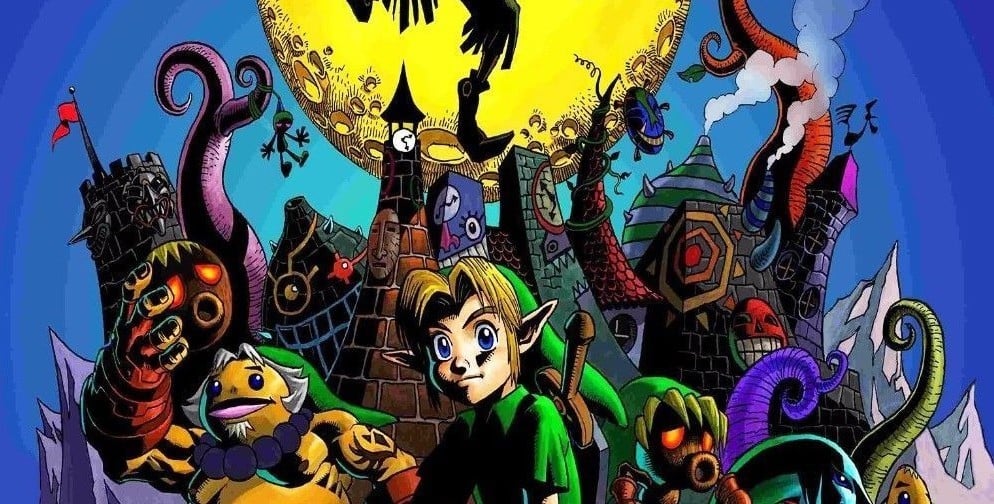
The journey of Majora’s Mask to the PlayStation Vita began not on a handheld, but on PC. The emergence of native PC source ports for classic N64 games has been a growing trend within the retro gaming community. These projects aim to re-implement the original game’s engine from scratch, using reverse engineering to understand the game’s code, rather than simply emulating the original hardware. This approach offers significant advantages, including native compatibility with modern operating systems, improved performance, higher resolutions, customizable controls, and a robust platform for community-driven modifications.
May 2024 proved to be a pivotal month for Majora’s Mask enthusiasts, witnessing the release of two distinct, unofficial PC source ports. On May 10th, Mr-WiseGuy launched version 1.0 of "Zelda64Recomp." This project utilized a tool called "N64: Recompiled" to statically recompile the original game’s code. Static recompilation involves translating the original N64 machine code into PC-compatible code, allowing the game to run natively on modern systems without needing an emulator. While effective, this method often focuses on direct translation, potentially limiting the scope for extensive new features or engine overhauls.
Just over two weeks later, on May 27th, "2ship2harkinian" was released by the development group Harbour Masters. This project took a different, more ambitious route, born from an extensive and painstaking reverse-engineering process. Instead of recompiling, "2ship2harkinian" involved meticulously dissecting the original game’s code to understand its inner workings and then rewriting the engine from the ground up in a modern programming language. This method, while significantly more labor-intensive and time-consuming, was touted at its release as having the potential to result in "far more, larger-scale features" compared to recompilation-based projects. The ability to directly manipulate and understand the engine code allows for deeper integration of new functionalities, greater flexibility for modding, and more profound enhancements that go beyond simple resolution bumps or framerate increases. This fundamental difference in approach laid the groundwork for the advanced features that would eventually make their way to the PS Vita port.
Rinnegatamante and the PlayStation Vita Homebrew Ecosystem
The successful port of "2ship2harkinian" to the PlayStation Vita is a testament to the vibrant and dedicated homebrew community surrounding Sony’s handheld console. Despite its commercial struggles compared to its predecessor, the PSP, the PS Vita has cultivated a passionate following of developers and enthusiasts who refuse to let the console fade into obsolescence. Rinnegatamante stands out as one of the most prolific and respected developers in this scene. Their portfolio includes numerous high-profile ports of classic PC games and other unofficial titles, effectively transforming the Vita into a versatile retro gaming machine capable of running software far beyond its original design specifications.
The Vita’s unique architecture, combining a powerful ARM-based CPU with a custom GPU, alongside its touchscreens, dual analog sticks, and robust Wi-Fi capabilities, makes it an attractive target for developers looking to push the boundaries of handheld gaming. However, porting complex PC games to the Vita is no trivial task. It requires deep technical knowledge of both the Vita’s hardware and software, expertise in optimizing code for performance on a less powerful system, and meticulous attention to detail in adapting controls and user interfaces. Rinnegatamante’s consistent delivery of high-quality ports has earned them a reputation for technical prowess and a deep understanding of the Vita’s potential, making them the ideal candidate to bring such an ambitious project as Majora’s Mask to the handheld.
Modern Enhancements for a Classic Title
The PlayStation Vita port of Majora’s Mask is not merely a faithful recreation of the N64 original; it is based on version 1.1.2 of "2ship2harkinian," known internally as "Satoko Charlie," which was released in December 2024. This particular version of the PC port forms a robust foundation, already packed with a multitude of enhancements over the original N64 title, all of which are now available to Vita players. These improvements significantly enhance the gameplay experience, addressing common frustrations and adding new layers of convenience and customization.
Among the most notable enhancements are:

- Faster Mask Transformations: A perennial complaint from N64 players was the slow and often repetitive animation sequence for transforming into different mask forms. The port drastically speeds up these transformations, streamlining gameplay and reducing downtime.
- Cutscene Skips: While Majora’s Mask boasts an engaging narrative, repeat playthroughs or simply wanting to get back into the action can be hampered by unskippable cutscenes. The ability to skip these sequences is a significant quality-of-life improvement.
- Play as Kafei: This unique feature allows players to experience portions of the game, particularly the poignant Kafei and Anju questline, from a different perspective, offering fresh insights and replayability.
- Integrated Cheats: For players who wish to experiment or simply enjoy a less challenging experience, the port includes built-in cheat options such as infinite health, rupees, magic, and consumables. This level of customization allows players to tailor the game to their preferred difficulty or play style.
- Mod Support: The underlying architecture of "2ship2harkinian," rooted in reverse engineering, allows for robust mod support. While specific Vita mods may evolve, the capability is inherent, opening doors for community-created content to further expand the game’s lifespan.
- High-Resolution Textures and Widescreen Support: Although the Vita’s screen resolution is limited compared to modern PCs, the port benefits from the underlying PC version’s ability to handle higher-fidelity assets, potentially offering a crisper visual experience than traditional N64 emulation.
- Customizable Controls: Beyond the initial fixes, the nature of a source port often allows for greater flexibility in control mapping, enabling players to fine-tune button assignments to their personal preference on the Vita.
These enhancements collectively transform Majora’s Mask from a beloved but aged classic into a modernized, more accessible, and deeply customizable experience, all while preserving the core integrity of the original game.
The Broader Implications: Preservation, Community, and Copyright
The release of "2ship2harkinian" on the PlayStation Vita carries significant implications for the broader landscape of video game preservation, the role of fan communities, and the ongoing tension with intellectual property holders.
From a game preservation standpoint, projects like this are invaluable. Official channels for playing classic games on modern hardware are often limited, and older consoles and cartridges inevitably degrade over time. Source ports ensure that games like Majora’s Mask remain accessible and playable for future generations, often in enhanced forms that surpass their original iterations. They demonstrate the community’s commitment to cultural preservation, filling gaps left by official re-releases or digital storefronts.
The homebrew community itself is a powerful force, showcasing the passion and technical skill of developers who work purely out of love for gaming. The PlayStation Vita, in particular, has seen its lifespan dramatically extended by such efforts, transforming it from a commercially struggling console into a vibrant hub for retro gaming and experimental development. This community-driven innovation pushes boundaries, fosters learning, and provides platforms for games that might otherwise be forgotten.
However, these projects always exist in a legal grey area. Nintendo, like many major publishers, is notoriously protective of its intellectual property. While source ports typically require users to provide their own legitimate game files (often by dumping their N64 cartridges), the very act of reverse engineering and distributing code derived from a copyrighted work can attract legal scrutiny. Nintendo has a history of issuing cease-and-desist orders against fan projects and unofficial distributions, regardless of the community’s intentions for preservation or enhancement. This ongoing tension highlights the need for clearer frameworks regarding fan-made content and game preservation in the digital age. While "2ship2harkinian" and its Vita port operate under the principle of requiring user-supplied game files, the developers and the broader community are aware of the potential legal risks involved.
Future Outlook
The successful port of The Legend of Zelda: Majora’s Mask to the PlayStation Vita through "2ship2harkinian" marks a significant achievement for Rinnegatamante and the entire Vita homebrew community. It not only breathes new life into a cherished classic but also reaffirms the Vita’s status as a highly capable and beloved handheld, continuing to evolve years after its official production ceased. This port, with its array of modern enhancements and the promise of future modding potential, offers a compelling reason for both long-time fans and newcomers to revisit the enigmatic world of Termina on a unique and portable platform. As the homebrew scene continues to thrive, such projects serve as powerful reminders of the enduring power of community and the timeless appeal of great video games. More information regarding the port and its features can be found on Rinnegatamante’s official VitaDB page.