Cecilia Chamidah Nur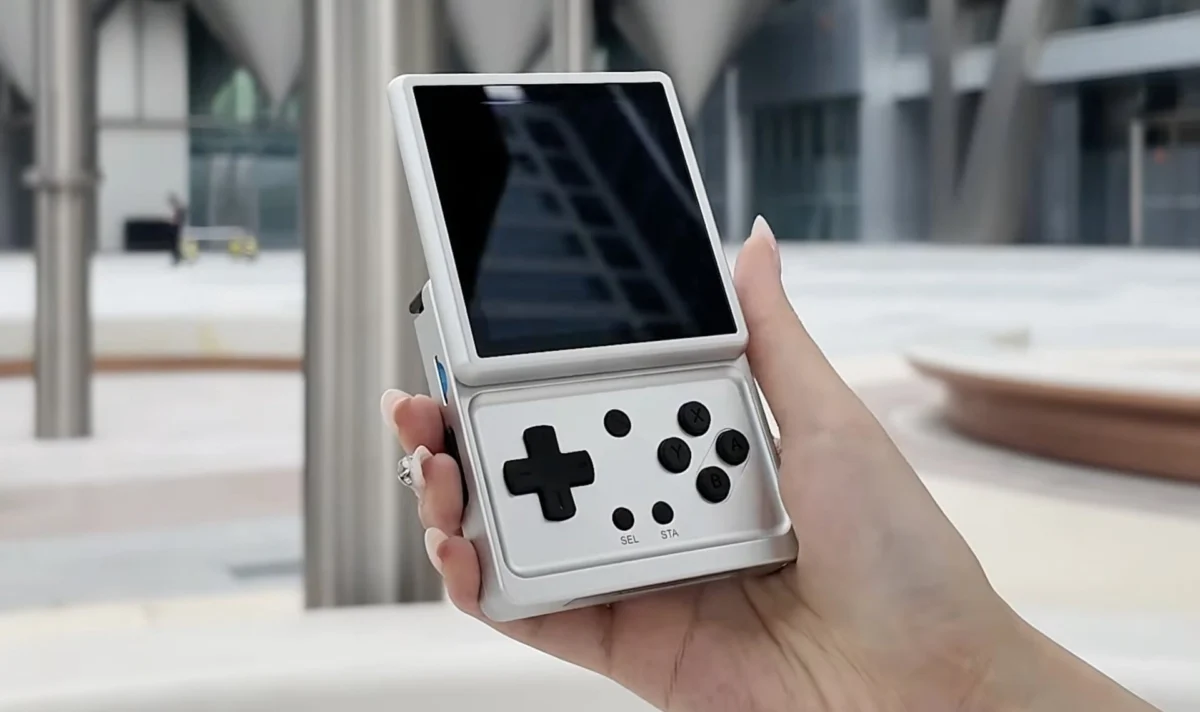
Anbernic, a prominent manufacturer in the retro gaming handheld market, has officially announced the ‘RG Rotate,’ an innovative emulation handheld featuring a distinctive rotating display. This highly anticipated device, which had previously been the subject of leaks and industry speculation, marks a notable departure from conventional handheld designs, drawing inspiration from the experimental mobile phone aesthetics prevalent in the early 2000s. The official reveal confirms key specifications, including available colorways, material options, and customizable features, though pricing and a definitive release date are yet to be disclosed.
The ‘RG Rotate’: A Detailed Look at Anbernic’s Latest Innovation
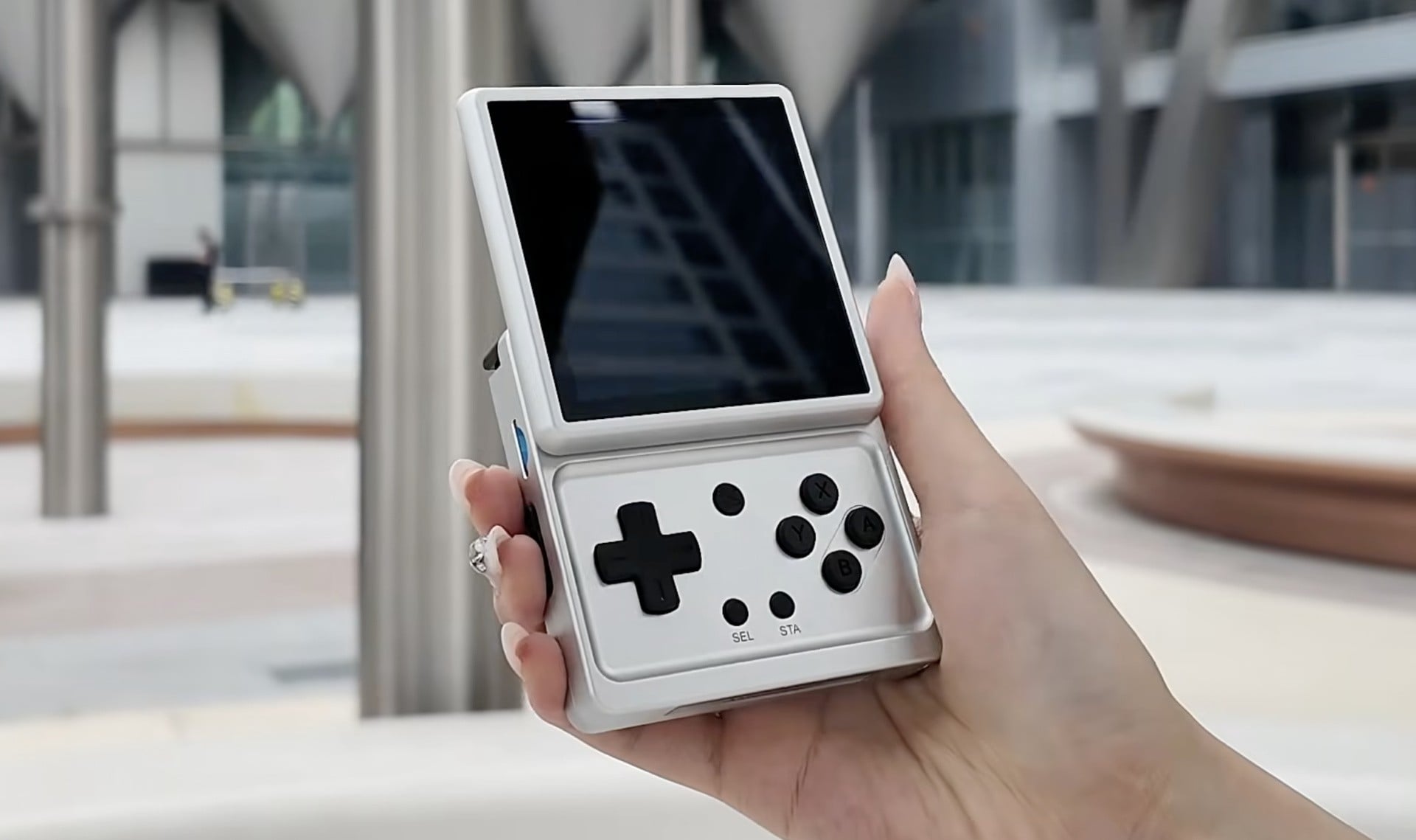
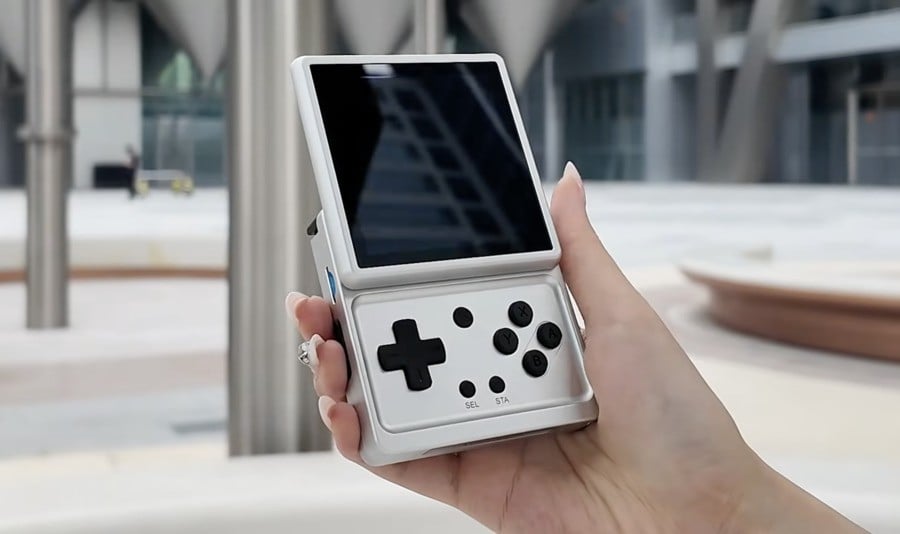
The ‘RG Rotate’ is designed to captivate both retro gaming enthusiasts and collectors with its unique form factor. The central feature is its rotating display, allowing the screen to swivel and expose the control inputs beneath, a mechanism reminiscent of early 21st-century mobile phones like the Motorola Flipout. This design choice aims to offer a novel user experience, potentially enhancing portability and screen protection when the device is not in active use.
Anbernic has confirmed that the ‘RG Rotate’ will be available in two distinct color options: Polar Black and Aurora Silver. Further customization will extend to the device’s build materials, with consumers having the choice between a premium aluminum casing or a more cost-effective ABS plastic option. This dual-material strategy suggests Anbernic’s intent to cater to different segments of the market, offering both a high-end, tactile experience and a more accessible entry point.
Beyond its rotational display and material choices, the ‘RG Rotate’ will also offer a degree of user-level customization for its controls. Specifically, users will be able to swap out the standard L2 and R2 shoulder buttons for taller alternatives. This attention to ergonomic detail indicates an understanding of varied player preferences, particularly for those who might prefer a more pronounced or comfortable grip during extended gaming sessions. The device is confirmed to feature a 1:1 aspect ratio screen, a specification particularly relevant for accurately displaying titles from certain classic gaming systems.
A Nod to the Past: The Resurgence of Rotational Designs
The ‘RG Rotate’s’ design philosophy is deeply rooted in a period of intense experimentation within the mobile technology sector. Before the widespread adoption of the monolithic ‘slab’ smartphone design, the 2000s were characterized by a vibrant array of form factors, including flip phones, slider phones, and devices with rotating screens or keypads. Companies like Nokia, Samsung, and Motorola frequently introduced radical designs in an effort to differentiate their products and capture consumer interest. The Motorola Flipout, released in 2010, serves as a direct conceptual antecedent, featuring a square form factor with a screen that swiveled to reveal a QWERTY keyboard.
This era of design diversity fostered a sense of innovation and playfulness in consumer electronics, qualities that have largely been superseded by the functional uniformity of modern smartphones. Anbernic’s decision to revisit this design language for an emulation handheld taps into a potent vein of nostalgia while simultaneously exploring practical applications for a device dedicated to retro gaming. The rotating screen mechanism could offer benefits such as protecting the display when carried in a pocket or bag, or providing a compact, screen-only mode for media consumption, though its primary purpose appears to be integrating the controls seamlessly.
Chronology of the Announcement and Pre-Release Speculation
The journey of the ‘RG Rotate’ from rumor to official product followed a typical trajectory for highly anticipated tech gadgets.
- Original Leak (Tuesday, March 17, 2026, 1:30 PM UTC): Initial reports surfaced following a video leak, prominently highlighted by tech blogs such as Retro Dodo. The leaked footage showcased a prototype device with a distinct rotating mechanism, immediately drawing comparisons to vintage mobile phones. At this stage, the device was unofficial, and its existence remained speculative, though the advanced nature of the prototype suggested it was far beyond a conceptual stage. The video specifically pointed out the 1:1 aspect ratio screen, generating immediate interest within the retro gaming community regarding its potential for specific console emulation.
- Official Confirmation (Monday, April 13, 2026, 3:30 PM UTC): Approximately one month after the initial leak, Anbernic officially confirmed the device, christening it the ‘RG Rotate’. This announcement solidified the details previously seen in the leak and added crucial information regarding color options, material choices, and the customizable shoulder buttons. The official reveal cemented Anbernic’s commitment to bringing this unconventional design to market.
The relatively short period between the leak and the official announcement underscores Anbernic’s proactive approach to managing product releases and engaging with its community. It also suggests that the development cycle for the ‘RG Rotate’ was well underway at the time of the initial leak.
Anbernic’s Strategic Play in the Emulation Market
Anbernic has established itself as a significant player in the burgeoning retro handheld emulation market. Known for its extensive catalog of devices that range in power, form factor, and price point, the company has built a reputation for delivering reliable and often aesthetically pleasing hardware tailored for classic gaming. Their product line typically includes devices like the RG35XX series, RG405M, and RG505, which generally adhere to more conventional handheld designs with screens positioned above or between fixed control layouts.
The introduction of the ‘RG Rotate’ represents a strategic diversification for Anbernic. While the core function remains emulation, the unique form factor aims to differentiate the device in an increasingly crowded market. Competitors, including brands like Retroid Pocket, AyaNeo, and even mainstream players like Valve with its Steam Deck, largely focus on performance upgrades, larger screens, or more traditional ergonomic layouts. By contrast, the ‘RG Rotate’ emphasizes a unique user interaction and aesthetic appeal.
This move could be interpreted as an attempt to capture a niche segment of the market – those who value novelty, design nostalgia, and perhaps a more compact form factor for portability. It also signals Anbernic’s willingness to experiment with design, potentially testing the waters for future unconventional handhelds. The choice of offering both aluminum and ABS plastic options further highlights a strategy to appeal to both premium and budget-conscious consumers, allowing the company to target a broader demographic with a single core design.
The Booming Retro Handheld Landscape and Market Implications
The market for retro gaming handhelds has witnessed exponential growth over the past decade. Driven by a blend of nostalgia, the accessibility of emulation software, and advancements in affordable, powerful ARM-based processors, these devices allow enthusiasts to play games from classic consoles like the NES, SNES, Game Boy, PlayStation, and even more modern systems like the PSP and Nintendo DS. This market is populated by numerous brands, each vying for consumer attention through a combination of performance, build quality, screen technology, and ergonomic design.
The ‘RG Rotate’ enters this competitive landscape with a distinctive selling proposition. Its rotational design and 1:1 aspect ratio screen are key differentiators. The 1:1 aspect ratio is particularly interesting for emulation, as it perfectly accommodates games from systems like the original Game Boy, Game Boy Color, and many arcade titles, which often utilized square or near-square display resolutions. While less ideal for widescreen systems, this choice underscores a dedication to certain subsets of retro gaming, potentially offering an unparalleled experience for those specific libraries.

From a market perspective, the ‘RG Rotate’ could carve out a unique space. While it might not appeal to users solely focused on raw processing power or the largest possible screen, its design novelty and specific aspect ratio could make it a must-have for collectors and purists of certain retro eras. The dual material options also allow Anbernic to compete across different price points, potentially drawing in consumers who might otherwise opt for a competitor’s device. Industry analysts might view this as a calculated risk, betting on design innovation to create demand rather than solely relying on incremental performance improvements.
Engineering and Ergonomics: The Rotating Mechanism’s Promise and Peril
The rotating display, while aesthetically appealing and reminiscent of a bygone era, presents both engineering challenges and ergonomic considerations. The primary benefit is undoubtedly the compact form factor when the controls are hidden, offering screen protection and a sleek, almost phone-like appearance. This could make the ‘RG Rotate’ an ideal portable companion, easily slipping into pockets or small bags.
However, the mechanism itself introduces potential points of failure. Moving parts in electronics often raise concerns about long-term durability. Anbernic will need to ensure the rotating hinge is robust enough to withstand repeated use without developing wobble or becoming loose over time. This is where the choice between aluminum and ABS plastic chassis might also play a role, with the aluminum version potentially offering greater structural integrity.
Ergonomically, the device’s square footprint and potentially compact control layout (when extended) will be critical. While the swappable L2/R2 buttons address one aspect of comfort, the overall feel in hand for extended gaming sessions will be paramount. The 1:1 aspect ratio screen, while perfect for some retro titles, might result in smaller display areas for games designed for 4:3 or 16:9 aspect ratios, requiring black bars or scaling that could impact visual fidelity or immersion for those titles. Balancing nostalgia with practical, modern ergonomic requirements will be key to the ‘RG Rotate’s’ success.
Material Choices and Customization: Premium vs. Practicality
The decision to offer the ‘RG Rotate’ in both aluminum and ABS plastic versions is a strategic move that reflects current trends in the handheld market. Premium materials like aluminum provide a more substantial, high-quality feel, often associated with increased durability and a superior aesthetic. This option caters to enthusiasts willing to pay more for a premium build, akin to higher-end smartphones or specialized gaming devices. The tactile feedback, weight, and perceived robustness of an aluminum chassis can significantly enhance the user experience.
Conversely, the ABS plastic option offers a more practical and affordable alternative. ABS (Acrylonitrile Butadiene Styrene) is a common thermoplastic known for its strength, rigidity, and impact resistance, making it suitable for consumer electronics. A plastic version would likely be lighter, potentially more comfortable for some users, and certainly more budget-friendly. This dual-material approach allows Anbernic to maximize its market reach, appealing to both the premium segment and the larger, cost-conscious consumer base without diluting the core design concept.
The swappable L2 and R2 shoulder buttons further enhance the device’s appeal by offering a degree of personalization and ergonomic adjustment. This feature is a subtle but significant nod to user feedback, acknowledging that default button layouts may not suit all hand sizes or play styles. By providing taller options, Anbernic is addressing a common complaint in compact handhelds, where shoulder buttons can sometimes feel cramped or difficult to actuate comfortably. This level of customization speaks to a user-centric design philosophy.
Market Reception and Future Outlook
Early reactions from the retro gaming community, following the initial leak and now the official announcement, suggest a mix of excitement and cautious optimism. Many are intrigued by the nostalgic design and the potential for a fresh take on the handheld form factor. The 1:1 aspect ratio has been particularly well-received by fans of vertical arcade games and classic Nintendo handhelds. However, some concerns naturally revolve around the durability of the rotating mechanism and the practical ergonomics for varied game libraries.
From a broader industry perspective, the ‘RG Rotate’ could influence future handheld designs, prompting competitors to explore more unconventional aesthetics beyond iterative performance upgrades. Should the ‘RG Rotate’ prove successful, it might signal a renewed appetite for unique physical designs in consumer electronics, moving beyond the current trend of minimalist slabs. Its success will largely depend on Anbernic’s ability to deliver a robust, well-performing device at a competitive price point.
The Road Ahead: Pricing and Availability
Despite the comprehensive official announcement, two critical pieces of information remain undisclosed: the official pricing and the exact release date. These details are paramount for consumers to make informed purchasing decisions and for market analysts to fully assess the device’s potential impact. The pricing strategy, in particular, will be crucial, especially given the dual material options. Anbernic will need to position the ‘RG Rotate’ competitively against both its own existing lineup and those of its rivals, balancing the cost of its unique design and premium materials with the expectations of the retro gaming community.
The absence of a release date means that prospective buyers will continue to monitor Anbernic’s official channels for further updates. Typically, once a device is officially announced with such detail, a release window or pre-order period often follows within weeks or months. The anticipation surrounding these final details underscores the significant interest the ‘RG Rotate’ has already generated.
In conclusion, the Anbernic ‘RG Rotate’ represents a bold and nostalgic step for the retro gaming handheld market. By reintroducing a rotating display design reminiscent of the 2000s mobile phone era, Anbernic is not only tapping into a powerful sense of nostalgia but also exploring new avenues for handheld ergonomics and portability. With its distinct 1:1 aspect ratio, choice of premium materials, and customizable controls, the ‘RG Rotate’ is poised to be a significant and highly discussed entry, challenging conventional design norms and potentially setting a new trend in the ever-evolving landscape of portable gaming.