Chalid Lutfie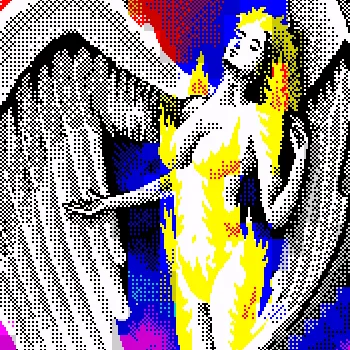
Still Flying represents the debut studio effort of the renowned electronic musician C-Jeff, marking a significant historical point in the evolution of 8-bit music composition and the broader demoscene culture of the early 2000s. Originally conceived and written throughout 2002, the album was crafted entirely on a real ZX Spectrum home computer using the Pro Tracker 3 music editor, a technical constraint that defined its unique auditory profile and established C-Jeff as a meticulous architect of the AY-3-8910 sound chip. Marketed under the evocative tagline "lyric music novels," the album sought to transcend the typical repetitive nature of early computer music by focusing on narrative structure and emotional depth, effectively bridging the gap between hobbyist tracking and professional composition.
The Technical Genesis and the Pro Tracker Era
The creation of Still Flying occurred during a period when the ZX Spectrum, an 8-bit personal computer originally released by Sinclair Research in 1982, remained a vital platform for creative expression in Eastern Europe. While Western markets had long moved on to 16-bit and 32-bit systems, the Russian and CIS (Commonwealth of Independent States) demoscene continued to push the boundaries of Spectrum hardware, particularly through the use of clones like the Pentagon 128. C-Jeff utilized Pro Tracker 3 (PT3), which was the industry-standard software for the platform at the time. PT3 allowed for sophisticated control over the three-channel AY-3-8910 programmable sound generator, enabling composers to manipulate volume envelopes, pitch slides, and noise channels to simulate a full orchestral or synth-pop arrangement.
The decision to record on original hardware rather than modern emulators was a point of pride and technical necessity for C-Jeff in 2002. The nuances of the AY chip’s analog output provided a warmth and specific "grit" that defined the album’s aesthetic. By labeling the tracks as "lyric music novels," the artist signaled a departure from the high-tempo, aggressive "techno" sounds common in many demoparty entries, opting instead for a melodic, melancholic, and story-driven approach that mirrored the complexity of traditional songwriting within the limitations of a three-voice polyphony.
Chronology of Development and Distribution
The timeline of Still Flying spans several years, beginning with the individual composition of tracks for competitive demoparties and culminating in a full-scale digital distribution on modern platforms.
- Early to Mid-2002: Composition Phase. C-Jeff authored the core tracks of the album using the ZX Spectrum. This period was characterized by intense experimentation with the PT3 editor, focusing on how to extract maximum emotional resonance from the hardware’s limited frequency range.
- August 2002: CAFe 2002 Demoparty. The track "My Mind is Free" was submitted to the CAFe 2002 demoparty in Kazan, Russia. Due to a linguistic misunderstanding at the time, the track was originally titled "My mind free." It placed 13th in the ZX Spectrum AY Music competition, a respectable finish in a highly competitive field.
- Late 2002: Paradox 2002 Demoparty. The track "Lonely Soul" was entered into the Paradox 2002 demoparty in Rostov-on-Don. It achieved significant critical success, securing 2nd place in the AY Music competition, which solidified C-Jeff’s reputation as a top-tier composer in the scene.
- 2003–2004: The Musicdisk Release. Approximately 1.5 years after the initial compositions, the album was compiled into a "musicdisk"—a standalone executable program for the ZX Spectrum. This release was a collaborative effort involving several key figures in the demoscene: the code was handled by Vortex, the visual interface and graphics were designed by Schafft, and the final package was compressed and optimized by Poisoned CyberJack.
- Modern Era: Archival and Remastering. Years after its initial release, the album was professionally mastered by MmcM (Sergey Myachin), another legendary figure in the chiptune world, and made available on platforms like Bandcamp to ensure its preservation for future generations of listeners and historians.
Analysis of Key Track Performances
The competitive performance of individual tracks provides a quantitative measure of the album’s impact during its contemporary release. The track "My Mind is Free" is often cited as a turning point for C-Jeff. Despite its 13th-place finish at CAFe 2002, the track demonstrated a sophisticated use of "ornaments" (rapid pitch changes used to simulate chords or textures) that would become a hallmark of his style. The title’s grammatical error in the competition version became a piece of demoscene trivia, highlighting the grassroots, international nature of the community where English was often a secondary language for creators.
In contrast, "Lonely Soul" was a triumph at Paradox 2002. Its second-place finish was a testament to the artist’s ability to compete at the highest level of the Russian demoscene. Although not originally intended for the album’s primary sequence, its stylistic consistency with the "lyric music novel" theme led to its eventual inclusion. The track is noted for its sweeping melodies and a sense of "space" that is notoriously difficult to achieve with only three audio channels and no dedicated reverb or delay hardware.
Collaborative Credits and Production Roles
The transition of Still Flying from a collection of tracker files to a polished musicdisk required a multidisciplinary team. This collaborative model was typical of the demoscene, where programmers, artists, and musicians pooled their talents to create "prods" (productions).
- C-Jeff (Composer/Producer): Responsible for the core musical content and the conceptual direction of the album. His role extended beyond mere composition to overseeing the thematic "novel" structure of the release.
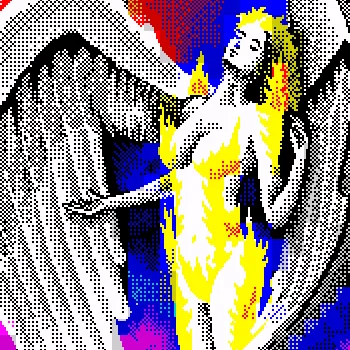
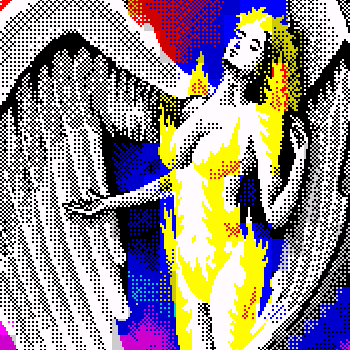
- Schafft (Artwork/Graphics): Provided the visual identity for the musicdisk. In the context of the ZX Spectrum, this involved working within the "attribute clash" limitations of the hardware, where color placement is restricted to 8×8 pixel blocks.
- Vortex (Coder): Developed the custom software (the musicdisk engine) that allowed users to navigate the tracks, view credits, and interact with the music on actual hardware or via emulators.
- Poisoned CyberJack (Packer): Responsible for the data compression of the final release. Given the limited memory of the ZX Spectrum (typically 48K or 128K), efficient packing was essential to fit the music, graphics, and code onto a single floppy disk or digital image.
- MmcM (Mastering): A later addition to the credits, MmcM applied modern audio engineering techniques to the original AY-3-8910 recordings, ensuring that the 8-bit sounds translated well to modern high-fidelity audio systems without losing their characteristic hardware "soul."
Broader Impact and Demoscene Implications
Still Flying is more than a nostalgic artifact; it is a document of a specific cultural movement. In the early 2000s, the Russian demoscene was one of the most active in the world, serving as an informal academy for a generation of programmers and digital artists. C-Jeff’s work on this album helped transition chiptune from a niche hobby into a recognized genre of electronic music that would eventually influence mainstream pop and indie game soundtracks.
The album’s focus on "lyric novels" anticipated the shift toward more complex, atmospheric chiptune that would define the mid-2000s. By prioritizing melody and structure over the technical "flexing" common in demoparty entries, C-Jeff proved that 8-bit hardware could be a medium for genuine emotional expression. This approach paved the way for his later, more expansive works, such as Electric_Adventures and Big_Steel_Wheels, which incorporated live instruments and progressive rock influences while maintaining a core identity rooted in tracker music.
Furthermore, the release of Still Flying as a musicdisk highlights the importance of the "software-as-art" philosophy. Rather than just a series of audio files, the album was an interactive experience, requiring a specific environment to be viewed and heard as intended. The preservation of such works is a key concern for digital historians, and the migration of Still Flying to modern digital storefronts represents a successful bridge between the ephemeral nature of 20th-century computer subcultures and the permanent digital archives of the 21st century.
Conclusion and Legacy
As the first full-length album from C-Jeff, Still Flying remains a foundational text for enthusiasts of the ZX Spectrum and the AY-3-8910 sound chip. It stands as a testament to the creativity that can flourish under extreme technical constraints. The album’s journey from a series of tracker files in 2002 to a celebrated piece of chiptune history in the present day illustrates the enduring appeal of 8-bit music. For researchers of digital culture and fans of electronic music alike, the album provides a clear window into a time when the limitations of the past were the primary fuel for the innovations of the future. Through its "lyric music novels," Still Flying continues to resonate as a landmark achievement in the art of the tracker.