Cecilia Chamidah Nur
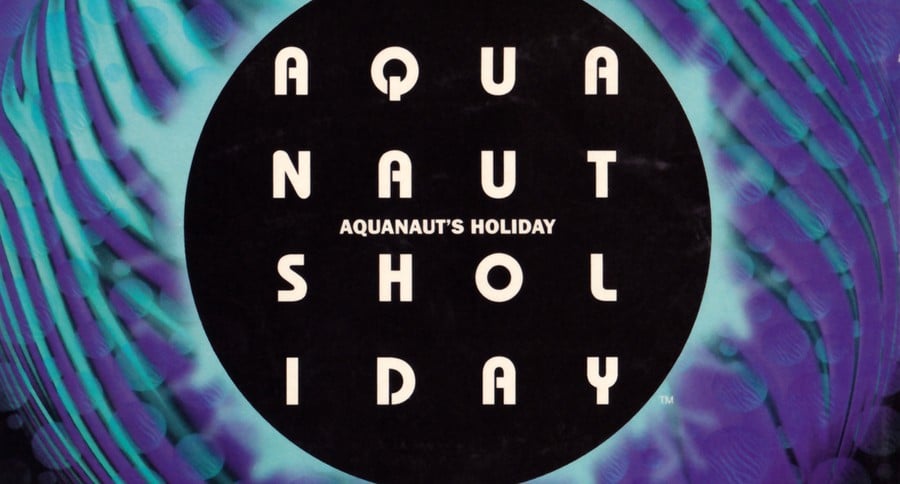
Japanese developer and publisher Artdink has officially announced April 23rd, 2026, as the release date for its highly anticipated reissue of the cult-classic PlayStation 1 title, Aquanaut’s Holiday. The game, an unconventional underwater adventure originally directed by Doshin the Giant creator Kazutoshi Iida, will be available on Steam and the Japanese Nintendo Switch eShop as part of the ongoing "Artdink Game Log" series. While fans have eagerly awaited the return of this unique title, the announcement has also ignited discussions, particularly concerning Artdink’s decision to integrate generative AI for upscaling in-game assets and the continued absence of an English localization despite the game’s original release in North American and PAL territories.
The Return of a PlayStation Pioneer: Aquanaut’s Holiday
Aquanaut’s Holiday first captivated players in Japan in June 1995, arriving on the original PlayStation as a launch window title in some regions. It quickly distinguished itself from the burgeoning wave of 3D games with its serene, objective-free exploration. Unlike action-packed contemporaries, Aquanaut’s Holiday offered a tranquil escape into a vast, mysterious underwater world. Players piloted a small submarine, the "Aqua-Naut," through expansive oceanic environments, discovering diverse marine life, uncovering hidden passages, and interacting with the ecosystem.
The game’s premise was refreshingly simple: there were no specific missions to complete, no enemies to defeat, and no pressing narrative demands. Instead, players were encouraged to simply explore, observe, and engage with the environment. A core mechanic involved building reefs using sonar pulses, which would then attract different species of fish and other marine creatures, gradually transforming barren seafloors into vibrant ecosystems. This emphasis on discovery and ecological interaction, rather than combat or puzzle-solving, earned Aquanaut’s Holiday a dedicated, albeit niche, following. It was a pioneering example of emergent gameplay and environmental storytelling, predating many modern open-world exploration titles in its approach to player agency and non-linear progression.
The game’s director, Kazutoshi Iida, later gained further recognition for his work on Doshin the Giant for the Nintendo 64 and GameCube, another title known for its unconventional gameplay and focus on interaction with a dynamic world. Iida’s signature touch of creating games that defy traditional genre conventions is evident in Aquanaut’s Holiday, making its return a significant event for aficionados of experimental game design. The original game was indeed localized for North American and PAL markets in 1996, allowing a wider international audience to experience its unique charm, further complicating Artdink’s current localization strategy.
Artdink’s "Game Log" Initiative and Precedent Set by Tail of the Sun
The reissue of Aquanaut’s Holiday is a cornerstone of Artdink’s "Artdink Game Log" series, an initiative seemingly dedicated to bringing back select PlayStation-era titles from the company’s extensive catalog. This series aims to reintroduce classic games to modern audiences, making them accessible on contemporary platforms. The precedent for this approach was set earlier this year with the reissue of Tail of the Sun, another distinct PS1 adventure from Artdink, which saw a release on Steam and the Nintendo Switch (exclusively in Japan).

Tail of the Sun, known for its peculiar prehistoric survival theme and expansive, albeit sometimes cryptic, gameplay, followed a similar release pattern. It was launched on Steam globally but the Switch version was limited to the Japanese eShop. Crucially, Tail of the Sun also lacked an official English localization, despite its prior international release. This established a concerning trend for international fans hoping for comprehensive reissues of Artdink’s classic library. The pricing strategy for Tail of the Sun also offers a benchmark: it retailed for 2420 yen in Japan, translating to approximately £16.75 in the UK on Steam. This pricing model is expected to be consistent for Aquanaut’s Holiday.
The "Artdink Game Log" series represents a commendable effort in game preservation, allowing a new generation of players to experience titles that might otherwise remain confined to aging hardware. However, the choices made regarding localization and technological enhancements within this series are proving to be points of ongoing discussion within the gaming community, particularly as the industry grapples with the evolving landscape of remasters and re-releases.
The Generative AI Integration Controversy
Perhaps the most contentious aspect of the Aquanaut’s Holiday reissue is Artdink’s explicit announcement of utilizing "Generative AI" to upscale in-game cutscenes and other assets. The game is set to feature two distinct modes: a "remastered mode" that leverages this controversial technology for enhanced visuals, and a "classic mode" which promises to deliver the original experience, complete with optional scanline and CRT filters to evoke a retro aesthetic.
Generative AI, in this context, refers to algorithms that can create new content or enhance existing content based on learned patterns. For upscaling, this typically involves using AI to intelligently fill in missing pixels and details, theoretically producing sharper, higher-resolution images from lower-resolution originals. While the promise of AI-enhanced visuals is appealing for revitalizing older games, its application in creative works, especially in beloved classics, has become a hotbed of debate.
Critics of AI upscaling often raise several concerns:
- Authenticity and Artistic Integrity: AI-generated details, while technically higher resolution, may not accurately reflect the original artistic intent or style of the developers. They can introduce visual artifacts, smooth out intentionally pixelated textures, or even fundamentally alter the "look and feel" that defined the game.
- "Uncanny Valley" Effect: In some cases, AI upscaling can lead to visuals that appear unnaturally smooth or distorted, falling into an "uncanny valley" where they look almost right, but subtly off, disturbing the player’s immersion.
- Ethical Concerns: Broader ethical debates surrounding generative AI include the source of training data (often scraped from the internet without explicit consent), the potential for job displacement in creative fields, and questions of authorship and ownership. While less direct in simple upscaling, these discussions contribute to the general skepticism surrounding AI in gaming.
- Preservation Philosophy: For many game preservationists, the ideal remaster should either meticulously recreate the original assets in higher fidelity by hand or provide a pristine, untouched version of the original. Introducing AI alterations, even if optional, is seen by some as a deviation from true preservation.
Artdink’s decision to offer both a "remastered" and a "classic" mode demonstrates an awareness of these debates. The inclusion of the classic mode, explicitly stating it will "let you enjoy the game just as it was back then," suggests an attempt to cater to purists who prefer an unadulterated experience. However, the very presence of AI-upscaled content in the "remastered" option sets a precedent and signals a potential direction for future reissues, not just from Artdink but potentially across the industry. This could pave the way for more efficient, albeit potentially controversial, methods of breathing new life into older titles, but it also opens up ongoing discussions about the definition of a "remaster" and the acceptable limits of technological intervention in artistic works.

Localization Challenges and Import-Friendliness
A recurring point of contention for international fans of Artdink’s classic titles is the consistent lack of English localization for the "Artdink Game Log" reissues on the Japanese eShop, and in some cases, even on Steam. For Aquanaut’s Holiday, this is particularly notable because the original PlayStation game was indeed localized and released in North America and PAL territories in 1996. The absence of this previously available English text in the new reissue creates an unnecessary barrier for a significant portion of its potential audience.
While the article notes that Aquanaut’s Holiday is "fairly ‘import-friendly’ regardless, due to the free-roaming nature of the game," this assessment comes with caveats. The game’s core gameplay loop—exploration, discovery, and reef building—does not heavily rely on complex dialogue or intricate narrative exposition. Players can largely understand the mechanics through visual cues and experimentation. However, any in-game menus, tutorials, or contextual information will likely remain in Japanese, potentially hindering full comprehension for non-Japanese speakers. Moreover, the charm of discovering the names and descriptions of various marine species, or understanding subtle environmental hints, would be lost without translation.
The decision to forego English localization, despite the historical precedent, can stem from several factors:
- Cost-Benefit Analysis: Localizing a game, especially one with a potentially niche appeal, can be a significant financial undertaking. Artdink might be prioritizing speed and cost-efficiency for these reissues, focusing on their primary domestic market.
- Target Audience: The "Artdink Game Log" series might primarily target a Japanese audience with nostalgia for these specific titles, assuming international sales would not justify the localization investment.
- Technical Challenges: Re-implementing existing localizations into new engine versions or updated builds can sometimes be more complex than it appears, especially for older game architectures.
This approach, while understandable from a business perspective, frustrates a dedicated segment of international retro gaming enthusiasts who are eager to legally purchase and play these reissues. It forces some to rely on fan translations or simply navigate the game with limited understanding, underscoring the ongoing challenges in global game preservation and accessibility. The distinction between the global Steam release and the Japan-only Switch eShop release for Tail of the Sun, and likely for Aquanaut’s Holiday, further complicates the landscape for international players, who might have access to one version but not the other, or find the Switch version completely out of reach.
Release Details and Pricing
Aquanaut’s Holiday is scheduled to launch on April 23rd, 2026. It will be available on PC via Steam globally and on the Nintendo Switch eShop specifically in Japan. The expected price in Japan is 2420 yen (tax included). As of the announcement, no overseas price has been officially declared for the Steam version. However, based on the previous release of Tail of the Sun, which also sold for 2420 yen in Japan and approximately £16.75 in the UK on Steam, a similar pricing structure is anticipated for international markets.
To provide a broader context for the Japanese price: 2420 yen currently converts to approximately $15.50 USD or €14.50 EUR (exchange rates are subject to fluctuation). This places the reissue in a mid-range price bracket for a classic title, reflecting the development effort put into the updated modes and platform ports. The dual-platform release strategy – Steam for broader PC accessibility and the Japanese eShop for console players – aims to maximize reach within Artdink’s targeted markets. The absence of a Western Switch eShop release, however, remains a significant limitation for console players outside of Japan.
Broader Implications for Game Preservation and Remasters
The reissue of Aquanaut’s Holiday by Artdink serves as a fascinating case study in the evolving landscape of video game preservation and the modernization of classic titles. On one hand, it represents a positive step towards making historically significant games available to contemporary audiences on modern platforms. Artdink’s commitment to revisiting its back catalog through the "Game Log" series is a valuable contribution to gaming history.
On the other hand, the choices made in this particular reissue raise critical questions that resonate across the entire industry:
- The Role of AI in Remasters: Aquanaut’s Holiday directly confronts the debate about using generative AI in enhancing classic games. Will this become a common, cost-effective method for future remasters, or will the community’s reaction lead developers to favor more traditional, handcrafted approaches or simply pristine emulation? The split between "remastered" and "classic" modes might become a standard compromise.
- Localization as a Barrier to Global Preservation: The consistent lack of English localization for games that previously had it highlights a gap in global preservation efforts. While a game might be "preserved" on modern platforms, if it’s not accessible to a global audience in their native language, its cultural impact and potential reach remain limited. This could lead to increased reliance on fan-made patches or unofficial translations, which are not ideal for official reissues.
- Defining "Remaster" in the Modern Era: The term "remaster" itself is becoming increasingly fluid. From simple resolution bumps to comprehensive overhauls, and now AI-driven enhancements, the spectrum of what constitutes a remaster is wide. Aquanaut’s Holiday pushes the boundary by explicitly integrating AI, prompting a re-evaluation of expectations for such releases.
Ultimately, Aquanaut’s Holiday‘s return is a complex tapestry of excitement for a unique classic, coupled with apprehension over technological choices and accessibility limitations. As the April 2026 release approaches, the gaming community will be closely watching to see how Artdink’s vision for preserving and modernizing its past titles is received, and what implications it holds for the future of game reissues.