Farhan hamdan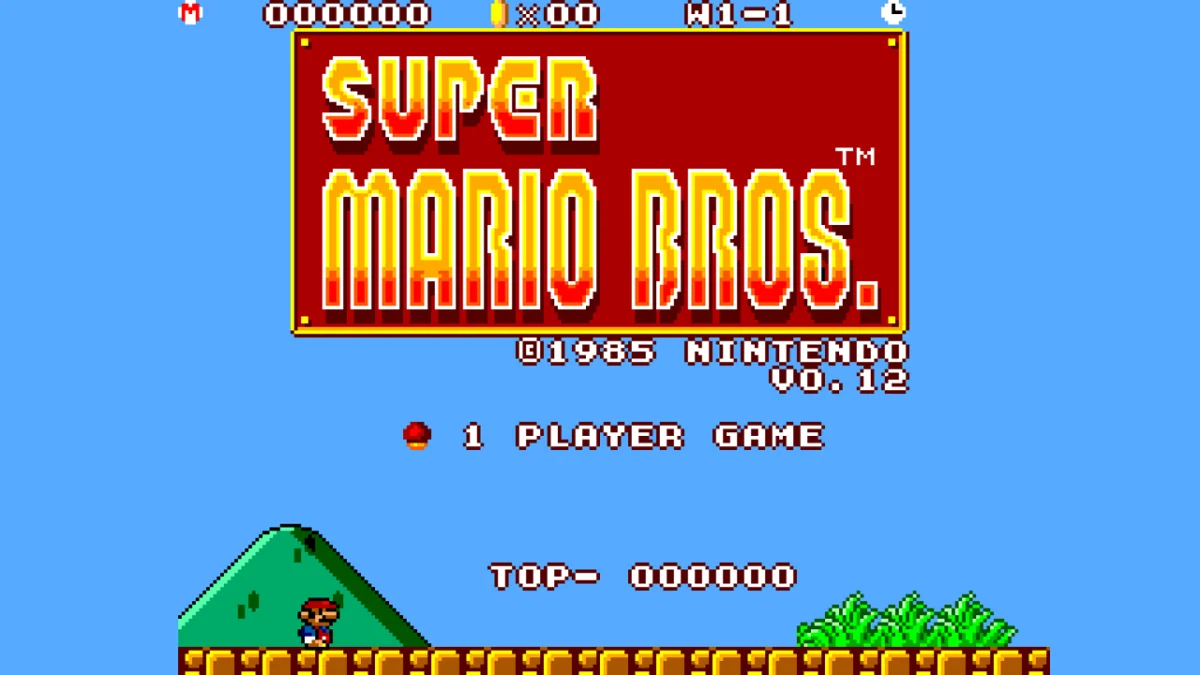
The burgeoning retro gaming community is abuzz with the unveiling of a remarkable technical achievement: a faithful port of the iconic first level of Nintendo’s Super Mario Bros. for the Sega Master System (SMS). This ambitious project, entered into SMSPower’s highly anticipated 2026 coding contest, represents far more than a simple re-skinning or homage; it is a meticulous recreation that captures the very essence and playability of the original NES masterpiece on a different 8-bit architecture. Spearheaded by developer LackOfTrack, this proof-of-concept demonstrates an extraordinary understanding of both the source material and the target hardware, promising a significant new entry in the console’s homebrew library.
The Genesis of a Technical Marvel: LackOfTrack’s Achievement
What distinguishes LackOfTrack’s Super Mario Bros. SMS Port from other fan-made adaptations is its commitment to authenticity. Rather than simply creating a platformer that visually resembles Super Mario Bros. with SMS assets, the developer undertook a "true port" of the game’s foundational mechanics. This involved leveraging the extensive disassembly of the original NES title by doppelganger as a critical reference. By delving into the NES game’s actual code and logic, LackOfTrack was able to translate core elements such as Mario’s precise jump physics, enemy AI patterns, collision detection, and power-up behaviors with astonishing fidelity. The result is a game that not only looks like Super Mario Bros. but, crucially, plays and feels like the NES version, a benchmark often difficult to achieve in cross-platform development, especially between different 8-bit architectures.
Currently, the project exists as a highly polished proof-of-concept, showcasing the entirety of World 1-1. This initial release has already garnered significant attention within the retro computing sphere, particularly among Sega Master System enthusiasts and collectors who possess the means to play homebrew titles on original hardware via ROM carts or advanced emulators. The availability of the port for download on SMSPower.org underscores the project’s accessibility and the developer’s desire for community engagement and feedback.
A Retrospective on the 8-bit Console Wars: NES vs. Master System
To fully appreciate the significance of LackOfTrack’s achievement, it is essential to contextualize it within the historical landscape of the 8-bit console era. The mid-to-late 1980s were defined by a fierce rivalry between Nintendo’s Nintendo Entertainment System (NES) and Sega’s Master System. The NES, launched in North America in 1985 (after its Famicom debut in Japan in 1983), quickly established market dominance, largely propelled by the unprecedented success of its bundled title, Super Mario Bros. This game, designed by Shigeru Miyamoto, revolutionized platforming, setting industry standards for level design, character control, and engaging gameplay. Its immense popularity made Mario a global icon and the NES a household name, selling over 60 million units worldwide.
Sega’s Master System, released in 1985 in Japan and 1986 in North America, was technically a very capable machine. In some respects, its hardware offered advantages over the NES, such as a larger color palette (64 colors on screen from 256, compared to NES’s 25 from 52), superior sprite scaling capabilities, and in later models, built-in FM sound. However, despite its technical merits and a strong lineup of games like Alex Kidd in Miracle World (Sega’s attempt at a mascot platformer), Phantasy Star, and Wonder Boy III: The Dragon’s Trap, the Master System struggled to gain significant market share against Nintendo’s established lead, especially in North America and Japan. It did find considerable success in Europe and Brazil, where it fostered a dedicated fanbase.
The "what if" scenario of Super Mario Bros. appearing on the Master System has long been a subject of fascination among retro gamers. Historically, cross-platform releases between direct competitors were rare, especially for flagship titles. Nintendo was famously protective of its intellectual property and its ecosystem. Therefore, LackOfTrack’s port not only pushes the technical boundaries of the SMS but also offers a tantalizing glimpse into an alternate gaming history, allowing players to experience a cornerstone of gaming culture on a console it was never intended for.
The SMSPower Coding Contest: A Catalyst for Innovation
The platform for this impressive debut is SMSPower.org’s 2026 coding contest. SMSPower.org stands as one of the most vital online hubs for Sega Master System, Game Gear, and SG-1000 enthusiasts and developers. It serves as a comprehensive resource for documentation, emulation, hardware information, and, crucially, a vibrant community for homebrew development. The coding contests hosted by SMSPower are renowned for fostering innovation and pushing the technical limits of these vintage consoles. These competitions typically challenge developers to create new games, demos, or utilities that demonstrate creativity, technical prowess, and a deep understanding of the hardware.
The fact that LackOfTrack’s project is an entry for the 2026 contest, despite its early release, speaks volumes about the long-term planning and high standards expected. These contests often run for extended periods, allowing developers ample time to refine their projects, seek community input, and achieve ambitious goals. Over the years, SMSPower contests have been instrumental in revitalizing interest in the Master System, yielding numerous high-quality homebrew games and utilities that continue to expand the console’s library and showcase its untapped potential. LackOfTrack’s Super Mario Bros. port, even in its current preliminary state, is already poised to become one of the most talked-about entries in recent memory, drawing significant attention to the competition and the platform itself.

Deconstructing the Port: Technical Challenges and Solutions
Porting a game like Super Mario Bros. from the NES to the Master System involves overcoming a myriad of technical hurdles due to fundamental differences in their respective hardware architectures. While both are 8-bit systems, their central processing units (CPUs), video display processors (VDPs/PPUs), and sound chips operate distinctly.
The NES utilizes a Ricoh 2A03 CPU (a customized MOS 6502) and a Ricoh 2C02 Picture Processing Unit (PPU). The SMS, on the other hand, is built around a Zilog Z80 CPU and a Sega 315-5124 VDP (Video Display Processor).
- Graphics and Display: The NES PPU is known for its ability to display 25 colors on screen from a palette of 52, with a background consisting of two layers and a limited number of sprites (64 total, 8 per scanline, leading to common sprite flickering). The SMS VDP, while having a smaller overall sprite count (64 total, 8 per scanline, but with less flicker due to better hardware multiplexing), boasted a much larger color palette of 64 colors on screen from a possible 256. This difference in color capabilities means LackOfTrack had to meticulously adapt the NES’s limited color schemes to the SMS’s richer palette while maintaining the original game’s visual identity. Furthermore, the tile-based background rendering and scrolling mechanisms, though conceptually similar, require different memory mapping and VDP commands. Replicating the smooth, multi-directional scrolling of Super Mario Bros. within the SMS VDP’s capabilities required careful optimization.
- Sound System Divergence: The sound chips represent another significant challenge. The NES’s 2A03 APU features two pulse wave channels, one triangle wave channel, one noise channel, and a DPCM (Delta Pulse Code Modulation) channel for sampled audio. The Master System’s Texas Instruments SN76489 Programmable Sound Generator (PSG) offers three square wave channels and one noise channel. The NES’s richer sound capabilities, particularly the triangle wave and DPCM, are crucial to the distinctive soundtrack and sound effects of Super Mario Bros. LackOfTrack faced the complex task of transcribing and adapting the original musical compositions and sound effects to the SMS’s simpler PSG, requiring creative arrangements to capture the essence of Koji Kondo’s iconic score with fewer waveform options. The eventual plan to integrate FM sound would significantly enhance this aspect.
- CPU Architecture and Game Logic: While both are 8-bit, the 6502 (NES) and Z80 (SMS) have different instruction sets and architectural philosophies. The 6502 is known for its elegant design and fast interrupt handling, while the Z80 is praised for its powerful instruction set and multiple register banks. A "true port" means understanding the original 6502 assembly code and re-implementing its logic, physics, and AI routines using the Z80’s instruction set, rather than simply writing new code from scratch that mimics the gameplay. This requires an almost archaeological approach to reverse-engineering the original game’s behavior from its disassembly and translating it into a functional equivalent for the target system. The fidelity of the "feel" is a direct testament to the success of this intricate translation process.
- Memory Management: Both systems operated with limited RAM and ROM capacities. The original Super Mario Bros. was a 256-kilobit (32 KB) ROM. Porting it requires careful management of the SMS’s available RAM (typically 8 KB) and adapting the game’s asset loading and code execution to fit within these constraints, often necessitating optimized data structures and algorithms.
The Road Ahead: Graphics, FM Sound, and Community Collaboration
LackOfTrack’s current achievement, while impressive, marks only the beginning of a larger endeavor. The developer has openly stated plans to continue work on the project beyond the initial Level 1 proof-of-concept, with a clear roadmap for future enhancements. A primary focus is the completion of the game’s visual assets. LackOfTrack is actively seeking assistance from skilled graphic artists within the retro homebrew community. Converting the distinctive pixel art of Super Mario Bros. from the NES’s palette and tile structure to the SMS’s unique specifications, while maintaining aesthetic consistency and graphical integrity, is a demanding task that often requires a dedicated team member. The goal is not just a direct pixel-for-pixel translation but an artistic reinterpretation that feels native to the Master System without losing the original’s charm.
Furthermore, a highly anticipated planned enhancement is the addition of FM sound. While the Sega Master System’s built-in PSG (Programmable Sound Generator) is capable, the optional Yamaha YM2413 FM sound chip, present in Japanese Master Systems and some overseas models (and emulatable on modern hardware), offers a significantly richer and more complex audio experience. Implementing FM sound would allow for more nuanced musical arrangements and sound effects, elevating the auditory fidelity of the port closer to the NES’s capabilities and providing a premium experience for those with FM-enabled hardware or emulators. This commitment to leveraging the SMS’s full potential underscores the project’s dedication to quality.
The call for community collaboration, particularly for graphics, highlights the open-source and collaborative spirit prevalent in the retro homebrew scene. Projects of this scale often thrive on the contributions of multiple talented individuals, each specializing in different aspects of game development—programming, art, music, and testing. This collaborative model not only accelerates development but also enriches the final product through diverse perspectives and expertise.
The Broader Impact on Retro Gaming and Preservation
LackOfTrack’s Super Mario Bros. port extends beyond a mere technical demonstration; it holds significant implications for the wider retro gaming community and the ongoing efforts in game preservation.
- Validation of the Sega Master System: This project serves as a powerful testament to the capabilities of the Sega Master System, demonstrating that with ingenuity and dedication, its hardware can run games that were historically considered exclusive to its rival. It effectively challenges long-held perceptions about the console’s limitations and highlights its untapped potential.
- Fueling the Homebrew Scene: The high-profile nature of a Super Mario Bros. port will undoubtedly inspire other developers to tackle ambitious projects, fostering further innovation and competition within the homebrew community for the Master System and other vintage consoles. It encourages exploration of what these classic machines can truly achieve when pushed to their limits by modern developers.
- Accessibility and Preservation: The availability of such ports on platforms like SMSPower.org, coupled with the prevalence of modern ROM carts (e.g., EverDrives) and advanced emulators, ensures that these historical "what if" scenarios are not just theoretical but playable. This contributes to the broader effort of video game preservation, ensuring that classic gameplay experiences, even in unofficial forms, remain accessible to future generations.
- Ethical Considerations and Fan Projects: While Nintendo’s intellectual property rights are universally recognized, fan-made ports and remakes of classic games like Super Mario Bros. generally exist in a grey area. As long as these projects remain non-commercial and are created purely out of passion and respect for the original work, copyright holders often tolerate them, recognizing their role in community engagement and cultural appreciation. LackOfTrack’s project exemplifies this delicate balance, operating within the established norms of the retro homebrew scene.
- Living History: These projects breathe new life into vintage consoles, transforming them from static museum pieces into active platforms for new experiences. They connect past and present, allowing contemporary developers to engage with the technological constraints and design philosophies of a bygone era, fostering a deeper understanding and appreciation of video game history.
Conclusion: A Glimpse into the Future of 8-bit Gaming
The Super Mario Bros. SMS Port by LackOfTrack is a monumental undertaking that has already set a high bar for entries in SMSPower’s 2026 coding contest. It is a vibrant demonstration of technical mastery, community spirit, and enduring passion for retro gaming. By meticulously porting the iconic first level of one of gaming’s most important titles to the Sega Master System, LackOfTrack has not only delivered a compelling playable experience but has also offered a fascinating alternate history for the 8-bit console wars.
As the project moves forward, with plans for graphics refinement and the integration of richer FM sound, the anticipation within the retro community will only grow. This port is a must-try for anyone with the capability to play SMS homebrew, especially those utilizing ROM carts on original hardware. It stands as a testament to the fact that the golden age of 8-bit gaming continues to evolve, propelled by dedicated developers who refuse to let these classic machines fade into obsolescence. Enthusiasts and casual observers alike will undoubtedly be following the project’s progress closely, eager to witness the next milestones in this remarkable journey of retro revival.