Chalid Lutfie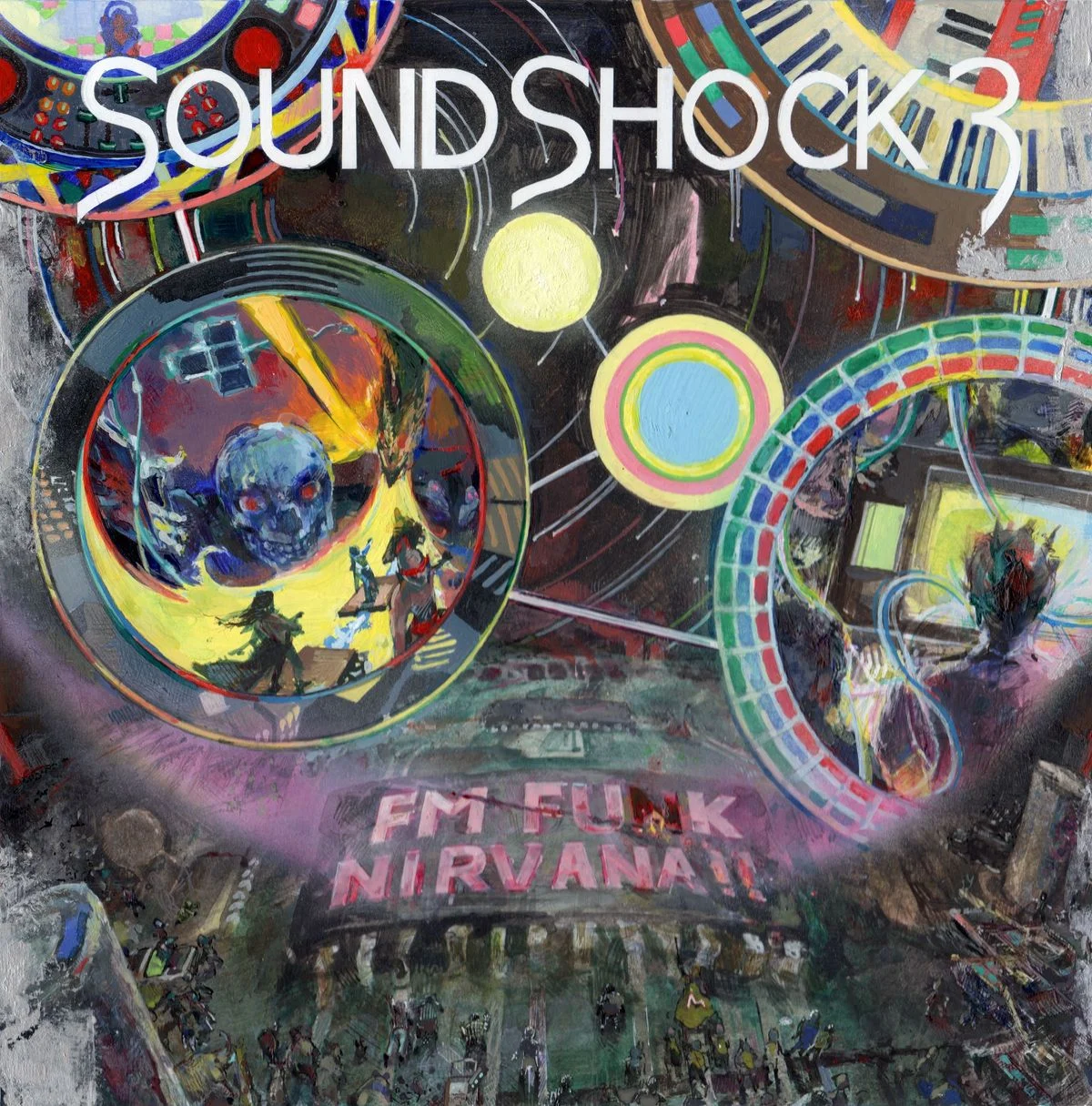
The release of SOUNDSHOCK 3: FM FUNK NIRVANA!! marks a significant milestone in the decade-long journey of a project that has transitioned from a niche compilation into a definitive survey of the global chip music and FM synthesis landscape. Initiated in 2010 through a collaborative effort between the producer known as zinger and the independent music label Ubiktune, the SOUNDSHOCK series has served as a cultural bridge, connecting the technical traditions of the Western demoscene with the rich heritage of Japanese arcade and personal computer music. This third installment represents the culmination of years of community building, hardware preservation, and artistic exchange, highlighting the enduring influence of 1980s and 1990s sound hardware on contemporary electronic composition.
The 2010 Genesis: From Solo Project to Collaborative Vision
The origins of the SOUNDSHOCK series can be traced back to a 2010 proposal from C-jeff, the founder of the Ubiktune label, who initially approached the artist zinger regarding the production of a solo album. However, zinger, who had already established a presence in the tracker and demoscene communities as both a composer and an organizer, envisioned a more expansive project. Rather than a singular artistic statement, the proposal shifted toward a curated compilation that would explore the specific aesthetic of Frequency Modulation (FM) synthesis—a sound signature synonymous with the Sega Mega Drive (Genesis) and Japanese NEC and Sharp computer systems.
This shift in focus was rooted in a lifelong obsession with the audiovisual aesthetics of the 16-bit era. Growing up with titles such as Golden Axe II and Sonic the Hedgehog, zinger’s interest evolved into a deep involvement in the "chip" music scene, eventually leading to the acquisition of obscure Japanese hardware, arcade cabinets, and standalone FM synthesizers. The SOUNDSHOCK project was conceived as a medium to cultivate and expand this realm, providing a platform for artists who shared a similar devotion to these specific, often technically restrictive, sound-generating chips.
Technical Context: The Legacy of FM Synthesis
To understand the significance of the SOUNDSHOCK series, it is necessary to examine the technical foundation upon which it is built. FM synthesis, popularized by the Yamaha Corporation in the 1980s, differs fundamentally from the subtractive synthesis common in Western analog synthesizers of the time. By using one waveform (a modulator) to change the frequency of another (a carrier), FM synthesis allowed for the creation of complex, harmonically rich, and metallic timbres that could mimic bells, brass, and percussion with greater accuracy than previous technologies.
In the gaming world, this technology was embodied in the Yamaha YM2612 (OPN2) chip found in the Sega Mega Drive and the YM2151 (OPM) chip used in countless arcade boards. In Japan, the NEC PC-8801 and PC-9801 series computers utilized similar FM chips, defining the sound of an entire generation of Japanese computer games. While Western composers often focused on the programmable sound generators (PSG) of the Commodore 64 or the sample-based synthesis of the Amiga, their Japanese counterparts were mastering the intricacies of FM operators. The SOUNDSHOCK series sought to unify these two distinct technical lineages, bringing together artists who had mastered these different approaches to digital synthesis.
Bridging the East-West Cultural Divide
One of the most significant achievements of the SOUNDSHOCK series has been its ability to facilitate communication and collaboration between Western and Japanese artists who, for years, operated in relative isolation due to linguistic and geographical barriers. The producer recounts early meetings with Japanese artists such as Ryu Takami and hex125 where, prior to mastering the Japanese language, communication was limited to "name-dropping" specific composers and game titles. This shared vocabulary of niche interests served as the foundation for what would become a robust international community.
The project revealed a surprising symmetry in the interests of these two groups. While Western enthusiasts were enamored with the sleek, FM-driven soundtracks of Japanese developers like Falcom or TechnoSoft, Japanese composers were equally fascinated by the Western demoscene—a subculture focused on pushing computer hardware to its absolute limits to create real-time audiovisual demonstrations. Notable figures such as hally (Haruhisa Tanaka), a prominent researcher and musician in the Japanese chip music scene, demonstrated a profound knowledge of the European demoscene, while legendary composer Keishi Yonao—known for his work on titles like Mad Stalker: Full Metal Forth—expressed a long-standing interest in Western computer culture.
Chronology of Development and Community Integration
The timeline of the SOUNDSHOCK series reflects a steady growth in both scope and technical ambition:
- 2010: Initial discussions between zinger and Ubiktune lead to the cancellation of a solo album in favor of the first SOUNDSHOCK compilation.
- 2011–2012: The release of the early volumes establishes the project’s identity, focusing on FM synthesis and featuring a mix of established game industry veterans and rising stars from the netlabel scene.
- 2013–2014: The series begins to see deeper integration between Japanese and Western artists, with tracklists featuring names like zabutom and Metal alongside Japanese luminaries like Utabi and shogun.
- Present: The release of SOUNDSHOCK 3: FM FUNK NIRVANA!! serves as the latest iteration of this cross-cultural experiment, emphasizing the "funk" and "groove" capabilities of FM hardware.
The series has benefitted from the logistical and creative support of several key figures. Tsuyoshi Shimokura, Megus, Rufus Blacklock, and MmcM have been instrumental in the production and visual identity of the series. Furthermore, the partnership with C-jeff and Ubiktune provided the professional infrastructure necessary to distribute these works to a global audience, elevating the project from a community hobby to a professionally published series of albums.
Broader Impact on the Electronic Music Landscape
The SOUNDSHOCK series arrives at a time when "retro" aesthetics have moved from the periphery to the mainstream of electronic music. However, unlike many projects that merely emulate the 16-bit sound using modern software, SOUNDSHOCK emphasizes the use of authentic hardware and traditional tracking methods. This commitment to technical authenticity has several implications for the broader music industry:
- Hardware Preservation: By showcasing the capabilities of FM chips, the series encourages the maintenance and study of vintage hardware, such as the Yamaha DX series and various vintage computer systems.
- Educational Value: The project serves as an entry point for new listeners and composers to understand the history of digital synthesis and the constraints that shaped the soundtracks of their youth.
- Legitimatization of "Game Music": By presenting these compositions in a high-quality, curated format, SOUNDSHOCK reinforces the idea that video game music and its derivatives are a legitimate form of contemporary art, independent of the games for which they were originally designed.
- Cultural Exchange: The series stands as a successful model for international artistic collaboration, proving that shared technical passions can overcome significant linguistic and cultural hurdles.
Analysis of FM FUNK NIRVANA!! and Future Prospects
The latest release, FM FUNK NIRVANA!!, suggests a stylistic maturation of the series. While earlier volumes focused on the raw power and variety of FM synthesis, this installment leans into the rhythmic and soulful possibilities of the medium. The inclusion of artists such as zabutom and Metal alongside Japanese contributors demonstrates a seamless integration of styles, where the distinction between "Western" and "Japanese" sound design becomes increasingly blurred in favor of a unified "SOUNDSHOCK" aesthetic.
The involvement of hally as a source of inspiration and a conduit to the Japanese community remains a cornerstone of the project’s success. As the chip music scene continues to evolve, the SOUNDSHOCK series provides a blueprint for how niche communities can achieve longevity through curation, mutual respect, and a commitment to technical excellence.
In conclusion, the SOUNDSHOCK series is more than a collection of nostalgia-driven tracks; it is a meticulously documented exploration of a specific era of digital audio technology. Through the efforts of zinger, C-jeff, and a global network of composers, the project has successfully preserved the spirit of the FM synthesis era while pushing it into new, innovative directions. As SOUNDSHOCK 3: FM FUNK NIRVANA!! reaches listeners, it stands as a testament to the power of community and the enduring appeal of the "FM sound." The project not only honors the history of game music but also ensures its continued relevance in the modern digital landscape.