
 Farhan hamdan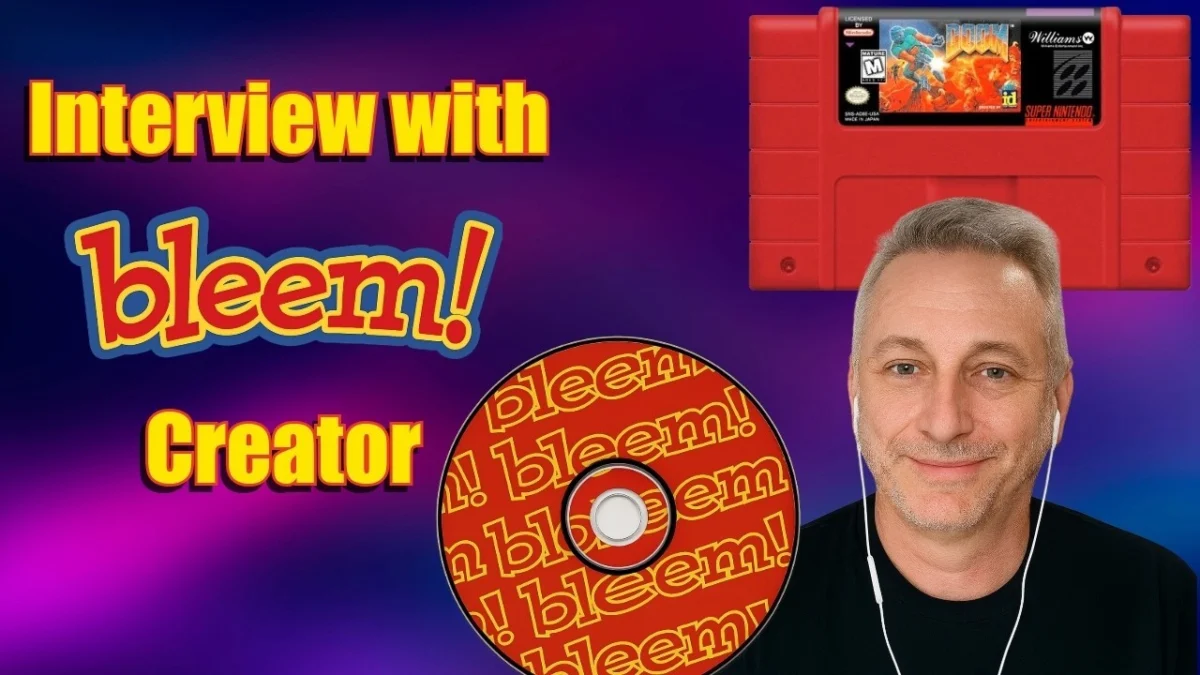
The digital retro gaming community is once again abuzz with renewed interest in the pioneering work of Randy Linden, a legendary figure in software development renowned for his extraordinary feats of optimization. A new interview conducted by Zophar, a long-standing luminary in the emulation scene, with Linden has recently been published, offering fresh insights into the creation of groundbreaking projects such as the commercial PlayStation emulator Bleem! and the seemingly impossible port of Doom to the Super Nintendo Entertainment System (SNES). This interview, following previous discussions with Linden by various outlets, including RetroRGB, underscores the enduring impact of his contributions to gaming history and software engineering.
The Architect of the "Impossible": Randy Linden’s Genesis
Randy Linden carved out a unique niche in the competitive and rapidly evolving video game industry through his unparalleled ability to extract maximum performance from limited hardware. His reputation as a master optimizer was cemented by projects that many in the industry deemed technically unfeasible. Linden’s career trajectory is characterized by a relentless pursuit of efficiency, a deep understanding of low-level programming, and an innovative approach to overcoming significant technical hurdles. His work on Doom for the SNES demonstrated an uncanny knack for pushing hardware to its absolute limits, while Bleem! showcased his capacity for complex reverse engineering and delivering enhanced gaming experiences on consumer-grade personal computers. These achievements collectively positioned him as a visionary whose technical prowess not only challenged industry norms but also set new benchmarks for what was considered possible in software development.
Bleem!: A Revolutionary and Contentious Emulator
Bleem!, launched in 1999 by Bleem Company, emerged as a pivotal moment in the history of commercial emulation. Its core promise was audacious: to allow gamers to play their existing PlayStation (PSX) discs on a standard PC, not only accurately but also with significant graphical enhancements. This was a direct challenge to Sony, the console’s manufacturer, which held a dominant position in the console market.
The Vision and Technical Marvel:
The vision behind Bleem! was to leverage the superior processing power and graphics capabilities of personal computers to elevate the PlayStation gaming experience. While the PlayStation itself was a powerful console for its time, its fixed resolution and graphical limitations became more apparent as PC hardware advanced. Bleem! aimed to transcend these limitations by offering features such as higher resolutions (up to 1600×1200), full-screen anti-aliasing, and anisotropic filtering, which significantly improved the visual fidelity of PSX games. This meant games like Gran Turismo or Metal Gear Solid, originally designed for 240p or 480i displays, could be rendered with crisp, modern aesthetics on a PC monitor.
The true technical marvel of Bleem! was its ability to run effectively on relatively modest PC specifications for the era, famously targeting a Pentium 166 MHz processor with a 3D accelerator card. Achieving this required an extraordinary level of optimization and reverse engineering. Linden and his team had to meticulously understand and replicate the PlayStation’s proprietary hardware architecture, including its MIPS R3000A CPU, Graphics Processing Unit (GPU), Geometry Transformation Engine (GTE), and Sound Processing Unit (SPU). Unlike many emulators that rely on high-level emulation (HLE) or dynamic recompilation, Bleem! implemented a highly optimized combination of techniques, directly translating PlayStation instructions to x86 code and interfacing with PC graphics hardware efficiently. This direct and optimized approach allowed it to run games at playable frame rates without demanding cutting-edge PC components, making it accessible to a wider audience.
Market Reception and Initial Success:
Upon its release, Bleem! generated immense excitement among PC gamers and PlayStation enthusiasts. The prospect of replaying beloved PSX titles with dramatically improved visuals was a compelling proposition. The emulator quickly gained traction, demonstrating the significant market demand for enhanced retro gaming experiences. Its commercial success, however, was short-lived, largely due to the formidable legal challenges mounted by Sony.
The Sony Lawsuits and Their Aftermath:
Sony Corporation viewed Bleem! not merely as a novelty but as a direct threat to its intellectual property rights, its console sales, and its control over the PlayStation ecosystem. The company initiated multiple lawsuits against Bleem Company, primarily alleging trademark infringement, copyright infringement, and unfair competition.
- Trademark Infringement: Sony argued that Bleem Company’s use of PlayStation game screenshots in its advertising and packaging constituted trademark infringement, as it could confuse consumers into believing Bleem! was an authorized Sony product.
- Copyright Infringement: While Bleem! did not contain any Sony-owned code, Sony contended that the act of emulating its hardware and playing its copyrighted games on an unauthorized platform violated its intellectual property rights. This claim ventured into complex legal territory regarding interoperability and reverse engineering.
The legal battles spanned several years and involved multiple courts. In a landmark ruling in 1999, a U.S. District Court initially sided with Bleem!, stating that the emulator did not infringe on Sony’s copyrights and that the use of screenshots in advertising constituted fair use. This decision was a significant victory for Bleem Company and for the broader emulation community, affirming the legality of reverse engineering for interoperability and the fair use of copyrighted material for comparative advertising.
However, the legal struggle was far from over. Sony appealed the decision, and while Bleem Company continued to win on key points regarding copyright and trademark infringement, the sheer financial burden of defending itself against a corporate giant like Sony proved insurmountable. The costs associated with litigation, combined with the uncertainty created by ongoing legal disputes, severely hampered Bleem Company’s ability to market and distribute its product effectively. Despite winning the legal arguments, the economic reality of the situation forced Bleem Company to cease operations in 2001. The case, while not setting definitive legal precedents for all emulation, highlighted the immense power imbalances between large corporations and smaller independent developers in intellectual property disputes.
Bleemcast: A Final Stand on Sega’s Dreamcast:
In a final, audacious move, Bleem Company attempted to pivot its technology to another platform: Sega’s Dreamcast. Released in 2001, Bleemcast was an emulator designed to allow PlayStation games to run on the Dreamcast, a direct competitor to the PlayStation 2. This venture was even more technically challenging, as it involved porting the complex Bleem! emulation layer to a different console architecture, again optimizing it to run efficiently on the Dreamcast’s hardware.
Bleemcast was not a universal emulator; instead, it was released as a series of game-specific discs, each designed to run a select number of popular PlayStation titles with enhanced graphics on the Dreamcast. Titles like Gran Turismo 2, Metal Gear Solid, and Tekken 3 received dedicated Bleemcast versions. This limited release strategy was likely due to the immense development effort required for each game and the ongoing legal pressures. While a technical marvel and a testament to Linden’s programming skill, Bleemcast also faced commercial difficulties, partly due to the Dreamcast’s declining market share and the continued legal shadow cast by Sony. Its existence remains a fascinating footnote in console history, representing a bold cross-platform endeavor that pushed the boundaries of what was considered possible.
Beyond Emulation: The SNES Doom Port

Long before Bleem!, Randy Linden had already achieved legendary status with his work on the Super Nintendo Entertainment System port of id Software’s seminal first-person shooter, Doom, released in 1995. This project is widely regarded as one of the most impressive technical achievements in console porting history, given the severe hardware limitations of the SNES.
The "Impossible" Task:
Doom on PC was known for its fast-paced 3D graphics, intricate level design, and immersive atmosphere, demanding a relatively powerful processor (at least a 486DX/33) and significant RAM. The SNES, by contrast, featured a much slower 16-bit CPU (a Ricoh 5A22 clocked at 3.58 MHz), a limited color palette, and minimal RAM (128 KB of main RAM, 64 KB of video RAM). Crucially, it lacked any dedicated hardware for texture mapping or complex 3D rendering, capabilities that were fundamental to Doom‘s PC engine. Porting such a game to the SNES was considered by many to be an exercise in futility.
Linden’s Genius and Technical Specifics:
Randy Linden, working for Sculptured Software (and later Williams Entertainment), embraced the challenge. His solution involved leveraging the Super FX 2 chip, a co-processor cartridge developed by Argonaut Games, which provided additional processing power, particularly for integer arithmetic and basic 3D operations. However, the Super FX 2 chip alone was not enough; Linden had to implement highly innovative and optimized rendering techniques to translate Doom‘s raycasting engine to the SNES’s tile-based graphics hardware.
Key technical aspects of his approach included:
- Custom Renderer: Linden developed an entirely new rendering engine from scratch, designed specifically for the SNES and Super FX 2. It utilized a fixed-point math implementation for speed and efficiency.
- Reduced Resolution and Frame Rate: To achieve playable performance, the game ran at a lower resolution (typically 256×128 pixels, scaled up) and a variable frame rate, often hovering around 10-15 frames per second, which was still remarkable for the hardware.
- Palette Optimization: The SNES has a 15-bit color palette (32,768 colors), but Doom originally used a 256-color palette. Linden carefully mapped Doom‘s textures and sprites to the SNES’s color limitations, creating a surprisingly faithful visual representation.
- Memory Management: With extremely limited RAM, Linden employed sophisticated memory management techniques to swap data in and out of memory efficiently, ensuring that necessary assets were available when needed without causing significant slowdowns.
- Level Design Compression: The game’s levels were simplified and compressed to fit within the cartridge’s storage limitations, yet they retained the core essence and layout of the original PC maps.
The result was a compromise, certainly, but an astonishing one. While not as fluid or visually rich as the PC version, Doom on SNES was unmistakably Doom. It captured the atmosphere, gameplay, and level design sufficiently to deliver a compelling experience on hardware that should not have been able to run it. This port stands as a testament to Linden’s ability to transcend hardware limitations through sheer programming ingenuity.
The Enduring Legacy of Randy Linden
Randy Linden’s contributions have had a profound and lasting impact on the gaming industry. His work on Bleem! not only pushed the boundaries of commercial emulation but also inadvertently played a role in the ongoing legal discourse surrounding intellectual property, fair use, and reverse engineering in software. While Bleem! ultimately succumbed to legal and financial pressures, its technical achievements and the legal battles it sparked continue to be studied and discussed within the emulation and legal communities. It demonstrated that third-party solutions could offer superior experiences to official hardware, fostering competition and innovation.
His Doom SNES port remains a benchmark for console optimization, showcasing how creative programming can overcome seemingly insurmountable hardware constraints. It inspired a generation of developers and gamers to appreciate the art of low-level optimization and the potential of dedicated hardware add-ons. Linden’s reputation as a "code wizard" or "optimization guru" is well-earned, rooted in a career defined by delivering on promises that others considered impossible.
The Significance of These Interviews
The recent interview with Zophar, along with past discussions by RetroRGB, highlights the continued relevance and fascination with Randy Linden’s work. In an era where digital preservation and the accessibility of classic games are paramount, hearing directly from the pioneers who crafted these experiences provides invaluable historical context. These interviews serve multiple purposes:
- Historical Documentation: They offer first-hand accounts of the technical challenges, creative solutions, and commercial realities faced during the development of iconic software. This is crucial for accurately documenting gaming history.
- Technical Insights: Linden’s explanations of his methodologies and thought processes provide deep technical insights that can inform current and future developers, particularly those working on optimization, emulation, or embedded systems.
- Inspiration: His story serves as an inspiration for aspiring programmers and engineers, demonstrating that ingenuity and persistence can overcome even the most daunting technical obstacles.
- Community Engagement: Platforms like Zophar’s Domain and RetroRGB play a vital role in fostering a community interested in retro gaming, preservation, and the technical underpinnings of classic hardware and software. These interviews are a cornerstone of that engagement, connecting enthusiasts with the creators they admire.
Broader Implications for Retro Gaming and Software Preservation
The narrative surrounding Randy Linden’s work, particularly Bleem!, continues to resonate within the broader discussions about retro gaming and software preservation. The legal precedents, or lack thereof, set by the Sony v. Bleem case continue to influence how commercial entities approach emulation and how courts interpret intellectual property law in the context of interoperability.
Emulation, while often existing in a legal gray area, is widely recognized by historians and enthusiasts as a critical tool for preserving video game history. Without emulators, many classic titles would be lost to time as original hardware degrades and becomes obsolete. Linden’s commercial endeavors with Bleem! demonstrated a pathway for legitimate, enhanced access to older games, pushing the industry to consider how it could better serve the demand for retro content. The ongoing debate between console manufacturers, game developers, and the emulation community regarding the balance between protecting intellectual property and facilitating game preservation remains a complex and evolving issue.
Randy Linden’s legacy is a testament to the power of human ingenuity in the face of technological constraints. His ability to craft software that defied expectations, from the pixelated corridors of Doom on the SNES to the high-resolution worlds of PlayStation games on a PC, cements his place as a true innovator. The ongoing interviews and discussions about his work ensure that his remarkable contributions continue to be celebrated, studied, and understood by new generations of gamers and developers alike. Those interested in delving deeper into his insights are encouraged to explore the recent interview with Zophar, as well as previous discussions with RetroRGB, which are available through various digital platforms.








