Cecilia Chamidah Nur
The Genesis of a Hybrid: From Kickstarter to Akihabara
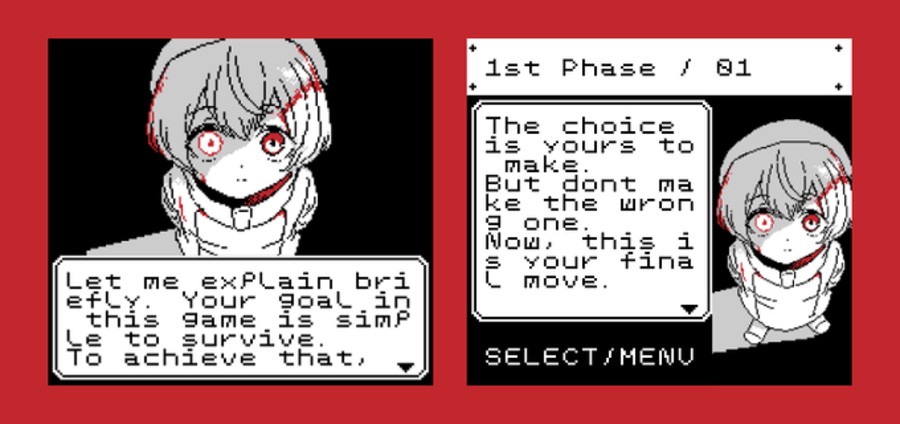
The journey of "Do You Like?/" began on Kickstarter, where developer Nanu successfully secured funding for their ambitious project. Described as a "mystery adventure for Game Boy Color-compatible devices, where AI reveals the truth," the campaign garnered ¥2,036,201, approximately $13,000 USD at the time of funding. This sum, while modest by modern AAA game development standards, represents a considerable success for an independent project targeting a niche market: retro gamers with an openness to experimental technology. The funding goal was met, enabling Nanu to bring their vision to fruition, culminating in the recent retail availability.
The game’s premise is rooted in providing an unprecedented level of personalization for a Game Boy title. Central to this is a custom-designed cartridge equipped with Wi-Fi connectivity. This seemingly anachronistic feature allows the device to communicate with external servers, specifically leveraging the capabilities of OpenAI’s ChatGPT. The integration of a large language model (LLM) like ChatGPT is intended to generate unique narrative scenarios, character dialogues, and branching plotlines in real-time, tailored to each player’s choices and interactions. The Kickstarter campaign explicitly highlighted this feature, stating, "Immerse yourself in a single-player narrative by engaging with AI-driven characters like ‘Luna’ and other NPCs. Utilizing a Wi-Fi-enabled cartridge, the game incorporates advanced AI to bring these characters to life. Your choices and dialogue shape the story in real time, creating limitless branching scenarios for a truly unique experience every time you play." This promise of infinite replayability and bespoke narratives stands in stark contrast to the fixed, pre-scripted experiences typical of Game Boy era titles.
Technical Feat and Narrative Ambition
The technical achievement of embedding Wi-Fi capabilities into a Game Boy Color cartridge and enabling it to interact with a cloud-based AI service cannot be understated. The Game Boy Color, released in 1998, operates with an 8-bit Sharp LR35902 CPU running at 8 MHz, 32 KB of RAM, and a maximum display resolution of 160×144 pixels with 32,768 colors. These specifications are vastly different from the hardware environments typically associated with AI applications, which often demand significant processing power and memory. Nanu’s approach bypasses the Game Boy Color’s inherent limitations by offloading the computational heavy lifting to external servers. The cartridge acts primarily as an input/output device, transmitting player choices and receiving AI-generated text or simple commands, which are then rendered within the Game Boy Color’s display capabilities. This elegant solution allows the retro console to "host" a modern AI experience without needing to perform complex calculations locally.

The game is designed to be playable in both English and Japanese, broadening its appeal across different linguistic markets. The core gameplay loop, while not extensively detailed beyond its AI-driven narrative, is understood to revolve around player choices influencing character interactions and plot progression, characteristic of a mystery adventure genre. The "mystery" aspect implies investigation, deduction, and unraveling a truth that is dynamically constructed by the AI.
Public Reception and Industry Debate
Despite its innovative nature, the announcement and subsequent release of "Do You Like?/" have been met with a predictably mixed reception, particularly within the dedicated retro gaming community and the broader discourse surrounding artificial intelligence in creative fields.
The Appeal of Novelty: For some, the game represents a fascinating experiment, pushing the boundaries of what retro hardware can achieve when paired with modern technological advancements. It offers a glimpse into a future where classic platforms might be revitalized with dynamic, personalized content, potentially extending their lifespan and appeal beyond fixed, nostalgic experiences. The idea of a "truly unique experience every time you play" is a powerful draw, addressing a common desire for replayability in narrative-driven games.
Concerns Over Longevity and Authenticity: A significant portion of the criticism, however, centers on the inherent reliance of "Do You Like?/" on external services. Reddit user HaikuLubber articulated this concern succinctly: "The description never actually says what the gameplay is. What’s supposed to make this game fun? Part of the reason I enjoy retro gaming on the Game Boy is that it just works, even after over 30 years. I have no faith that this game will continue to work after even a few years. Web APIs change. Websites go down." This sentiment highlights a core tenet of retro gaming culture: the desire for self-contained, perpetually functional experiences that are immune to server shutdowns or evolving web standards. The dependence on ChatGPT’s API introduces a potential point of failure that could render the game unplayable in its intended form should Nanu’s servers, OpenAI’s services, or the underlying API structure change significantly over time. This directly contradicts the long-term preservation ethos often associated with physical retro game cartridges.

The AI Ethics Conundrum: Beyond technical longevity, the use of generative AI itself has sparked broader philosophical and ethical debates. Another Reddit comment, "AI-powered", yeah, no suck my ass," encapsulates a more visceral rejection of AI integration. This reaction is indicative of a growing segment of the gaming and creative communities that views generative AI with skepticism, if not outright hostility. Concerns often include:
- Authorship and Creativity: Questions arise about the true authorship of the narrative when an AI generates content. Does the creative credit belong to Nanu, the AI model, or the player whose inputs guide the AI?
- Data Sourcing: The training data for large language models like ChatGPT often includes vast amounts of existing creative works, leading to debates about intellectual property rights and fair compensation for original creators. While not directly addressed by Nanu, this underlying tension permeates discussions about AI-generated content.
- "Soul" and Artistic Intent: Some argue that AI-generated narratives lack the "soul," intentionality, or cohesive artistic vision that a human writer brings to a story, potentially resulting in experiences that are technically unique but emotionally hollow or nonsensical.
Historical Context: AI in Gaming
The integration of AI into video games is not new, but "Do You Like?/" represents a novel application. Historically, AI in games has evolved from simple finite-state machines controlling enemy behaviors in early arcade games (e.g., Pac-Man ghosts) to more complex pathfinding algorithms, decision trees, and scripting in modern titles. Procedural generation, a form of algorithmic content creation, has been used for decades to generate vast game worlds (e.g., Elite, Minecraft, No Man’s Sky). However, these earlier forms of AI and procedural generation typically operate within predefined rules and parameters set by human designers. Generative AI, especially large language models, represents a significant leap, capable of creating novel content (text, images, audio) that was not explicitly programmed or designed, based on patterns learned from massive datasets.
This evolution brings both excitement and apprehension. While AI could potentially democratize content creation and offer unprecedented personalization, it also raises complex questions about the role of human creators and the future of artistic expression.
Implications for the Retro Gaming Market and Beyond
The appearance of "Do You Like?/" in stores like those in Akihabara is more than just a quirky novelty; it carries significant implications for several sectors:
The Retro Gaming Revival: The retro gaming market has seen a resurgence in recent years, driven by nostalgia, collectibility, and a renewed appreciation for classic game design. This has led to the production of new games for old consoles, often released on physical cartridges. "Do You Like?/" pushes this trend further by not just creating new content but by integrating modern interactivity. It might inspire other developers to explore similar hybrid approaches, potentially breathing new life into older platforms by allowing them to interface with contemporary digital ecosystems.
Indie Game Development: For independent developers like Nanu, generative AI offers a powerful tool for overcoming resource limitations. Creating "limitless branching scenarios" with traditional human writing would be prohibitively expensive and time-consuming. AI allows for the generation of vast amounts of narrative content with relatively less direct human labor, potentially enabling smaller teams to create experiences previously only feasible for large studios.
The Future of Narrative Design: If the technical challenges of reliability and the ethical concerns surrounding AI can be adequately addressed, generative AI could fundamentally alter narrative design. Instead of static, branching narratives, players could experience truly dynamic stories that adapt not just to their choices but also to their playing style, emotional state, or even real-world data. This could lead to a new era of highly personalized and immersive storytelling.
Challenges for Preservationists: The reliance on external services poses a dilemma for game preservationists. Traditional preservation efforts focus on archiving the game code and data on the physical medium. For "Do You Like?/", preserving the cartridge alone would not be sufficient; access to the specific AI models and server infrastructure, or a means to emulate them, would be crucial to ensure the full intended experience remains playable for future generations. This adds a new layer of complexity to the already challenging task of digital game preservation.

Conclusion: A Glimpse into the Future’s Past
"Do You Like?/" stands as a fascinating, if polarizing, artifact at the intersection of gaming’s past and its potential future. By daring to integrate generative AI with the humble Game Boy Color, Nanu has created a product that simultaneously celebrates retro aesthetics and embraces cutting-edge technology. While it raises legitimate concerns about longevity, the nature of authorship, and the evolving role of AI in creative endeavors, it undeniably sparks conversation and pushes the boundaries of what is technologically feasible. Its presence on store shelves in Akihabara serves as a tangible symbol of the ongoing dialogue between tradition and innovation within the vibrant world of video games, inviting players to ponder whether they "like" this new, AI-powered frontier.