Farhan hamdan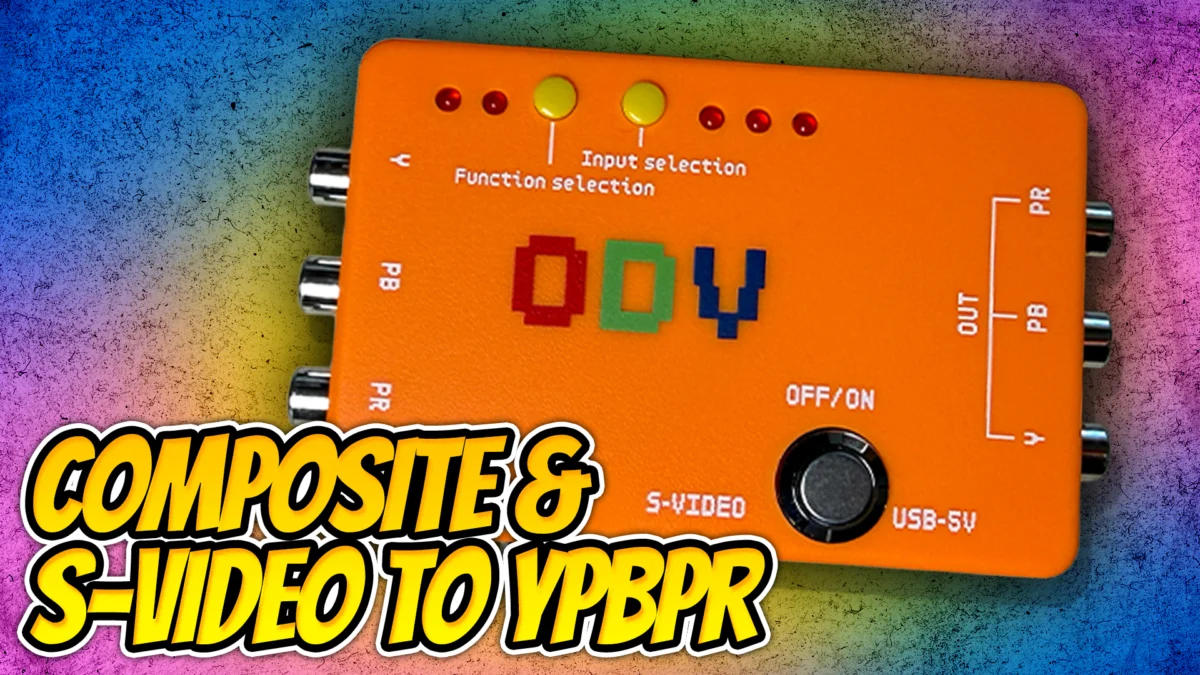
The Mcbazel ODV-II represents a significant entry into the specialized market of retro gaming hardware, serving as a commercial adaptation of the acclaimed open-source Koryuu Transcoder. This device is engineered to convert legacy analog video signals, specifically composite and S-Video, into the higher-fidelity YPbPr Component Video format, while also offering direct component video passthrough. Initial assessments indicate robust performance, positioning the ODV-II as a highly recommended solution for enthusiasts seeking to integrate vintage gaming consoles with modern display technologies.
The Resurgence of Retro Gaming and the Analog Video Conundrum
The past decade has witnessed a substantial resurgence in the popularity of retro video games and consoles. A growing segment of gamers and collectors are dedicated to experiencing classic titles on their original hardware, appreciating the authentic feel and historical significance. However, this pursuit is often met with significant technical challenges when attempting to connect decades-old gaming systems to contemporary televisions. Modern displays are predominantly designed for digital signals via interfaces like HDMI, having largely abandoned or poorly implemented support for analog inputs such as composite, S-Video, and even component video.
Composite video, the most common standard for early consoles like the Nintendo Entertainment System (NES) and the Sega Genesis, combines all video information into a single signal. This often results in a blurry image with color bleeding, primarily due to inherent limitations in signal separation. S-Video, an improvement found on systems like the Super Nintendo Entertainment System (SNES) and Sega Saturn, separates luminance (brightness) from chrominance (color), yielding a sharper image with better color definition. The pinnacle of consumer analog video, YPbPr Component Video, further separates the luminance and two color-difference signals, providing the cleanest and most vibrant analog picture quality achievable, common on systems like the PlayStation 2, original Xbox, and Nintendo Wii.
The fundamental issue arises because modern televisions either lack the physical ports for these older analog signals or, if present, their internal analog-to-digital converters (ADCs) and scalers are often of low quality. This results in poor image fidelity, input lag, or incorrect aspect ratios, significantly detracting from the intended retro gaming experience. Consequently, specialized hardware solutions have emerged to bridge this technological gap, ensuring that classic consoles can be enjoyed with optimal visual quality on today’s displays.
Understanding Video Transcoding: The Role of the ODV-II
A video transcoder, in this context, is a device designed to convert one analog video signal format into another. It does not perform scaling (changing resolution) but rather re-encodes the signal to a different standard while preserving its original resolution and refresh rate. The Mcbazel ODV-II excels in this specific function by taking composite or S-Video inputs and converting them into YPbPr Component Video. This conversion is crucial for several reasons:
- Improved Signal Integrity: By converting to component video, the transcoder leverages a superior analog standard, which is inherently less prone to signal degradation and interference compared to composite or S-Video.
- Compatibility with Advanced Processing: YPbPr Component Video is often the preferred input for high-quality external video scalers, such as those in the RetroTINK series. These scalers can then deinterlace (for 480i signals), upscale, and output the signal via HDMI, providing a pristine, lag-free image suitable for modern HDTVs and monitors.
- Wider Acceptance: While direct composite or S-Video inputs are rare on new TVs, component video inputs, though declining, are still found on a greater number of displays, and crucially, are almost universally supported by professional monitors (PVMs/BVMs) and dedicated video processors favored by enthusiasts.
The ODV-II’s capability to also accept and pass through component video signals means it can serve as a central hub in a retro setup, managing various analog inputs and ensuring a consistent output format for subsequent processing or direct display. The reported strong performance of the ODV-II underscores its efficiency in maintaining signal fidelity during these conversions, which is paramount for preserving the visual nuances of classic games.
The Open-Source Koryuu Project: A Foundation of Community Innovation
The Mcbazel ODV-II is not a proprietary design from the ground up; rather, it is a commercial iteration of the Koryuu Transcoder, an open-source hardware project. The Koryuu project originated from the collaborative efforts of the retro gaming hardware community, driven by a collective desire to create high-quality, accessible solutions for common technical hurdles. Open-source hardware development, much like open-source software, promotes transparency, peer review, and community contribution, leading to robust and well-tested designs.
The philosophy behind Koryuu and similar projects is rooted in empowerment: enabling individuals and smaller manufacturers to produce specialized hardware without prohibitive licensing fees or the need to reverse-engineer existing commercial products. This model fosters rapid innovation, allows for direct feedback from the target user base (retro gamers), and often results in more cost-effective solutions. The Koryuu transcoder’s design files, schematics, and firmware are typically made publicly available, allowing anyone with the technical expertise and resources to build their own unit or, as Mcbazel has done, to produce it commercially. This transparency allows for community validation of the design’s effectiveness and ensures that the core technology is understood and trusted by its users. The project’s development timeline would typically involve initial conceptualization and design by key contributors, followed by prototyping, community testing, and iterative refinements based on user feedback. This collaborative environment ensures that the final design is optimized for the specific needs of the retro gaming demographic.

Mcbazel’s Commercialization: Bridging Open-Source and Market Demand
Mcbazel’s decision to manufacture and distribute their version of the Koryuu Transcoder, the ODV-II, exemplifies a successful commercialization strategy for open-source hardware. This approach allows a proven, community-validated design to reach a much wider audience than it might through individual DIY builds. For Mcbazel, this means leveraging a design that has already undergone extensive testing and refinement by its intended users, reducing R&D costs and ensuring product relevance.
From a business perspective, producing an open-source design allows Mcbazel to focus on manufacturing quality, supply chain efficiency, and distribution, rather than solely on invention. This strategy is particularly effective in niche markets like retro gaming, where the user base is highly knowledgeable and appreciates solutions tailored to their specific needs. Mcbazel’s role involves sourcing components, assembling the units, implementing quality control measures, and establishing a distribution network. The company implicitly communicates a commitment to the retro gaming community by providing an accessible and reliable version of a highly regarded open-source project. This model benefits both the open-source community, by validating and spreading their innovations, and consumers, who gain access to high-quality, affordable products. While specific statements from Mcbazel are not provided, their actions suggest a recognition of the growing market for retro gaming accessories and a strategic alignment with community-driven development.
Performance Analysis and Integration within a Retro Setup
The reported "really well" performance of the Mcbazel ODV-II is crucial for its adoption within the retro gaming ecosystem. For a transcoder, high performance translates to several key attributes:
- Accurate Color Reproduction: The transcoder must faithfully convert color information without shifting hues or introducing artifacts.
- Minimal Signal Degradation: The converted signal should retain as much clarity and detail as the original analog input allows, without introducing noise or blurring.
- Low Latency: Crucially for gaming, the conversion process must introduce negligible input lag. Even a few milliseconds of delay can significantly impact gameplay, especially in fast-paced action or fighting games.
- Reliable Operation: Consistent performance across various source consoles and resolutions (e.g., 240p, 480i, 480p).
The ODV-II’s effectiveness is often maximized when integrated into a larger retro gaming setup. For instance, after composite or S-Video signals are transcoded to YPbPr Component Video by the ODV-II, they can then be fed into a high-quality video scaler like those from the RetroTINK series. RetroTINK devices are renowned for their ability to deinterlace 480i signals, scale various resolutions (240p, 480i, 480p) to modern HDMI standards (e.g., 1080p), and apply advanced video filters, all with extremely low latency. This combination allows for a pristine digital output to an HDTV, preserving the original aspect ratio and pixel perfect clarity. Furthermore, the use of high-quality component cables, such as those from HD Retrovision, ensures that the signal chain from the console to the transcoder and then to the scaler is maintained with minimal loss, contributing to the overall superior visual experience. The ODV-II thus acts as a vital link, preparing legacy signals for optimal processing by subsequent hardware.
A Chronology of Video Signal Evolution and Retro Solutions
The journey of video signal technology for consumer electronics provides essential context for the Mcbazel ODV-II’s relevance:
- 1970s-1980s: Composite Video Dominance. Early home consoles and VCRs universally relied on composite video. While ubiquitous, its inherent limitations in picture quality were soon recognized.
- Early 1990s: S-Video Emerges. With the rise of 16-bit consoles (SNES, Genesis, TurboGrafx-16) and later VCRs/LaserDisc players, S-Video offered a noticeable improvement by separating luminance and chrominance. It became a popular upgrade for enthusiasts.
- Late 1990s-Early 2000s: Component Video Ascends. The advent of DVD players and sixth-generation consoles (PS2, Xbox, GameCube, Dreamcast) brought component video to the forefront. Its ability to deliver progressive scan signals (480p and beyond) made it the gold standard for analog quality.
- Mid-2000s: The Digital Transition. HDMI (High-Definition Multimedia Interface) began its widespread adoption, offering a single cable solution for both digital video and audio. This marked the beginning of the end for analog inputs on consumer televisions.
- 2010s: Analog Obsolescence and the Retro Revival. As HDMI became the sole input on many new TVs, support for composite, S-Video, and even component video dwindled. Simultaneously, the retro gaming community grew, creating a significant demand for solutions to connect old consoles to new displays. This era saw the rise of specialized hardware:
- Scanline Generators: To mimic CRT display characteristics.
- Dedicated Scalers: Devices like the Framemeister and later the RetroTINK line, designed to convert and upscale low-resolution analog signals to HDMI.
- Transcoders: To convert between analog formats, bridging gaps in the signal chain. The Koryuu project emerged within this period, around the mid-to-late 2010s, as a direct response to the need for a high-quality, open-source analog transcoder.
- Early 2020s: Commercialization of Open-Source Solutions. Mcbazel’s ODV-II, alongside other products like their GBS-Control Scaler (another open-source adaptation), signifies a mature phase where community-developed solutions are being brought to market by commercial entities, making them more accessible to the average consumer.
The Broader Implications: Preservation, Accessibility, and the Open-Source Model
The introduction and success of products like the Mcbazel ODV-II carry significant implications for the retro gaming community and beyond:
- Digital Preservation and Accessibility: By enabling classic consoles to connect seamlessly with modern displays, transcoders like the ODV-II contribute directly to the preservation of video game history. They ensure that original hardware, which often provides a unique and authentic experience that emulation cannot fully replicate, remains playable for future generations. This accessibility broadens the appeal of retro gaming, attracting new enthusiasts who might otherwise be deterred by the technical hurdles.
- Validation of the Open-Source Hardware Model: Mcbazel’s commercial success with the ODV-II serves as a powerful testament to the viability and benefits of open-source hardware development. It demonstrates that community-driven innovation can lead to high-quality, market-ready products, fostering a symbiotic relationship between developers, manufacturers, and consumers. This model encourages further collaboration and iterative improvement within the retro gaming hardware space.
- Growth of a Niche Market: The demand for the ODV-II highlights the robust and growing market for specialized retro gaming accessories. This niche economy supports a range of businesses, from hardware manufacturers like Mcbazel and RetroTINK to content creators and reviewers (such as RetroRGB, which promoted the ODV-II), all contributing to a vibrant ecosystem. The continued support for content creators through platforms like Patreon further underscores the community-driven nature of this market.
- Elevating the Retro Gaming Experience: Ultimately, the ODV-II contributes to a higher standard of retro gaming. By delivering cleaner, more stable analog signals, it allows players to experience classic games with a visual fidelity that approaches, and in some cases surpasses, their original presentation on CRT televisions, but on modern displays. This commitment to quality enhances immersion and appreciation for the artistry and engineering of vintage game design.
In conclusion, the Mcbazel ODV-II transcoder stands as a noteworthy device, effectively converting legacy composite and S-Video signals into YPbPr Component Video. Its strong performance, combined with its lineage from the innovative open-source Koryuu project, positions it as an essential tool for retro gaming enthusiasts. This product not only addresses a critical technical challenge but also exemplifies the synergistic relationship between community-driven open-source development and commercial manufacturing, ultimately enriching the experience and ensuring the longevity of classic video games for a growing global audience.