Cecilia Chamidah Nur
Japanese technology firm ZUIKI, known for its niche retro hardware reproductions, has officially unveiled its latest product: the "Vividnode Mobile AI." This announcement puts an end to widespread speculation that the company’s teased "next challenge" would be another retro gaming console, revealing instead a mobile PC specifically designed for advanced, cloud-independent artificial intelligence processing. The reveal, made public on Thursday, March 26, 2026, marks a significant strategic pivot for ZUIKI, moving from its established retro computing niche into the rapidly expanding and highly competitive field of AI-centric personal computing.
The ‘Vividnode Mobile AI’ Revealed: A Focus on Local Processing
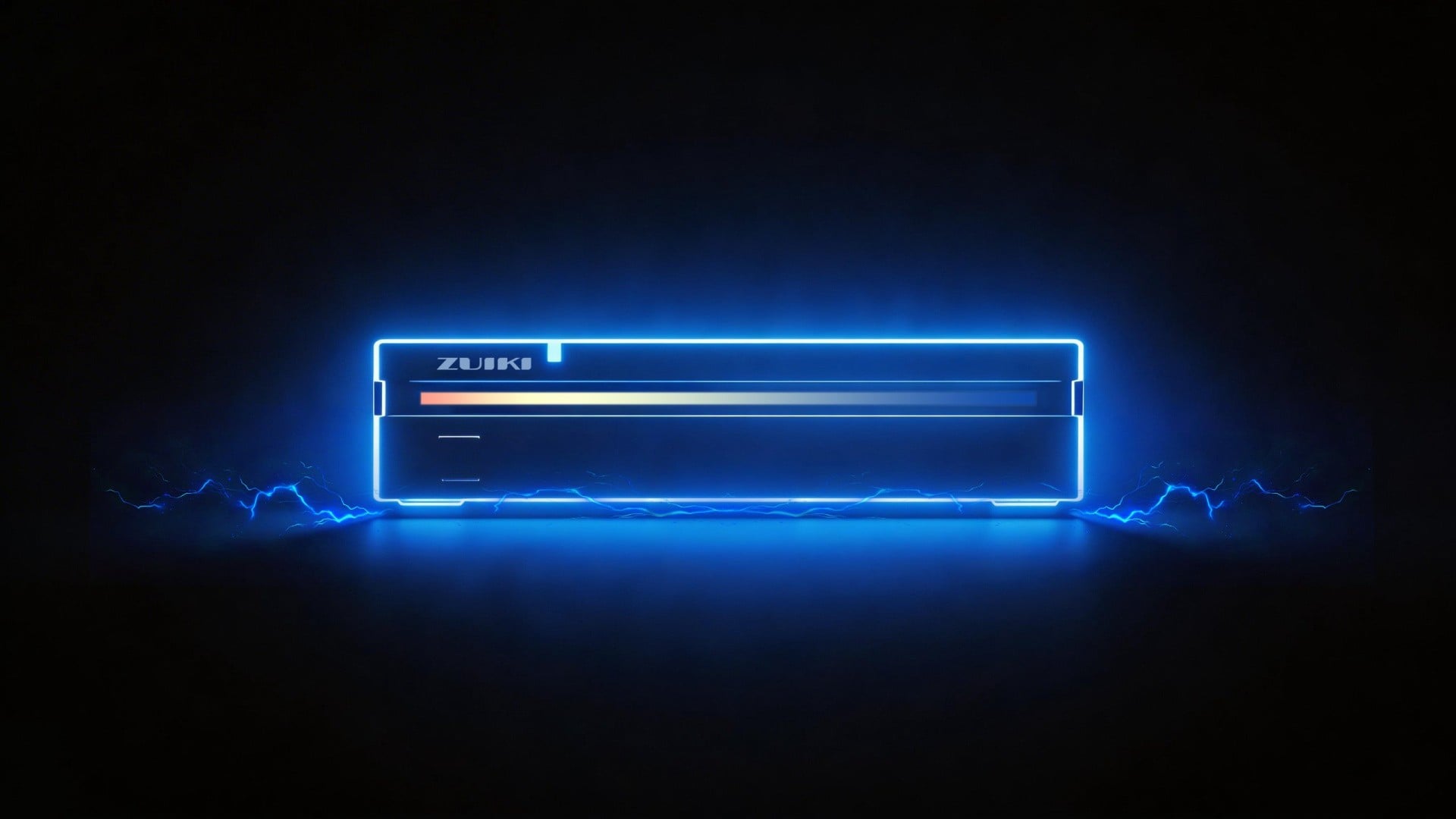
The "Vividnode Mobile AI" is positioned by ZUIKI as a cutting-edge mobile personal computer optimized for next-generation AI processing. Its defining characteristic, as highlighted in the official press release, is its "cloud-independent local AI execution environment." This feature promises to deliver both enhanced security and high-speed processing by performing AI computations directly on the device, rather than relying on external cloud servers.
According to ZUIKI’s public relations statement, translated from Japanese, "In recent years, the use of AI has expanded rapidly, and we are entering an era where individuals routinely use advanced AI. ‘Vividnode Mobile AI’ is a mobile PC optimised for AI processing, developed to accelerate this trend. It features a cloud-independent local AI execution environment, achieving both security and high-speed processing." This declaration underscores ZUIKI’s belief that the future of AI adoption lies in accessible, on-device capabilities, empowering users with greater control over their data and immediate computational power.
The decision to focus on local AI execution aligns with growing industry trends and consumer demands for privacy and reduced latency. As AI models become more sophisticated and data-intensive, the ability to process them directly on a personal device can mitigate concerns related to data sovereignty, compliance, and the inherent risks of transmitting sensitive information over networks to remote servers. Furthermore, local processing eliminates reliance on internet connectivity for core AI functions, making the "Vividnode Mobile AI" potentially valuable in environments with unreliable or no internet access.
The Initial Tease and Speculation: From Retro Dreams to AI Reality
The journey to the "Vividnode Mobile AI" began with a cryptic tease from ZUIKI on Tuesday, March 24, 2026. The company released an image of a mysterious new piece of hardware, hinting at a "next challenge" that was "coming soon." The device, with its distinct upright form factor, immediately drew comparisons to Nintendo’s iconic Wii console. The image, though lacking clear details, appeared to show a front panel with a blue LED and two buttons, further fueling speculation among enthusiasts that ZUIKI might be preparing another retro-inspired console.
Given ZUIKI’s recent history, particularly its successful launch of the X68000 Z micro-console—a miniaturized homage to Sharp’s legendary X68000 home computer—and subsequent announcements of the X68000 Z SUPER and X68000 Z XVI, the retro gaming community was abuzz with excitement. Many hoped for a similar revival of another classic system, perhaps even a new take on a console from the Wii era, albeit with ZUIKI’s unique miniaturization and emulation expertise. The cancellation of a crowdfunding campaign to bring the X68000 Z SUPER and XVI to Western markets had left many fans longing for ZUIKI’s next retro offering, intensifying the speculation surrounding the new teaser.
However, the official reveal two days later swiftly tempered these expectations. While the form factor might indeed evoke the design language of popular home consoles, its function is unequivocally rooted in modern computational demands rather than nostalgic gaming. This pivot, while perhaps disappointing to a segment of ZUIKI’s established fanbase, positions the company in a burgeoning market segment that promises significant growth.

ZUIKI’s Legacy: From Japanese Computing Icons to New Horizons
To understand ZUIKI’s current trajectory, it is essential to appreciate its recent history. The company garnered significant attention for its X68000 Z series. The original Sharp X68000, launched in Japan in 1987, was a powerful home computer renowned for its advanced graphics and sound capabilities, particularly its sprite handling and Yamaha YM2151 sound chip, making it a favorite among game developers. It became a platform for numerous iconic arcade ports and original titles, establishing a cult following.
ZUIKI’s X68000 Z aimed to recreate this experience in a modern, compact form factor, appealing to both nostalgic enthusiasts and collectors. The micro-console was generally well-received for its faithfulness to the original hardware’s aesthetic and its ability to run a wide array of X68000 software. The subsequent announcements of the X68000 Z SUPER and X68000 Z XVI indicated ZUIKI’s commitment to expanding this retro line, promising enhanced specifications and broader compatibility. The unfortunate cancellation of their Western crowdfunding campaign, however, highlighted the challenges of bringing niche Japanese hardware to international markets, even for beloved retro brands. This experience may have influenced ZUIKI’s strategic decision to explore more universally relevant technology segments.
The shift from meticulously recreating vintage hardware to developing a contemporary AI processing unit represents a bold strategic move for ZUIKI. It suggests a recognition of market opportunities beyond its established niche and a desire to leverage its engineering expertise in new, high-growth areas.
The Ascent of the AI PC: Market Context and Driving Factors
The "Vividnode Mobile AI" enters a computing landscape increasingly defined by artificial intelligence. The concept of an "AI PC" has gained substantial traction, signifying a new generation of personal computers equipped with dedicated hardware accelerators—typically Neural Processing Units (NPUs) or specialized AI engines integrated into CPUs and GPUs—designed to efficiently handle AI workloads. This trend is driven by several key factors:
- Performance and Efficiency: Local AI processing can be significantly faster and more energy-efficient for specific tasks compared to offloading everything to the cloud, especially for repetitive or real-time applications. NPUs are optimized for parallel processing tasks common in AI, such as inferencing, image recognition, and natural language processing.
- Privacy and Security: As ZUIKI emphasizes, processing data locally keeps sensitive information on the user’s device, reducing the risk of data breaches, unauthorized access, and privacy violations associated with cloud-based services. This is particularly crucial for enterprise users, healthcare, and individuals handling personal data.
- Reduced Latency and Offline Capability: Eliminating the need to send data to and from cloud servers drastically reduces latency, enabling more responsive AI applications. Furthermore, local AI means functionality isn’t dependent on a persistent internet connection, making devices useful in remote or connectivity-challenged environments.
- Cost Savings: For businesses and heavy users, performing AI tasks locally can reduce ongoing operational costs associated with cloud computing resources, such as data transfer fees and compute time.
- Democratization of AI: By embedding AI capabilities directly into personal devices, AI becomes more accessible to a broader user base, fostering innovation and enabling new types of applications that were previously impractical or too expensive to run.
Major industry players like Intel, AMD, Qualcomm, and Microsoft are heavily invested in the AI PC segment. Intel’s "AI Boost" NPUs in its Core Ultra processors, AMD’s Ryzen AI engines, and Qualcomm’s Snapdragon X Elite platforms are examples of hardware designed to power this new era of computing. Microsoft, in particular, has been a significant proponent, integrating AI features directly into Windows and developing its Copilot AI assistant, which benefits greatly from on-device AI acceleration. Market projections indicate substantial growth in the AI PC sector, with some analysts forecasting that AI PCs will represent a significant percentage of total PC shipments within the next few years, potentially exceeding hundreds of millions of units annually by the end of the decade.
Technical Implications and Potential Applications of Vividnode Mobile AI
While specific technical specifications for the "Vividnode Mobile AI" have not been disclosed, its designation as an "AI PC optimised for AI processing" implies it will feature robust hardware for accelerated computing. This would typically include:
- A powerful NPU (Neural Processing Unit) or dedicated AI accelerator: This component is the heart of an AI PC, handling machine learning tasks efficiently.
- High-performance CPU and GPU: To support general computing tasks and graphics-intensive AI applications.
- Ample RAM: AI models often require significant memory, especially for larger language models or complex image processing.
- Fast storage (SSD): For quick loading of AI models and data.
- Optimized software stack: Drivers and frameworks tailored for the AI hardware to maximize performance.
The "cloud-independent local AI execution environment" suggests a focus on applications that benefit most from on-device processing. These could include:

- Generative AI: Running local large language models (LLMs) for text generation, summarization, and translation without sending data to external servers.
- Advanced Image and Video Editing: Real-time AI-powered upscaling, denoising, object removal, style transfer, and content generation.
- Enhanced Security and Privacy Tools: On-device biometric authentication, anomaly detection, and data encryption.
- Personalized Assistants: More intelligent and context-aware virtual assistants that learn from user data locally.
- Developer Workloads: Providing a powerful portable platform for AI developers to train and deploy smaller models or test larger ones.
- Voice and Speech Recognition: Highly accurate and real-time transcription and command processing without cloud reliance.
The "Vividnode Mobile AI" could find appeal among professionals dealing with sensitive data, creative professionals requiring high-speed local processing, and developers looking for a portable AI development platform.
Broader Impact and Future Outlook
ZUIKI’s entry into the AI PC market with the "Vividnode Mobile AI" underscores a broader industry shift towards edge computing and distributed AI. While cloud AI will continue to play a crucial role for massive datasets and complex training, the increasing capability of on-device AI empowers users with greater autonomy, privacy, and responsiveness.
The "Vividnode Mobile AI" represents ZUIKI’s adaptation to the evolving technological landscape. While it may not fulfill the retro dreams of some fans, it demonstrates the company’s commitment to innovation and its willingness to compete in cutting-edge segments. The success of the "Vividnode Mobile AI" will depend not only on its technical prowess but also on its pricing, software ecosystem, and ZUIKI’s ability to effectively market its unique "cloud-independent" value proposition in a crowded market dominated by established tech giants.
As AI continues to integrate more deeply into daily life, devices like the "Vividnode Mobile AI" are poised to play a pivotal role in shaping how individuals interact with and leverage artificial intelligence, marking a significant step towards a future where powerful AI capabilities are truly personal and locally controlled. ZUIKI’s "next challenge" is indeed ambitious, aiming to carve out a niche in a market that could redefine personal computing for decades to come.