Jia Lissa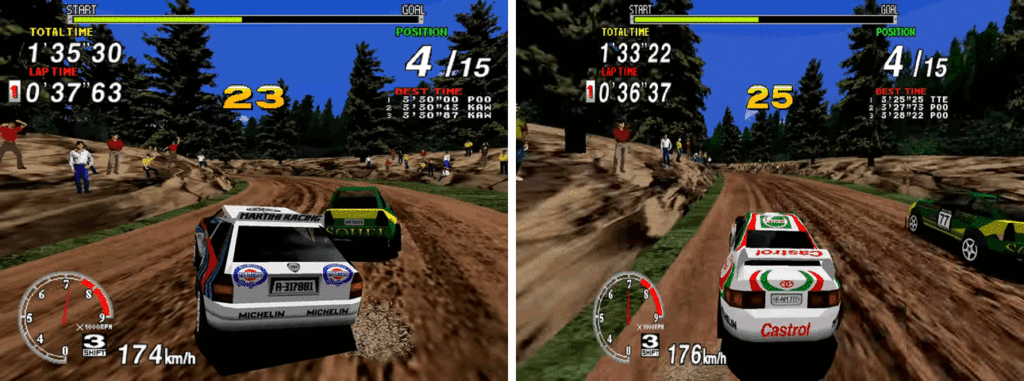
The mid-1990s represented a transformative era for the global interactive entertainment industry, characterized by a fierce technological arms race between Sega and Namco in the arcade sector. While the home console war between Sega and Nintendo captured the public imagination, the real frontier of innovation was located in the smoky, neon-lit corridors of amusement centers. It was here that 1995’s Sega Rally Championship emerged, not merely as another racing title, but as a definitive masterclass in 3D game design that would reshape the racing genre for decades to come. Developed by Sega’s AM3 division, the project combined bleeding-edge hardware, unorthodox creative leadership, and a relentless pursuit of "emotion design" to create a simulator that felt as visceral as the real-world sport it emulated.
The Genesis of 3D Innovation and the Model 2 Era
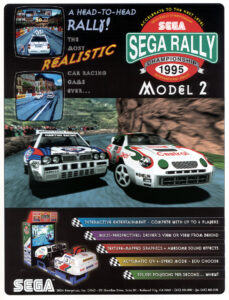
The transition from 2D sprite-based graphics to 3D polygons in the early 1990s was a seismic shift for the coin-op business. Sega had already established a foothold with the Model 1 hardware, which powered hits like Virtua Racing (1992) and Virtua Fighter (1993). However, the arrival of the Model 2 arcade board—a collaborative effort between Sega and GE Aerospace—marked the beginning of a new standard in visual fidelity. The Model 2 was capable of pushing approximately 500,000 polygons per second, a nearly threefold increase over its predecessor. More importantly, it introduced advanced features such as texture mapping, filtering, and anti-aliasing, which allowed developers to move away from flat-shaded shapes toward realistic, textured environments.
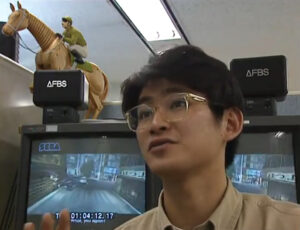
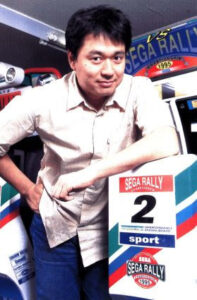
This technological leap coincided with the rise of Tetsuya Mizuguchi, a young visionary who had joined Sega in 1990. Mizuguchi was not a traditional programmer; his background was in media and aesthetics. He initially worked under Hisashi Suzuki in the R&D department, focusing on high-end simulators like the AS-1. Mizuguchi’s philosophy was rooted in "taikan" or body sensation games—experiences that moved the player physically and emotionally. When Sega decided to form a new team within the AM3 lab to leverage the Model 2’s power, Mizuguchi was appointed as producer, despite his lack of traditional coding experience. His goal was to move beyond simple entertainment and create "the future of entertainment."
Building the Emotion Design Lab
To realize his vision, Mizuguchi assembled a team of 12 young developers, many of whom were in their twenties and lacked significant industry experience. However, the team gained a critical asset in Kenji Sasaki, who joined Sega after a successful stint at Namco. Sasaki had served as the chief graphic designer for Ridge Racer, the very game that was currently Sega’s primary rival in the arcade market. Sasaki’s expertise in 3D data creation and his admiration for Sega’s "scrappy" image made him the ideal director for the project.
The leadership trio was completed by Sohei Yamamoto, an AM3 veteran with a background in mechanical design for motion cabinets. Yamamoto’s programming genius proved essential in navigating the "temperamental" nature of the Model 2 hardware, which, while powerful, lacked support for features like Gouraud shading and had limited texture memory. Together, this group formed what Mizuguchi called the "Emotion Design Lab," a unit dedicated to researching how digital media could evoke the same emotional response as cinema.
From Pacific Coast to the World Rally Stage
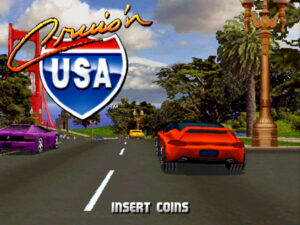
The project initially carried the working title Rally California. The team’s original concept was a cross-country race across the United States, inspired by the film Cannonball Run. However, the announcement of Midway’s Cruis’n USA in 1994 forced a radical pivot. Realizing their concept was too similar to Midway’s, and acknowledging the technical difficulty of rendering thousands of miles of unique scenery, the team looked toward Europe.
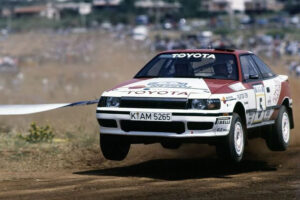
During a scouting trip to Sega’s European offices, Mizuguchi discovered a deep-seated passion for the World Rally Championship (WRC). Unlike NASCAR, which was the focus of AM2’s Daytona USA, rally racing involved varied terrain, tight off-road circuits, and a unique relationship between the driver and the environment. This became the project’s new North Star. The team established three core tenets for the design:
- High-fidelity 3D graphics that felt "warm" and natural rather than cold and urban.
- Distinct handling characteristics based on road surfaces (gravel, mud, asphalt).
- Immersive audio that utilized navigator cues and realistic engine sounds.
To ensure authenticity, the team embarked on a 1,200-mile research trip across the Western United States, including Yosemite National Park and the California coastline. They took over 4,000 photographs and hours of video footage to use as texture references. This trip was instrumental in moving the game away from "Japanese-looking" landscapes toward a global aesthetic that would appeal to international audiences.
Technical Innovations and Licensing Breakthroughs
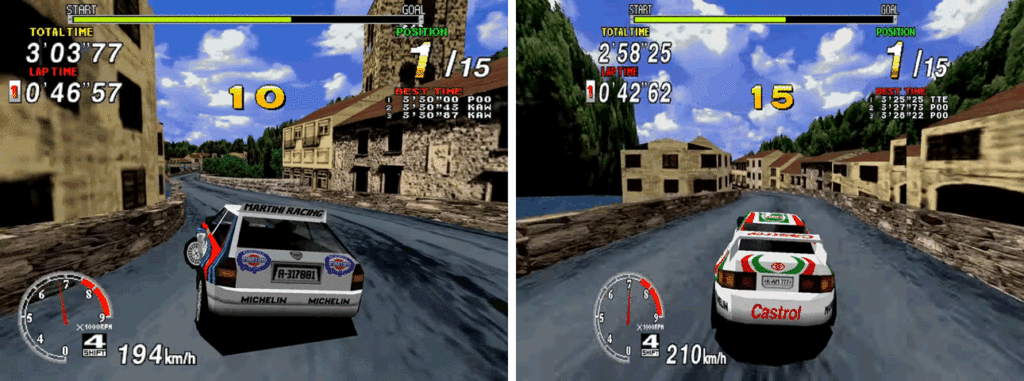
Sega Rally Championship was a pioneer in several technical aspects that are now industry standards. One of the most significant was the introduction of surface-dependent physics. For the first time in a major arcade racer, the car’s handling changed dynamically based on whether it was on tarmac or loose gravel. This required a sophisticated understanding of drifting mechanics. Sasaki and Yamamoto worked to ensure that while the game felt realistic, it remained accessible to novices. They intentionally avoided punishing crashes to keep the "flow" of the race intact.
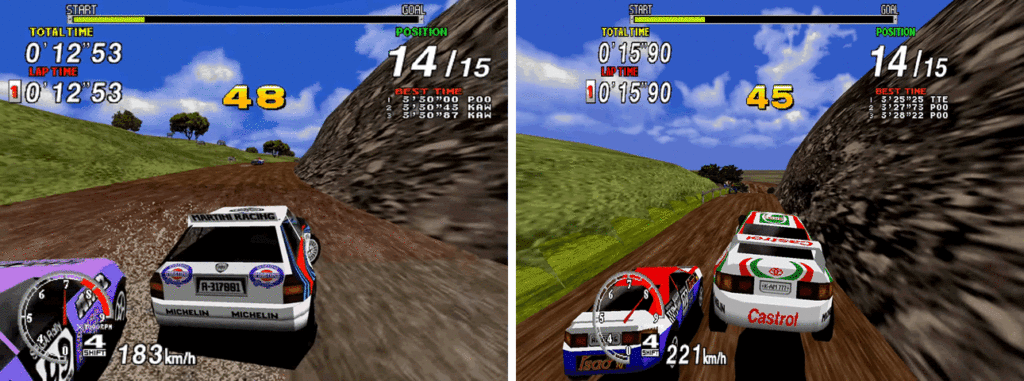
The game also marked a significant milestone in automotive licensing. Mizuguchi was determined to include the Toyota Celica ST205 and the Lancia Delta HF Integrale—two iconic rally cars that had never faced each other in a video game. Obtaining these licenses was a Herculean task. Toyota executives were initially skeptical, viewing video games as a distraction rather than a marketing tool. However, after seeing the high-fidelity 3D models Mizuguchi presented, they were stunned by the realism. Fiat (the parent company of Lancia) followed suit, eventually granting Sega the rights to use the cars and their official sponsors without any licensing fees—a testament to the game’s visual quality.
The Sound of the Rally: Mitsuyoshi’s Sonic Identity
The audio experience of Sega Rally was just as vital as its visuals. Takenobu Mitsuyoshi, the composer behind Daytona USA, was tasked with creating the soundtrack. Mitsuyoshi utilized the improved sampling capabilities of the Model 2 to include longer vocal phrases and more complex arrangements. The game’s "Game Over, YEAH!" jingle became an instant piece of gaming folklore, designed to alleviate the frustration of a lost race and encourage players to insert another coin.
Beyond the music, the team sought absolute realism in sound effects. They recorded actual rally cars at the Maruwa Autoland Nasu dirt track, capturing engine idles, revs, and the sound of gravel splashing against the chassis. These sounds were then integrated with the "Active Shock Generator" (ASG), a proprietary system in the arcade cabinet that used audio frequencies to create physical vibrations in the seat and steering wheel, providing a primitive but effective form of haptic feedback.
Arcade Launch and the Saturn Miracle
Sega Rally Championship debuted in Japanese arcades in February 1995. It was offered in three formats: a standard upright cabinet, a "Twin" unit for two-player competition, and a high-end "Deluxe" cabinet featuring a mini-Celica shell with motion capabilities. A fourth, ultra-exclusive "Special Stage" version was created for Sega’s Joypolis theme parks, featuring full-sized Toyota Celicas mounted on three-axis motion platforms.
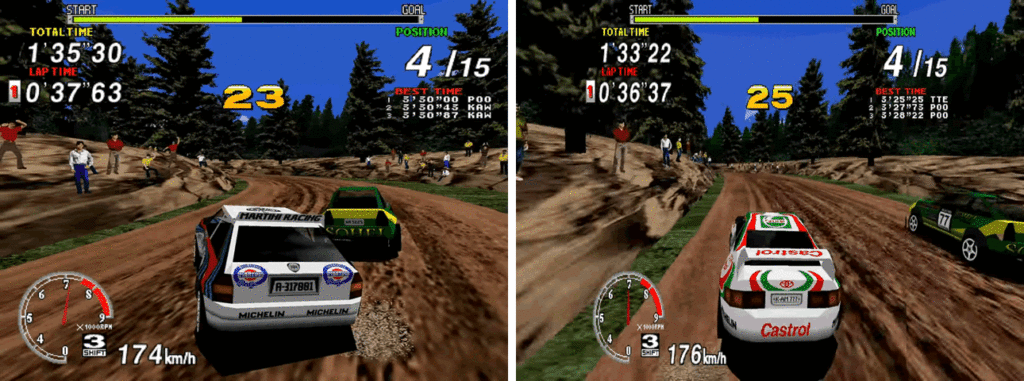
The game was a massive success, selling approximately 12,000 units and revitalizing interest in the rally genre. However, its greatest challenge lay ahead: the home port. The Sega Saturn, while powerful, was not designed to handle the Model 2’s high-polygon throughput. Many industry observers believed a faithful port was impossible.
The 1996 Saturn release proved the doubters wrong. Although it ran at a lower resolution and frame rate (30fps vs. the arcade’s 60fps), AM3 managed to preserve the game’s core physics and handling. The Saturn version even expanded on the original by adding a "Time Attack" mode, a ghost car feature, and an unlockable Lancia Stratos. This port became a "killer app" for the Saturn, demonstrating that the console could compete with the Sony PlayStation’s Ridge Racer.
Broader Impact and Historical Significance
The implications of Sega Rally Championship extended far beyond Sega’s bottom line. The game’s focus on surface physics and drifting served as the blueprint for future racing franchises, most notably Codemasters’ Colin McRae Rally. Guy Wilday, the producer of the McRae series, openly acknowledged that the handling in Sega Rally was the foundation upon which their realistic simulations were built.
For Tetsuya Mizuguchi, the game was the launchpad for a legendary career. The success of Sega Rally allowed him to form AM Annex, which would eventually become United Game Artists. He would go on to create genre-defying titles like Rez and Space Channel 5, carrying the "emotion design" philosophy he honed during the development of Sega Rally into the 21st century.
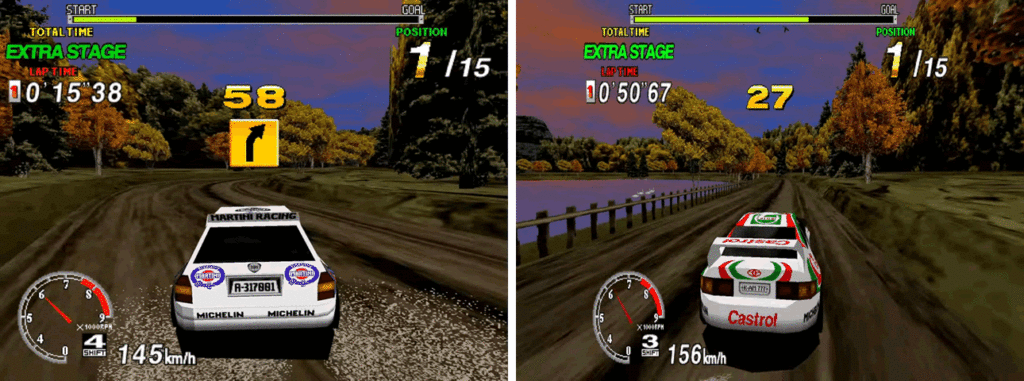
Today, Sega Rally Championship is remembered as a pinnacle of the 32-bit era. It represented a moment when technology and creativity aligned to turn a niche motorsport into a global gaming phenomenon. By prioritizing the "feeling" of the drive over mere statistics, AM3 created a timeless experience that remains a benchmark for arcade racing quality. The game’s legacy persists in the DNA of every modern racer that dares to take the driver off the pavement and into the dirt.