Chalid Lutfie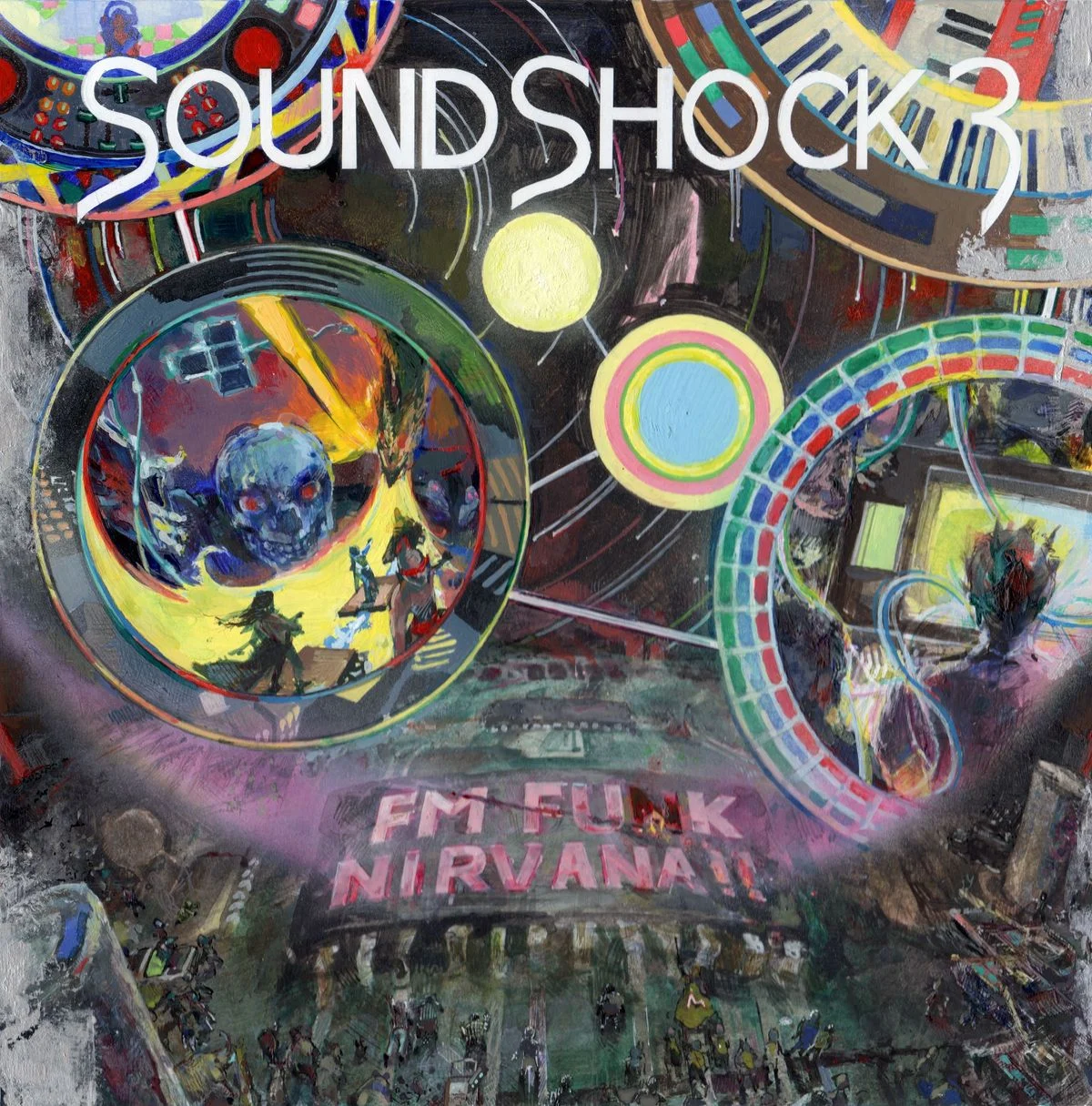
The digital music landscape has witnessed a significant revival of retro-aesthetic synthesis, a movement spearheaded by the SOUNDSHOCK series and its latest iteration, SOUNDSHOCK 3: FM FUNK NIRVANA!!. Since its inception in 2010, the project has evolved from a conceptual collaboration between the creative producer known as Zinger and the independent record label Ubiktune into a definitive anthology of modern FM synthesis. This initiative has successfully bridged the historical and cultural divide between Western computer subcultures and the Japanese video game music industry. By synthesizing the technical precision of the European demoscene with the melodic sensibilities of Japanese arcade and home console history, the series has established a new benchmark for contemporary chiptune and electronic music production.
The Genesis of a Collaborative Vision
The origins of the SOUNDSHOCK series can be traced back to 2010, a period when the chiptune movement was beginning to transition from a niche underground community into a more organized global phenomenon. C-jeff, the founder of the Ubiktune label, initially approached the artist Zinger with a proposal for a solo album. However, Zinger proposed a broader, more ambitious project: a compilation that would serve as a tribute to the Frequency Modulation (FM) synthesis sound that defined the 16-bit era of gaming.
Zinger’s vision was rooted in a lifelong engagement with the aesthetics of the 1980s and 1990s. This fascination was catalyzed by early exposure to the Sega Mega Drive (Genesis) and iconic titles such as Golden Axe II and Sonic the Hedgehog. These games utilized the Yamaha YM2612 sound chip, a hardware component that became synonymous with the gritty, metallic, and funk-driven soundtracks of the era. This early exposure led to Zinger’s deeper involvement in the tracker and demoscene communities—subcultures dedicated to pushing the technical limits of computer hardware to create real-time audiovisual art. Over a period of fifteen years, this personal obsession expanded into a rigorous exploration of obscure Japanese computer systems, arcade hardware, and professional-grade FM synthesizers, providing the technical foundation for what would eventually become SOUNDSHOCK.
Cultural Synthesis: The Demoscene Meets Japanese Game Music
One of the most significant achievements of the SOUNDSHOCK series is its role as a cultural bridge. Historically, the Western computer music scene and the Japanese video game music scene operated in relative isolation, despite sharing similar technical constraints. In the West, the demoscene flourished on platforms like the Commodore 64 and the Amiga, while in Japan, composers were mastering the FM synthesis capabilities of the NEC PC-8801, PC-9801, and the Sharp X68000.
The series founder noted that early attempts to communicate with Japanese counterparts were often hampered by language barriers, yet a shared technical vocabulary allowed for deep mutual understanding. Key figures such as Ryu Takami and the artist known as hex125 were instrumental in these early exchanges. By referencing specific composers and hardware configurations, these artists were able to establish a common ground that transcended linguistics.
This convergence was further solidified through interactions with Hally (Haruhisa Tanaka), a prominent figure in the Japanese chiptune community and an expert on the history of programmable sound generators (PSG) and FM synthesis. Hally’s deep knowledge of the Western demoscene complemented the Western interest in Japanese game centers and hardware. This mutual respect paved the way for legendary Japanese composers, such as Keishi Yonao—known for his work on titles like Asuka 120% and various PC-98 soundtracks—to collaborate with Western artists like Zabutom and Metal. This integration represented a landmark moment in the "doujin" (independent) music world, proving that the aesthetic values of the 16-bit era were a universal language.
Technical Specifications and Hardware Significance
To understand the impact of the SOUNDSHOCK series, one must analyze the technical significance of Frequency Modulation synthesis. Unlike the subtractive synthesis common in many analog synthesizers, FM synthesis generates complex timbres by modulating the frequency of one waveform (the carrier) with another (the modulator). This method, pioneered by John Chowning and popularized by Yamaha’s DX7 and subsequent sound chips, allowed for the creation of realistic bell-like tones, sharp brass, and deep, percussive basslines that were previously impossible on home hardware.
The SOUNDSHOCK project specifically celebrates the hardware of the late 1980s and early 1990s. The series focuses on the sonic signatures of several key Yamaha chips:
- YM2151 (OPM): The first single-chip FM synthesizer, widely used in arcade cabinets and the Sharp X68000.
- YM2612 (OPN2): The heart of the Sega Mega Drive, known for its distinct "crunchy" distortion and six FM channels.
- YM2608 (OPNA): Found in the NEC PC-8801 and PC-9801 series, featuring six FM channels, six rhythm channels, and an ADPCM channel for high-quality samples.
By requiring or encouraging artists to work within the constraints of these specific chips—or at least to emulate their characteristics—the SOUNDSHOCK series ensures a cohesive aesthetic that serves as both a historical preservation of sound and a modern expansion of the genre.
Chronology of the Series and Release Milestones
The development of the SOUNDSHOCK series follows a clear trajectory of increasing complexity and international participation.
- 2010: The Conceptual Phase. Zinger and C-jeff formalize the partnership. The objective is set to create a high-fidelity compilation that moves beyond simple "chiptune" tropes into the realm of professional "FM Funk."
- 2011–2012: SOUNDSHOCK 1 & 2. The first two volumes establish the series’ reputation. They feature a mix of established demoscene veterans and rising stars in the independent music scene. These releases help define the "Ubiktune sound"—a blend of progressive structures, jazz-fusion influences, and retro hardware limitations.
- 2013–2015: Expansion and Networking. During this period, the organizers deepened their ties with the Japanese community. Collaborative efforts with Hally and the Kamishimo Records circle led to a broader roster of contributors.
- Present: SOUNDSHOCK 3: FM FUNK NIRVANA!!. The third installment represents the culmination of over a decade of networking and technical refinement. It features a massive tracklist including contributions from Shogun, Utabi, MmcM, and Rufus Blacklock, alongside the core team of Zinger and C-jeff.
The Role of Ubiktune in the Modern Chiptune Ecosystem
The success of the SOUNDSHOCK series is inextricably linked to the operational excellence of Ubiktune. Founded by C-jeff, Ubiktune has positioned itself as more than just a record label; it is a platform for the advancement of music created via technological constraints. In an era where digital distribution is dominated by high-fidelity streaming, Ubiktune has carved out a niche by emphasizing the artistic value of low-fidelity and hardware-specific production.
The label’s commitment to high production standards has helped elevate chiptune from a hobbyist pursuit to a recognized form of contemporary electronic music. The involvement of professional designers like Tsuyoshi Shimokura and Megus in the visual and structural aspects of the series further underscores the professional journalistic standard the label maintains. This professionalization has attracted mainstream attention and has influenced the soundtracks of modern "indie" games, which often look to the SOUNDSHOCK series as a reference point for authentic FM synthesis.
Broader Impact and Industry Implications
The implications of the SOUNDSHOCK series extend beyond the immediate community of chiptune enthusiasts. It serves as a case study in the preservation of digital culture. As the original hardware—such as the PC-98 and vintage arcade boards—becomes increasingly rare and difficult to maintain, projects like SOUNDSHOCK ensure that the unique "voice" of these machines remains relevant to new generations of composers.
Furthermore, the series highlights the importance of international collaboration in the digital age. By breaking down the barriers between the Western demoscene and Japanese game music, the project has fostered a global exchange of techniques and creative philosophies. This has led to a cross-pollination of styles; Western "tracker" music has become more melodic and harmonically complex, while Japanese "doujin" music has adopted some of the aggressive, technical sound design prevalent in the European scene.
From an industry perspective, the series demonstrates the viable market for niche, high-quality physical and digital releases. The demand for SOUNDSHOCK 3: FM FUNK NIRVANA!! indicates a robust interest in "boutique" music projects that offer a curated experience, complete with detailed liner notes and high-quality artwork. This model provides a blueprint for other independent labels looking to cultivate dedicated communities around specific musical or technical themes.
Conclusion and Future Outlook
SOUNDSHOCK 3: FM FUNK NIRVANA!! stands as a testament to the enduring power of FM synthesis and the strength of the community that surrounds it. What began as a personal passion project for Zinger has grown into a significant cultural artifact that documents a decade of global collaboration. Through the support of C-jeff and Ubiktune, and the inspiration provided by pioneers like Hally and Keishi Yonao, the series has successfully mapped the "depths of those worlds" that Zinger first explored as a child.
As the series moves forward, it is likely to continue its role as a vanguard for the FM synthesis revival. The fusion of diverse talents—from the technical wizards of the Western demoscene to the legendary composers of Japan’s golden age of gaming—ensures that the realm of SOUNDSHOCK will continue to expand, cultivate, and inspire for years to come. The series not only honors the history of video game music but also actively shapes its future, proving that the sounds of the past are a vital and vibrant component of the modern musical landscape.