
 Farhan hamdan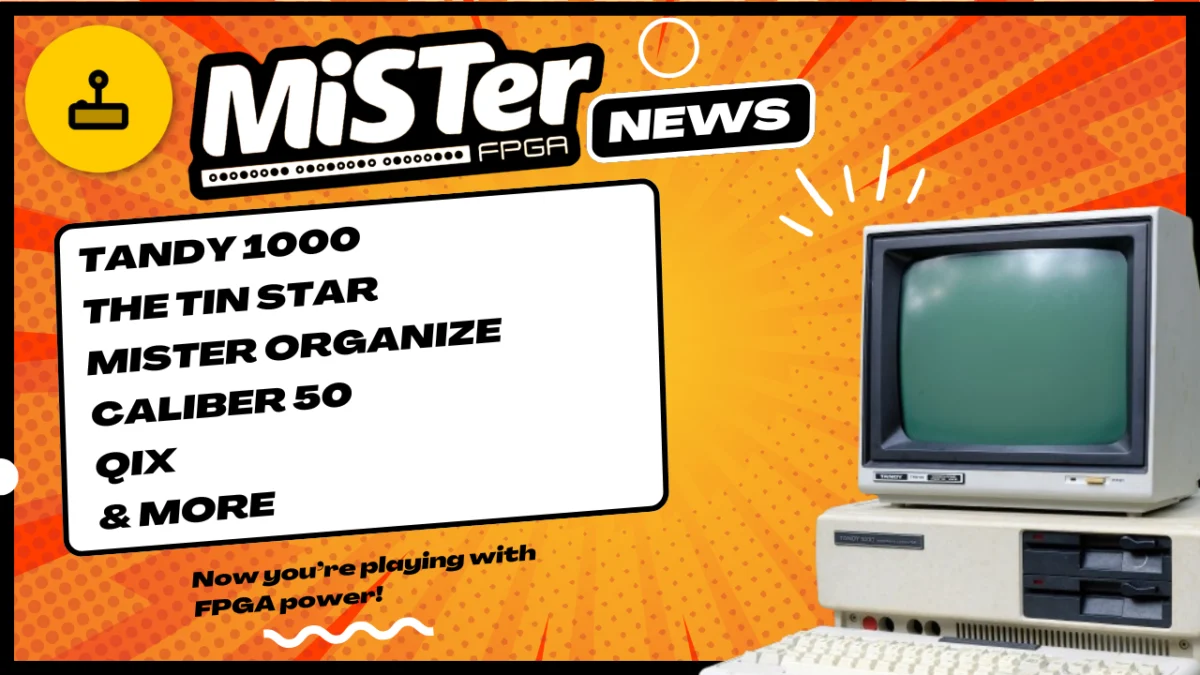
The MiSTer FPGA platform, a cornerstone for retro gaming and computing enthusiasts seeking hardware-accurate emulation, has recently undergone a substantial series of updates, signaling robust ongoing development and a deepening commitment to historical preservation. These advancements span critical areas, including the separation of historically significant computer cores, the introduction of new arcade game cores, extensive enhancements to existing platforms, and significant upgrades to the suite of utility tools that manage the MiSTer experience. The cumulative effect of these updates reinforces MiSTer’s position as a premier solution for digital heritage, providing unparalleled accuracy and functionality across a diverse range of classic systems.
Understanding the MiSTer FPGA Project
For those unfamiliar, MiSTer FPGA (Field-Programmable Gate Array) is an open-source project that utilizes an FPGA chip to re-create the original hardware of classic computers and arcade machines at a fundamental, gate-level. Unlike software emulation, which simulates the behavior of hardware, FPGA implementation is the hardware, configured to mimic the original chips with exceptional fidelity. This approach largely eliminates the latency, timing issues, and inaccuracies often associated with software emulators, offering an experience remarkably close to playing on original systems. The MiSTer platform is driven by a dedicated global community of volunteer developers, engineers, and enthusiasts who contribute to the development of new cores (the FPGA configurations for specific systems), improve existing ones, and create essential utilities. This collaborative spirit ensures continuous innovation and expansion of the platform’s capabilities.
Key Utility Enhancements Streamline User Experience
Several critical utility tools have received significant updates, enhancing the overall user experience and simplifying the management of the MiSTer FPGA system. These tools are vital for maintaining a comprehensive and organized retro gaming library.
Downloader 2.4 Unveils New Features
The MiSTer Downloader utility, a crucial tool for acquiring and updating cores, firmware, and game ROMs, has advanced to version 2.4. This iteration introduces four significant new features designed to improve efficiency and broaden functionality. While specific details on these features would typically be found in release notes, the emphasis on "new features" suggests improvements aimed at more streamlined content acquisition, better error handling, or expanded compatibility with various sources. Such updates are essential for a platform that relies heavily on regular content synchronization, ensuring users can easily keep their systems current with the latest developments from the community. The continuous refinement of tools like Downloader reflects the developers’ commitment to not only creating accurate cores but also making them accessible and manageable for the end-user.
MiSTer Organize’s March Update Bolsters Arcade Management
The MiSTer Organize project released its anticipated March update, bringing substantial improvements to arcade game management. This month’s highlight is the arrival of comprehensive Arcade DATs, including MiSTer_Arcade, MiSTer_Arcade_HBMAME, and MiSTer_Arcade_MAME. These DAT files are critical for accurately verifying and managing arcade ROM sets, ensuring that users have the correct versions required by the various MiSTer arcade cores. The inclusion of DATs from prominent contributors like MiSTer-devel, Jotego, Coin-Op Collection, Arcade Offset, Ongo Gablogian, and Blackwine NeoGeo MiSTer signifies a collaborative effort to consolidate and standardize arcade ROM management across the platform. This is particularly valuable given the complex and often fragmented nature of arcade ROM sets. The update also highlighted important RomVault settings, underscoring the necessity of proper ROM management for optimal performance and compatibility. For users with extensive arcade libraries, these organizational tools are indispensable, transforming a potentially chaotic collection into a well-structured and easily maintainable archive.
Update All 2.6 Release Enhances System Maintenance
The "Update All" script, a cornerstone for routine MiSTer system maintenance, has been upgraded to version 2.6. This utility is indispensable for keeping the MiSTer firmware, cores, and various scripts synchronized with the latest community releases. The improvements in version 2.6 likely focus on enhanced stability, faster update processes, or expanded compatibility with new core structures and file systems. An efficient and reliable "Update All" script is crucial for the MiSTer ecosystem, as it allows users to effortlessly access the latest bug fixes, performance improvements, and new features without manual intervention. This iterative improvement of foundational tools reflects a mature development environment where user convenience is prioritized alongside core accuracy.
MiSTer Companion v2.5.0 Introduces Intuitive Configuration
MiSTer Companion, a lightweight cross-platform GUI utility designed for managing and maintaining MiSTer FPGA systems over SSH, has reached version 2.5.0. This significant update introduces a new "MiSTerSettings" tab, empowering users to edit the MiSTer.ini configuration file in both "Easy Mode" and "Advanced Mode." MiSTer Companion’s core purpose is to provide a user-friendly interface for common maintenance tasks, eliminating the need for terminal commands. The ability to directly edit the MiSTer.ini file through a graphical interface is a major convenience, as this file controls numerous critical aspects of the MiSTer’s behavior, from video output settings to input configurations. Easy Mode caters to new users with simplified options, while Advanced Mode offers granular control for experienced users. This addition democratizes access to MiSTer’s deeper configuration options, making the platform more approachable and customizable for a broader audience.
Core Development Milestones: New Platforms and Enhanced Accuracy
The heart of the MiSTer FPGA project lies in its cores, and the latest update cycle has delivered significant advancements across both computer and arcade system emulation.
Tandy 1000 Core Achieves Independence
A notable development in the realm of classic personal computing is the completion of the split between the PCXT and Tandy 1000 cores, thanks to the dedicated efforts of developer Spark2k06. Each system now boasts its own dedicated core. The Tandy 1000 series, a line of IBM PC compatibles introduced by RadioShack in the mid-1980s, was highly significant for its integrated graphics and sound capabilities, often surpassing the standard PC/XT architecture of the time. Many games and applications were specifically optimized for the Tandy 1000’s enhanced features, particularly its 16-color graphics and 3-voice sound chip (derived from the SN76489 found in ColecoVision and Sega Master System). Separating the core allows for more precise and optimized emulation of the Tandy 1000’s unique hardware characteristics, moving beyond a generic PCXT implementation. This dedicated core ensures greater compatibility and accuracy for software specifically designed for the Tandy 1000, preserving a crucial segment of early PC gaming and computing history with high fidelity.
Qix Core in Active Development
For arcade game enthusiasts, the news of a core for the classic arcade game Qix being in development by RodimusFVC is an exciting prospect. Qix, released by Taito in 1981, is a unique and highly influential vector-graphics arcade game known for its innovative gameplay mechanic of enclosing areas of the screen to claim territory while avoiding dangerous "Spirals." The game’s distinct visual style and strategic depth made it a memorable title of its era. The current status, where "the core hangs on a game over screen," indicates that while the fundamental logic and graphics are likely operational, further refinement is needed to achieve full playability and stability. The development of new arcade cores is a continuous process within the MiSTer community, expanding the platform’s already extensive library of perfectly preserved coin-op classics.
The Tin Star Runs on Updated Taito SJ Core
Anton Gale, a prominent developer in the MiSTer community, recently showcased The Tin Star arcade game running on an updated version of the Taito SJ core. The Tin Star, a relatively obscure but engaging 1983 arcade title, is part of a larger family of games utilizing Taito’s SJ system board. Gale’s announcement that "almost all games are now running the core with the exception of KickStart Wheelie King" is a significant achievement. It implies that the Taito SJ core has reached a high level of maturity and compatibility, capable of accurately emulating a wide array of games from that hardware platform. Such comprehensive compatibility for a single core saves developers time and provides users with a broad selection of games under one accurate emulation umbrella, further solidifying MiSTer’s arcade preservation efforts.
Jotego’s Caliber 50 and Other Core Enhancements
Jotego, one of the most prolific and respected arcade core developers for the MiSTer platform, has released a beta core for Caliber 50. This run-and-gun arcade game, known for its rotary controls reminiscent of classics like Ikari Warriors, offers a distinct gameplay experience. As is Jotego’s standard practice, the beta core is initially available to Patreon subscribers, supporting the continued development of high-quality cores. Crucially, once the core reaches a stable state, it will be released to the general public for free, aligning with the open-source ethos of the MiSTer project. This model allows dedicated enthusiasts to directly fund development while ultimately benefiting the entire community. Beyond Caliber 50, Jotego has also delivered "other updates to Jotego cores," indicating ongoing maintenance, bug fixes, and potentially performance improvements across his existing impressive catalog of arcade cores. Jotego’s contributions are consistently among the most anticipated by the community, known for their exceptional accuracy and attention to detail in replicating complex arcade hardware.
PlayStation Core Receives Extensive Enhancements
The PlayStation core, one of the most ambitious and complex projects within the MiSTer ecosystem due to the PS1’s intricate architecture and widespread popularity, has received a multitude of updates. These enhancements come from multiple contributors, highlighting the collaborative nature of this challenging development.
fpgazumspass’s Contributions: Developer fpgazumspass has implemented several updates, which, while not explicitly detailed in the provided snippet, typically focus on improving hardware accuracy for specific components like the GPU, CPU, or I/O. These incremental fixes are vital for addressing graphical glitches, timing issues, and overall system stability across the vast PlayStation game library.
kuba-j’s Critical CD Fixes: Developer kuba-j has contributed significant advancements, particularly concerning the CD-ROM emulation, a notoriously complex aspect of PS1 emulation.
- CD: Rework INT1 handling: This fix addresses issues related to the interrupt handling for the CD-ROM drive. Accurate interrupt timing is crucial for games that rely on precise data streaming and synchronization between the CPU and CD drive. Correcting INT1 handling can resolve freezing, stuttering, or incorrect game logic that might occur when the system doesn’t properly acknowledge or respond to CD-ROM events.
- CD: Prevent DMA from empty sector buffers while allowing RAW reads: This addresses a critical issue where the Direct Memory Access (DMA) controller might attempt to read data from buffers that haven’t been filled by the CD drive, leading to corrupt data or crashes. Simultaneously, allowing RAW reads ensures that games or applications that bypass standard CD-ROM file systems and read raw sector data can do so without issues, which is important for some copy protection schemes or specialized loading routines.
- CD: Correct PAUSE behavior during seek: This fix targets the precise timing and state management of the CD drive when a PAUSE command is issued during a seek operation. Incorrect PAUSE behavior could lead to desynchronization of the CD drive’s internal state, resulting in audio glitches, data corruption, or game freezes. Accurate PAUSE implementation is essential for many games that dynamically load data or play streaming audio.
These detailed CD-ROM fixes by kuba-j are particularly impactful as they directly address fundamental aspects of how the PlayStation accesses game data. The PlayStation’s reliance on CD-ROM for its games means that accurate CD emulation is paramount for overall game compatibility and stability. These types of low-level, hardware-specific corrections are what elevate FPGA emulation to its high standard of fidelity, ensuring that even the most finicky PS1 titles can run as intended.
Broader Impact and Implications
The continuous stream of updates to the MiSTer FPGA platform, as evidenced by this latest cycle, underscores the vitality and unwavering dedication of its global development community. The separation of the Tandy 1000 core is not merely a technical refinement but an act of digital preservation, ensuring that a distinct and historically significant computing platform is accurately represented. The ongoing development of arcade cores like Qix and the comprehensive compatibility of the Taito SJ core expand the playable library, introducing more pieces of arcade history to a new generation and preserving them from the inevitable decay of original hardware.
The enhancements to the PlayStation core are particularly significant, as the PS1 represents a more complex era of gaming hardware. Each fix, however minute, contributes to a more robust and compatible emulation experience, addressing long-standing challenges in accurately replicating its intricate timing and data handling. Similarly, the advancements in utility tools such as Downloader, MiSTer Organize, Update All, and MiSTer Companion are crucial. They empower users to manage increasingly vast libraries with greater ease and confidence, reducing barriers to entry and making the MiSTer experience more accessible and enjoyable.
Collectively, these updates demonstrate a holistic approach to retro gaming and computing preservation. They highlight a community-driven model where technical expertise converges with a passion for history, pushing the boundaries of what is possible with FPGA technology. The MiSTer FPGA project continues to evolve, promising an ever more accurate, comprehensive, and user-friendly platform for experiencing the rich tapestry of digital heritage.








