Cecilia Chamidah Nur
The intricate history of video game console wars is replete with strategic maneuvers, technological innovations, and often, covert operations designed to gain a competitive edge. One such fascinating chapter revolves around Bleem!, the groundbreaking PlayStation emulator, and its unlikely, yet critically important, journey to the Sega Dreamcast. Recent revelations from Randy Linden, the principal programmer behind Bleem!, shed new light on Sega’s clandestine support for Bleemcast, illustrating a delicate dance between technological ambition and the looming threat of legal confrontation with industry giant Sony.
The Genesis of Bleem!: Challenging Console Exclusivity
Before Bleemcast emerged as a curious footnote in the Dreamcast’s short but impactful life, Bleem! itself had already carved a significant, albeit controversial, niche in the PC gaming landscape. Launched in 1999 by Bleem Company, founded by David Herpolsheimer, Bryan Willman, and Randy Linden, the software allowed users to play Sony PlayStation games on Windows-based personal computers. This was a monumental technical achievement for its time, as it successfully emulated the complex architecture of the PlayStation, often enhancing the visual fidelity of games through higher resolutions and anti-aliasing not possible on the original console.
The premise was simple yet revolutionary: why buy a PlayStation console when you could play its extensive library of titles on your existing, more powerful PC? For consumers, Bleem! offered a pathway to backward compatibility and graphical upgrades. For Sony, however, it represented a direct challenge to its intellectual property rights and its lucrative console ecosystem. The release of Bleem! was met with immediate and aggressive legal action from Sony Computer Entertainment. Sony filed a lawsuit alleging copyright infringement, unfair competition, and trademark dilution. The ensuing legal battle, which captivated the gaming and tech industries, saw Bleem! emerge victorious on several key points. Courts ruled that Bleem!’s emulation did not infringe on Sony’s copyrights as long as it did not incorporate Sony’s proprietary BIOS code, and that fair use allowed for interoperability. This landmark decision set crucial precedents for the legality of emulation, provided it was developed from the ground up without using copyrighted code. Despite these legal victories, the financial strain of the lawsuits ultimately contributed to Bleem Company’s downfall, but not before it explored new avenues for its technology.
The Dreamcast’s Desperate Bid for Relevancy
By the turn of the millennium, Sega found itself in a precarious position. The Dreamcast, launched in Japan in late 1998 and globally in 1999, was a technically advanced console, boasting innovative features like built-in internet connectivity and strong graphical capabilities. However, it faced an uphill battle against the overwhelming market dominance of Sony’s original PlayStation, which had sold over 100 million units worldwide, and the impending launch of the PlayStation 2 in March 2000. The PS2, with its backward compatibility with PS1 games, DVD playback, and immense hype, was poised to dominate the next generation.
Sega was desperate to gain market share and offer unique selling points that could differentiate the Dreamcast. The console’s initial sales, while respectable, were not enough to secure its long-term viability against the PlayStation juggernaut. Against this backdrop of intense competition and existential threat, the idea of bringing PlayStation game compatibility to the Dreamcast, even unofficially, would have appeared as a strategic gambit with potentially significant upside. It offered a compelling value proposition: own a Dreamcast and gain access to its exclusive titles and a vast library of PlayStation classics.
Sega’s Covert Enthusiasm: A Nudge and a Wink
It was in this climate that David Herpolsheimer, president of Bleem Company, approached Randy Linden with the audacious idea of porting the PlayStation emulator to the Sega Dreamcast. Linden, a seasoned programmer renowned for his technical prowess (including porting Doom to the Super Nintendo), immediately recognized the feasibility. "I took a look at the specs for the Dreamcast and thought, ‘Yeah, it could be done. Absolutely. Let’s get in contact with Sega,’" Linden recounted in a recent interview with Zophar.
What followed was a revelation that underscores the cutthroat nature of the console industry. According to Linden, Sega’s reaction was far from indifferent; it was enthusiastic. "Sega was thrilled at the idea," Linden stated, detailing how the company proceeded to provide Bleem Company with critical development resources. This included "all the technical specs for the Dreamcast," a "Dreamcast hardware development system," a "GD-ROM writer," and "all the necessary software to do the development." This level of support, typically reserved for official third-party developers, clearly indicated Sega’s strong, albeit unofficial, endorsement.
The Legal Tightrope: Plausible Deniability
Despite their evident excitement and willingness to provide extensive technical assistance, Sega drew a firm line at officially licensing Bleemcast or allowing it to be released on their proprietary GD-ROM format. This decision was a strategic calculation, rooted deeply in the fear of Sony’s formidable legal apparatus. "They did not want the title to be licensed officially by Sega. Because they didn’t want to get into a big legal battle with Sony," Linden explained.
Sega’s position was clear: they would gladly license their GD-ROM format and libraries if Bleem Company could secure permission from Sony – a condition both parties knew was an absolute impossibility. Sony had already demonstrated its zero-tolerance policy towards Bleem! on PC, and any official collaboration between Sega and Bleem! would undoubtedly be interpreted as a direct hostile act, triggering another, potentially more damaging, lawsuit. Given Sega’s already fragile financial state, engaging in a protracted legal battle with Sony over Bleemcast was an unaffordable risk.
This stance forced Linden and his team to undertake an extraordinary development effort. "Everything written for Bleemcast was written from the ground up. There are no Sega libraries that are used. There’s no Sega code that is used. There’s no Sony code that’s used, either," Linden confirmed. Sega’s unofficial support extended only to providing low-level technical documentation for the hardware, effectively allowing Bleem Company to reverse-engineer the necessary interfaces without using any of Sega’s copyrighted code. This meticulous approach was crucial for maintaining Bleemcast’s legal independence and Sega’s plausible deniability.
The Mil-CD Discovery: Unlocking the Dreamcast’s Hidden Potential
The refusal to license the GD-ROM format presented a significant hurdle. Dreamcast games were released on GD-ROMs (Gigabyte Disc-ROMs), a high-capacity optical disc format designed by Yamaha for Sega. Standard CD-ROMs, the format Bleemcast would need to use, were typically not bootable on the Dreamcast. This meant that even if the emulator was perfected, it couldn’t be distributed in a way that users could easily run it.
It was at this critical juncture that Sega’s "nudge-nudge, wink-wink" support proved invaluable. Linden recounted a subtle hint from a Sega contact: "somebody at Sega said you should go to Japan and buy Heartbreak Diaries." This seemingly innocuous suggestion was the key to unlocking the Dreamcast’s hidden potential. Heartbreak Diaries was a Japanese-exclusive title released on a "Mil-CD."
Mil-CDs (Multimedia Internet-Link CDs) were a Sega-developed format designed to add multimedia capabilities to standard CD-ROMs, such as internet options and video playback. Crucially, Mil-CDs contained specific boot code that allowed the Dreamcast to recognize and launch software from a standard CD-ROM. Sega had developed this format as an "alternate revenue stream" for videos and small programs, but had reportedly kept its full capabilities under wraps due to concerns about potential piracy. The discovery of this "loophole," facilitated by Sega’s veiled guidance, was a game-changer. It meant Bleemcast could be released on a standard CD, circumventing the GD-ROM licensing issue entirely.
Broader Implications: Piracy, Homebrew, and the Dreamcast’s Legacy
The Mil-CD loophole, inadvertently highlighted by Sega’s covert assistance to Bleem!, had far-reaching consequences for the Dreamcast community, extending well beyond Bleemcast itself. Once this vulnerability became widely known, it quickly became the foundation for the infamous "Utopia bootdisk" and enabled the creation of self-booting CD-R copies of Dreamcast games.
The Utopia bootdisk, a simple CD-R, allowed users to bypass the Dreamcast’s copy protection, enabling them to play pirated games burned onto standard CD-Rs. While this significantly fueled piracy, it also inadvertently fostered a vibrant homebrew community by allowing independent developers to create and distribute their own software without needing Sega’s official approval or expensive GD-ROM manufacturing. This dual impact – enabling both illicit copying and legitimate independent development – is a complex part of the Dreamcast’s legacy. Some argue that widespread piracy, facilitated by the Mil-CD exploit, accelerated the Dreamcast’s demise by eroding software sales. Others contend that it created a dedicated, passionate community that kept the console alive long after Sega officially ceased hardware production in early 2001.
The Enduring Significance of Bleemcast
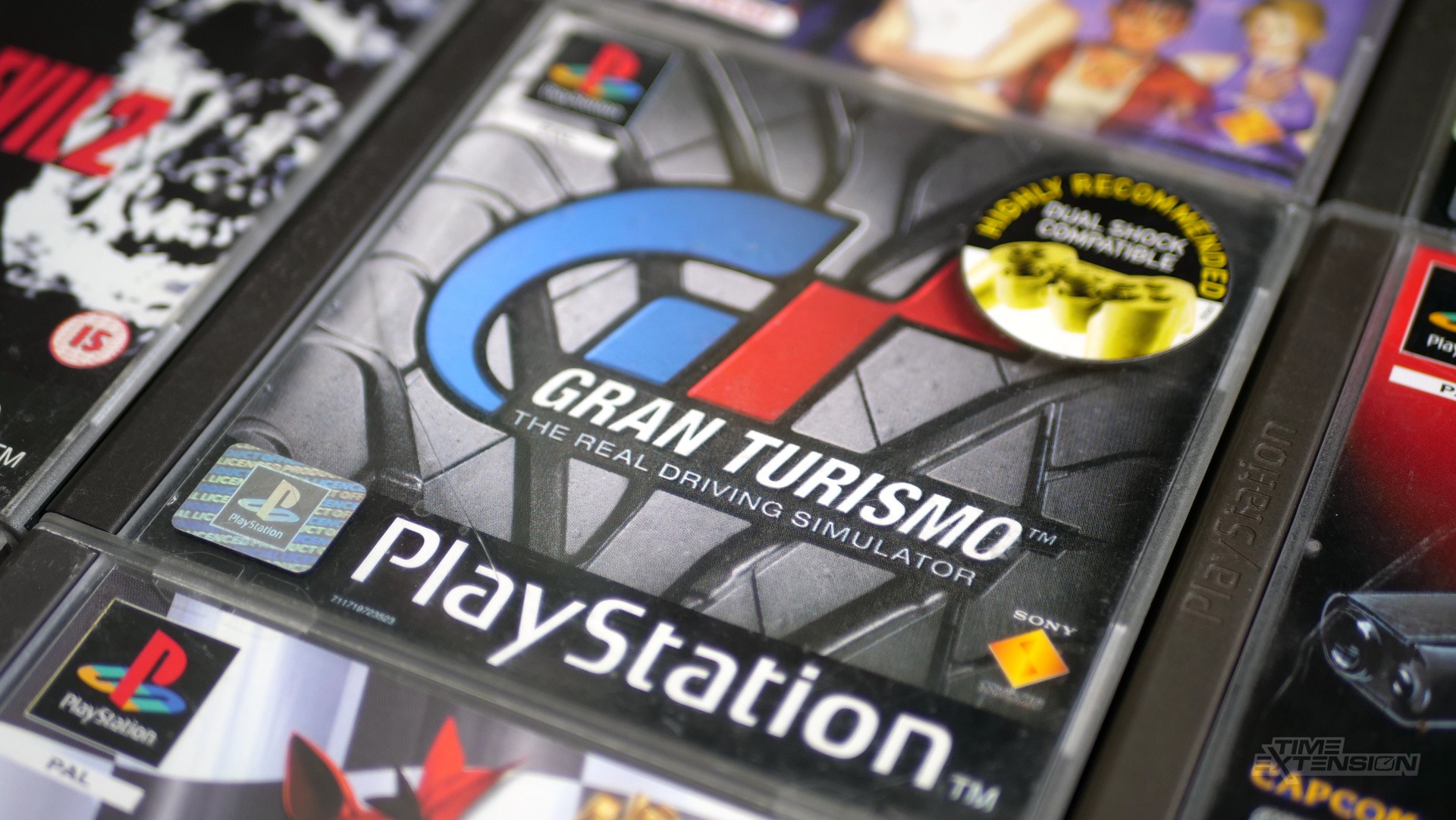
Bleemcast officially launched in 2001, initially released as specific versions for popular PlayStation titles like Gran Turismo 2, Tekken 3, and Metal Gear Solid. A universal version was later developed but released in limited quantities due to Bleem Company’s impending closure. While its commercial success was modest, constrained by Bleem Company’s legal and financial woes, its existence stands as a testament to an audacious technological feat and a fascinating chapter in the console wars.
The story of Bleemcast and Sega’s covert support is a microcosm of the intense competition that defined the late 1990s and early 2000s in the video game industry. It highlights the lengths to which companies would go to gain an advantage, even if it meant skirting official endorsements to avoid legal entanglements. It also underscores the ingenuity of programmers like Randy Linden, who navigated complex technical and legal landscapes to push the boundaries of what was thought possible.
Today, Bleemcast remains a compelling artifact, a reminder of a time when console exclusivity was fiercely guarded, and emulation was a nascent, legally embattled field. Its story is not just about playing PlayStation games on a Dreamcast; it’s about strategic alliances, technological defiance, and the hidden mechanisms that shaped the trajectory of video game history. The "thrilled" whispers from Sega’s corridors, coupled with the silent provision of critical tools, reveal a desperation and cunning that ultimately could not save the Dreamcast but left an indelible mark on the landscape of gaming technology and intellectual property.