
 Farhan hamdan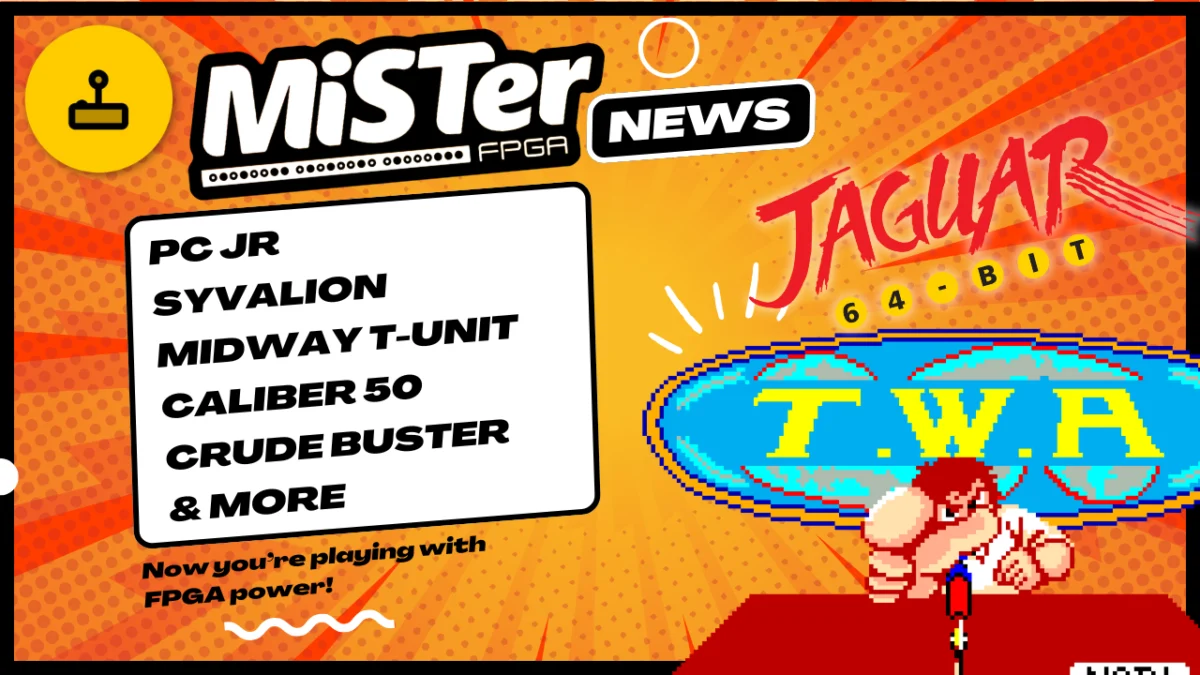
The MiSTer FPGA platform continues its rapid evolution, marking a significant period of advancement with the release of new cores for classic systems and arcade titles, innovative hardware integrations, and pioneering game distribution methods. These developments underscore MiSTer’s growing prominence as a premier solution for hardware-accurate retro gaming and digital preservation, driven by a dedicated global community of developers and enthusiasts.
Hardware Innovations: Customization and Enhanced User Experience
A notable community project recently showcased on the r/MiSTerFPGA subreddit highlights the platform’s flexibility and the ingenuity of its users. A customized ITX case, meticulously designed to house a MiSTer FPGA setup, integrates an impressive array of controller inputs, catering to a diverse range of classic gaming experiences. This bespoke solution features dedicated ports for Sega Genesis, Sega Saturn, Nintendo Entertainment System (NES), Super Nintendo Entertainment System (SNES), Nintendo 64 (N64), and PlayStation controllers. Such an integration addresses a core desire among retro gamers for authentic input methods, eliminating the need for multiple adapters and streamlining the user experience.
Beyond controller connectivity, the custom case incorporates a TTY2OLED screen, offering real-time system information or game data without needing a separate display. Essential control buttons—power, RESET, USR, and OSD—are neatly integrated, providing convenient access to core MiSTer functionalities. Additionally, two supplementary USB ports enhance peripheral connectivity, vital for keyboards, mice, or other specialized controllers. This project exemplifies the community’s drive to transform MiSTer from a barebones development board into a polished, dedicated retro gaming console, pushing the boundaries of what integrated hardware solutions can offer. The professional execution within a standard ITX form factor also suggests a growing trend towards more aesthetically pleasing and functionally robust MiSTer builds, potentially inspiring future commercial or community-driven hardware designs.
Advancements in Arcade Emulation: Breathing New Life into Classics
The arcade scene on MiSTer FPGA is experiencing a renaissance, with several ambitious projects making significant headway. These efforts not only expand the library of playable titles but also tackle some of the most complex hardware architectures in arcade history.
Midway T-Unit: Tackling Sound System Complexity
One of the most challenging and anticipated developments revolves around the Midway T-Unit ADPCM and DCS sound boards. These sophisticated audio systems powered a golden age of Midway arcade titles, renowned for their distinctive soundscapes and iconic voiceovers. Developers have been making steady progress, with the ADPCM T-Unit’s audio functionality largely operational, though some persistent YM timing issues require further refinement. The Digital Compression System (DCS) board, however, presents a considerably more formidable challenge. Work on this intricate component has spanned several months, highlighting the profound technical hurdles involved in accurately replicating its complex digital signal processing capabilities.
The successful emulation of these sound boards would unlock a treasure trove of iconic arcade games for the MiSTer platform. Titles like the groundbreaking Mortal Kombat (1992), with its digitized graphics and speech, the fast-paced sports action of NBA Jam (1993), the chaotic twin-stick shooter Smash TV (1990), the cinematic action of Terminator 2: Judgment Day (1991), and the gritty urban combat of Narc (1988) are among the highly anticipated additions. The accurate reproduction of their unique audio experiences is paramount to their faithful preservation and enjoyment, and the ongoing dedication to overcoming these technical challenges underscores the MiSTer community’s commitment to authenticity. The successful completion of the DCS board is not merely about adding sound; it’s about preserving the integral atmospheric and gameplay elements that defined these legendary arcade experiences.
CoinOp Collection: Expanding the Arcade Library
The CoinOp Collection team continues to be a prolific force in arcade core development, announcing progress on several beloved titles:
- Mat Mania: This classic pro wrestling arcade game, developed by Technos and released in 1985, is currently under active development. Mat Mania (known as Exciting Hour in Japan) was celebrated for its engaging gameplay and character roster, contributing significantly to the burgeoning wrestling game genre. Its arrival on MiSTer will allow a new generation to experience its pixelated grappling action.
- Syvalion: Another intriguing arcade title from 1988, Syvalion is part of Taito’s technologically advanced H System. The core for this unique game, which involves controlling a dragon through mazes, faces specific technical challenges, including bandwidth issues stemming from its high-resolution data. Crucially, accurate implementation of trackball support is also required, a common hurdle for arcade games that utilized specialized input devices. The H System itself was known for pushing graphical boundaries in its era, making its accurate emulation a testament to MiSTer’s capabilities.
- Crude Buster / Edward Randy: The CoinOp Collection team provided an update on Crude Buster, a side-scrolling beat ’em up from 1990 developed by Data East (known as Two Crude Dudes in North America). A significant milestone has been achieved with the completion of the sprite generator, which was the missing piece to begin work on remaining titles utilizing this hardware. This breakthrough directly paves the way for the next planned title, Edward Randy (also by Data East), a side-scrolling action arcade game from 1990. The shared hardware architecture between these titles means that progress on one often accelerates development for others, promising a steady stream of Data East classics.
Jotego’s Caliber 50 and RodimusFVC’s Vastar
Independent developers are also making substantial contributions to the arcade library:
- Caliber 50: The core for Caliber 50, a run-and-gun arcade game with distinctive rotary controls similar to classics like Ikari Warriors, is nearing its beta release. Developer Jotego has successfully added support for rotary stick controls, a critical component for authentic gameplay. The final obstacle remaining is an "ugly audio bug," a common but often time-consuming issue in FPGA development where minor glitches can require extensive debugging. Once resolved, Caliber 50 will offer another challenging and unique arcade experience.
- Vastar: RodimusFVC is developing a new arcade core for the game Vastar. The project is largely functional, with most aspects of the game working correctly, though some further refinement is still needed. Enthusiasts eager to test the progress can download the mra and rbf files directly from the developer’s GitHub page, highlighting the open and collaborative nature of MiSTer development where community feedback often plays a vital role in refining cores.
Home System Emulation: PCjr and Atari Jaguar Reach New Milestones
The MiSTer platform continues to expand its reach into home computing and console history with significant core releases and updates.
IBM PCjr: A Glimpse into Early Home Computing
Spark2k06 has released a core for the IBM PCjr, a fascinating, albeit commercially unsuccessful, chapter in IBM’s computing history. Launched in 1984, the PCjr was IBM’s attempt to enter the burgeoning home computer market with a lower-cost variant of its hugely successful IBM PC. Critically for gaming, the PCjr possessed hardware capabilities that were significantly enhanced for multimedia compared to its business-oriented sibling. These enhancements included superior graphics, improved sound capabilities, built-in ROM cartridge slots for instant loading of software, and integrated joystick ports. While it ultimately struggled to compete with established home computers like the Apple II and Commodore 64 due to its higher price and unusual keyboard, the PCjr boasts a unique library of games that leveraged its specific hardware. The release of this core ensures the preservation and accessibility of these niche titles, offering a window into an often-overlooked segment of early personal computer gaming.
Atari Jaguar: Enhanced Performance and Flash Cartridge Support
The Atari Jaguar core, representing one of the most complex and historically significant consoles, has received crucial updates, further solidifying its performance and compatibility on MiSTer. The "unstable" build, which typically precedes a stable release, now features several key improvements:
- Improved CD Streaming Buffer/Cache: The size of the CD streaming buffer/cache has been increased. This technical enhancement directly addresses a common issue where bringing up the On-Screen Display (OSD) during CD-based gameplay could cause stuttering or interruptions. The larger buffer ensures a smoother, more consistent experience, especially vital for titles that rely heavily on streaming audio or video from the CD.
- GameDrive Emulation: A major addition is the emulation of the Atari Jaguar GameDrive. The GameDrive is a flash cartridge for the original Jaguar hardware, allowing users to load ROMs from an SD card. Its emulation on MiSTer is critical because some recent homebrew games and fan ports, such as the Jaguar port of Mortal Kombat, require its specific functionalities to run. This inclusion not only enhances compatibility with modern Jaguar software but also supports the ongoing vitality of the Jaguar homebrew scene, ensuring that new creations are fully playable on the MiSTer platform. This development is a significant step towards comprehensive Jaguar preservation, encompassing both original releases and contemporary fan-made content.
Zaparoo: Pioneering NFC-Based Game Distribution for MiSTer
In a truly innovative move, Zaparoo has launched a unique feature for game distribution via NFC (Near Field Communication) cards, marking a potential paradigm shift in how digital games are accessed and shared on the MiSTer platform. This initiative commenced with an initial release of 10 Atari Jaguar titles from Reboot Games, a developer known for its contributions to the Jaguar homebrew scene.
The concept is straightforward yet revolutionary: users require a MiSTer setup running the latest unstable build of the Jaguar core. Games can then be encoded onto blank NFC cards using Zaparoo Online or the Zaparoo App, providing a physical, collectible medium for digital content. For those preferring immediate access, pre-written cards are also available directly from the Zaparoo shop.
This novel distribution method addresses several aspects of retro gaming and preservation. It offers a tangible, physical representation for digital games, appealing to collectors and those who appreciate the tactile experience of cartridge-based gaming. Furthermore, it streamlines the process of acquiring and loading games, potentially simplifying the experience for less technically inclined users. Zaparoo has also extended an open invitation to other developers, including independent and homebrew creators, to explore distributing their games through this NFC card system. This outreach could foster a new ecosystem for homebrew content, offering developers a unique channel to reach the MiSTer community.
The initial lineup of games distributed via Zaparoo’s NFC cards includes:
- Full Releases: Biopede, Downfall, HMS Raptor, Raiding Rivers, Superfly DX. These are full, playable titles showcasing the range of Jaguar homebrew development.
- Demos: Full Circle: Rocketeer (demo), Gravitic Mines (demo), Kobayashi Maru: Final (demo), Last Strike (demo), Rocketeer: Rebounced (demo). The inclusion of demos allows users to sample upcoming or in-development titles, fostering anticipation and engagement within the community.
This initiative is not just about convenience; it represents an exciting fusion of physical and digital media, potentially setting a precedent for future retro game distribution and preservation efforts within the MiSTer ecosystem and beyond.
Broader Implications: Preservation, Accessibility, and Community Growth
These diverse advancements collectively reinforce MiSTer FPGA’s critical role in the landscape of retro gaming and digital preservation. The continuous development of accurate hardware cores ensures that iconic games and systems, many of which face hardware degradation, remain playable and accessible for future generations. The dedication to replicating intricate details, from specific sound chips like the Midway T-Unit’s DCS board to unique input methods like trackballs and rotary sticks, highlights a commitment to authenticity that is often unmatched by software emulation.
The community-driven nature of MiSTer development, exemplified by custom hardware projects and open-source core contributions, fosters a collaborative environment that constantly pushes boundaries. Innovations like Zaparoo’s NFC card distribution demonstrate a forward-thinking approach to challenges like game accessibility and physical media preservation in the digital age. As the MiSTer platform matures, it not only serves as a hub for enjoying past gaming eras but also as a vibrant testament to the enduring passion for video game history and the power of collective effort in preserving it. The ongoing stream of updates and new capabilities signals a bright future for MiSTer FPGA, solidifying its position as an indispensable tool for enthusiasts, historians, and developers alike.








