Cecilia Chamidah Nur
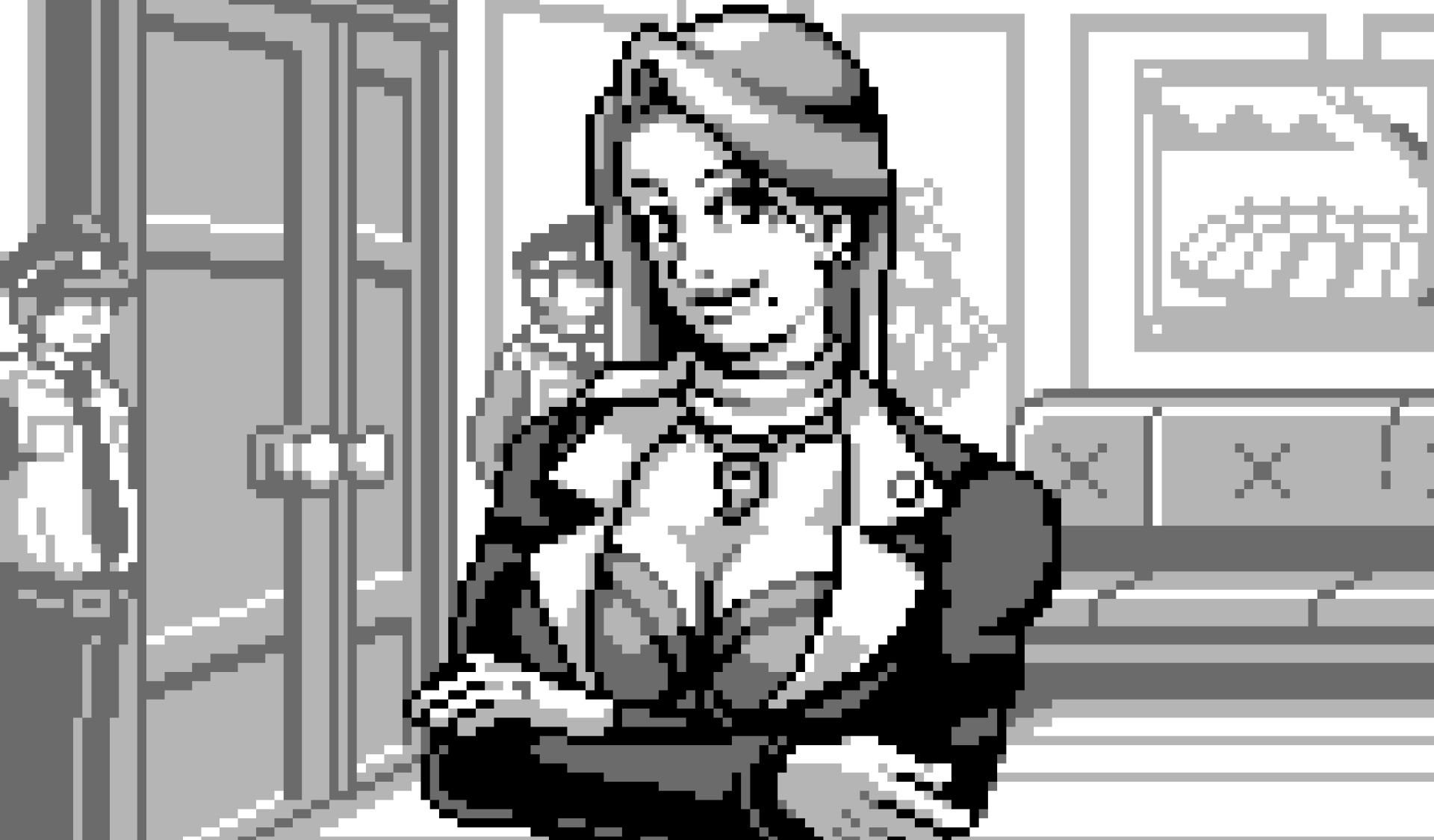
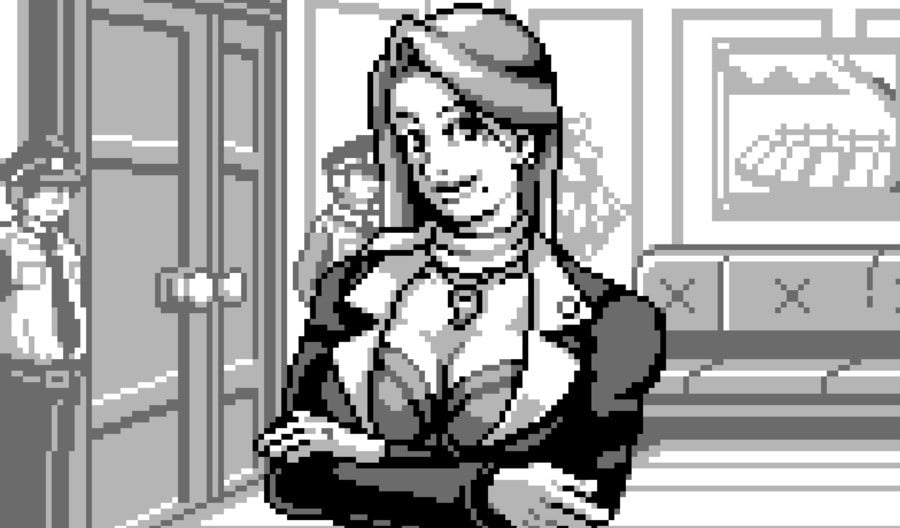
In a remarkable display of fan dedication and retro development ingenuity, a developer known as 2bitcrook has meticulously demade the entire first case of Capcom’s iconic legal adventure game, Phoenix Wright: Ace Attorney, for the original monochrome Game Boy. Titled "The First Turnabout," this unofficial port offers a fascinating glimpse into how a modern classic might have appeared on Nintendo’s pioneering handheld console, paying homage to the franchise’s deep roots in portable gaming. The project, primarily conceived as a technical demonstration, highlights the surprising capabilities of modern retro game development tools like GB Studio, enabling creators with minimal coding experience to craft intricate experiences for vintage hardware.
The demake, which features the complete narrative and core gameplay mechanics of the inaugural case, has been made available to the public through 2bitcrook’s Itch.io page. Players have multiple avenues to experience this unique adaptation: it can be downloaded as a ROM file for use with Game Boy emulators, played directly in a web browser, or, for the most authentic retro experience, loaded onto a flash cart and played on an actual Game Boy console. The developer specifically recommends the Game Boy Pocket for optimal enjoyment, emphasizing the importance of enabling frame blending when playing via emulation to ensure the visual fidelity intended for the monochrome display. This project resonates deeply with the retro gaming community, not only for its technical achievement but also for its respectful reinterpretation of a beloved title on a platform that predates its original Western release.
The Genesis of Ace Attorney: From GBA Japan to Global Phenomenon
The Ace Attorney series holds a significant place in video game history, particularly within the visual novel and adventure game genres. Its journey began on October 12, 2001, with the release of Gyakuten Saiban (Turnabout Trial) for the Game Boy Advance (GBA) in Japan. Developed by Capcom, the game introduced players to Phoenix Wright, a rookie defense attorney, and established the series’ signature blend of investigation, courtroom drama, and memorable characters. The GBA version laid the groundwork for the franchise’s distinctive art style, engaging narrative structure, and the iconic "Objection!" cry that would become synonymous with the series.
However, it was the Western release in 2005 that truly propelled Phoenix Wright: Ace Attorney to international acclaim. This version was not a direct port of the GBA original but an enhanced edition developed for the Nintendo DS. The DS port leveraged the console’s unique features, incorporating touch screen controls for investigation segments and even microphone functionality for shouting "Objection!" during trials, adding an immersive layer to the gameplay experience. This strategic decision to launch on the then-nascent Nintendo DS proved pivotal, exposing the series to a much broader global audience and establishing it as a cult classic. The DS version included an additional fifth case, "Rise from the Ashes," which was not present in the original GBA release, further enhancing its appeal and providing a more robust package for Western players.
Under the creative direction of Shu Takumi, the Ace Attorney series quickly distinguished itself with its intricate plots, witty dialogue, and a compelling cast of characters, including Phoenix’s mentor Mia Fey, rival prosecutor Miles Edgeworth, and spirit medium Maya Fey. The success of the initial game spawned numerous sequels and spin-offs across various platforms, including the Nintendo DS, WiiWare, iOS, Android, Nintendo 3DS, and eventually modern consoles like the Nintendo Switch, PlayStation 4, Xbox One, and PC through remastered collections. Titles such as Phoenix Wright: Ace Attorney – Justice for All, Phoenix Wright: Ace Attorney – Trials and Tribulations, and the prequel series The Great Ace Attorney Chronicles continued to build upon the established formula, expanding the lore and character roster while consistently delivering high-quality storytelling.
Beyond the gaming world, the Ace Attorney franchise has transcended its digital origins to become a significant cultural phenomenon. Its popularity has led to a live-action film adaptation in 2012, directed by Takashi Miike, which brought the dramatic courtroom battles to the big screen. An anime television series, Ace Attorney, also premiered, further expanding the narrative and character development for fans. Moreover, the series has inspired multiple stage plays in Japan, showcasing its broad appeal and adaptability across different entertainment mediums. This multi-faceted presence underscores the enduring legacy and widespread recognition of Phoenix Wright and his associates, cementing their status as beloved figures in popular culture.
The Demake’s Technical Foundation: GB Studio and Game Boy Limitations
2bitcrook’s decision to utilize GB Studio for this demake is particularly noteworthy, as it speaks volumes about the accessibility and growing power of modern retro game development tools. GB Studio is an open-source, drag-and-drop game creator that allows developers to build authentic Game Boy ROMs without needing extensive coding knowledge. Its intuitive interface and event-based scripting system democratize the process of creating games for the original Game Boy, making it possible for enthusiasts to realize ambitious projects like the Phoenix Wright demake. As 2bitcrook himself stated, the demake was created as "a technical demonstration of the capabilities of GB Studio and how next to zero knowledge of coding can take you," directly aligning with the tool’s core philosophy.

The undertaking of demaking a game like Phoenix Wright: Ace Attorney for the Game Boy is not without significant technical challenges. The original Game Boy, released in 1989, possesses far more restrictive hardware specifications compared to the Game Boy Advance or Nintendo DS. Key limitations include:
- Monochrome Display: The Game Boy’s screen is a 160×144 pixel LCD, capable of displaying only four shades of grey (often perceived as green due to the screen filter). This stark contrast to the vibrant, full-color graphics of the DS original necessitated a complete visual overhaul, requiring 2bitcrook to meticulously re-imagine character sprites, environments, and user interface elements in a monochrome palette while retaining their recognizable essence.
- Limited Processing Power: The Game Boy’s Sharp LR35902 CPU, clocked at 4.19 MHz, is considerably less powerful than the ARM7 and ARM9 processors found in the DS. This impacts animation fluidity, the complexity of on-screen elements, and the speed at which game logic can be processed.
- Sound Capabilities: The Game Boy’s sound chip is capable of generating two pulse waves, one wave channel, and one noise channel. This allows for chiptune-style music and simple sound effects, a stark departure from the more orchestral scores and voice samples featured in the DS version. Adapting Ace Attorney‘s iconic musical themes and sound cues to these limitations requires creative arrangement and sound design.
- Storage Constraints: Game Boy cartridges typically ranged from 256KB to 8MB. While "The First Turnabout" is a relatively contained case, fitting all the necessary assets—graphics, text, and sound—within these constraints demands efficient data compression and asset management.
To overcome these hurdles, 2bitcrook would have had to make careful design choices. Character sprites, originally detailed and expressive, needed to be simplified yet remain instantly recognizable. The detailed courtroom backgrounds and investigation scenes had to be translated into effective monochrome pixel art, relying on shading and composition to convey depth and atmosphere. The extensive dialogue, a cornerstone of the Ace Attorney experience, required precise text rendering within the Game Boy’s limited screen real estate. The successful execution of these adaptations underscores the developer’s understanding of both the source material and the target hardware’s capabilities.
Playing the Demake: Authenticity vs. Accessibility
The developer’s recommendations for playing the demake highlight the ongoing discussion within the retro gaming community regarding authenticity and accessibility. Recommending an "actual Game Boy," particularly the Game Boy Pocket, appeals to purists who seek the genuine tactile and visual experience of playing on original hardware. The Game Boy Pocket, known for its clearer, non-backlit screen and more compact design compared to the original "brick" Game Boy, offers a slightly improved visual experience for monochrome titles. Playing on original hardware often evokes a strong sense of nostalgia, connecting players to the era when such games were first released.
For those without access to original hardware, emulation provides a convenient and widely accessible alternative. The instruction to enable "frame blending" in emulators is crucial for accurately replicating the visual experience of the Game Boy’s LCD screen. Early Game Boy screens had a slow refresh rate, which led to a natural "ghosting" or blending effect between frames, making fast-moving sprites appear smoother. Modern emulators, by default, often render frames perfectly distinct, which can make movement appear choppy or introduce "flickering" artifacts not present on original hardware. Frame blending attempts to simulate this natural LCD behavior, resulting in a more authentic visual presentation. The availability of a browser-based version further lowers the barrier to entry, allowing anyone with an internet connection to instantly experience the demake without needing to download software or configure emulators. This multi-platform approach ensures the demake reaches the widest possible audience, catering to both dedicated retro enthusiasts and curious newcomers.
The Broader Trend: Demakes, Nostalgia, and Fan Creativity
The Phoenix Wright: Ace Attorney Game Boy demake is part of a broader and increasingly popular trend within the retro gaming community: the creation of "demakes." A demake is essentially the inverse of a remake or remaster; it involves taking a modern or relatively newer game and recreating it on older, less powerful hardware. This phenomenon is driven by a confluence of factors, including:
- Nostalgia: Demakes tap into a powerful sense of nostalgia, allowing players to imagine what their favorite modern games might have been like if they existed during their childhood gaming era.
- Technical Challenge: For developers, demakes present an intriguing technical challenge. It requires a deep understanding of both the source game’s design principles and the limitations of the target retro hardware, pushing creative boundaries to translate complex mechanics and aesthetics into simpler forms.
- Fan Art and Tribute: Many demakes are born out of pure passion and serve as a unique form of fan art, celebrating beloved franchises and showcasing a developer’s admiration for both the original game and the retro platform.
- Accessibility of Tools: The rise of user-friendly development tools like GB Studio, PICO-8 (for fantasy consoles), and various demaking toolkits has significantly lowered the barrier to entry, empowering a new generation of hobbyist developers to tackle these ambitious projects.
Examples of popular demakes range from recreating Bloodborne as a PlayStation 1-era horror game to reimagining Portal on the Nintendo Entertainment System. These projects often go viral within gaming communities, sparking discussions about game design evolution, hardware limitations, and the enduring appeal of pixel art and chiptune music. They serve as a testament to the ingenuity and creativity of the fan community, demonstrating that older hardware can still inspire innovative and engaging experiences.
From a legal perspective, fan-made demakes often operate in a grey area. While they typically use intellectual property owned by major publishers, most are non-commercial projects distributed for free. Publishers often adopt a tolerant stance towards such fan creations, viewing them as positive community engagement and free publicity, provided they do not infringe upon trademarks or directly compete with official products. 2bitcrook’s demake, being freely available on Itch.io and explicitly non-commercial, falls within this generally accepted scope of fan-made content.
Implications and Future Outlook

The Phoenix Wright: Ace Attorney Game Boy demake carries several implications for both the retro gaming community and the broader landscape of game development. Firstly, it serves as a powerful testament to the capabilities of GB Studio. By showcasing how a complex narrative-driven game can be effectively adapted with "next to zero knowledge of coding," it will undoubtedly inspire other aspiring developers to explore the platform and create their own retro titles. This democratization of game development for vintage hardware ensures a continued flow of new content and renewed interest in classic systems.
Secondly, the project reinforces the enduring appeal of the Ace Attorney franchise. Its successful translation to such a technically constrained platform highlights the strength of its core gameplay loop, character design, and narrative, proving that these elements can transcend graphical fidelity and platform limitations. This adaptability is a hallmark of truly great game design.
Finally, demakes like 2bitcrook’s contribute to a larger conversation about game preservation and the history of interactive entertainment. By recontextualizing modern games within the technological constraints of the past, they offer a unique perspective on how game design has evolved and how developers have always innovated within the limitations of their era. They celebrate the legacy of classic hardware while simultaneously pushing the boundaries of what is thought possible on these vintage systems. As digital gaming continues to evolve, these fan-driven projects serve as a vital link to the past, reminding players of the foundations upon which today’s immersive experiences are built. The Phoenix Wright demake is more than just a nostalgic curiosity; it is a vibrant piece of digital art, a technical marvel, and a loving tribute to a beloved series and the console that helped define a generation of gaming.
[source 2bitcrook.itch.io]