Jia Lissa
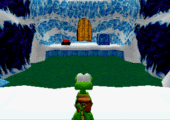
The transition from two-dimensional sprite-based gaming to the complex geometry of 3D polygonal environments stands as the most significant technological paradigm shift in the history of interactive entertainment. While arcade systems in the early 1990s laid the foundational architecture for this evolution, the true test of this technology arrived with the domestic release of the Sega Saturn and the Sony PlayStation. Amidst this competitive landscape emerged Croc: Legend of the Gobbos, a title developed by the British studio Argonaut Software and published by Fox Interactive in 1997. Serving as a crucial, albeit divisive, entry in the burgeoning 3D platformer genre, the game provides a window into the experimental methodologies that defined the mid-nineties development cycle.
Origins and the Nintendo Connection
The genesis of Croc is inextricably linked to the history of Argonaut Software, a studio renowned for its technical prowess. In the early 1990s, Argonaut collaborated with Nintendo to develop the Super FX chip, the proprietary hardware that powered the 3D graphics for Star Fox on the Super Nintendo Entertainment System. Following this success, Argonaut proposed a new project to Nintendo: a 3D platforming and racing hybrid centered on the character of Yoshi.
Industry analysts note that Nintendo’s decision to decline this pitch was both strategic and protective. At the time, Nintendo was internalizing its own 3D platforming efforts, which would eventually culminate in the seminal release of Super Mario 64. By refusing to license its intellectual property to a third-party developer, Nintendo solidified its position as the sole custodian of its mascot’s transition into 3D. Consequently, Argonaut was forced to pivot, retaining the core mechanics of the engine while replacing the Nintendo aesthetic with an original protagonist: a crocodile named Croc. This pivot serves as a case study in the precarious nature of third-party development during the transition to 32-bit architecture.
Technical Specifications and Gameplay Mechanics
Upon its 1997 release, Croc: Legend of the Gobbos was designed to function within the constraints of early 3D hardware. The game features four distinct worlds, each comprising six standard levels, two boss encounters, and one secret stage. The primary objective involves the collection of Gobbos, the indigenous furry inhabitants of the game world, who have been captured by the antagonist, Baron Dante.
The control scheme remains a point of historical contention among critics. Utilizing what is commonly referred to as "tank controls," the player must rotate the character in the direction of movement, a design choice reminiscent of contemporary titles like Resident Evil and Tomb Raider. While this system provided a sense of weight and mechanical intent, it contrasted sharply with the fluid, analog-stick-driven movement of Super Mario 64. Argonaut attempted to address these concerns by supporting the Sega 3D Control Pad; however, technical limitations within the software often resulted in perceived stiffness, preventing the level of precision required for high-speed platforming.
Chronology of Development and Release
- 1993: Argonaut Software completes work on the Super FX chip with Nintendo.
- 1994: The studio pitches a 3D platformer featuring Yoshi; the project is rejected by Nintendo.
- 1995: Argonaut begins development of an original intellectual property, focusing on a crocodile protagonist.
- 1997: Croc: Legend of the Gobbos is released for the Sony PlayStation and the Sega Saturn.
- 2025: A remastered version of the game is released for modern hardware, introducing updated control options and improved graphical fidelity.
Design Philosophy and Structural Design
A critical analysis of the game’s level design reveals a high degree of intentionality. Unlike many platformers of the era that relied on "leaps of faith," Argonaut implemented a modular, room-based level structure. Each area is designed with clear visual cues to guide the player toward objectives, such as the sixth Gobbo hidden behind a color-coded gem door.
However, the game’s environment design is frequently cited as a weakness. The world-building—spanning forests, ice, deserts, and castles—often relies on generic tropes. While the musical score, characterized by its upbeat, mariachi-infused arrangements, provides a strong identity for each level, the mechanical obstacles often feel disjointed. The placement of floating cogs and wooden rafts lacks the cohesive environmental storytelling found in more refined platformers of the late 1990s, leading to a lingering perception that the title functioned as a technical prototype rather than a fully polished experience.
The Saturn Port and Platform Disparities
The Sega Saturn version of Croc presents a notable case of suboptimal porting. While the PlayStation served as the lead development platform, the Saturn version suffered from several technical compromises. Reports from the era identified a recurring visual glitch—specifically, the disappearance of character geometry, such as the protagonist’s snout—when the game was launched from a warm boot. Furthermore, the Saturn’s color palette and rendering capabilities resulted in a grittier, lower-contrast aesthetic compared to the vibrant output of the PlayStation. These discrepancies underscored the broader industry challenge of optimizing code across hardware architectures that were fundamentally incompatible.
Broader Impact on the Industry
The legacy of Croc: Legend of the Gobbos is primarily one of historical significance rather than sustained popularity. It represents an era where developers were forced to operate with limited reference points. There was no established "grammar" for 3D navigation in 1997; developers were effectively building the rules as they went. The consistent, albeit simple, level design demonstrated that Argonaut understood the psychological requirements of a player navigating 3D space, even if the execution was hindered by hardware limitations and the lack of a standardized control paradigm.
The 2025 remaster of the title provides an opportunity to reassess its place in the pantheon of platformers. By introducing modern control schemes, the developers have mitigated the primary criticism leveled against the original release, allowing the game’s structural design to be evaluated on its own merits.
Final Analysis
As an artifact of its time, Croc: Legend of the Gobbos serves as a testament to the "leap of faith" taken by developers in the late 1990s. The industry was in a state of rapid flux, characterized by a gold-rush mentality toward polygonal graphics. While the game possesses flaws—most notably its repetitive enemy respawn mechanics, simplistic boss encounters, and occasionally dated control schemes—its role in the evolution of the 3D platformer cannot be ignored. It bridged the gap between the experimental infancy of 3D gaming and the refined experiences that would follow in the early 2000s.
Ultimately, the game stands as a 7-out-of-10 experience: competent, occasionally inspired, and a vital historical marker. It is a product of a time when the industry was still learning how to translate the kinetic joy of a 2D platformer into a three-dimensional plane, and for that reason alone, it remains an essential study for historians and enthusiasts of the medium.