Indra Gunadi
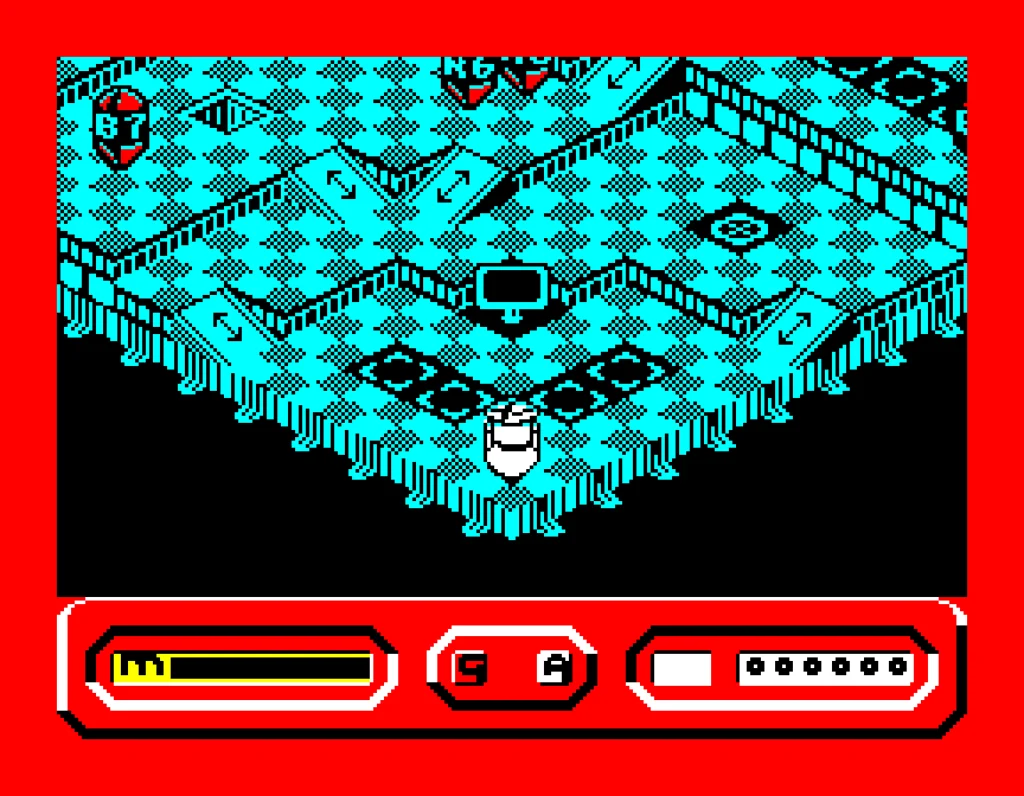
The release of Quazatron Reloaded for the Amstrad CPC in 2026 marks a significant milestone in the ongoing preservation and expansion of the 8-bit software library. Developed by zeddy48, this title serves as a modern reimagining of a classic concept, specifically targeting the hardware limitations and capabilities of the Amstrad CPC series. The game invites players to assume the role of KLP-2, an investigative droid tasked with navigating isometric decks, engaging in combat with rogue machines, and harvesting their components to upgrade its own capabilities.
Historical Context and the Legacy of Quazatron
To understand the significance of Quazatron Reloaded, one must first look at the lineage of the original title. The original Quazatron, developed by Steve Turner and published by Graftgold in 1986, was a landmark title for the ZX Spectrum. It introduced players to a unique blend of arcade action and tactical decision-making, where the primary objective was to infiltrate the Citadel, a massive complex teeming with hostile droids.
The original game was celebrated for its innovative use of isometric perspective, a design choice that was technically challenging to implement on 8-bit hardware at the time. By allowing players to interact with the environment through a "droid-to-droid" combat system—where the player could attempt to override an enemy’s systems and scavenge parts—it added a layer of strategic depth that set it apart from the standard "run and gun" titles of the mid-1980s.
For decades, Amstrad CPC enthusiasts have lamented the lack of an official port of the original title, despite the machine’s comparable hardware architecture. Quazatron Reloaded acts as a spiritual successor, effectively filling a gap in the platform’s library that has remained open for nearly forty years.
Technical Specifications and Hardware Optimization
Quazatron Reloaded is built specifically for the Amstrad CPC, utilizing the machine’s Mode 1 graphics. This mode is a cornerstone of the CPC’s visual identity, providing a four-color palette that forces developers to make precise decisions regarding color dithering and contrast to create the illusion of a more vibrant display.
The game features:
- Isometric Engine: A custom-coded engine designed to handle the complex depth calculations required for an isometric playing field on a Zilog Z80 processor.
- AY Sound Chip Integration: The title leverages the General Instrument AY-3-8912 sound chip, which is synonymous with the Amstrad CPC audio profile. The soundtrack provides a high-fidelity soundscape that complements the fast-paced nature of the gameplay.
- Asset Management: By focusing on modular droid parts, the game manages its memory footprint efficiently, ensuring that the isometric environments remain responsive despite the limitations of the CPC’s 64KB RAM.
The implementation of these features reflects a high degree of technical proficiency, particularly in how the developer handled the isometric projection—a notoriously difficult task for the CPC’s video controller when aiming to maintain a consistent frame rate.
Chronology of the Project
The development timeline for Quazatron Reloaded began in early 2025, following a period of resurgence in the retro-computing community. The project was conceived as a "what if" scenario: a theoretical port that the original developers never realized.
- January 2025: Conceptualization phase. Zeddy48 begins drafting the isometric projection logic and identifying the technical constraints of the Amstrad CPC hardware.
- May 2025: Alpha testing of the droid-combat mechanics. Initial focus is placed on the "scavenging" system, which allows players to swap parts between their own droid and defeated enemies.
- September 2025: Beta testing. The transition to the final color palette using Mode 1 occurs, with optimization efforts targeted at reducing screen tearing during movement.
- October 2026: Final release. The software is distributed to the community, accompanied by technical documentation detailing its compatibility with both physical hardware and modern emulators such as WinAPE and Sugarbox.
Analysis of the "Reloaded" Philosophy in Modern Retro Development
The term "Reloaded" within the retro gaming community implies more than just a port; it suggests a modernization of the source material while retaining the "feel" of the original hardware. Unlike contemporary remakes that might use high-resolution assets or updated physics engines on modern PCs, titles like Quazatron Reloaded remain tethered to the original machine’s constraints.
This approach is rooted in the "demake" and "homebrew" culture, which has seen a massive surge in popularity over the last decade. By creating software that adheres to the 1980s hardware limitations, developers like zeddy48 are ensuring that these platforms remain active and relevant. This methodology provides a unique educational window into the engineering feats of the past. It forces a rigorous discipline upon the programmer, as they must maximize every cycle of the Z80 processor to ensure the game remains playable.
Community Reception and Industry Implications
The release of Quazatron Reloaded has been met with positive reception within the Amstrad CPC enthusiast circles. On platforms such as the CPCWiki and various retro-gaming forums, users have noted that the game effectively captures the tension of the original Graftgold release.
Industry analysts observe that the success of such projects highlights a broader trend: the democratization of software preservation. Because modern development tools allow for cross-compilation and easier testing via emulators, the barrier to entry for developing for legacy hardware has never been lower. This has led to a "second wave" of software for machines that were once considered obsolete.
Furthermore, the integration of AI-assisted coding tools, as noted in the developer’s documentation, marks an interesting evolution in the homebrew scene. By using AI to assist in the optimization of the assembly code, developers can overcome some of the more tedious aspects of 8-bit programming, allowing them to focus on game design and creative logic. This suggests that the future of retro-development may involve a hybrid workflow where modern intelligence assists in the recreation of vintage experiences.
Technical Challenges of Isometric Projection on 8-Bit Systems
Isometric projection on an 8-bit machine is inherently complex because it requires the machine to calculate the depth (z-axis) in addition to the standard horizontal and vertical (x and y) coordinates. On the Amstrad CPC, which does not have hardware-level support for isometric perspective, this must be handled entirely in software.
Each movement of the protagonist droid requires the processor to calculate the visibility of the surrounding tiles, determine which objects are in front of others (the "depth sort"), and update the screen memory without causing visual artifacts. The achievement of a smooth experience in Quazatron Reloaded indicates a highly efficient "Z-buffer" or depth-sorting algorithm, which is essential for preventing the flickering often seen in lesser-optimized isometric games of that era.
Conclusion and Future Outlook
Quazatron Reloaded represents a significant achievement in the world of independent game development. It serves as a bridge between the classic gaming experiences of the 1980s and the technical capabilities of modern homebrew developers. By successfully navigating the technical challenges of the Amstrad CPC, zeddy48 has not only provided a new experience for existing fans but has also contributed to the cultural preservation of the 8-bit era.
As the community continues to refine the tools used to develop for the Amstrad CPC, we can expect to see further "reloaded" titles that challenge the traditional understanding of what these machines are capable of. The project stands as a testament to the enduring appeal of the 8-bit architecture and the dedication of the community that continues to sustain it. Whether viewed as a piece of software history or as a standalone arcade game, Quazatron Reloaded is a compelling addition to the Amstrad library, proving that even after four decades, the potential of the CPC hardware remains a subject of active exploration and innovation.