Indra Gunadi
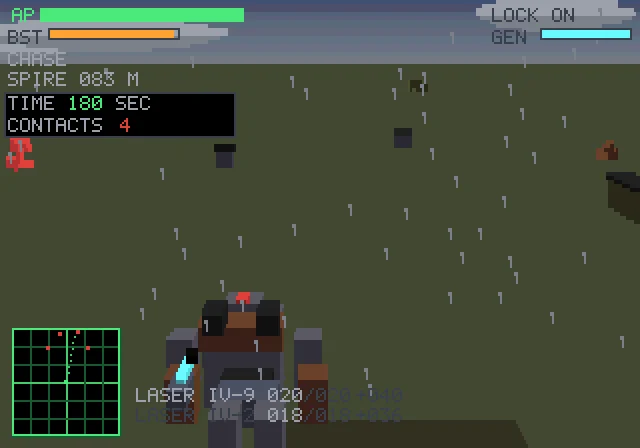
The homebrew development scene for the Sega 32X has reached a new technical milestone with the release of Stainless Gunner, an original mecha-themed action title developed by Dmar3000. Released on October 22, 2026, the game represents a significant departure from typical 32X software, which historically struggled with development complexity and a limited library. By leveraging a clean-room approach—building the software architecture entirely from scratch rather than relying on legacy Sega development kits—Dmar3000 has delivered a title that pushes the boundaries of the console’s dual SH-2 processor architecture.
Technical Architecture and System Utilization
At the core of Stainless Gunner lies a custom-built software 3D engine. Unlike many contemporary titles that attempted to port existing assets, this game utilizes a unique rendering pipeline designed specifically to distribute computational loads across the Sega 32X’s hardware ecosystem. The game employs a complex task-splitting mechanism where the two Hitachi SH-2 processors (running at 23 MHz each) handle the primary 3D transformations and geometric calculations, while the Motorola 68000 processor manages game logic and input handling.
The audio profile of the game is equally noteworthy, featuring a custom Pulse Width Modulation (PWM) mixer. By splitting the audio processing across the two SH-2 chips, the developer has achieved a soundscape that exceeds the standard capabilities of the base Sega Genesis/Mega Drive sound hardware. This architecture reflects an Armored Core-inspired design philosophy, prioritizing high-intensity ballistic combat and mechanical movement physics over static, pre-rendered backgrounds.
The Evolution of Sega 32X Development
The Sega 32X, released in November 1994, was originally conceived as a low-cost entry point into the "next generation" of 32-bit gaming. However, its brief market lifecycle and the architectural friction between its added hardware and the host Genesis system made it notoriously difficult to program for. For decades, the console was considered a "developer’s graveyard," with many software houses abandoning the platform in favor of the Sega Saturn or the Sony PlayStation.
The emergence of projects like Stainless Gunner signals a shift in the retro-gaming landscape. In the mid-2020s, the rise of advanced documentation, modern cross-compilers, and open-source emulation has allowed hobbyist developers to achieve performance levels that early 1990s engineers could only dream of. Dmar3000’s decision to utilize entirely original assets—rather than relying on repurposed sprites or code snippets from the 1990s—highlights a modern trend in the homebrew community: the pursuit of technical purity.
Chronology of the Project
The development cycle for Stainless Gunner took place over approximately 18 months, according to metadata provided at the time of the release. The project began as an exploratory venture into 32X polygon rendering, with early prototypes focusing on wireframe models and basic hit-detection algorithms.
- Early 2025: Dmar3000 begins preliminary testing of software-based 3D engines on the 32X platform, focusing on polygon throughput.
- Late 2025: Implementation of the SH-2/68000 communication bridge, allowing for concurrent processing.
- Q1 2026: Integration of ballistic weapon physics and mechanical unit movement patterns.
- Q3 2026: Finalization of the custom PWM audio mixer and asset optimization for limited hardware memory.
- October 22, 2026: Official public release of Stainless Gunner via digital homebrew distribution channels.
Supporting Data and Performance Metrics
The Sega 32X hardware includes a frame buffer capable of displaying 32,768 colors. Stainless Gunner maximizes this color palette to differentiate mechanical parts and environmental hazards, a necessity in the fast-paced, high-contrast gameplay loop characteristic of the mecha genre. While the 32X was often criticized for "screen tearing" and slow frame rates in early titles like Doom or Star Wars Arcade, Stainless Gunner reportedly maintains a consistent refresh rate by offloading the depth-sorting of polygons to the second SH-2 processor.
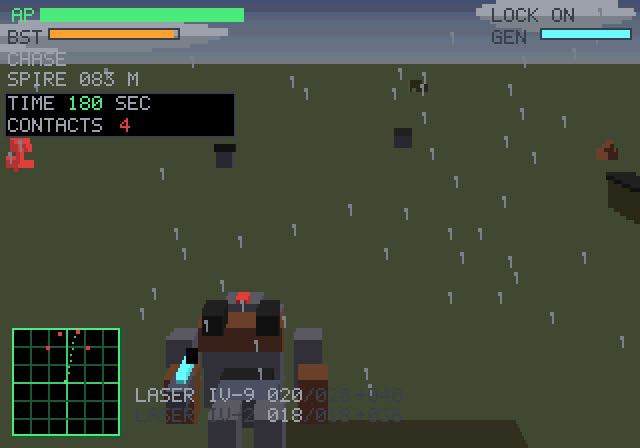
In terms of technical benchmarks, the game operates at a resolution of 320×224 pixels. By implementing a custom software 3D engine, Dmar3000 bypasses the traditional limitations of the 32X’s proprietary geometry engine, which often caused bottlenecks in titles that attempted to render too many polygons simultaneously. The result is a game that feels fluid by the standards of 32-bit hardware, offering a level of interaction that was previously thought to be impossible without significant slowdown.
Industry and Community Reception
The release of Stainless Gunner has generated significant discourse within the retro-gaming community, particularly among developers specializing in 16-bit and 32-bit platforms. Initial technical analysis from homebrew forums suggests that the game could serve as a "reference design" for future developers looking to maximize the potential of the 32X.
"The architecture here is remarkably clean," noted one independent software analyst in an online forum discussion. "By eschewing the traditional SDKs provided by Sega, the developer has avoided the overhead that plagued commercial releases in the 90s. This is the closest we have come to seeing the true maximum performance of the 32X."
While Sega has not issued an official statement—as the company has long since moved away from console hardware manufacturing—the project stands as a testament to the enduring appeal of the 32X among enthusiasts. It underscores a broader trend in the industry: the transition from "emulation-based" preservation to "re-creation-based" development.
Broader Implications for Retro Development
The implications of Stainless Gunner extend beyond its immediate gameplay value. The development of a custom engine for a legacy platform like the 32X demonstrates that software limitations are often a product of the tools available to developers at the time, rather than the hardware itself. As more developers adopt "clean-room" methodologies, we can expect to see a surge in high-quality software for discontinued hardware, effectively extending the lifespan of systems that were once considered obsolete.
Furthermore, the integration of AI-assisted content in the development workflow—as noted in the project documentation—marks a significant turning point. Using AI to assist in the generation of graphics and code structure allows individual developers to take on tasks that previously required large, dedicated teams. This democratization of development tools is likely to lead to an increase in high-complexity homebrew games over the next decade.
Conclusion: A Technical Testament
Stainless Gunner is more than just a game; it is an engineering exercise that challenges the historical narrative of the Sega 32X. By successfully implementing a robust software 3D engine and a sophisticated audio mixer, Dmar3000 has proven that the console was significantly more capable than the market outcomes of the 1990s suggested.
For the historian or the enthusiast, the game serves as a bridge between the limitations of the past and the capabilities of modern development techniques. As the homebrew community continues to refine its mastery over the 32X’s unique architecture, titles like Stainless Gunner will remain as essential case studies in the art of software optimization. The game is currently available for enthusiasts to test on original hardware via flash cartridges or through modern 32X-compatible emulation software, marking a successful addition to the console’s growing, albeit unconventional, software library.