Farhan hamdan
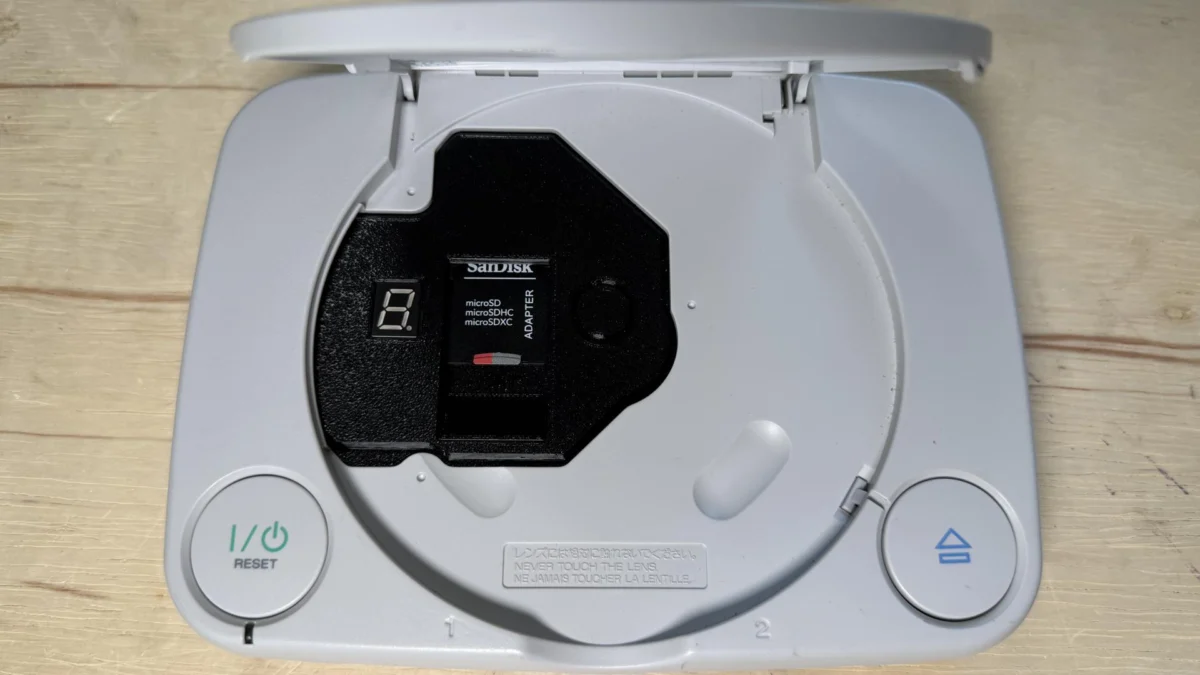
The landscape of retro video game hardware modification is undergoing a significant shift as the newly released ArcStation optical drive emulator (ODE) begins arriving at doorsteps worldwide. Designed to replace the aging mechanical disc drives of original Sony PlayStation consoles, the ArcStation offers an unprecedented level of accessibility in a market traditionally dominated by complex, solder-heavy installation procedures. By leveraging a unique approach to signal processing, the device allows enthusiasts of all technical skill levels to modernize their legacy hardware without risking permanent damage to their systems or requiring the steady hand of a professional micro-soldering technician.
Main Facts and Core Mechanics
The ArcStation is fundamentally engineered to be compatible with every hardware revision of the original PlayStation 1, spanning from the early, heavy-set "phat" models (such as the SCPH-1001) down to the sleek, redesigned PSOne slim console. Unlike competing optical drive emulators that require intricate wiring harnesses, motherboard trace cutting, or complex pin-lift procedures, the ArcStation relies on a drop-in installation method. Users simply unbolt the console chassis, extract the original CD-ROM assembly, and seat the ArcStation directly into the vacated space utilizing the existing factory interface connectors.
Storage setup is equally streamlined. The device reads standard SD cards formatted in the exFAT file system. Users are not required to utilize proprietary software wrappers or complicated indexing utilities; instead, compatible disc images—specifically .iso and bin/cue formats—are simply copied directly onto the storage medium. The device’s internal firmware features automated multi-disc detection, utilizing a built-in database that matches game serial numbers to seamlessly manage titles that span across multiple compact discs. Switching between discs requires only a physical interaction with the console lid: opening the lid triggers the device interface, a button press selects the desired disc index, and closing the lid resumes gameplay without interruption. Standard subfolder organization is fully supported, allowing users to categorize their libraries by region, genre, or alphabetical order while maintaining a clean, easily navigable on-screen menu where folder directories containing bin/cue files are surfaced directly as launchable volumes.
Technological Innovation and Signal Emulation
The defining engineering characteristic of the ArcStation is its methodology for communicating with the host PlayStation motherboard. Rather than attempting to rewrite or bypass the console’s internal security subsystems through software patches, the ArcStation hardware directly emulates the radio frequency (RF) signal generated by the original CD-ROM optical assembly.
By mimicking the exact physical output of the stock laser and spindle motor assembly, the PlayStation console remains entirely unaware that it is interacting with solid-state flash memory rather than a spinning polycarbonate disc. This hardware-level deception yields exceptionally high compatibility rates. During initial testing phases utilizing unmodded PSOne consoles, software known for triggering strict copy-protection routines or hardware incompatibility flags executed without error.
Regarding regional compatibility, the device successfully handles out-of-region software titles. When NTSC-native consoles run PAL software, the system automatically adjusts video signal output parameters—such as shifting to 288p or 576i modes at 50Hz upon launch. While a complete native refresh rate conversion across display standards still requires traditional hardware modifications like a dual-frequency oscillator (DFO) crystal replacement, testing indicates that software-driven timing execution operates sufficiently close to standard refresh parameters to be imperceptible to most end-users on modern compatible displays.
Comparative Cost Analysis and Market Positioning
Priced at approximately $167 inclusive of shipping fees, the ArcStation commands a financial premium over established alternatives in the optical drive emulator market. For comparison, competing solutions such as the popular XStation retail for roughly $40 less. However, industry analysts and hardware technicians emphasize that initial hardware sticker prices do not tell the complete economic story.

For the average consumer lacking professional micro-soldering equipment and expertise, installing an internal ODE like the XStation necessitates outsourcing the labor to a modder, which frequently incurs an additional service fee that equalizes or exceeds the cost disparity. Furthermore, because the ArcStation requires no permanent motherboard modifications or soldered connections for basic operation, the unit remains completely portable. If a host PlayStation console suffers a catastrophic power supply failure or motherboard fault, the ArcStation can be uninstalled with a standard screwdriver and transferred to a replacement chassis in a matter of minutes.
The manufacturer has adopted a steady-release commercial model to manage consumer demand and mitigate supply chain bottlenecks. Following the initial wave of shipments, subsequent inventory batches are scheduled for monthly releases with direct-to-shipping fulfillment, bypassing the protracted crowdfunding or pre-order windows that have historically plagued hardware accessory production cycles.
Advanced Features and Optional Modifications
While the core functionality of the ArcStation is entirely solder-free, advanced features such as Virtual Memory Card (VMC) emulation and In-Game Reset (IGR) require supplementary hardware integration when deployed on later hardware revisions. While these features function natively as plug-and-play additions on original, heavier PlayStation models, utilizing VMC and IGR on the compact PSOne slim revision necessitates physical installation procedures, including targeted soldering points on the console’s SIO0 data bus.
Hardware specialists issue a critical warning regarding the use of Virtual Memory Cards: enabling the VMC feature while simultaneously inserting a physical memory card—whether an official Sony peripheral or a third-party equivalent—creates a hardware conflict that risks catastrophic data corruption across save files. Consequently, many purists recommend disabling virtual memory card features in favor of dedicated, high-performance external peripherals such as the MemCard Pro, thereby preserving save integrity without risking data loss. Similarly, while In-Game Reset functionality allows users to return to the system menu via controller shortcuts without physically interacting with the console, adoption remains a matter of user preference rather than core operational necessity.
Broader Industry Impact and Retro Gaming Implications
The introduction of the ArcStation marks a mature phase in the lifecycle of optical drive emulators for fifth-generation video game consoles. As original laser assemblies continue to degrade due to mechanical wear and the inevitable failure of optical pick-up units, the retro gaming community faces a looming preservation crisis. Mechanical media is finite, and replacement laser diodes are increasingly subject to manufacturing scarcity and declining quality control.
Devices like the ArcStation bridge the gap between hardware preservation and modern convenience. By allowing legacy systems to operate using solid-state storage without demanding destructive permanent modifications, these technologies extend the functional lifespan of millions of aging consoles. The elimination of high barriers to entry—specifically the requirement for advanced soldering skills—opens the hardware modification hobby to a broader demographic of enthusiasts, collectors, and casual players.
As production scales and consumer feedback refines the firmware ecosystem, the ArcStation stands as a notable milestone in hardware engineering. It demonstrates that the demand for authentic, hardware-level retro gaming experiences remains robust, and that innovation in console modification continues to prioritize user accessibility, system longevity, and seamless integration with modern display technologies.