Jia Lissa
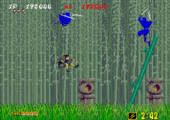
The 1987 release of Shinobi by Sega R&D 1 represents a pivotal juncture in the history of coin-operated arcade gaming, serving as both a commercial phenomenon and a technical blueprint for the side-scrolling action genre. Conceived by director Yutaka Sugano following his work on Alex Kidd: The Lost Stars, the title debuted on Sega’s System 16A hardware. While the era was defined by a pervasive cultural obsession with ninja mythology in Western media, Shinobi distinguished itself by eschewing the stealth-based gameplay often associated with its subject matter, instead delivering an uncompromising, high-velocity combat experience that prioritized pattern recognition, resource management, and reflexive precision.
Development and Technological Context
Shinobi was engineered to leverage the capabilities of the Sega System 16A, a board that allowed for more sophisticated sprite work and color depth than many of its contemporaries. Released at a time when Sega was aggressively diversifying its portfolio—moving beyond the colorful, whimsical aesthetics of titles like Fantasy Zone—Shinobi adopted a somber, industrial, and urban visual palette. This shift in tone was calculated to appeal to a demographic of "hardcore" arcade patrons who frequented arcades for high-stakes, difficult challenges.
The game’s technical architecture was notably rigid. Unlike modern titles that favor fluid, multi-layered environments, Shinobi utilized static, high-contrast backgrounds. While this decision arguably hampered the sense of depth compared to later scrolling technology, it provided a clean, readable playfield that allowed players to track multiple fast-moving projectiles simultaneously. This clarity was essential, as the game’s difficulty curve was intentionally steep, designed to maximize revenue through the "quarter-crunching" model prevalent in 1980s arcades.
The Mechanics of Combat and Progression
The core gameplay loop revolves around the protagonist, Joe Musashi, a ninja tasked with dismantling the terrorist organization known as Zeed. Musashi’s arsenal consists of unlimited shurikens, martial arts strikes, and, crucially, a limited supply of "Ninjutsu" magic. The implementation of Ninjutsu—available in three forms: doppelganger clones, electrical bolts, and tornado whirlwinds—introduced a strategic layer to the action. These abilities functioned as "screen-clearing" mechanics, providing a temporary respite during the game’s more overwhelming sequences.
A defining mechanical feature of Shinobi is the verticality of its level design. Players are tasked with navigating platforms both above and below their current position to rescue hostages—a requirement for stage completion. This mechanic necessitated a level of stage mastery that went beyond mere combat proficiency. The inclusion of bonus rounds, which shifted the perspective to a first-person view, further highlighted the developers’ intent to create a varied, multi-faceted experience that tested different cognitive skills, from rapid-fire targeting to defensive maneuvering.
Commercial Strategy: The Conversion Kit Phenomenon
Beyond its mechanical design, Shinobi’s success was fundamentally driven by its distribution model. During the late 1980s, the arcade industry began to pivot toward "conversion kits." These kits allowed operators to purchase the game software and specific art assets to retrofit existing, older cabinets, rather than investing in a new, dedicated machine.
Sega Enterprises USA, having found success with the distribution of the conversion kit for Choplifter, utilized the same model for Shinobi. This strategy significantly lowered the barrier to entry for arcade operators, allowing for rapid, widespread adoption across North American locations. According to industry records of the period, Shinobi became one of the most successful conversion kits in the market since the 1982 release of Mr. Do!, demonstrating a clear shift in how publishers sought to maximize the lifespan and profitability of their arcade hardware.
Chronology of the Shinobi Legacy
The trajectory of the franchise illustrates the rapid evolution of 8-bit and 16-bit gaming:
- 1987: The original arcade version of Shinobi launches, establishing the character of Joe Musashi and the Zeed terrorist plot.
- 1988: Sega releases a home port for the Sega Master System. This version, overseen by Katsuhiro Hasegawa, introduces significant modifications, including a health meter, which fundamentally altered the game’s balance by removing the "one-hit-death" constraint found in the arcade original.
- 1989: The release of The Revenge of Shinobi for the Sega Genesis marks the series’ transition to the 16-bit era. This sequel builds upon the foundational mechanics of the 1987 original while expanding the narrative and graphical fidelity.
- 1990s-Present: The series continues to iterate through various sequels and spin-offs, cementing Joe Musashi as a cornerstone intellectual property for Sega, comparable in status to other enduring mascots of the era.
Comparative Analysis: Arcade vs. Home Console
The adaptation of Shinobi for the Sega Master System serves as a case study in early home-console design constraints. Because home hardware could not perfectly emulate the processing power of the System 16A board, developers were forced to make concessions. The introduction of a health meter was not merely a quality-of-life improvement; it was a response to the differing expectations of the home market. Players in their living rooms were less likely to tolerate the "instant-death" difficulty of an arcade cabinet, where the goal was to extract coins. However, despite these additions, the Master System version retained the rigorous challenge of its predecessor, eventually leading to a legacy of cheat-code usage as players sought to overcome the game’s punishing segments.
Broader Impact and Industry Significance
Shinobi’s influence on the action-platformer genre cannot be overstated. It helped codify the "ninja" archetype in video games, influencing scores of titles throughout the late 80s and early 90s. The game’s reliance on pattern-based boss fights—where players must observe, adapt, and execute perfectly timed counter-measures—became a hallmark of the era.
Furthermore, the game demonstrated that a compelling, cohesive aesthetic, paired with a distinct "magic" system, could elevate a standard side-scrolling experience into a memorable brand. By providing players with a sense of growth—from a standard ninja to a powerful master—the game tapped into the core appeal of martial arts fantasy.
The lasting impact of the original 1987 Shinobi is evidenced by its continued presence in retro-gaming circles and its availability on modern digital storefronts. While the lack of parallax scrolling and the static backgrounds are viewed today as relics of a more limited technological age, the core gameplay—the rhythm of throwing shurikens, the necessity of leaping between platforms, and the high-tension boss encounters—remains inherently satisfying.
Conclusion: A Legacy of Challenge
Shinobi is frequently cited by industry analysts and historians as a primary example of the "golden age" of arcades. It provided a test of endurance and skill that was representative of the period’s design philosophy. While modern gaming has largely trended toward accessibility and player-friendly design, the original Shinobi remains a touchstone for those interested in the history of difficulty as a design pillar. Its success as a conversion kit ensured that it was ubiquitous, and its subsequent influence on the Sega console library ensured that it was never forgotten. Nearly four decades later, Joe Musashi remains a symbol of an era where high-difficulty, high-reward arcade experiences dominated the cultural landscape, and where a simple concept—the lone warrior against an army—could capture the imagination of a global audience.