Jia Lissa
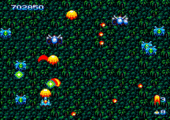
The Sega Master System, released globally between 1985 and 1986, occupies a distinct niche in the history of home video game consoles. While it successfully bridged the gap between the early arcade era and the 16-bit revolution, its library is historically characterized by its extensive catalog of platformers and action-adventure titles. Titles such as Alex Kidd in Miracle World and Phantasy Star remain the platform’s defining legacy. Despite the presence of technical marvels like Power Strike and R-Type, the shoot-em-up (shmup) genre remained an underserved segment of the 8-bit machine’s ecosystem. In 2026, the independent developer known as badcomputer has sought to rectify this historical imbalance with the release of Razing Core, a vertical-scrolling shooter that pushes the hardware to its functional limits.
Development Context and Technical Evolution
The release of Razing Core follows a multi-year effort by badcomputer to expand the Master System’s software library through modern development practices. The developer’s recent trajectory includes the 2025 launch of Frontier Force and Astro Climber, both of which were designed to test the capabilities of the Zilog Z80 processor—the engine powering the Master System.
Razing Core marks a significant escalation in project scope for the developer. Unlike the single-screen architecture of the developer’s earlier work, Blast Arena, Razing Core utilizes a multi-stage, scrolling environment model. This architectural shift required optimization to ensure that the hardware could handle multiple sprites, scrolling backgrounds, and complex boss patterns without triggering the performance degradation common in 8-bit software, such as sprite flicker or frame rate drops.
Narrative Framework and Core Mechanics
The game’s narrative follows a standard genre convention: a scout piloting the "Horizon" spacecraft finds its navigation systems compromised by an entity known as "the Core." The resulting disruption propels the craft into hyperspace, depositing the player in a war-torn version of Earth currently under siege by an alien armada. While the narrative serves primarily as a catalyst for gameplay, it provides the structural justification for the game’s seven-stage progression.
The mechanical design of Razing Core is notable for its versatility regarding input methods. It is compatible with both the legacy two-button Master System controller and the more robust Sega Genesis controller. The control scheme balances accessibility with depth:
- Primary Fire: A rapid-fire mechanic mapped to button 1, capable of being upgraded throughout the session.
- Core Attack: A secondary defensive and offensive maneuver mapped to button 2, designed to mitigate incoming projectile threats with a cooldown interval.
- Burst Charge: An invincibility-granting mechanic triggered by holding both buttons (or button A on a Genesis controller), providing a strategic "panic button" for high-density screen scenarios.
Weapon management is handled through a tiered system. Players encounter secondary weapons designated A through D, which can be upgraded up to five levels using "S" power-up icons. The inclusion of a "Super Upgrade" icon allows for immediate maximization, while the "X" icon serves as a penalty mechanic, stripping the player of their current secondary weapon. A critical design decision in Razing Core is the preservation of power-up levels upon player death; losing a life only results in a single-tier reduction rather than a total reset, a design choice that favors consistent progression over punishing difficulty spikes.
Scoring and Progression Logic
Razing Core adheres to the classic "points-for-lives" arcade model, a staple of 8-bit gaming that remained relevant long after the transition to home-console-specific scoring systems. The inclusion of hidden destructible elements and "Carrier Cubes" incentivizes exploration and precision, as these items grant both bonus points and additional lives.
The implementation of the "Continue" system reflects a balanced approach to difficulty. Upon the depletion of all lives, players are permitted to resume at the start of the current stage or, in the case of boss encounters, immediately preceding the battle. This departs from the more draconian "return to start" mechanics prevalent in original 1980s software, acknowledging the modern player’s preference for accessible challenge curves.
Technical Analysis and Hardware Compatibility
The performance of Razing Core on original hardware is a primary focus of the developer’s quality assurance. Designed for 60Hz operation, the game is optimized for the Master System and the Japanese Mark III variants. The absence of noticeable slowdown during high-density action sequences suggests a high level of efficiency in the game’s assembly code.
Independent testing using FPGA-based hardware—specifically the Analogue Mega SG and the Terraonion Mega SD—indicates that the game is stable across modern hardware emulation. While the developer has not exhaustively tested the title against the various "clone" consoles currently flooding the retro market, the game’s adherence to standard signal output protocols suggests a high probability of broad compatibility.
Artistic and Audio Production
The visual presentation of Razing Core is bolstered by the contributions of digital artist danmakuman, who provided the title’s character and environmental assets. The game features vibrant, distinct color palettes across its stages. While the absence of parallax scrolling—a technique rarely utilized on the Master System due to hardware limitations—is noted, the detail level of the sprites and the sheer scale of the boss encounters compensate for the static backgrounds.
The audio, composed by chiptune artist Lovepenguin, represents a significant upgrade over standard 8-bit sound design. The soundtrack avoids the "scratchy" percussion textures that characterized many western-developed Master System games, opting instead for high-fidelity chiptune arrangements. Each stage theme is designed with a two-minute loop, offering a level of sonic complexity that extends beyond the standard 30-second loops common in the era.
Broader Implications for the Retro Community
The release of Razing Core at a $7.99 price point highlights the viability of the contemporary indie-to-retro pipeline. By utilizing platforms like Itch.io for digital distribution and planning physical cartridge releases, developers like badcomputer are sustaining the commercial ecosystem for long-discontinued hardware.
The success of such titles suggests a growing market for "new-old" games—software developed in the present day but engineered for legacy consoles. This practice not only preserves the utility of original hardware but also keeps the skills associated with 8-bit assembly programming alive. For the Sega Master System, a console often overshadowed by the Nintendo Entertainment System and the Sega Genesis, the addition of high-quality, genre-specific titles like Razing Core provides a compelling reason for collectors to continue utilizing original hardware.
Conclusion and Future Outlook
Razing Core stands as a successful effort to demonstrate the latent power of the Master System. While there are subjective critiques regarding the pacing of the Burst Charge and the hit-point density of certain standard enemies, these do not detract from the overall technical achievement. The developer’s commitment to hardware-accurate performance, combined with a strong artistic and musical foundation, positions Razing Core as a significant entry in the modern Master System library. As the community moves toward the planned physical release, the title serves as a case study in how small-scale independent development can effectively honor and expand upon the legacy of classic gaming platforms. Through a blend of rigorous technical optimization and an appreciation for the 8-bit aesthetic, Razing Core succeeds in its objective: providing a robust, challenging, and historically resonant experience for fans of the shmup genre.