Retno Hari Mulyono
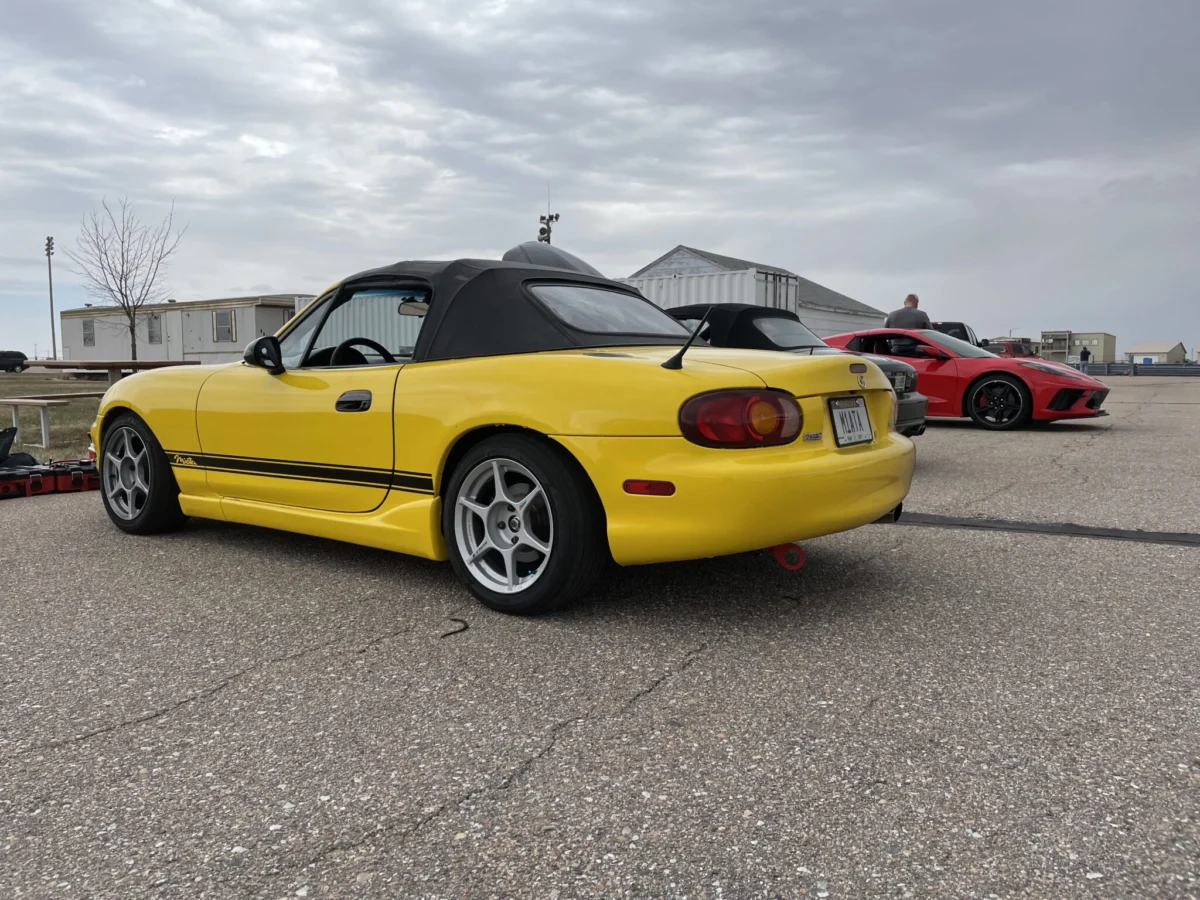
The enthusiast automotive community has long celebrated the Mazda MX-5 Miata as an accessible entry point into motorsports, balancing mechanical simplicity with exceptional handling dynamics. Evaluating the ownership lifecycle of a dedicated track-day car requires examining not only monetary investments and component modifications, but also driver development, telemetry improvements, and the inevitable mechanical setbacks associated with competitive driving. This retrospective analyzes the second year of ownership of a 2001–2005 (NB generation) Mazda Miata, chronicling a twelve-month progression from regional track days and competitive autocross to major suspension overhauls, powertrain tuning, and aerodynamic integration.
Chronology of Modifications and Track Integration
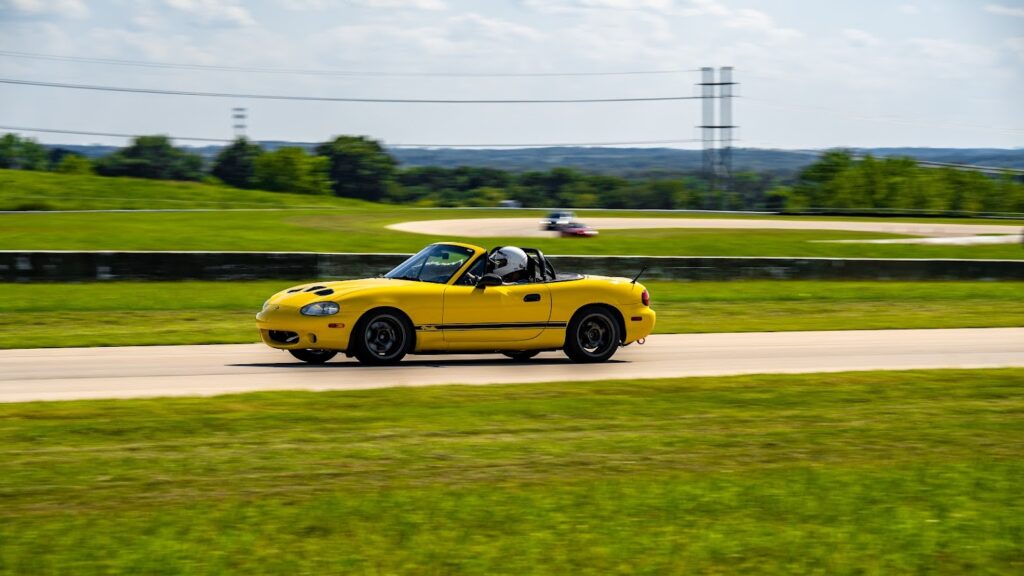
The second year of the NB Miata project officially commenced in March 2022, exactly twelve months after the initial acquisition of the vehicle in late March 2021. The driving season opened on March 19 at the Raceway Park of the Midlands (RPM), a technical road course located near the owner’s base of operations. Over the course of the 2022 season, the vehicle would visit RPM eight times, establishing it as the primary testing ground for vehicle setup adjustments and driver skill refinement.
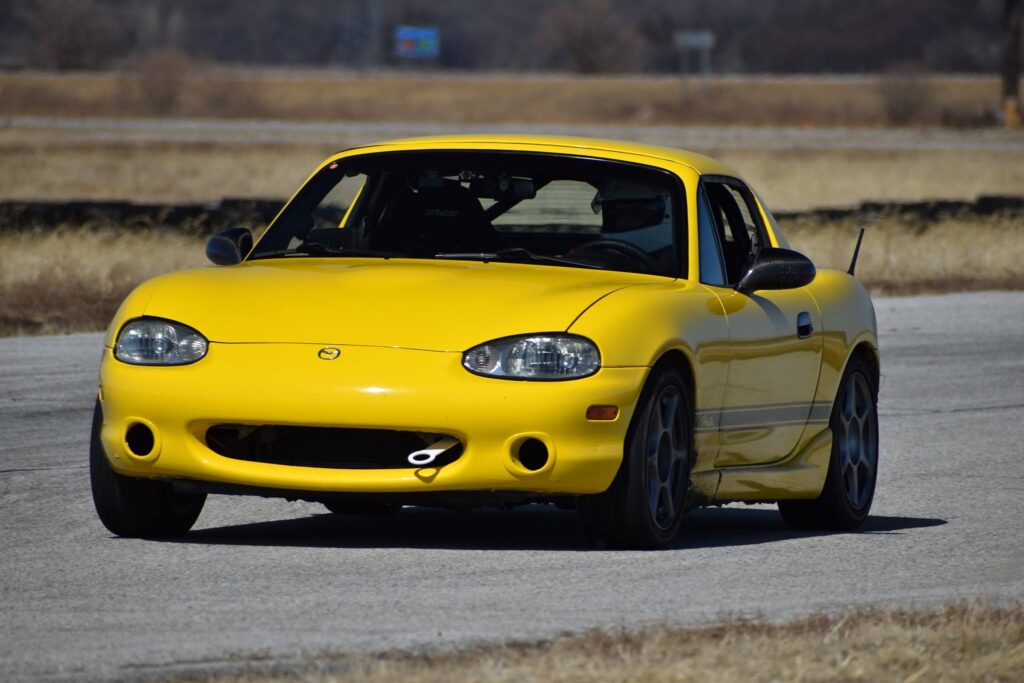
Data gathered across multiple track sessions at RPM highlighted a steady downward trend in lap times. Longitudinal analysis of telemetry and timing data revealed a cumulative lap-time reduction of 11.29 seconds over a seven-month period. Automotive engineers and driver coaches frequently attribute such significant gains in amateur motorsports to improvements in line selection, braking zones, and threshold braking capabilities rather than purely mechanical enhancements, though modifications to the vehicle’s induction and engine management systems ran concurrently.
In April 2022, the project expanded to Motorsports Park Hastings, a secondary regional facility featuring a newly repaved asphalt surface installed during the winter off-season. In contrast to RPM’s abrasive and undulating layout, Hastings presented a smooth, high-grip environment complemented by modern paddock infrastructure. While logistical considerations—chiefly track rental costs and geographic proximity—kept RPM as the primary venue, the outing provided valuable comparative data regarding tire degradation and chassis balance on high-grip surfaces.
Chassis, Powertrain, and Aerodynamic Evolution
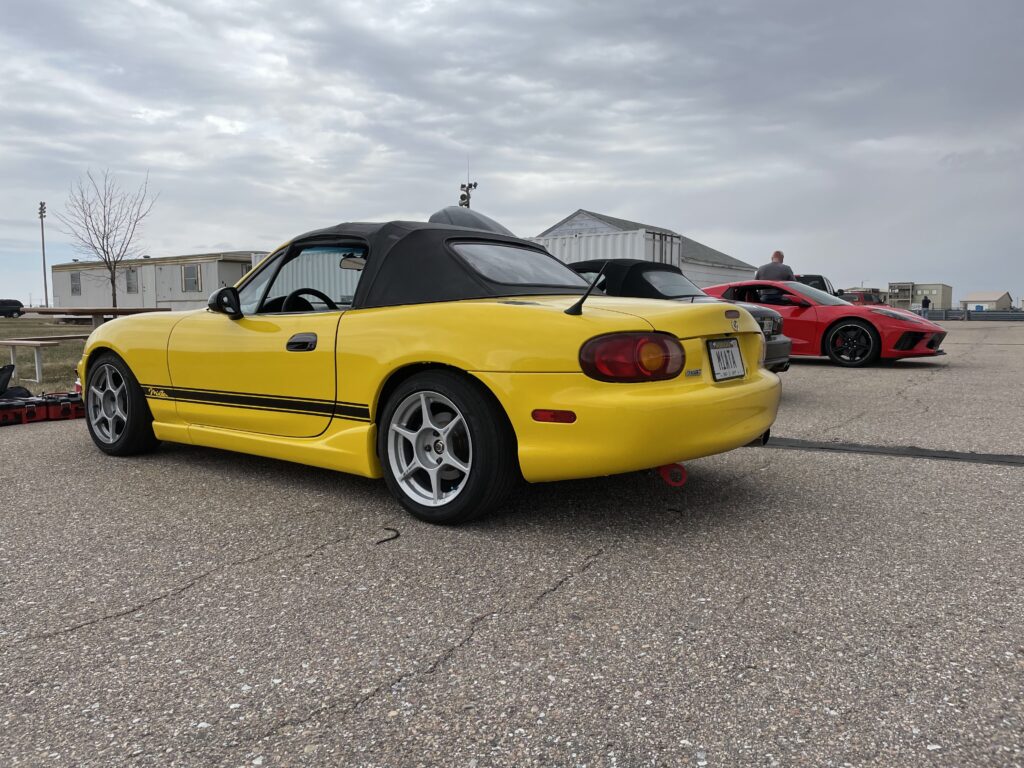
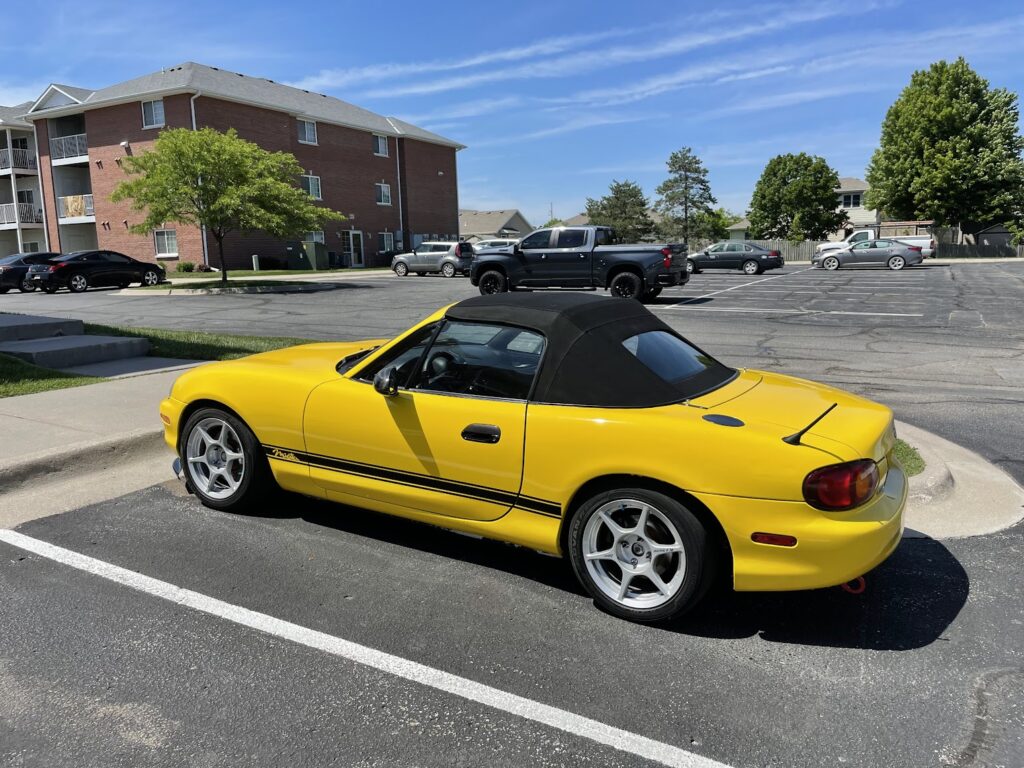
As mechanical stress accumulated through competitive use, the vehicle underwent several systematic maintenance and upgrade phases. In May 2022, the aging factory vinyl soft top, compromised by patching and structural fatigue, was replaced with a premium Robbins canvas top featuring a zippered glass window. To streamline the installation process, a donor soft-top frame was sourced from an automotive dismantler, allowing the new canvas to be fitted off the vehicle before a complete frame swap. The installation required thermal conditioning via direct sunlight to ensure proper elasticity of the rain rail and perimeter seals.
Addressing the inherent cargo limitations of the MX-5 platform represented a critical logistical hurdle for extended track weekends. Transporting a secondary set of track wheels, tools, fluids, an overnight canopy, and safety equipment necessitated the fabrication of a dedicated towing solution. A compact 40-by-48-inch Northern Tool utility trailer was modified with an extended plywood deck, custom tire-mounting fixtures, and integrated storage containers. Weighing approximately 700 pounds fully loaded, the trailer accumulated over 1,000 miles of towing duty during the 2022 season without inducing thermal or structural strain on the stock Miata drivetrain.
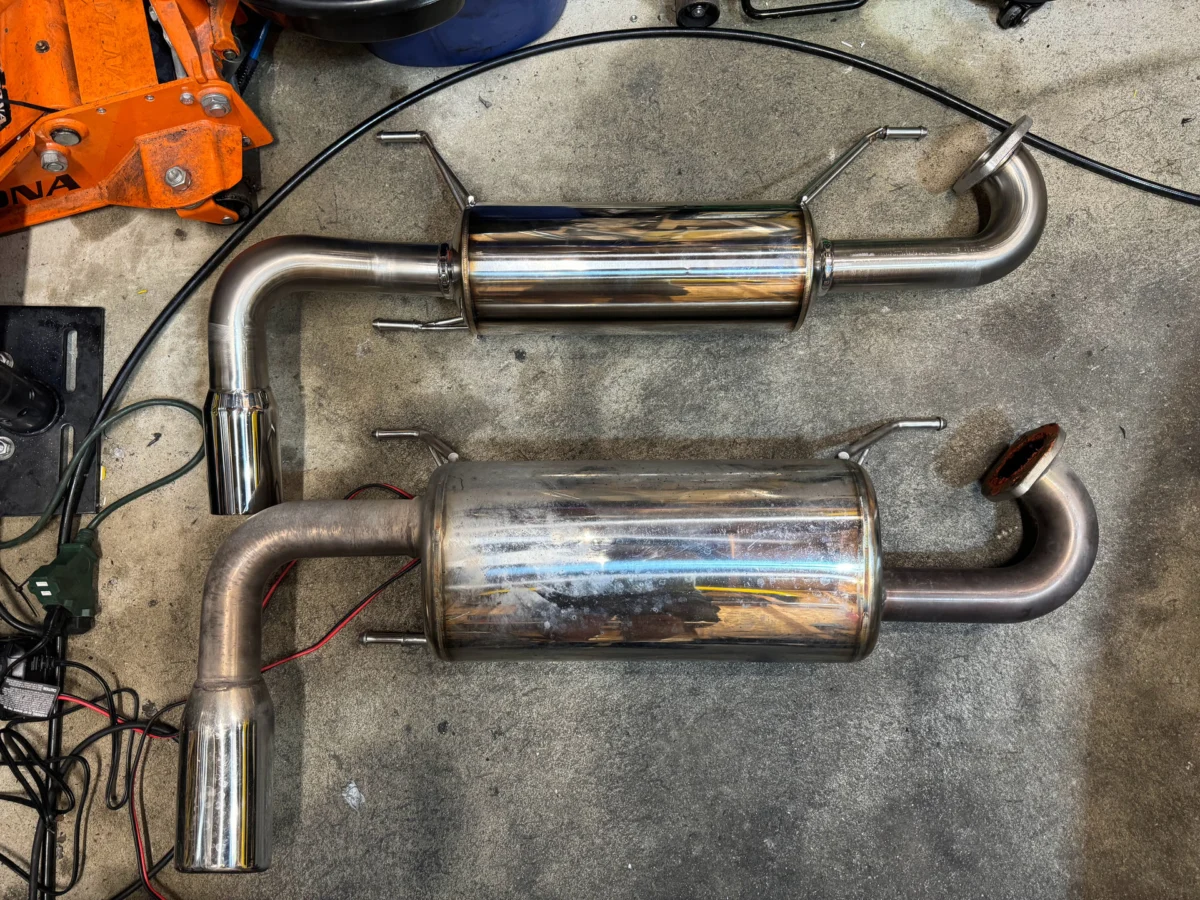
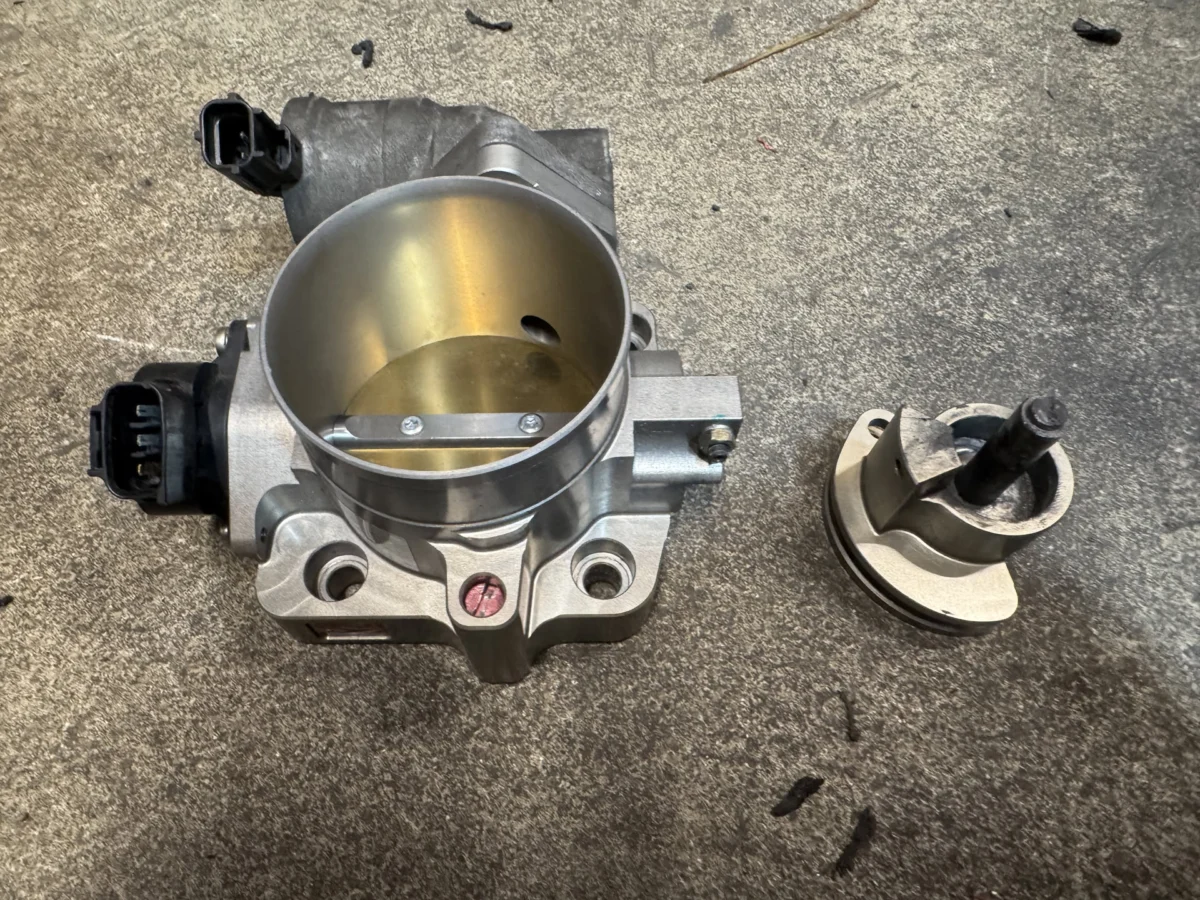
Engine performance benchmarking was conducted via dynamometer testing in July 2022, serving as a comparative metric against baseline figures established in August 2021. Initial dyno runs yielded 115 wheel-horsepower (whp) and 106 lb-ft of torque utilizing basic bolt-on modifications, including an aftermarket intake, headers, and exhaust. By July 2022, output increased to 136 whp and 119 lb-ft of torque. This performance gain was primarily attributed to the installation of a square-top intake manifold and a standalone Megasquirt engine control unit (ECU) calibrated to run on E85 high-octane fuel.
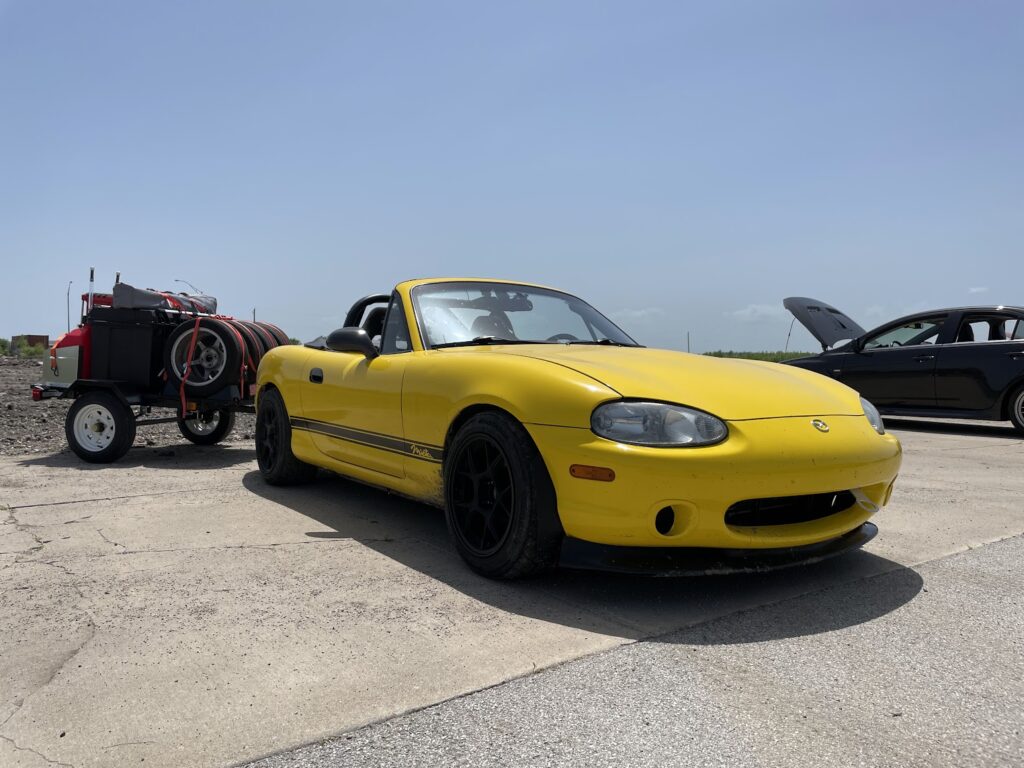
Suspension dynamics underwent a complete revision during the December off-season. Following an initial bushing refresh utilizing IL Motorsports rubber components in 2021, the project transitioned to higher-durometer materials. New replacement control arms were fitted with A1 Ground Control nylatron bushings—a self-lubricating engineering plastic offering low rotational friction without the binding tendencies or maintenance requirements often associated with polyurethane compounds. Additionally, adjustable upper rear control arms manufactured by Paco Motorsports were integrated to allow precise camber adjustments.
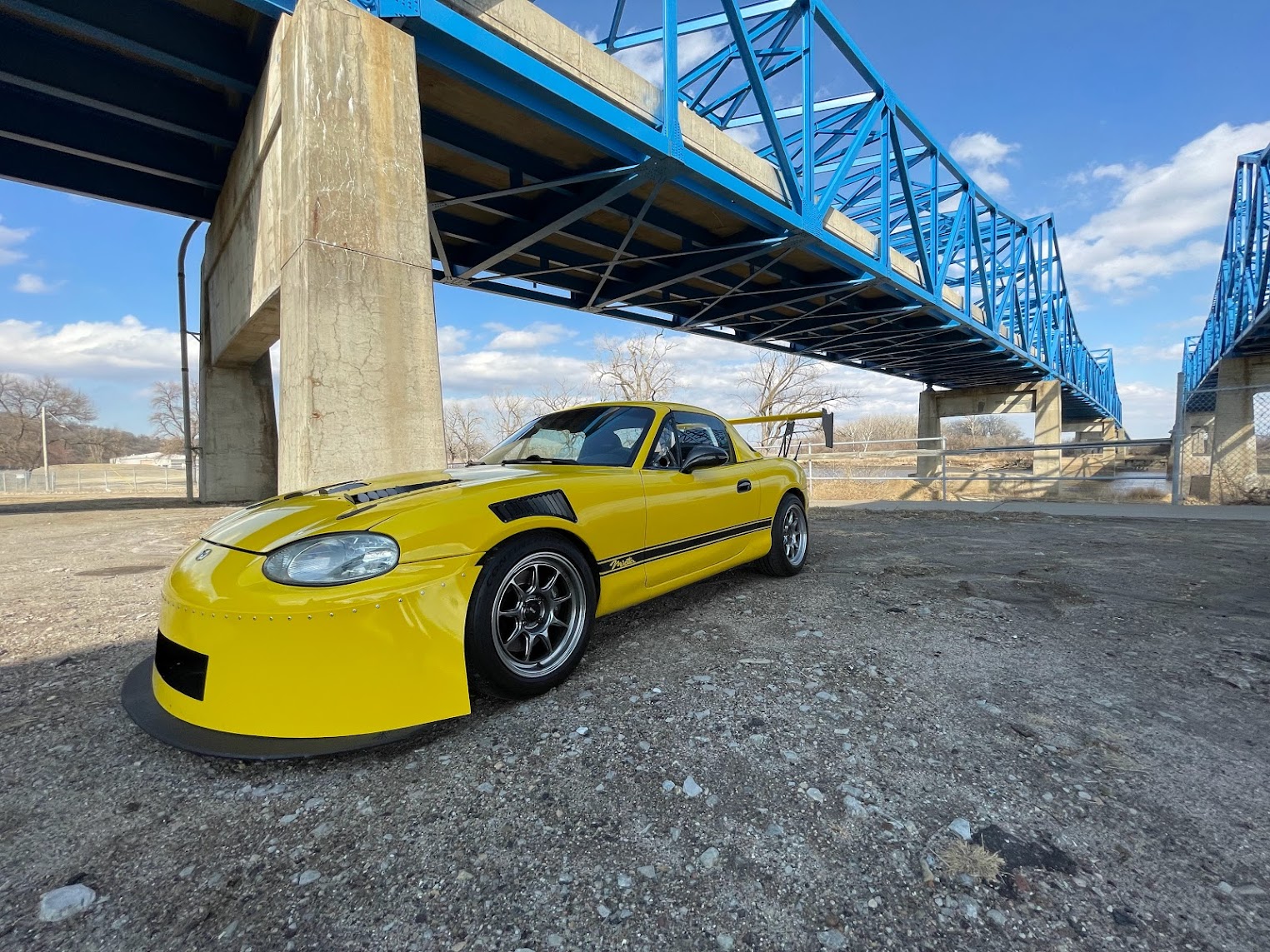
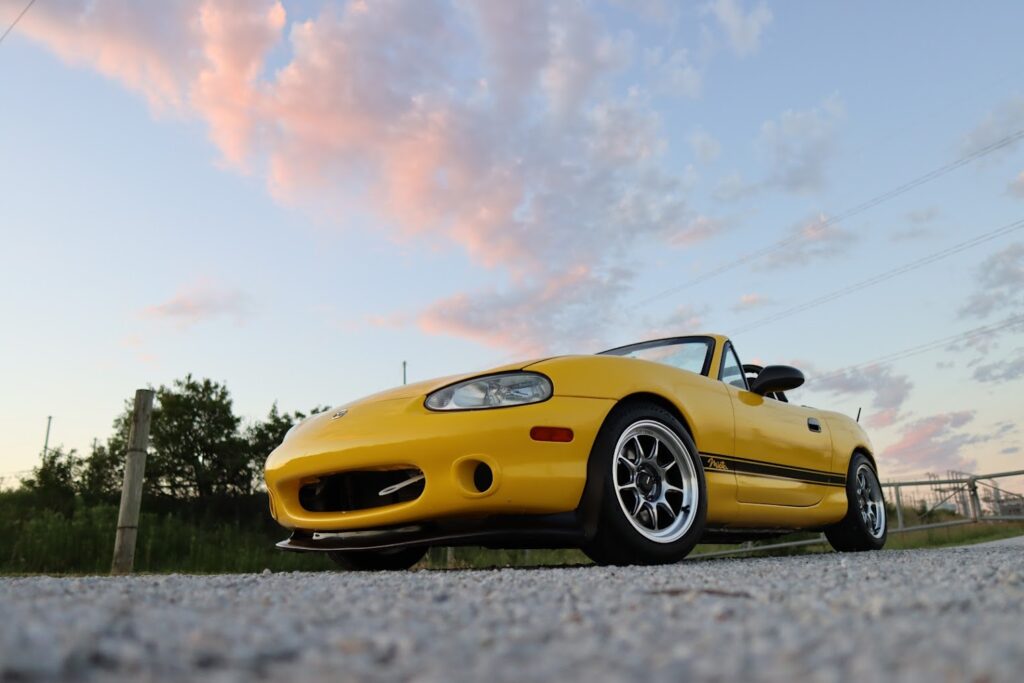
The culmination of the project’s aerodynamic development occurred in February 2023 with the installation of a Nine Lives Racing medium downforce kit, purchased during a seasonal promotional event. The package included a single-element aluminum rear wing mounted directly to the trunk structure, designed to counteract the natural aerodynamic lift generated by the NB chassis at highway and track speeds. Initial street testing indicated enhanced high-speed stability and reduced aerodynamic float, with no measurable penalty in straight-line acceleration.
Competitive Events and Incidents
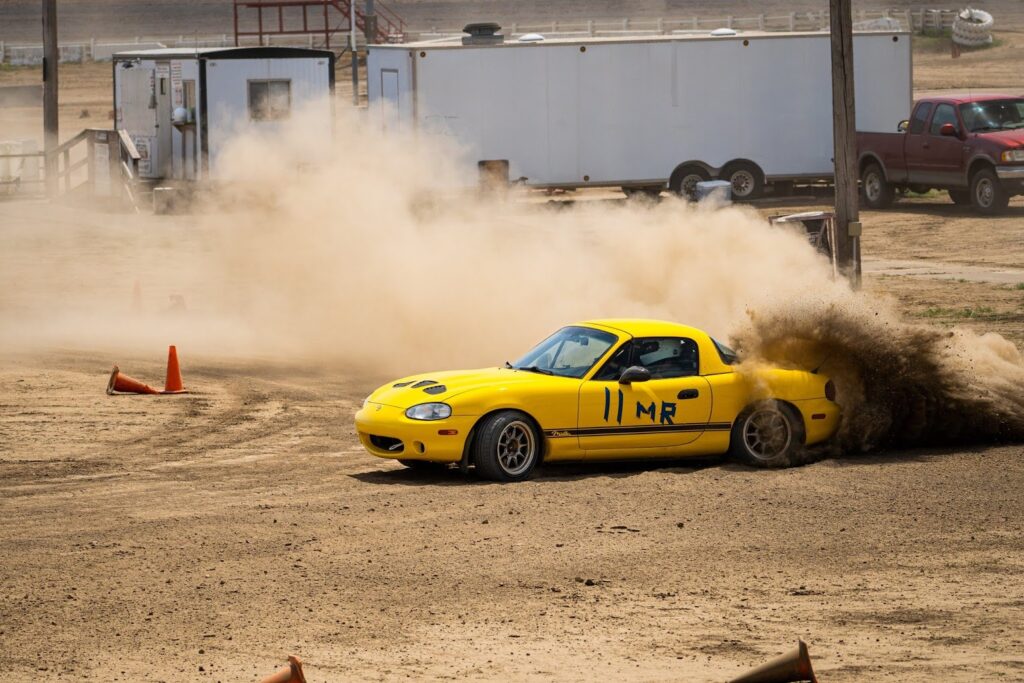
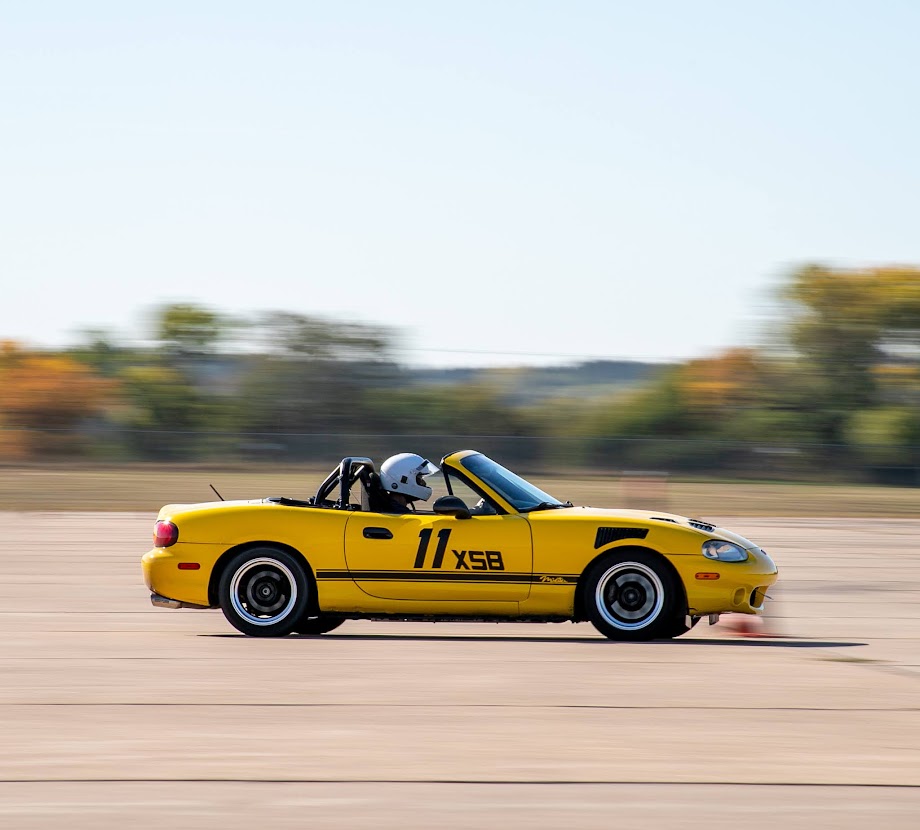
Throughout the summer and autumn months, the vehicle was campaigned across multiple motorsport disciplines, including Sports Car Club of America (SCCA) Autocross and Rallycross events. Participating in SCCA Rallycross at I-80 Speedway in Nebraska tested the car’s handling limits on unpaved surfaces, resulting in minor cosmetic damage to the front bumper lip due to reduced ground clearance. In autocross competition within the Nebraska Region SCCA—hosted at the historic SCCA Solo Nationals venue—driver classification metrics progressed significantly, moving from the bottom decile to the median tier of participants over the season.
The push for lower lap times at Raceway Park of the Midlands culminated in a high-speed incident during the final track event on October 29, 2022. While navigating the technical section of the circuit, excessive entry speed through Turn 10 induced oversteer, prompting a corrective steering maneuver that resulted in terminal understeer exiting Turn 11. The vehicle departed the racing surface and impacted a protective tire wall at an estimated velocity of 60 mph.
Analysis of the impact demonstrated the efficacy of trackside safety barriers; the tire wall successfully dissipated kinetic energy, preventing structural chassis compromise and protecting the occupant. Damage was largely confined to bolt-on body panels, including the hood, front bumper, left fender, and headlamp assembly. The vehicle remained mechanically operable and was driven away from the scene. Repairs executed within weeks utilized readily available replacement panels and vinyl wrap restoration techniques, highlighting the economic reparability characteristic of the MX-5 platform.
Broader Industry Implications and Future Outlook
The two-year progression of this NB Mazda Miata project underscores the viability of the platform as an economical, highly adaptable tool for grassroots motorsports development. By methodically addressing thermal efficiency, engine management, suspension compliance, and aerodynamic stability, the project bridges the gap between a street-driven roadster and a dedicated track implement.
As amateur racing organizations continue to see robust participation in regional time trials and autocross, modular platforms like the Mazda MX-5 provide quantifiable data on driver education versus hardware investment. The empirical lap-time reductions and systematic mechanical upgrades achieved over this two-year evaluation period reinforce the premise that structured, incremental modification yields predictable performance scaling in vehicle dynamics. Future development cycles will focus on powertrain refinement and expanded regional competition schedules as the vehicle enters its third operational year.