Retno Hari Mulyono
Marking half a decade of automotive stewardship, enthusiast and time-trial competitor Quade has documented the fifth consecutive year of ownership of his Mazda NB Miata. What began as a standard, factory-grey 2000 model has since evolved into a dedicated, highly competitive yellow track vehicle. Following an established tradition of annual retrospectives, this report chronicles the vehicle’s development, operational milestones, mechanical setbacks, and strategic upgrades from March 2025 through February 2026. Across the year’s 14 track events, the Miata accumulated 357 laps totaling 10.9 hours of competitive driving, bringing its lifetime recorded track telemetry via Garmin Catalyst to 1,380 laps and 43.8 hours of rigorous circuit operation.
The narrative of year five is defined by a transition from minor power enhancements to major reliability overhauls, custom electronics integration, and a surprising garage expansion.
Dyno Testing and Powertrain Adjustments
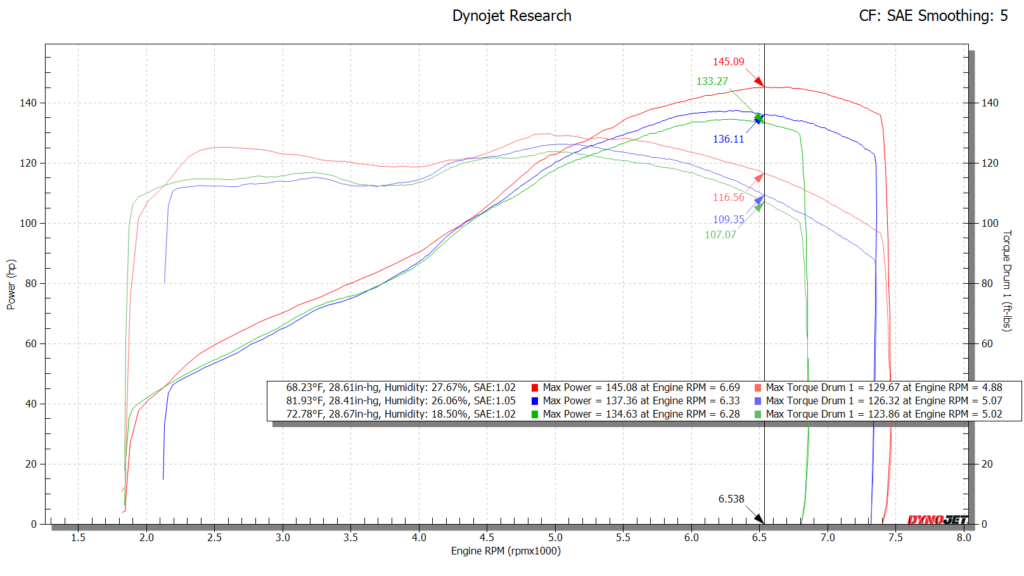
The retrospective begins in March 2025 with annual dynamometer testing conducted for Sports Car Club of America (SCCA) Midwest Division (MiDiv) time trials classing. Seeking more cost-effective baseline verification, testing moved to a new facility utilizing a Dynojet chassis dynamometer to maintain data comparability with previous years.
The primary mechanical modification for the period involved replacing the square-top intake manifold with a Skunk2 intake manifold. The resultant figures registered 145.09 wheel horsepower and 129.67 foot-pounds of torque. These results compare favorably against previous measurements of 133.27 and 136.11 wheel horsepower recorded in prior years on an alternative dyno, and represent a significant increase over the stock ECU baseline of approximately 115 wheel horsepower. Analysts note that minor variances between dynamometer calibration facilities frequently account for shifts in output figures, though the overall performance trajectory remains markedly upward.
Circuit Campaigns and Weather Challenges
Throughout the spring and summer of 2025, the Miata was campaigned across several regional racing facilities, including Hallett Motor Racing Circuit in Oklahoma, I29 Speedway, Ozarks International Raceway, and High Plains Raceway.
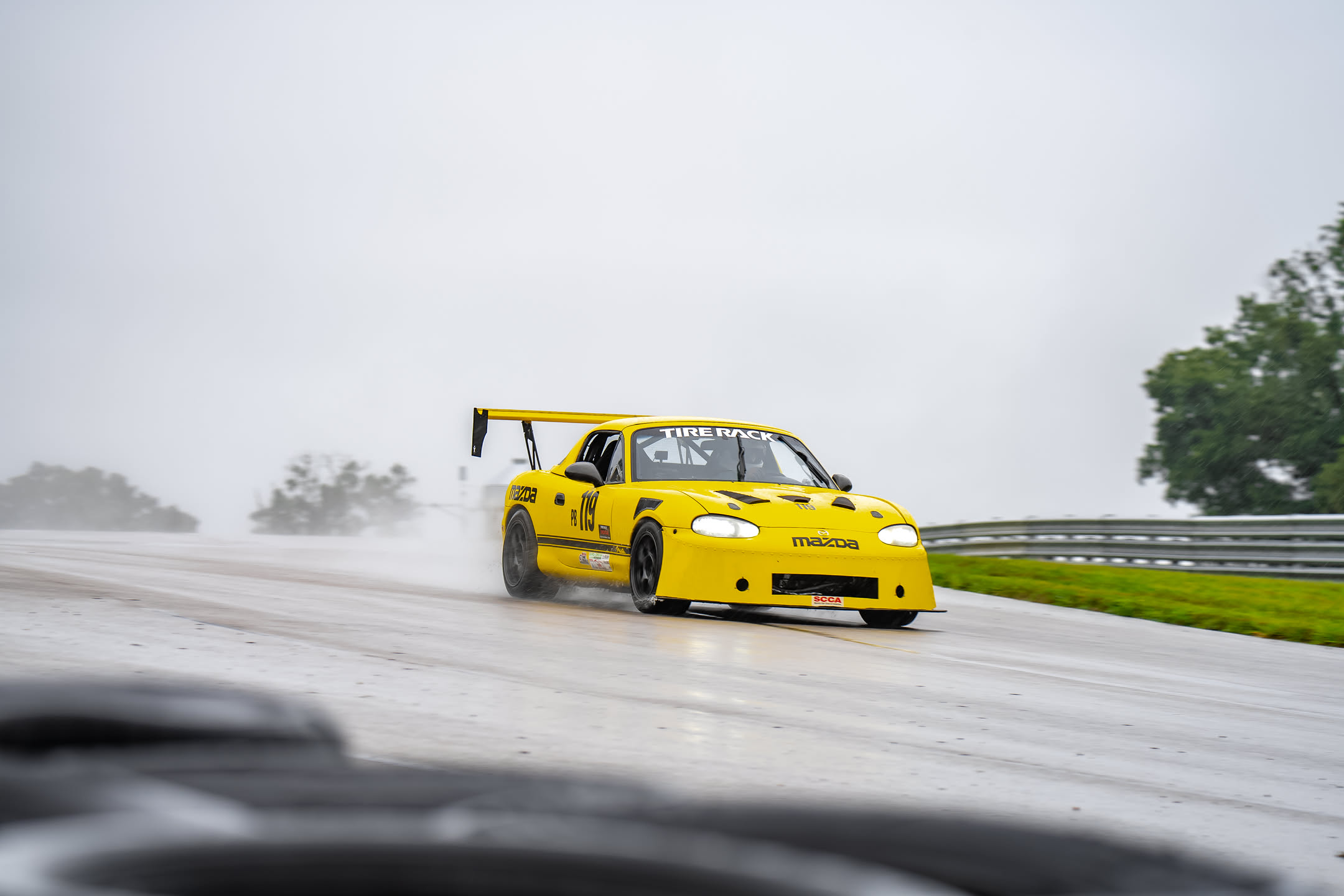
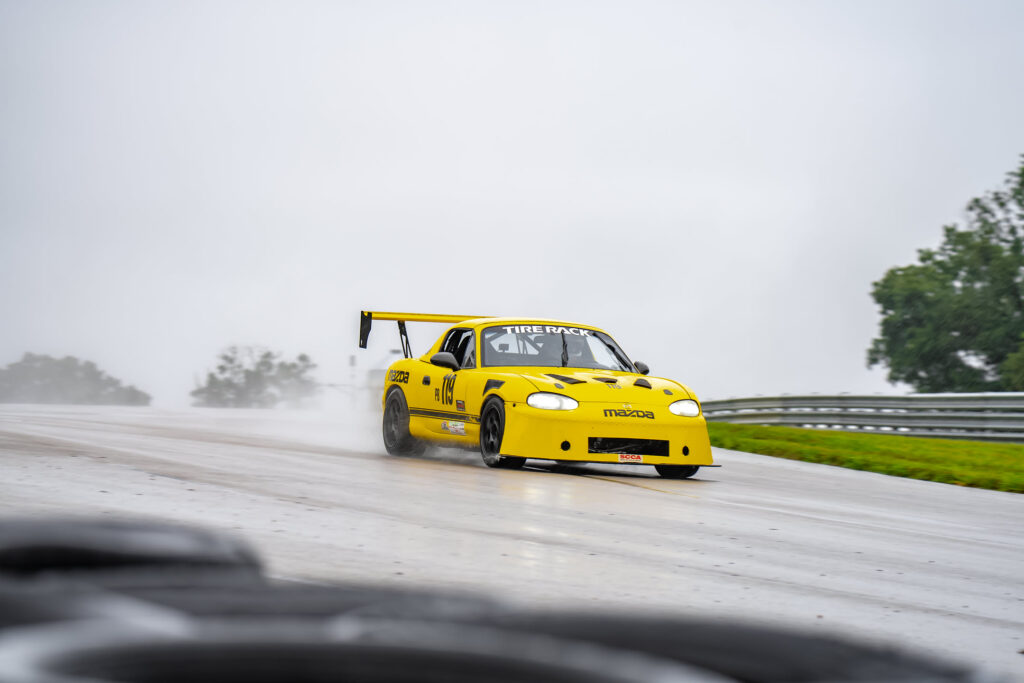
The April appearance at Hallett Motor Racing Circuit coincided with significant off-season infrastructure improvements, specifically the repaving of multiple turns by circuit management. However, continuous wet track conditions prevented optimal lap-time generation. Instead, the weekend served as an advanced testing ground for braking modulation, as drivers navigated transitional zones where older asphalt abruptly met newly laid surfaces mid-braking zone.
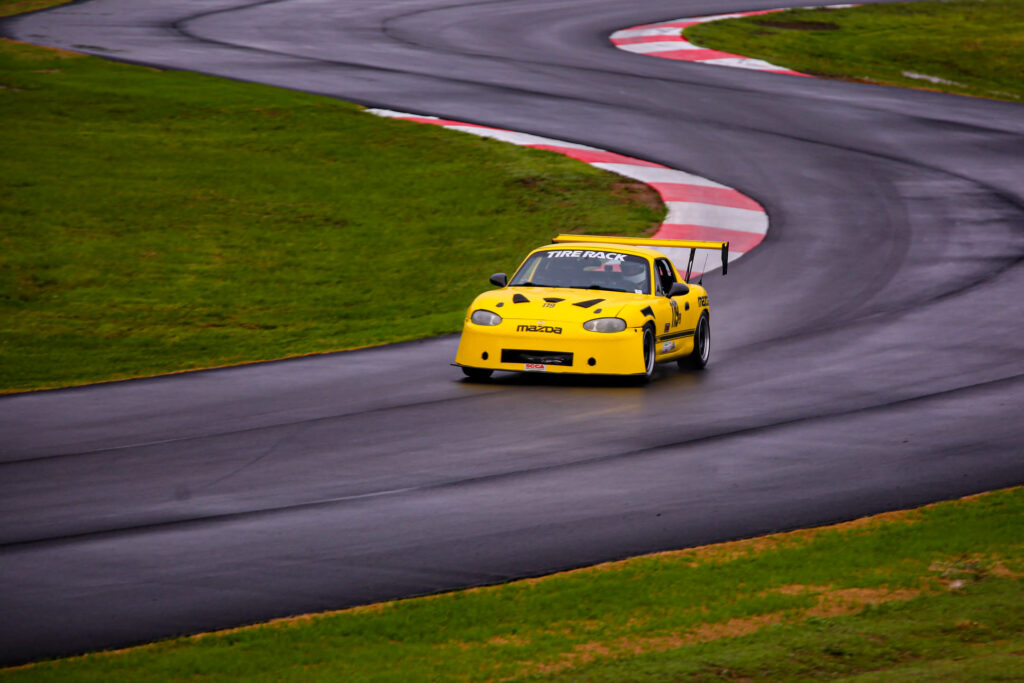
A similar meteorological challenge occurred in July at Ozarks International Raceway. Renowned as a technically demanding circuit in dry conditions, the introduction of standing water and variable drainage pools during wet sessions fundamentally altered track dynamics, providing critical car-control data for wet-weather competition.
Mechanical Resilience: The Skunk2 Throttle Body Failures
Despite rigorous preparation, the 2025 racing season exposed significant durability vulnerabilities within aftermarket components, specifically centering on the Skunk2 throttle body assembly.
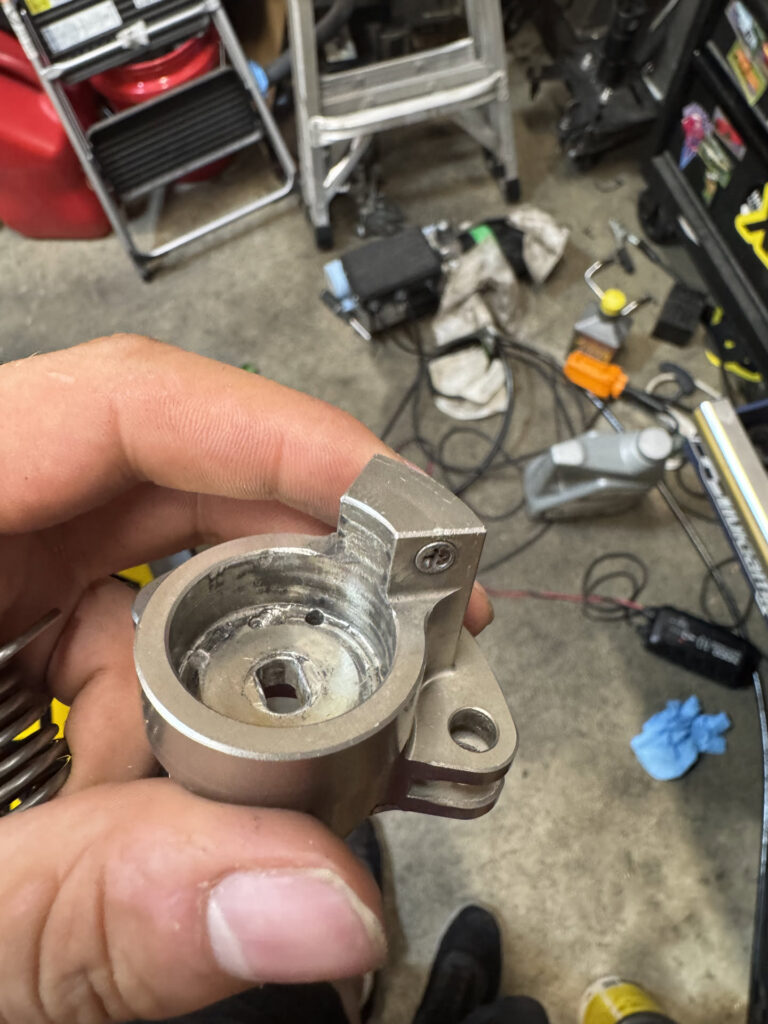
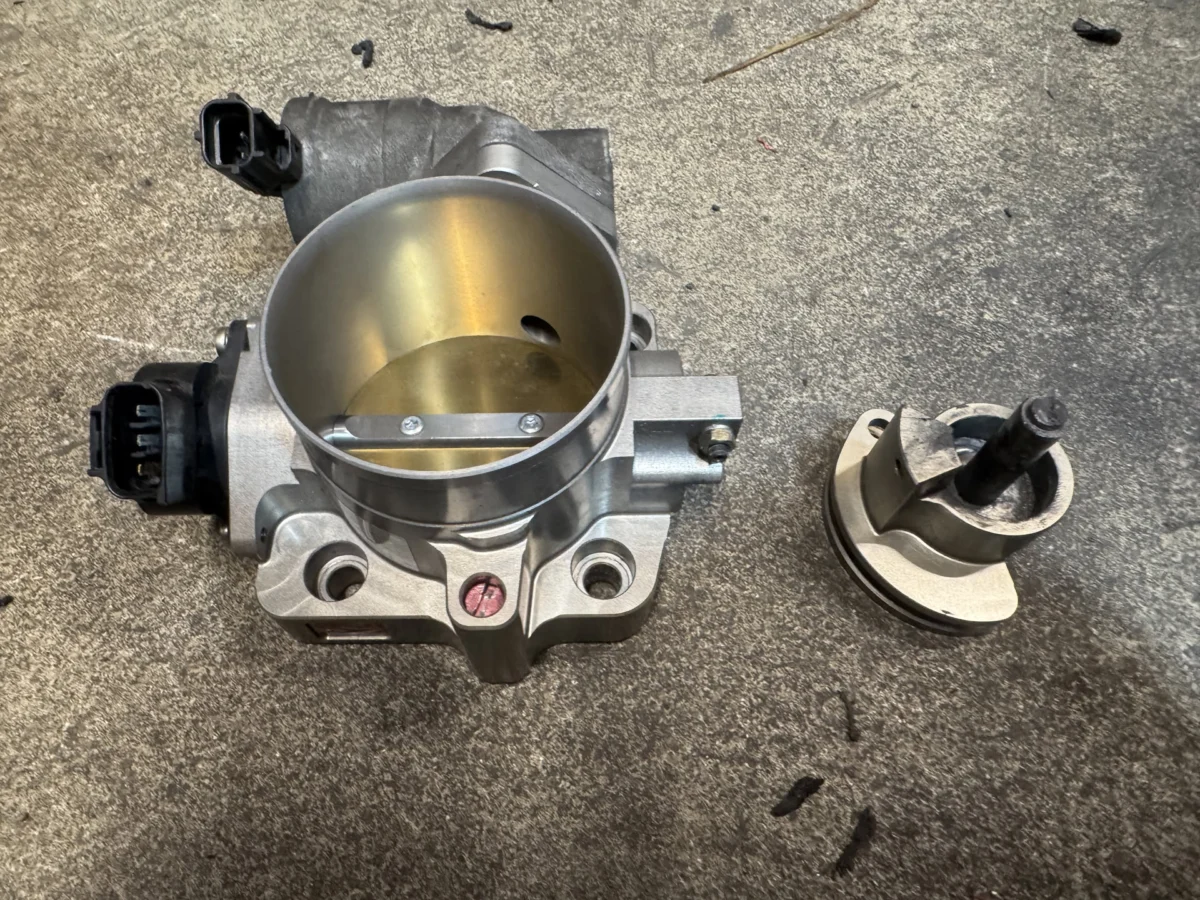
In May, during a test day at I29 Speedway, the throttle return spring on the Skunk2 unit fractured mid-session. Operating the vehicle without a proper return spring revealed inherent mechanical limitations, as engine vacuum struggled against a partially open throttle plate during deceleration zones. A field expedient repair—bending a surviving fragment of the spring—allowed the vehicle to complete the test day and make the journey home. A replacement Skunk2 unit was subsequently installed as a preventative measure.
The failure recurred more catastrophically in August during the final session of a weekend at High Plains Raceway. Accelerating down the main straightaway during a timed lap, the throttle body shaft sheared completely. While the fracture occurred externally, preventing internal engine ingestion of metallic debris, the failure necessitated an on-track recovery tow.
Confronted with two major throttle assembly failures within a single calendar year, the owner reverted to a factory stock throttle body for the remainder of the 2025 season while engineering a comprehensive long-term solution.
Infrastructure Upgrades: Trailer Enhancements and DIY Tire Maintenance
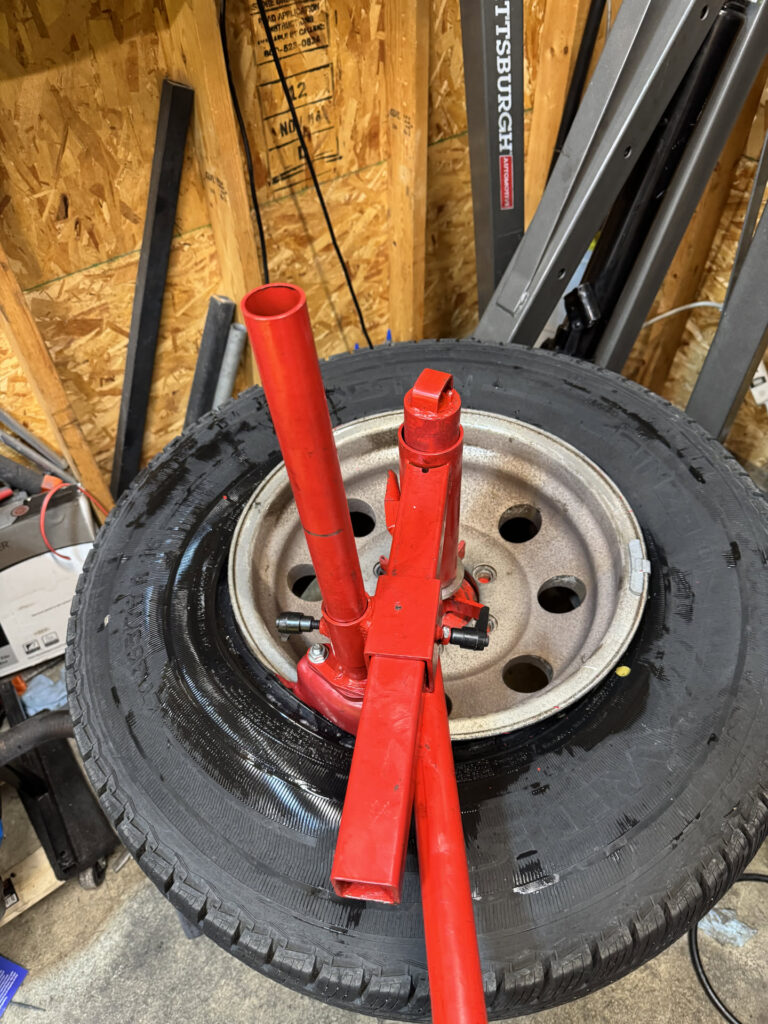
Operational logistics received significant attention during the 2025 season. Recognizing escalating commercial service rates at local automotive shops, the team invested in a Harbor Freight manual tire changer supplemented by a duckhead attachment and a DIY bubble balancer. Over the course of mounting and balancing more than 20 tires—including high-performance 200-treadwear (200TW) compounds—the equipment amortized its initial cost rapidly. Empirical observations indicated that precision bubble balancing frequently yields results comparable to, or exceeding, commercial spin-balancing equipment when executed with proper care.
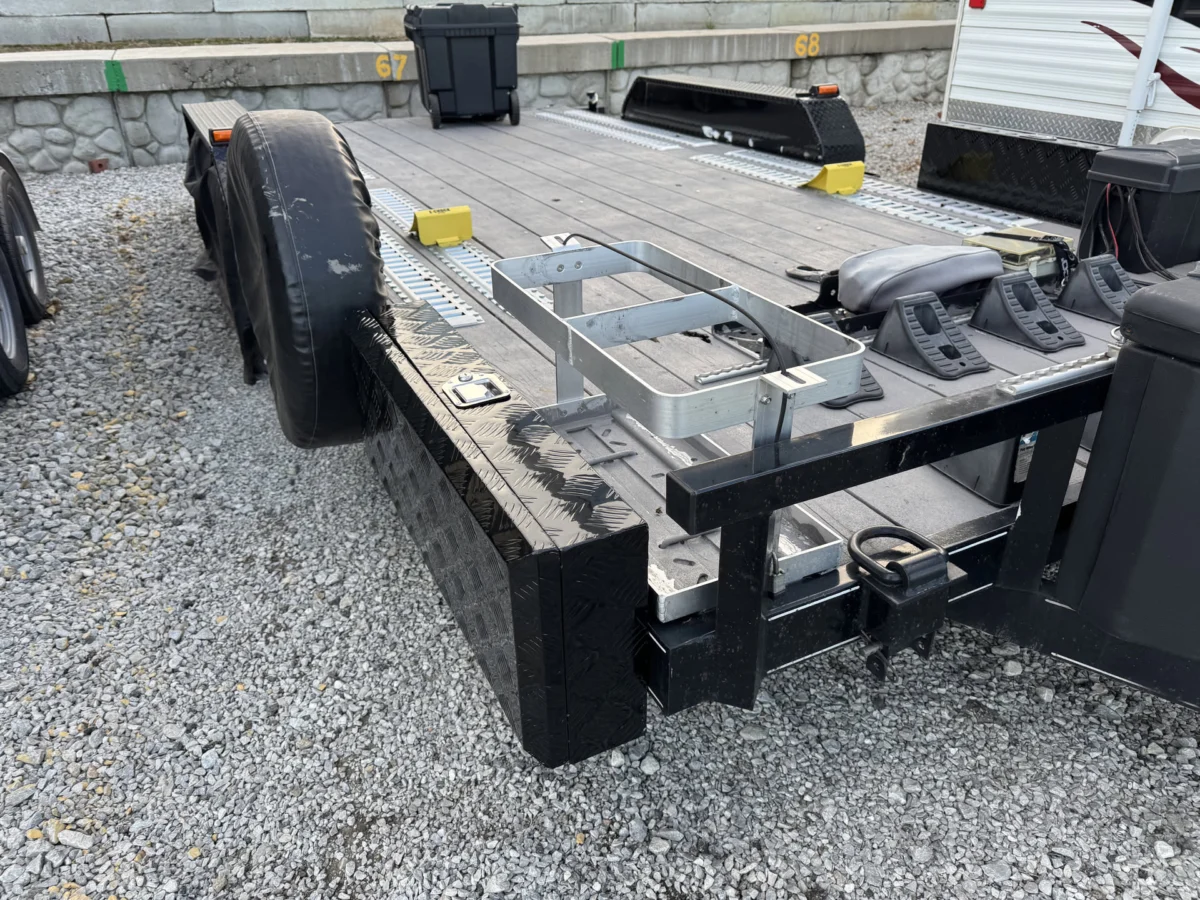
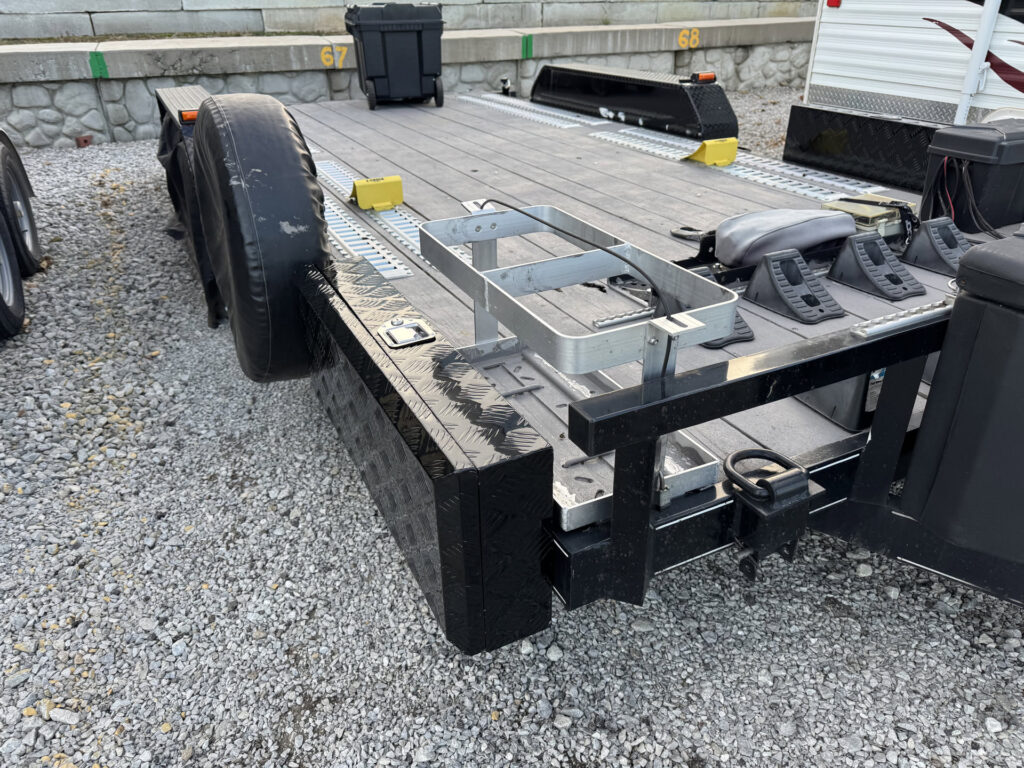
Concurrently, the open car-hauler trailer underwent structural and functional improvements. Most notably, the integration of E-track tie-down systems eliminated the initial 50-mile tension loss commonly associated with conventional wheel-net and axle-strap configurations, ensuring secure transit across long-distance towing routes to regional tracks.
Off-Season Engineering: Drive-by-Wire Conversion and Custom Wiring
Prompted by the reliability concerns of the 2025 racing season, the off-season months of late 2025 were dedicated to a complete electrical and mechanical overhaul aimed at eliminating potential single points of failure.
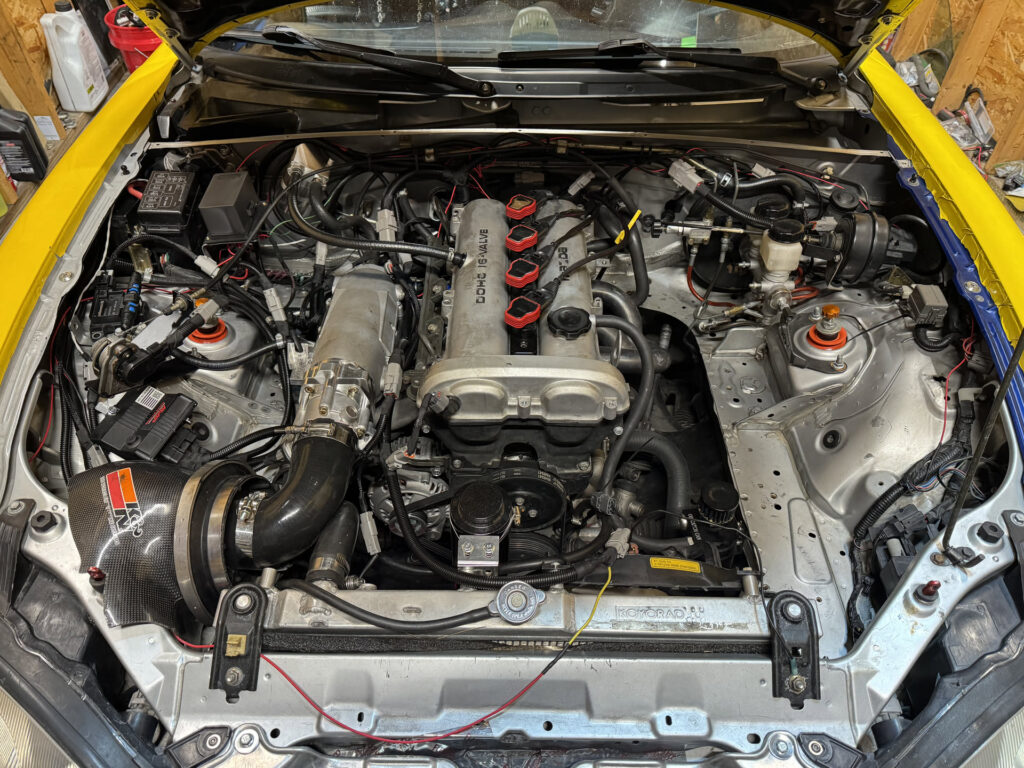
In October, the entire engine wiring harness was reconstructed from scratch. Previously, the vehicle utilized a factory 25-year-old engine harness integrated via custom adapter connectors to an MS3Pro Evo electronic control unit (ECU). The complete redesign implemented a modular harness utilizing weather-resistant Deutsch connectors, a centralized auxiliary fuse and relay block, and a dedicated ground bus bar.
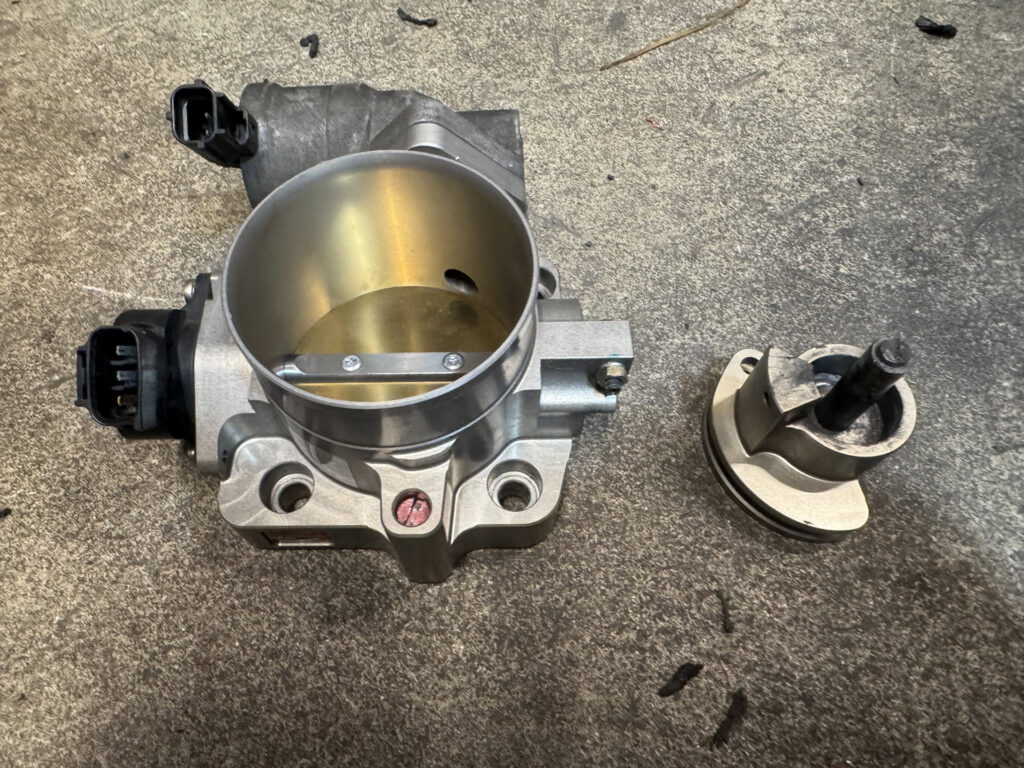
Simultaneously, the vehicle underwent a complete conversion to a drive-by-wire (DBW) throttle system. This upgrade retired the troublesome mechanical cable-actuated aftermarket throttle bodies in favor of a robust Bosch 60mm electronic throttle body, paired with a Honda accelerator pedal position sensor and an AMP EFI drive-by-wire controller.
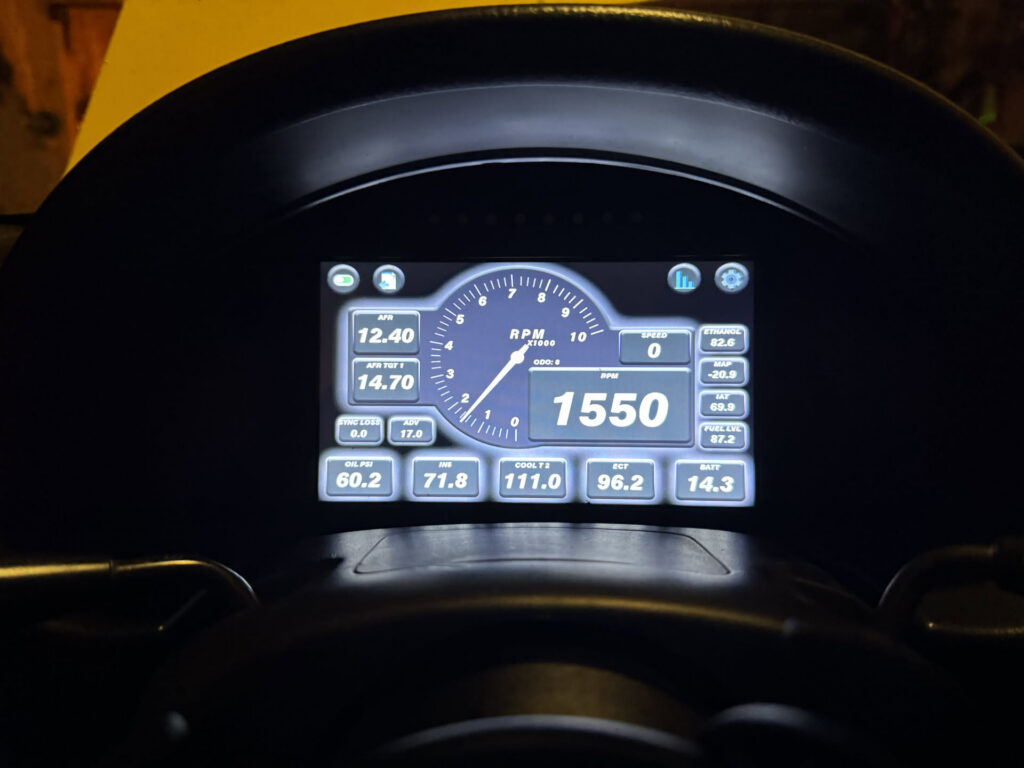
To complement the electrical updates, November saw the integration of a Tinker Electronics digital dashboard. Interfacing directly with the Megasquirt ECU via a Controller Area Network (CAN) bus, the compact digital display provides real-time telemetry for critical parameters such as oil pressure, coolant temperature, and fuel pressure. Configured warning thresholds automatically illuminate visual alerts in red when parameters exceed safe operating limits. Notably, custom ECU programming was developed to translate vehicle speed sensor data into a format compatible with the factory cruise control system, preserving street-car utility.
Drivetrain Refinement: Shifter and Differential Upgrades
The final months of the off-season focused on tactile driver interface and power delivery components.
In December, the existing tall-angled short-throw shifter was replaced with a Coolerworx competition short-throw shifter. Designed to mitigate accidental mis-shifts—a persistent hazard during high-stress track sessions—the Coolerworx unit incorporates an aggressive self-centering return spring, adjustable gate-position set screws for positive lateral engagement, and an integrated reverse-gear lockout mechanism to prevent accidental selection of reverse during aggressive downshifting maneuvers.
January 2026 marked a major internal drivetrain upgrade. After years of service, the factory Torsen Type II differential (utilizing a 4.30 final drive ratio) was retired. While effective under standard conditions, telemetry indicated limitations during sharp, low-speed cornering where inside rear tires frequently became unloaded. A Supermiata-tuned OS Giken mechanical clutch-type differential was installed into a secondary 4.30 open housing. This modification is anticipated to dramatically alter power delivery dynamics during corner exit phases for the upcoming 2026 racing calendar.
Expanding the Stable: Acquisition of a Second NB Miata
The retrospective concludes in February 2026 with a notable garage expansion. After five years of transforming the original 2000 model into a dedicated track machine, the owner acquired a secondary 2001 Mazda Miata via Facebook Marketplace for $1,800.
Though initially presenting in a severely neglected state—featuring degraded cosmetic clear coat, body damage, a torn soft top, missing interior components, and a welded differential—the rust-free chassis represented a high-value platform. Over the span of a month, corrective maintenance was executed, including the installation of a replacement soft top, interior restoration, refreshed suspension components, and the integration of the owner’s surplus 4.30 Torsen differential. The acquisition successfully establishes a dual-vehicle fleet: a heavily modified, yellow track-dedicated machine and a restored, street-oriented VVT-powered companion vehicle.
Outlook and Industry Implications
The continuous evolution of Quade’s NB Miata underscores the enduring viability of late-model Mazda roadsters within contemporary grassroots motorsports. By systematically addressing engineering bottlenecks—ranging from electronic signal routing and throttle actuation durability to differential lock-up characteristics—the project demonstrates how amateur motorsport participants utilize advanced aftermarket electronics, custom fabrication, and data-driven diagnostics to achieve professional-grade reliability and performance. As the vehicle prepares for its sixth year of competition, the integration of drive-by-wire technology and the OS Giken differential establishes a high benchmark for subsequent amateur time-trial development.