Edi Durjana
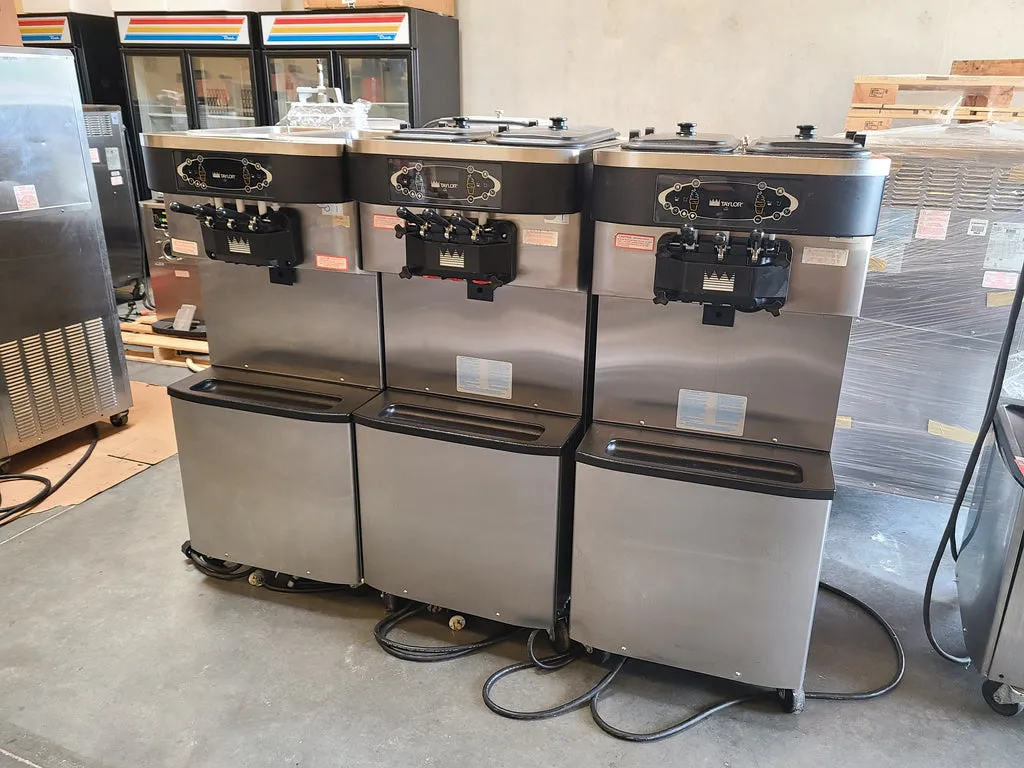
The landscape of emulation has historically been defined by the preservation of consumer electronics, ranging from 8-bit home video game consoles and handhelds to classic arcade cabinets and vintage personal computers. However, a recent development spearheaded by Libretro contributor Jesse Talavera—renowned for work on the melonDS DS core—expands the boundaries of emulation technology into the realm of commercial food service equipment. The newly released software, designated McSoftServe, is an emulator specifically engineered to replicate the operational characteristics, mechanical cycles, and interface mechanics of the Taylor C713 soft-serve ice cream machine, a model ubiquitous within major American fast-food franchises.
Available immediately for download within the RetroArch interface, McSoftServe marks a significant conceptual pivot for the open-source emulation community. While previous community experiments have occasionally targeted unconventional hardware as part of long-standing tradition—frequently coinciding with April Fool’s announcements—the technical framework required to simulate industrial thermal regulation, mix-hopper dynamics, and high-viscosity agitator motors introduces novel challenges to the Libretro architecture. This release brings industrial kitchen apparatuses into the same software ecosystem traditionally reserved for digital entertainment systems, prompting discussions among developers, technicians, and retro-gaming enthusiasts regarding the future scope of preservation technology.
Background Context and Industrial Significance
The Taylor C713 is not a consumer appliance, but rather a heavy-duty, floor-standing commercial soft-serve and shake freezer designed for high-volume foodservice operations. Manufactured by Taylor Company, a subsidiary of Carrier Global Corporation, the C713 line has long served as a backbone for major quick-service restaurant (QSR) chains, most notably McDonald’s. These machines are engineered to continuously draw liquid dairy or vegan mix from a refrigerated hopper, pasteurize or maintain it at safe holding temperatures, and freeze it while incorporating air (known as overrun) to produce a consistent, uniform soft-serve product.
Despite their widespread deployment, Taylor machines have occupied a unique space in public discourse and technical journalism over the past decade. Due to proprietary operating systems, complex error codes, and strict corporate maintenance guidelines, these units have frequently been the center of controversies surrounding the Right to Repair movement. Independent franchise owners have historically faced severe restrictions regarding self-service maintenance, leading to widespread equipment downtime and the creation of third-party diagnostic tools, such as the Kytch device, which monitor machine telemetry to help operators troubleshoot recurring locking errors.
The decision by Talavera to target the Taylor C713 through McSoftServe introduces a simulated environment where users can theoretically study the operational lifecycle of these complex commercial units without the associated financial overhead, health code risks, or mechanical wear. By abstracting the complex interplay of refrigeration compressors, beaters, pressure switches, and cleaning cycles into code executable within RetroArch, the project highlights the intersection of industrial automation and software emulation.
Technical Architecture and Emulation Challenges
Developing an emulator for a commercial soft-serve machine requires a fundamental shift from traditional CPU and GPU instruction-set translation. Unlike video game consoles, which process geometric data, audio streams, and pixel arrays, the Taylor C713 relies on electro-mechanical systems, sensor feedback loops, and microcontroller-based logic boards running proprietary firmware.
According to technical documentation embedded within the Libretro release ecosystem, McSoftServe simulates several core subsystems intrinsic to the physical C713 hardware:
-
Thermal Dynamics and Refrigeration Cycles: The emulator models the cooling efficiency of the evaporator barrel and the upper mix hopper. Users must monitor ambient room temperatures, condenser water or air flow, and refrigerant pressures to prevent the soft-serve mix from either melting into a liquid state or freezing solid into the cylinder, which triggers the machine’s safety lockout mechanism.
-
The Beater Motor and Viscosity Control: A central feature of the C713 is its high-torque drive assembly, which rotates internal blades to scrape frozen product from the cylinder walls while whipping air into the mixture. McSoftServe reportedly simulates torque resistance, motor load amperage, and product viscosity levels, replicating the mechanical resistance experienced when drawing product or running a batch freeze cycle.
-
The Hopper and Mix Level Sensors: Commercial soft-serve machines require precise fluid dynamics management to ensure the freezing cylinder is never starved of liquid mix, which can cause severe mechanical damage. The emulation layer tracks liquid levels, float switch statuses, and pump injections in real time.
-
The Digital Control Panel and Error Codes: Much of the user interaction with a Taylor C713 involves interpreting alphanumeric diagnostic displays, temperature readouts, and soft-touch keypad commands. McSoftServe provides a faithful recreation of the machine’s interface, allowing users to experience the routine startup procedures, brush cleaning reminders, and notoriously opaque error codes that plague human operators in real-world restaurant environments.
Integration Within the RetroArch Ecosystem
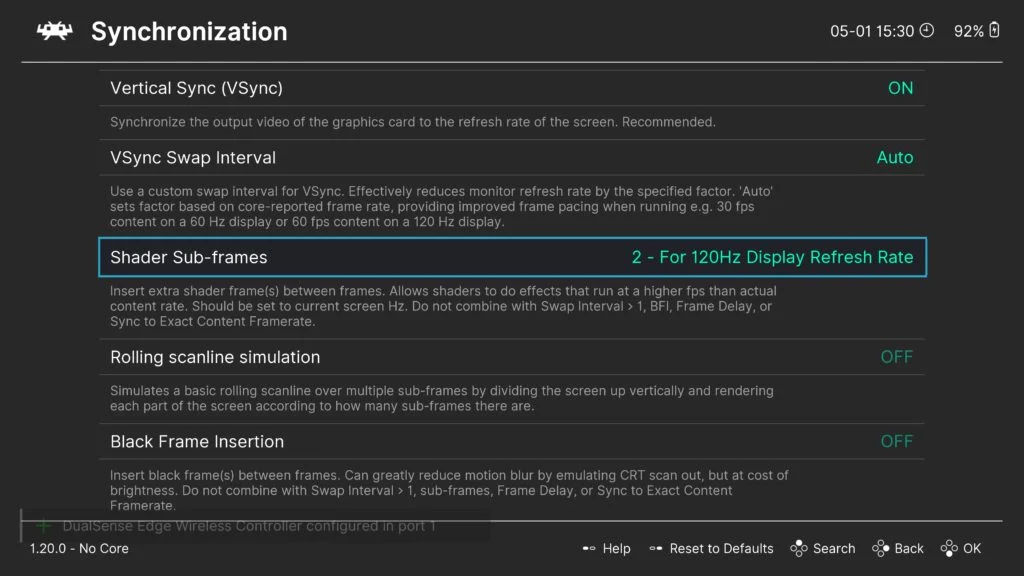
The deployment of McSoftServe via RetroArch’s online updater underscores the versatility of the Libretro application programming interface (API). RetroArch, which serves as a frontend for emulators, game engines, and media players, utilizes dynamically loadable libraries called cores. By compiling McSoftServe as a standard Libretro core, developers have enabled the software to run across a vast array of host operating systems, including Windows, macOS, Linux, Android, and various single-board computers.
The integration process follows the standard pipeline established for traditional gaming cores:
- Core Acquisition: Users navigate to the "Online Updater" menu within RetroArch, select "Core Downloader," and locate McSoftServe within the repository index.
- Asset Loading: Upon loading the core, the software initializes the simulated hardware environment, presenting the user with the front-facing control panel of the C713.
- Interaction Layer: Input mapping allows standard gamepads, keyboards, or touchscreens to interact with the machine’s physical buttons, replicating the actions of opening the draw valve, pressing the wash key, or resetting a fault condition.
While standard emulation cores utilize ROM (Read-Only Memory) files ripped from physical media, unconventional cores often generate synthetic states or require custom configuration files to simulate operational data. In the case of McSoftServe, the simulation operates as a continuous state machine, responding dynamically to user inputs and environmental parameters simulated by the backend code.
Industry and Community Reaction
The announcement and subsequent release of McSoftServe have elicited varied responses from both the retro-gaming community and broader technology sectors. Within the Libretro forums and social media channels, community members praised the humor and technical audacity of the project, drawing parallels to previous fictional or comedic emulation releases that nevertheless featured functional, albeit whimsical, underlying code.
However, industry analysts and independent repair advocates have noted that the release carries unintended cultural resonance. Given the ongoing public scrutiny surrounding the operational reliability of commercial soft-serve equipment in popular fast-food chains, an educational or simulation tool that demystifies the error codes and maintenance cycles of these machines provides an interesting commentary on modern appliance ownership and industrial software locks.
While the manufacturer, Taylor Company, has not issued an official statement regarding McSoftServe—largely due to the project’s classification as a hobbyist software release within the emulation community—legal and technical observers point out that simulating industrial machinery does not infringe upon copyrighted video game code, though it treads into novel territory regarding the digital representation of proprietary commercial hardware interfaces.
Broader Implications and Future Outlook
The introduction of McSoftServe raises broader questions regarding the potential evolution of emulation technology. Historically, the preservation community has focused on cultural artifacts such as video games, interactive software, and early computing hardware. However, as modern appliances, automobiles, and industrial machinery become increasingly software-defined—relying on embedded microcontrollers, proprietary operating systems, and digital interfaces—the line between consumer electronics and commercial equipment continues to blur.
Projects like McSoftServe, while presented with a degree of levity, demonstrate that the tools of emulation can be applied to virtually any system governed by finite state logic and sensor-driven feedback loops. Whether this sparks a broader movement toward the preservation and simulation of industrial machinery remains to be seen. For now, enthusiasts and curious developers can download the core through RetroArch, step into the virtual shoes of a fast-food equipment technician, and experience firsthand the intricate operational challenges of maintaining a commercial soft-serve ice cream machine.