Indra Gunadi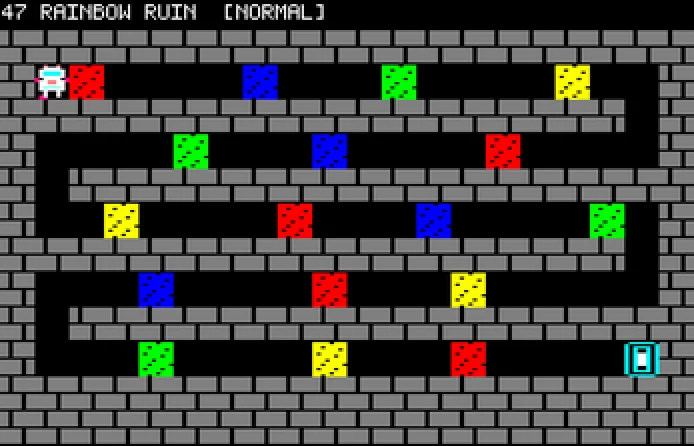
The release of Chroma Phaze by the developer collective known as Revive8Bit marks a significant milestone in the ongoing preservation and active development of the Amstrad CPC platform. Released in October 2026, the title serves as a testament to the persistent vitality of the 8-bit computing scene, which has seen a surge in high-quality software output over the last decade. Chroma Phaze introduces a sophisticated spatial puzzle mechanic that leverages the hardware limitations of the Amstrad CPC to create a challenging, fast-paced environment that pays homage to the classic puzzle games of the 1980s while incorporating modern design sensibilities.
The Core Gameplay Mechanics
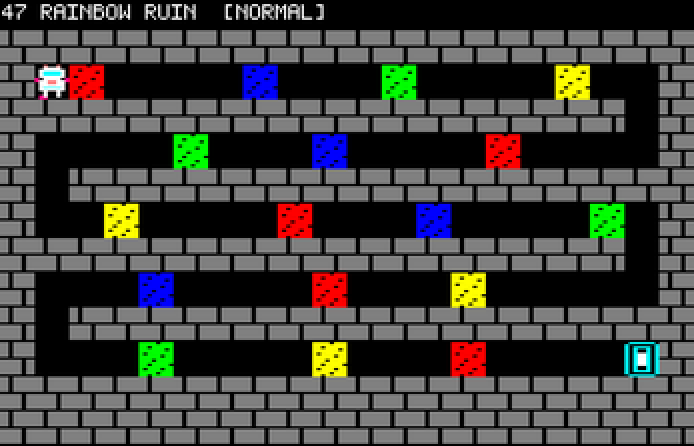
Chroma Phaze centers on a grid-based navigation system where the player must traverse 48 interconnected rooms to reach the "far gate." The fundamental hook of the game is its color-shifting mechanic. The game world is divided into four distinct color channels: Red, Blue, Green, and Yellow. To progress, the player must shift their character’s phase to match the color of the void ahead.
This mechanism is not merely cosmetic; it is a critical survival element. By matching the phase of the player to the color of the environmental barriers, the player is granted the ability to "walk through walls." However, the design includes a temporal penalty: holding a phase shift for too long causes the system to snap back to a default state. If a player is positioned within the geometry of a wall when this snap-back occurs, the character risks being trapped or obstructed by materialized geometry, necessitating a restart of the specific room or a strategic repositioning. This risk-reward dynamic requires precise timing and pattern recognition, elevating the game from a simple navigation puzzle to a test of mechanical rhythm.
Historical Context of the Amstrad CPC Scene
The Amstrad CPC (Colour Personal Computer) series, launched by Amstrad in 1984, remains a cornerstone of European home computing history. Originally designed to compete with the Commodore 64 and the ZX Spectrum, the CPC enjoyed a long lifespan, particularly in France, Spain, and the United Kingdom. While the original commercial production of software for the platform largely ceased in the early 1990s, the "homebrew" movement has sustained the machine’s utility for over 30 years.
The emergence of developers like Revive8Bit is part of a larger trend in retro-computing where enthusiasts utilize modern cross-compilation tools and AI-assisted development workflows to push the 8-bit hardware further than original developers could have imagined in the 1980s. The mention of "AI-assisted content" in the development of Chroma Phaze reflects a growing integration of machine learning tools in code generation and asset optimization. This shift has allowed small, independent teams to produce games that feature complex pathfinding, optimized screen-scrolling, and intricate puzzle logic that once required teams of engineers to implement.
Development Chronology and Production
The development of Chroma Phaze followed a structured timeline typical of contemporary indie projects. Initial conceptualization began in early 2026, focusing on the limitation of the Amstrad’s 64KB memory architecture. The primary technical challenge was managing the color-switching state machine without causing flickering or CPU latency, which is a common bottleneck on the Zilog Z80 processor.
- Q1 2026: Conceptual design phase, establishing the 48-room grid architecture and the core color-switching logic.
- Q2 2026: Prototyping of the collision detection system, ensuring that the "walk through walls" mechanic functioned correctly within the Z80’s address space.
- Q3 2026: Asset implementation and optimization. During this phase, the team integrated AI-assisted code modules to handle the rendering of the color-coded void transitions.
- October 2026: Final testing and public release through digital distribution platforms dedicated to retro-gaming preservation.
Technical Analysis and Hardware Implications
The Amstrad CPC is defined by its ability to display 16 colors from a palette of 27, though typically at a lower resolution in its higher-color modes. Chroma Phaze utilizes these hardware constraints effectively. By isolating the game world into four distinct color zones, the developers have optimized the VDU (Video Display Unit) memory usage.
From an analytical standpoint, the game’s reliance on "snapping back" mechanics serves as an ingenious way to manage player movement without exceeding the system’s interrupt handling capacity. By forcing the player to manage a resource—time spent in a phased state—the game minimizes the number of active objects the CPU must track at any given frame. This is a common strategy in modern retro development: replacing complex, resource-heavy calculations with gameplay loops that naturally limit the number of entities on screen.
Industry Impact and Preservation
The release of Chroma Phaze contributes to the broader ecosystem of digital preservation. By producing new, playable software for the Amstrad CPC, developers are ensuring that the hardware remains relevant to new generations of users. Furthermore, the inclusion of modern development methodologies, such as AI-assisted coding, creates a bridge between historical hardware and contemporary software engineering practices.
Experts in the field of digital archaeology and retro-gaming have noted that projects like this do more than just provide entertainment; they provide a "stress test" for current emulation software. As more developers push the limits of the original hardware, emulator developers must refine their software to ensure perfect compatibility with these new, non-standard code structures. Thus, Chroma Phaze acts as a benchmark for both the hardware’s capabilities and the accuracy of modern emulation suites.
Reactions from the Retro-Computing Community
Initial feedback from the retro-gaming community, particularly on forums and digital distribution sites like PDroms, has been largely positive. Enthusiasts have praised the game for its "pick-up-and-play" nature, which contrasts with the often overly complex or narrative-heavy games found on modern consoles. The simplicity of the objective—reaching the far gate—combined with the increasing difficulty of the 48 rooms, has been cited as a primary reason for the game’s high replay value.
While Revive8Bit has not issued a formal statement regarding future updates, the modular nature of the game’s code—enabled by the AI-assisted development tools—suggests that an expansion or a level-editor suite could be a possibility. Such an addition would be unprecedented for a native Amstrad title of this scale, potentially extending the longevity of the game for several years.
Future Implications for Homebrew Development
The use of AI-assisted code in Chroma Phaze sets a precedent for future development projects on legacy platforms. By offloading the more tedious aspects of assembly-language coding—such as optimizing register usage or ensuring consistent frame rates during screen transitions—developers can spend more time on high-level design.
This trend is expected to increase the frequency of high-quality releases for platforms like the Amstrad CPC, Commodore 64, and ZX Spectrum. As AI models become better at understanding the specific instruction sets of legacy processors like the Z80 or the MOS 6502, the barrier to entry for homebrew development will continue to lower. This could lead to a renaissance of sorts, where the technical limitations of 1980s hardware are no longer a barrier to the creation of complex, deep, and engaging interactive experiences.
In summary, Chroma Phaze is more than a simple puzzle game. It is a sophisticated piece of software that encapsulates the intersection of historical technology and modern innovation. Its success demonstrates that the 8-bit era is not a closed chapter in computing history, but rather a vibrant, evolving field that continues to attract talent and capture the imagination of the global gaming community. Through its challenging design and technical efficiency, it stands as a landmark release for the Amstrad CPC in 2026.