 Hartono Sudibyo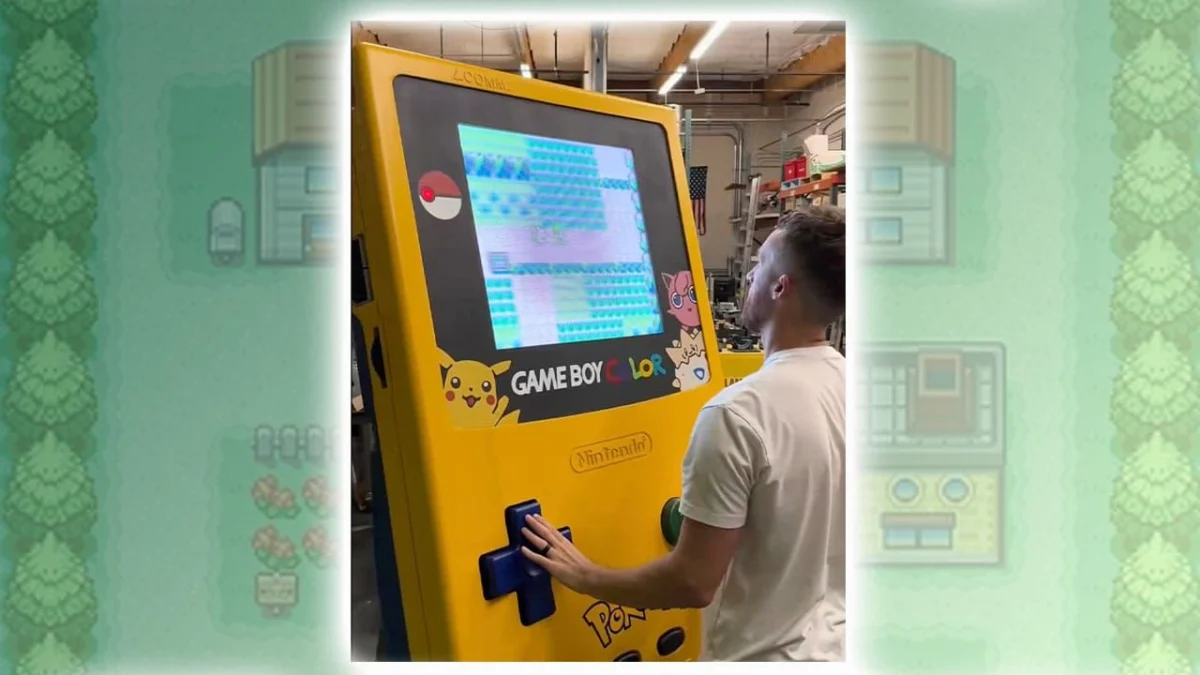
In the contemporary landscape of hardware modification and retro gaming restoration, scale has increasingly become a medium for creative expression. Content creator and hardware engineer Nick, known professionally across digital platforms as NickBuildsStuff, has unveiled his latest large-scale engineering feat: a fully functional, oversized replica of the iconic Game Boy Color Pikachu Special Edition. The project, developed in collaboration with creative partner Ppow Creative, merges nostalgia with modern engineering techniques, capturing widespread global attention across social media channels and generating significant discourse within the retro gaming community.
The Main Facts of the Gigantic Build
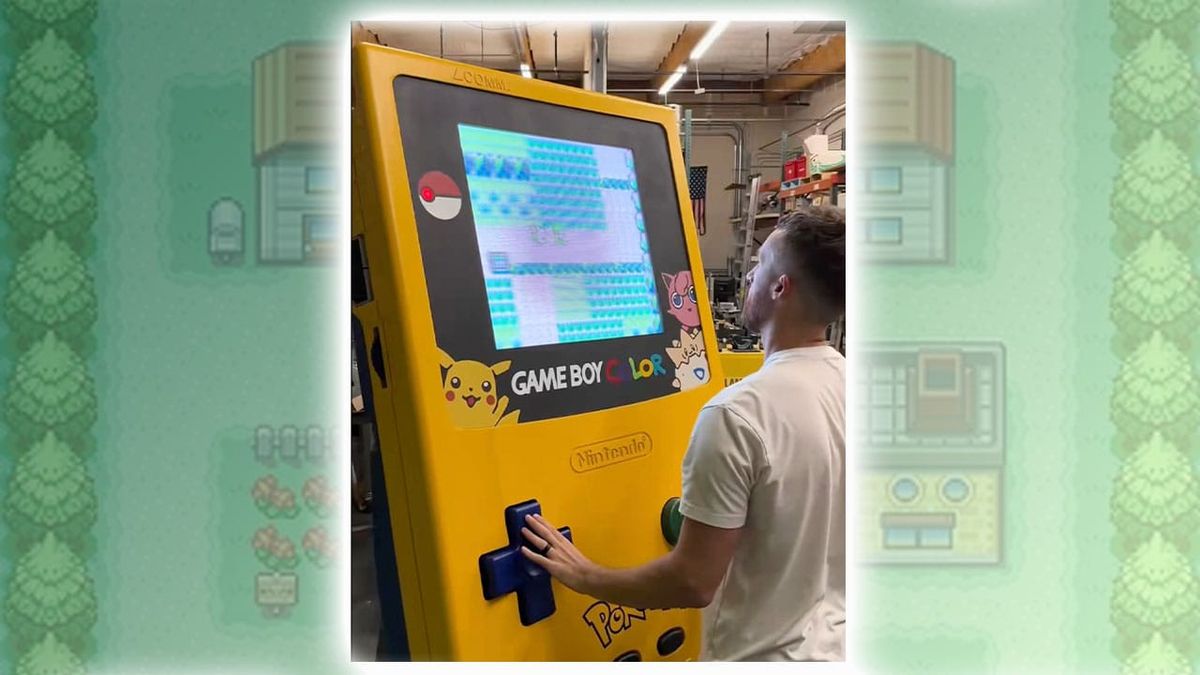
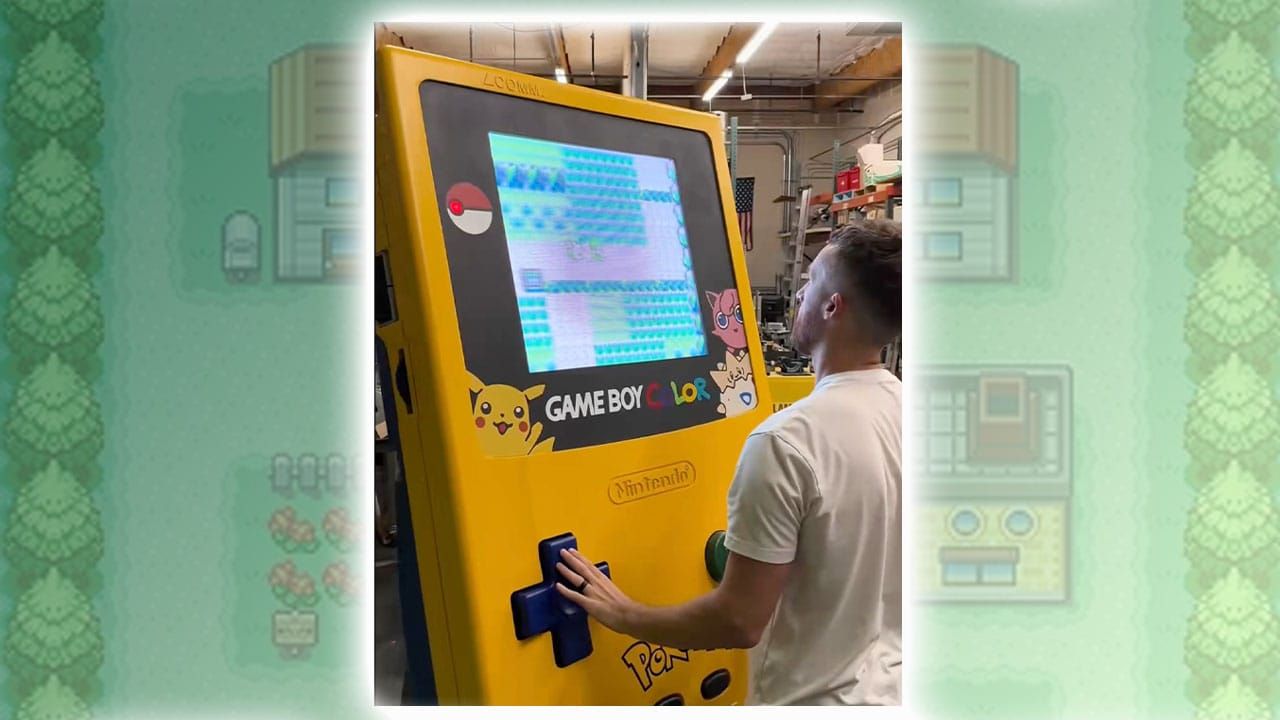
The newly revealed handheld console is an oversized homage to the classic Nintendo Game Boy Color Pikachu Special Edition, originally released in late 1999 to coincide with the cultural phenomenon surrounding the Pokémon franchise. Unlike static museum displays or non-working prop models, Nick’s creation is entirely operational. It features a functioning screen capable of running genuine software titles, responsive directional pads and action buttons scaled proportionally to the chassis, a functional volume wheel, and a dedicated link cable port.
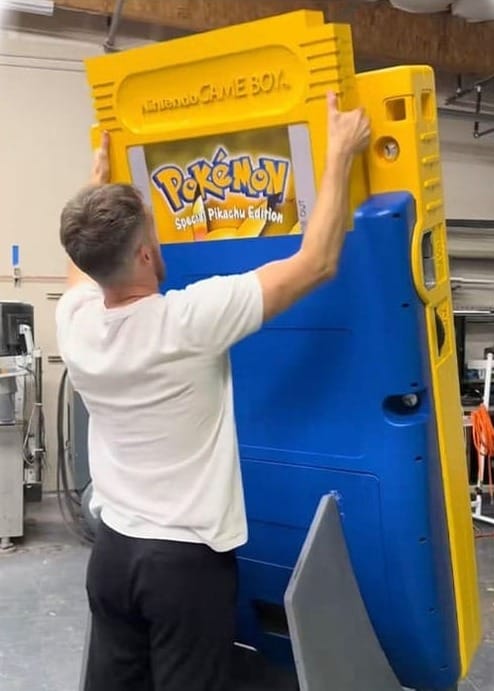
Central to the design is an oversized replica of a Pokémon Yellow Game Boy cartridge. The physical cartridge requires both hands to insert into the top-loading slot of the console, mirroring the mechanical interaction of the original hardware on a macro scale. Inside the oversized housing, the system integrates custom electronic components, microcontrollers, and a display panel capable of rendering vintage Game Boy graphics with crisp clarity. While the exact internal specifications have not been fully itemized by the creator, previous iterations of Nick’s oversized builds typically utilize heavy-duty power sources, such as scale-replica AA batteries positioned in the rear compartment, to support the increased electrical demands of the enlarged display and internal circuitry.
Chronology and Development of Retro Scaling
The creation of oversized consumer electronics is a niche subgenre within the broader maker and hardware modification community. Over the past decade, engineers and hobbyists have increasingly tested the limits of scale, transforming palm-sized consumer devices into room-filling or furniture-sized art installations.
The timeline of this specific engineering project began months prior to its public unveiling, involving conceptual design, 3D modeling of the distinct Pikachu Special Edition shell aesthetics, and the sourcing of custom-manufactured external housing components. The aesthetic accuracy required precise color matching to replicate the signature yellow chassis, vibrant blue buttons, and the character artwork featuring Pikachu, Pichu, and Togepi famously printed on the original Nintendo hardware faceplate.

Following the physical assembly and electrical calibration, the hardware underwent rigorous testing to ensure that classic software titles—most notably Pokémon Yellow: Special Pikachu Edition—could be loaded and played without input lag or graphical corruption. The public debut occurred via short-form video platforms, rapidly gaining traction. Within its initial release window, the primary demonstration video uploaded to TikTok surpassed 1.3 million views, sparking intense online discussion among vintage gaming enthusiasts, electrical engineers, and casual observers alike.
Supporting Data and Community Engagement
The viral success of the oversized Game Boy Color is reflective of a broader economic and cultural trend: the enduring viability and monetization of retro gaming nostalgia. According to market research tracking the vintage toy and video game sectors, consumer demand for hardware released between 1989 and 2005 has surged consistently over the past decade. Devices such as the original Game Boy, Game Boy Color, and Game Boy Advance routinely command high collector valuations, while hardware modding communities have transformed into multi-million-dollar cottage industries specializing in replacement shells, backlight modifications, and custom circuit boards.
NickBuildsStuff occupies a unique intersection within this ecosystem. By subverting traditional expectations of miniaturization—a hallmark of modern smartphone and computing evolution—his projects reverse engineer the psychological relationship between user and device. The juxtaposition of a massive hardware footprint running software engineered for pocket-sized portability creates an immediate visual contrast that resonates with digital audiences. Engagement metrics for the Pikachu Special Edition build far exceed platform averages for the creator’s channel, demonstrating a high conversion rate of shares, saves, and cross-platform reposting across Reddit, X (formerly Twitter), and specialized retro gaming forums.
Industry and Creator Perspectives
While official corporate commentary from Nintendo regarding independent, non-commercial hardware replicas of this scale is historically rare, intellectual property holders generally monitor fan-made modifications closely. To date, projects of this nature are widely perceived within the industry as benign tributes that celebrate legacy hardware rather than commercial market competitors.
Fellow prominent hardware engineers and digital creators have publicly praised the technical execution of the build. Tom Tilley, recognized globally for constructing the world’s largest functional Game & Watch console, serves as a prominent stylistic predecessor to Nick’s methodology. The community consensus among retro hardware preservationists highlights that while these oversized builds cannot be mass-marketed due to ergonomic and logistical constraints, they serve a vital cultural function: preserving the tactile memory of physical media in an increasingly cloud-based and digital-first entertainment landscape.
Broader Impact and Technical Implications
The implications of large-scale hardware engineering extend beyond viral social media metrics. Projects like the oversized Game Boy Color demonstrate the accessibility of advanced computer-aided design (CAD) software, large-format 3D printing, and custom printed circuit board (PCB) fabrication for independent makers. A decade ago, constructing a fully operational macro-scale consumer electronic device required industrial-grade manufacturing partnerships. Today, advanced makers leverage open-source microcontrollers, modular display technologies, and desktop manufacturing tools to achieve industrial-grade results in home workshops.
Furthermore, the project underscores the enduring cultural footprint of the Game Boy platform. Released initially in 1989 by Nintendo under the leadership of Gunpei Yokoi, the Game Boy and its successors established the standards for portable interactive entertainment. By scaling these devices up, creators deliberately force viewers to confront the intricate design choices made by original engineers—such as button placement, aspect ratios, and acoustic chamber design—in a hyper-visible format.
As the line between digital content creation and physical engineering continues to blur, projects of this caliber illustrate the vibrant intersection of modern fabrication technology and nostalgic preservation. Whether future iterations will explore even more complex hardware architectures remains to be seen, but the public reception of the Game Boy Color Pikachu Special Edition confirms that the appetite for creative, larger-than-life tributes to gaming history remains robust and globally engaged.