 Retno Hari Mulyono
The pursuit of motorsports performance often introduces logistical challenges that test the ingenuity of automotive hobbyists. For participants in high-performance driving events, time trials, and autocross competitions, transitioning from standard street tires to specialized 200 treadwear (200TW) or competition-compound rubber represents a critical performance milestone. However, this transition exposes a distinct operational hurdle: the rapid degradation of high-performance tires when subjected to standard street driving. While operators of larger sedans and hatchbacks can frequently stow an auxiliary set of wheels within the vehicle cabin or trunk, owners of compact sports cars—most notably the Mazda Miata—face strict spatial limitations. To overcome this constraint, a growing segment of the enthusiast community has turned to custom-built tire trailers, a specialized towing solution that balances gear capacity with minimalist vehicle preservation.

The Mechanical and Safety Implications of Street-Driven Track Tires
Although the majority of tires utilized during track days maintain Department of Transportation (DOT) approval for public road use, deploying them in non-track environments incurs significant drawbacks. Industry analyses and veteran driving instructors frequently caution against utilizing high-grip compounds for daily commuting or transit to events, citing two primary vulnerabilities: accelerated tread wear and severely compromised adverse-weather performance.
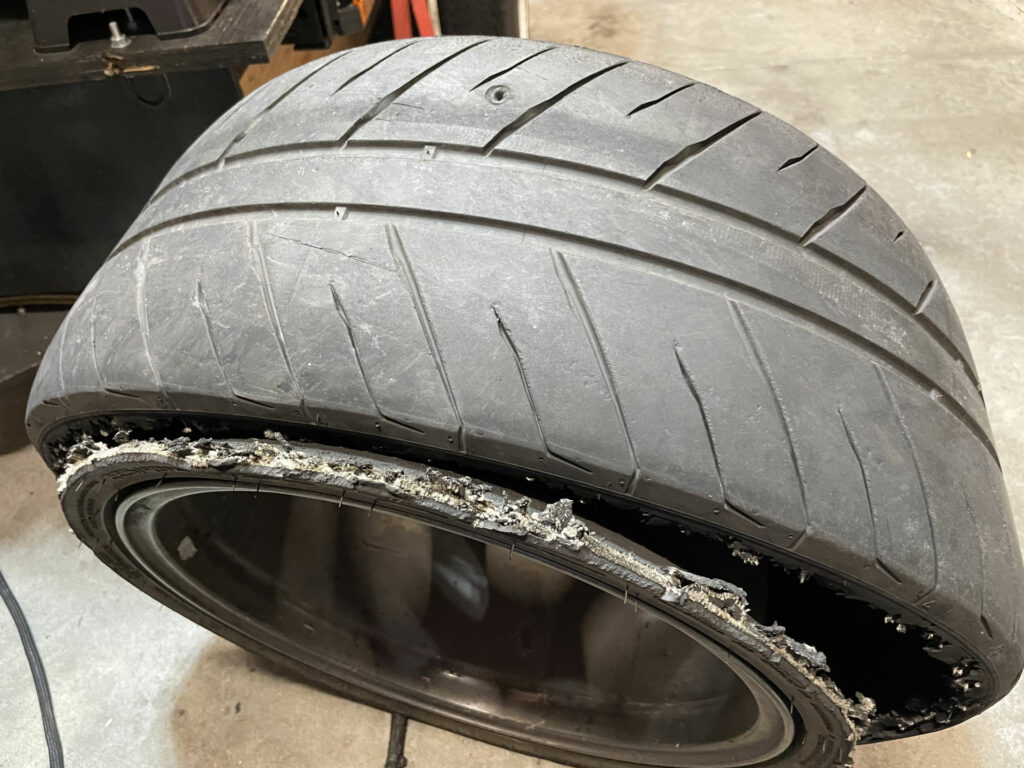
High-performance tires are engineered to operate within specific thermal windows, yielding maximum friction through soft compound formulations. Consequently, their lifespan is measured less by traditional odometer mileage and more by operating hours and thermal cycles—the process of heating up to operational temperatures and cooling down. Subjecting these expensive compounds to abrasions from public asphalt diminishes their competitive lifespan before they ever encounter a circuit. Furthermore, the financial risk of road hazards, such as puncturing a specialized tire with a stray nail, introduces unnecessary expenditure for components that regularly exceed standard tire pricing.
Beyond economic considerations, safety remains a paramount concern. Many track-oriented tires feature minimal void ratios and shallow tread patterns designed to maximize dry pavement contact. When ambient temperatures drop or unexpected precipitation occurs, these compounds lose substantial friction coefficients. Documented incidents of hydroplaning and loss of directional control during transit underscore the hazard of operating track-focused rubber on wet highways. Drivers frequently report severe handling compromises when caught in sudden downpours, transforming routine transit into high-risk navigation.

Anatomy of a Compact Tire Trailer
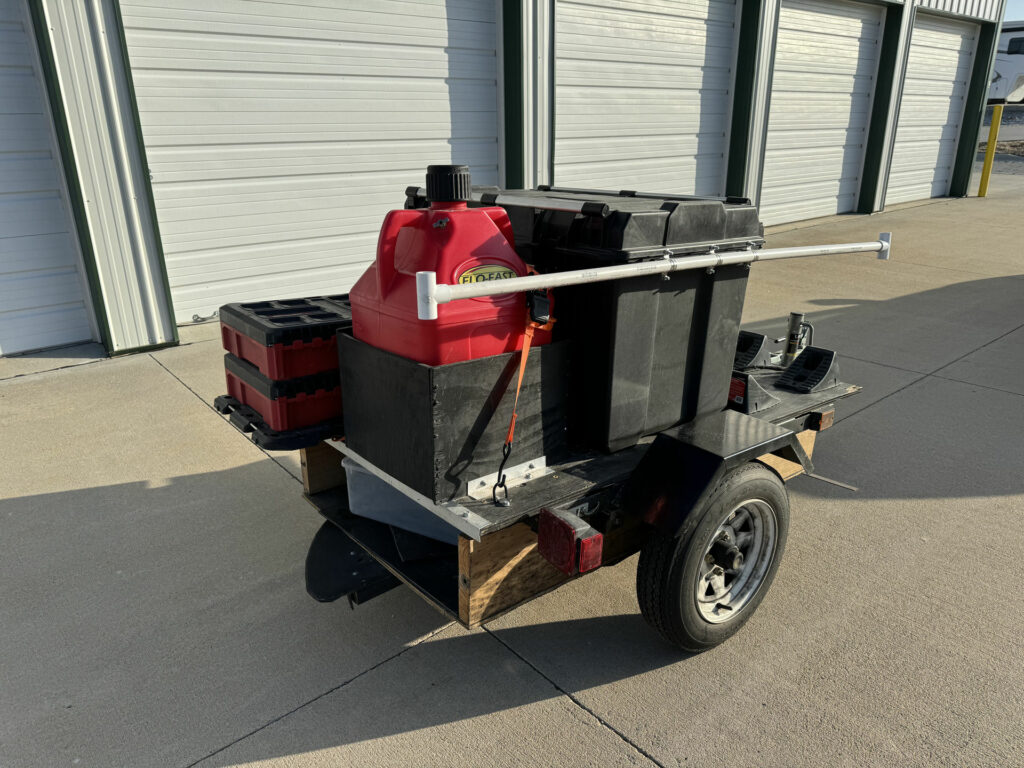
To circumvent the limitations of cabin storage, enthusiasts deploy compact utility trailers specifically modified to transport an auxiliary set of wheels, fuel containers, and paddock equipment. These configurations typically begin with a lightweight utility frame, such as those retailed by Northern Tool or Harbor Freight, which provide a modular foundation for custom fabrication.
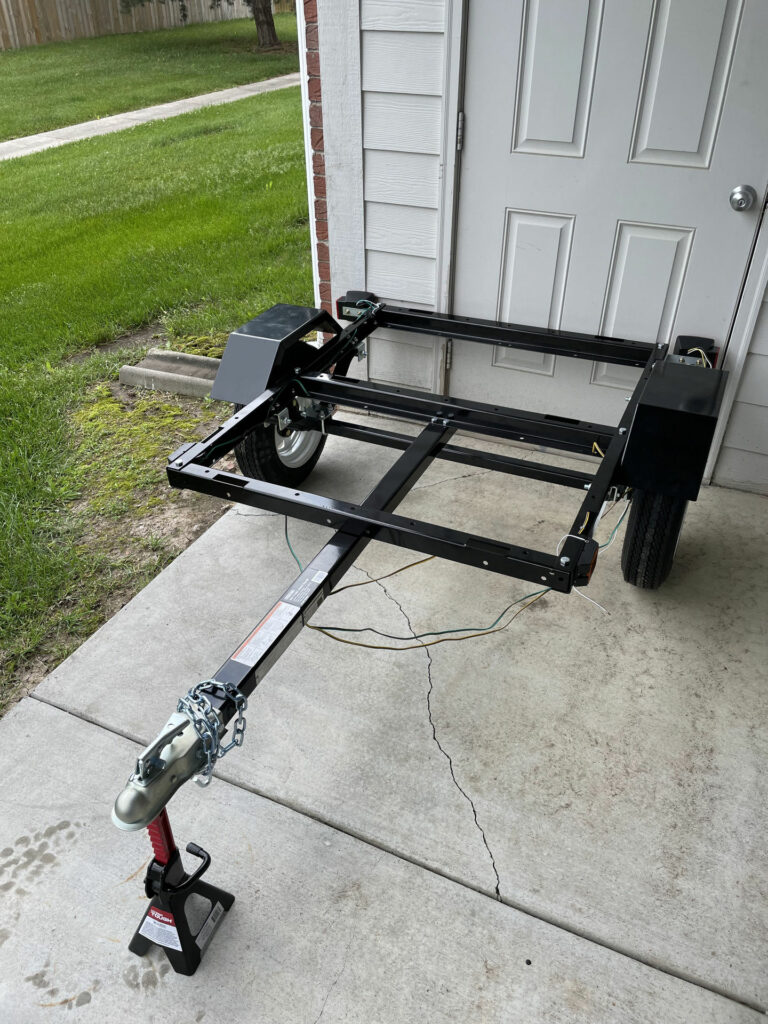
The structural advantages of utilizing a dedicated tire trailer include the preservation of vehicle suspension dynamics, unobstructed driver visibility, and the capacity to transport heavy fluids—such as high-octane race fuel or E85—outside the enclosed passenger compartment. Conversely, disadvantages involve altered vehicle towing dynamics, increased fuel consumption during transit, and the requirement for low-speed vigilance when operating a towed apparatus on highways.
Chronology of a Custom Build: Phase One
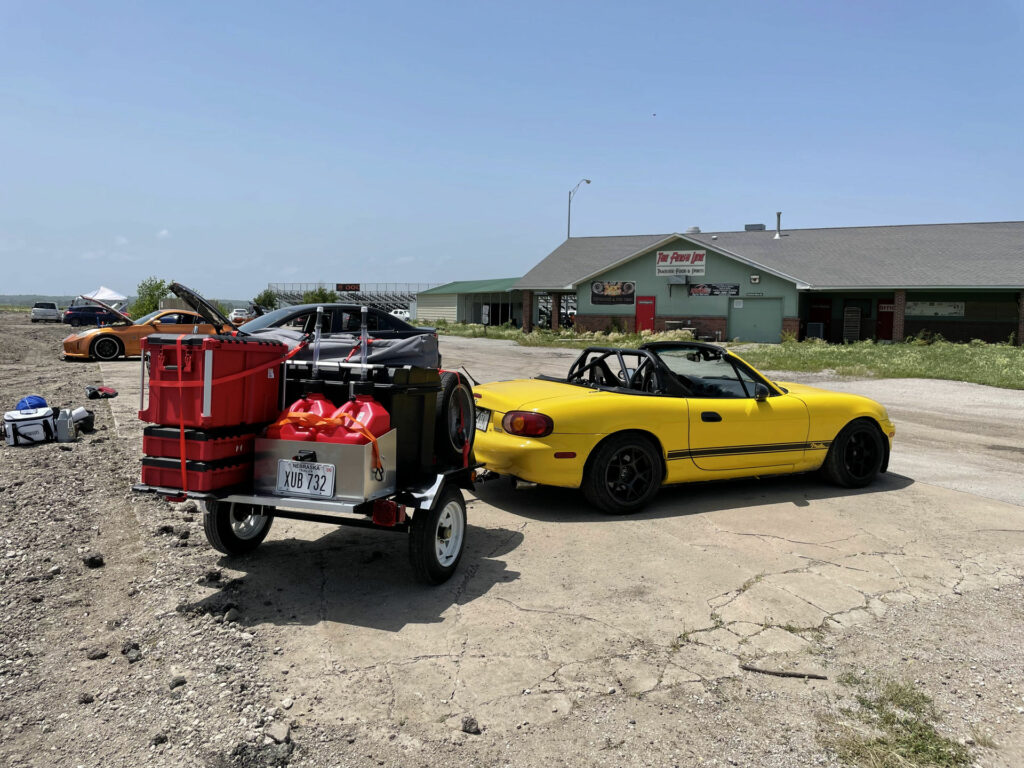
The developmental timeline of a functional tire trailer often spans multiple iterations as builders refine weight distribution, material selection, and utility. A typical project commences with the assembly of a base frame. Initial builds frequently employ a compact 40-inch by 48-inch steel frame, though builders frequently note that a slightly larger 4-foot by 8-foot folding trailer chassis provides superior load distribution and versatility without incurring a significant weight penalty.
In the foundational phase of construction, builders fabricate a durable deck, commonly utilizing three-quarter-inch exterior-grade plywood treated with protective coatings to withstand environmental exposure. Securing the deck requires flush-mounted carriage bolts and heavy-duty lock washers to ensure a completely flat cargo surface.
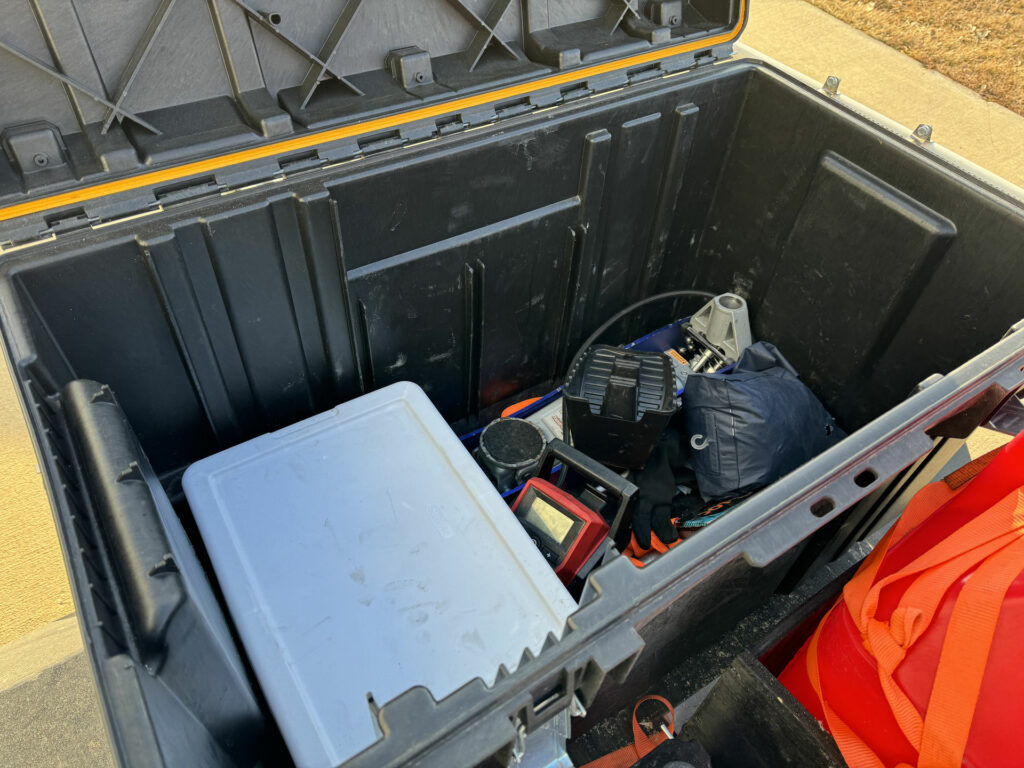
Central to the initial setup is the integration of a weatherproof, lockable storage vault—such as a heavy-duty contractor chest—mounted directly above the axle to maintain optimal tongue weight and stability. This enclosure houses essential trackside instrumentation, torque wrenches, low-profile hydraulic jacks, electronic tire pressure gauges, safety apparel, and replacement mechanical components. The exterior rails of the storage chest provide lash points for external gear, including collapsible canopies, folding seating, and portable work tables.
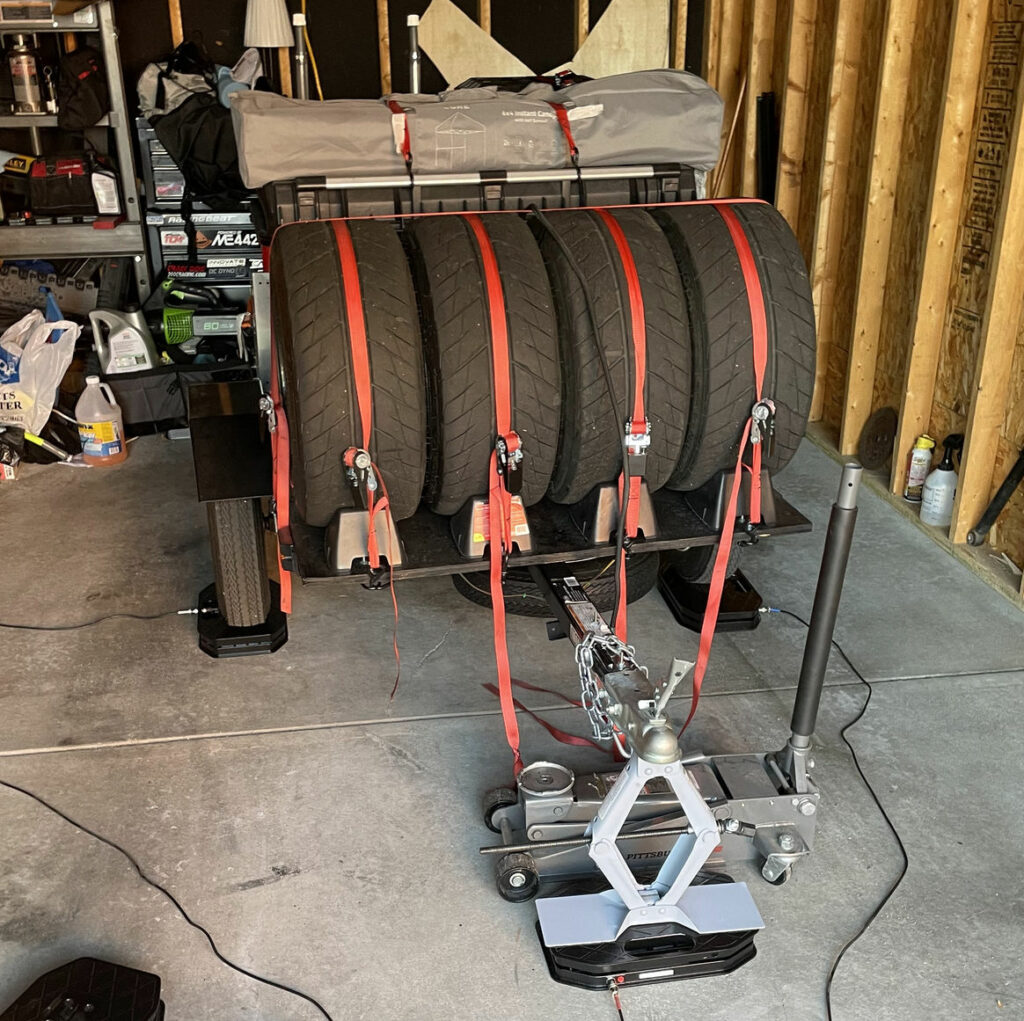
To address the primary objective of wheel transport, builders construct specialized vertical or horizontal mounting cradles at the forward section of the trailer. Securing four full-sized wheels requires a multi-point retention strategy combining heavy-duty threaded vertical posts, locking wheel nuts, and supplemental high-tension ratchet straps to eliminate shifting during high-speed transit.
Evolution and Advanced Modifications: Phase Two
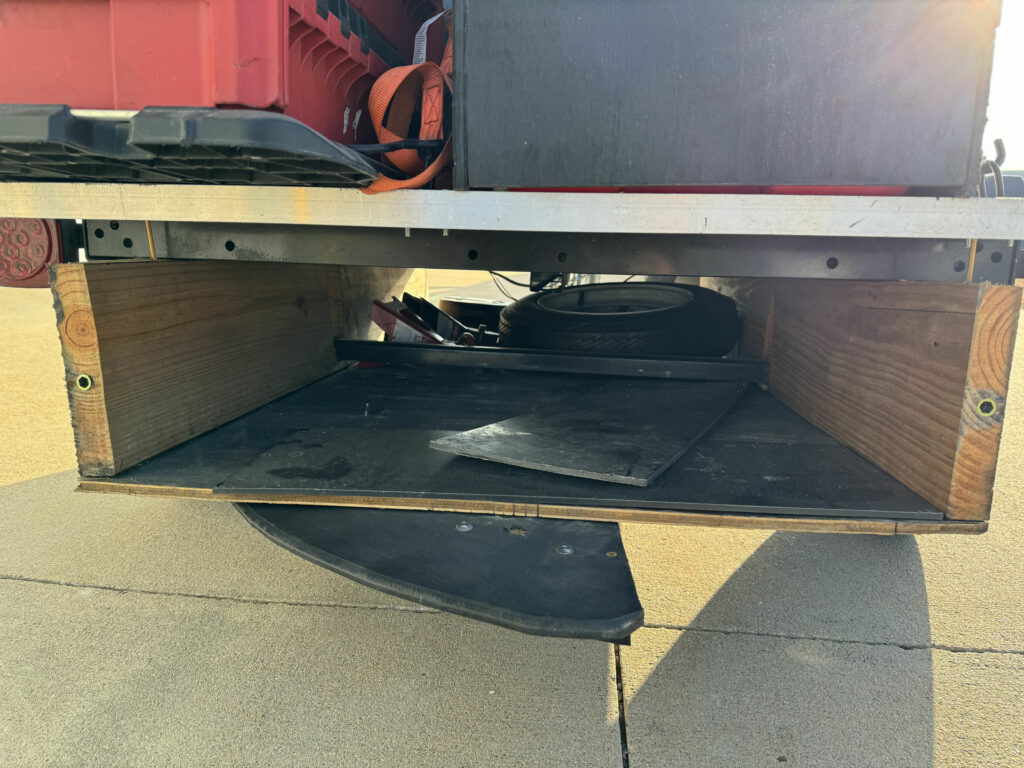
Following initial field testing over hundreds of operational miles, builders frequently implement structural enhancements to maximize storage capacity and operational efficiency. A common secondary phase involves the fabrication of a lower sub-deck positioned beneath the main chassis frame. Utilizing structural lumber and reinforced half-inch plywood, this modification creates a lower tier capable of housing bulky, low-priority items such as heavy canopy ballast weights, spare mechanical splitters, and rigid jack stands.
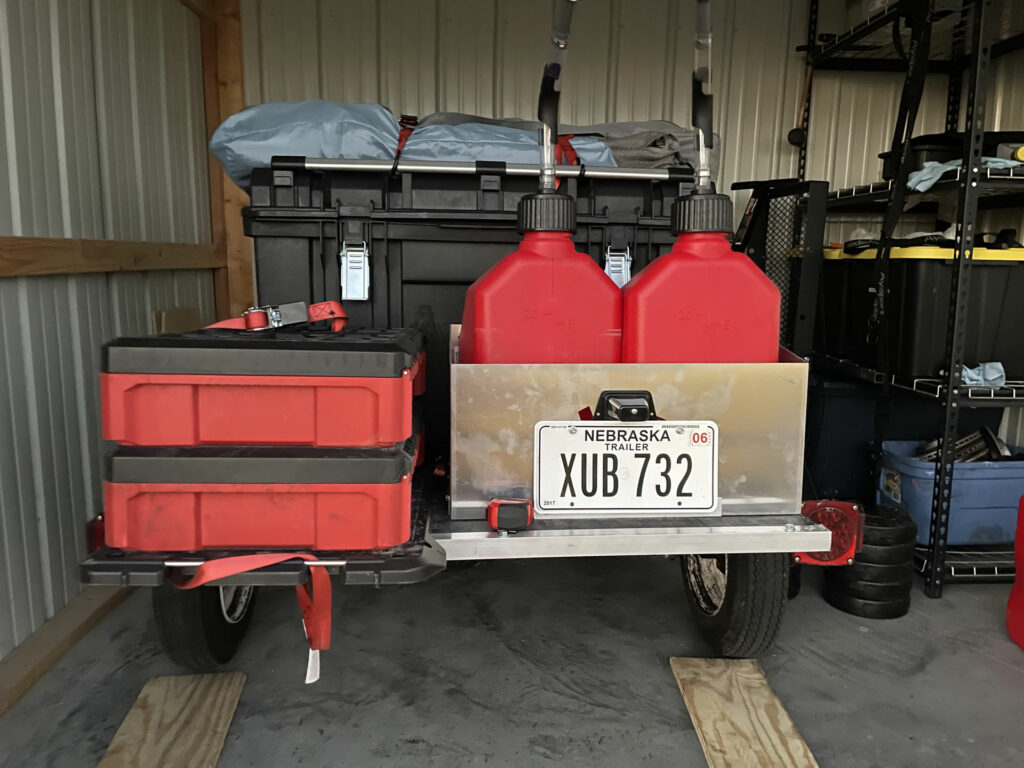
Fuel storage logistics also undergo refinement during extended use. While standard five-gallon motorsport utility jugs satisfy basic requirements, long-distance competitors frequently upgrade to higher-capacity transport tanks, such as 15-gallon auxiliary fuel systems secured via custom mounting brackets and industrial-grade L-brackets. To facilitate fuel transfer without manual lifting, operators integrate 12-volt or hand-crank fluid pumps, streamlining refueling operations in the paddock.
Chassis and Suspension Upgrades for Long-Distance Reliability

A critical technical consideration in trailer longevity involves the transition from standard factory-supplied bias-ply tires to radial alternatives. Factory utility trailers are frequently equipped with basic bias-ply tires designed for intermittent, low-speed agricultural use. Long-distance transit across interstate corridors generates significant thermal friction, which can degrade bias-ply rubber and accelerate wheel bearing wear.
Upgrading to radial trailer tires, such as standardized metric radial sizes, provides improved thermal dissipation, higher load ratings, and enhanced high-speed stability. Empirical observations from long-distance haulers indicate that radial configurations substantially reduce operating temperatures at highway velocities, mitigating the risk of structural tire failure far from home.
Industry Analysis and Broader Implications
The adoption of compact tire trailers reflects a broader micro-trend within amateur motorsports: the democratization of track-day participation through cost-effective, innovative engineering. By enabling owners of small, daily-driven sports cars to participate in weekend motorsport events without investing in heavy-duty tow vehicles and enclosed trailers, these custom fabrications lower the barrier to entry for automotive enthusiasts.
Automotive safety advocates and event organizers generally endorse the separation of track hardware from daily transit vehicles, emphasizing that fresh tires and dedicated safety gear significantly reduce incident rates in both transit and competition environments. While pre-manufactured commercial alternatives exist—such as specialized paddock trailers produced by boutique engineering firms—their premium cost positions them as luxury items, leaving modular, owner-assembled utility trailers as the dominant methodology for budget-conscious competitors.
Ultimately, the tire trailer serves as an enduring testament to the resourcefulness of the automotive community. Whether utilized for regional autocross meetings or multi-day road course excursions across state lines, these lightweight towed platforms successfully reconcile the daily drivability of compact sports cars with the demanding logistical requirements of modern motorsport.