 Indra Gunadi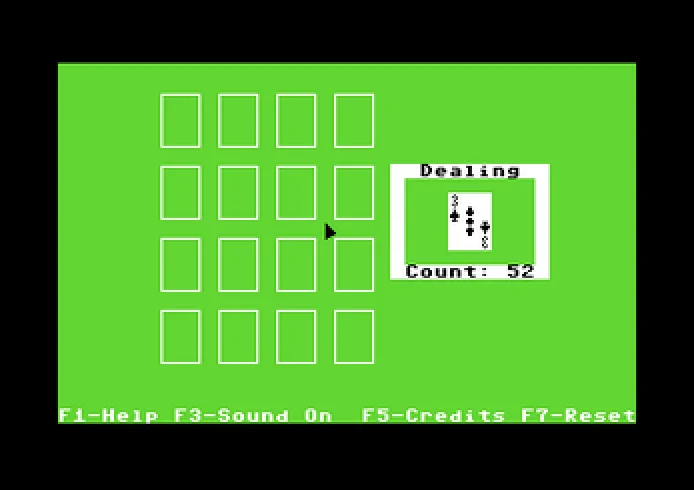
The Commodore 64, a machine that dominated the home computing landscape in the 1980s, continues to receive new software developments four decades after its commercial peak. The latest entry into this enduring ecosystem is Picture Frame 64, a solitaire card game developed by melipone and released on October 6, 2026. This title represents a unique cross-platform evolution, having migrated from the mobile handheld devices of the late 1990s and early 2000s—specifically the Palm Pilot—to the hardware constraints of the 8-bit MOS Technology 6510 processor.
A Legacy Transformed: From Palm OS to 8-Bit Architecture
The concept of Picture Frame is rooted in the minimalist design philosophy of early PDA (Personal Digital Assistant) software. During the height of the Palm Pilot era, developers were tasked with creating engaging, low-memory applications that could operate within the strict limitations of handheld hardware. Picture Frame, a solitaire variant, challenged players to build a protective frame of face cards around a 4×4 tableau, clearing pips through pairs and tens.
The transition of this title from the Palm OS environment to the Commodore 64 is a notable technical achievement. While both platforms favored simplicity, the architecture of the C64 requires a fundamentally different approach to memory management, color palette rendering, and user input handling. The port serves as a bridge between two distinct eras of computing history, demonstrating how logic-based games can transcend the hardware they were originally designed for. By adapting the game for the C64, melipone has effectively "time-traveled" the mechanics, bringing a quintessential mobile experience to the most successful single computer model of all time.
The Commodore 64 Ecosystem in the Modern Era
To understand the significance of a new release for the Commodore 64 in 2026, one must consider the status of the retro-computing community. Despite the machine being officially discontinued by Commodore International in 1994, the "demoscene" and homebrew developer communities have remained hyper-active.
Data from retro-software archives indicates that the production of new C64 software has actually accelerated in the last decade. This is driven by several factors:
- Tooling Advancements: The availability of cross-compilers, assemblers, and emulators that run on modern PCs, allowing developers to write code for the 6502/6510 instruction set with contemporary debugging tools.
- AI Integration: As noted in the developer documentation for Picture Frame 64, modern development pipelines often incorporate AI-assisted coding to optimize assembly routines, which were previously hand-coded with extreme difficulty.
- Hardware Preservation: The proliferation of modern hardware add-ons, such as SD-card-based disk drives (e.g., the 1541 Ultimate or Pi1541), has made it easier for users to load new software without needing original, aging magnetic media.
The release of Picture Frame 64 is not merely an act of nostalgia; it is a demonstration of the platform’s enduring viability as a canvas for software design. The game’s focus on the 4×4 grid and numerical logic allows it to bypass the need for complex graphical processing units, relying instead on the C64’s unique VIC-II chip capabilities.
Gameplay Mechanics and Strategic Depth
Picture Frame 64 centers on a specific set of rules that distinguish it from standard Klondike or Spider solitaire. The objective is to surround the central 4×4 card tableau with a perimeter of face cards (Jacks, Queens, and Kings). The internal game mechanics—specifically the clearing of pips—require the player to manage pairs and tens.
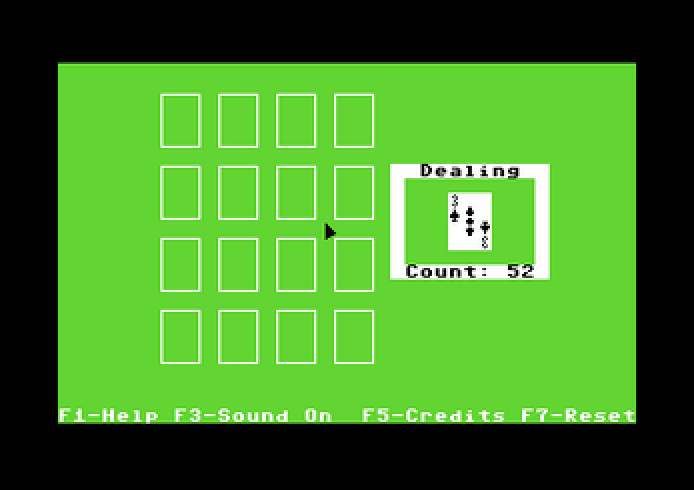
The complexity of this game lies in its limited board space. Because the tableau is fixed at a 4×4 configuration, players are forced into decision-making cycles that prioritize long-term board management over immediate gratification. Analysts in the card-game development space often refer to this as "constrained solitaire," a genre that has seen a resurgence in popularity due to its suitability for short play sessions on limited-resource devices. The implementation on the C64 utilizes the keyboard input to navigate the tableau, providing a tactile feel that differs significantly from the stylus-based input of the original Palm Pilot version.
Chronology of the Project
- 1998-2002: The original conceptualization and development of the game on Palm OS platforms.
- 2024: Initial conceptual research for a C64 port begins, focusing on memory allocation and the 6510 instruction set.
- August 2026: Beta testing of the core engine, with emphasis on optimizing the "deal again" function to prevent memory leaks in the C64’s 64KB RAM space.
- October 6, 2026: Official release of Picture Frame 64.
- October 2026: Community review begins, with early feedback highlighting the title’s "time-capsule" quality.
Industry Implications and Developer Commentary
While specific public statements from melipone regarding the commercial trajectory of the project are sparse, the development community has reacted with significant interest. The use of AI-assisted code in this release has sparked broader discussions regarding the future of retro-computing.
Some developers argue that AI tools could lead to a "second golden age" of 8-bit software, as these tools can handle the tedious aspects of assembly language optimization that previously acted as a barrier to entry for many hobbyists. Others maintain that the essence of C64 development lies in the manual mastery of the machine’s quirks, such as raster-bar effects and sprite multiplexing. Picture Frame 64, by focusing on logic over raw graphical power, provides a balanced middle ground, showcasing how modern efficiency can be applied to legacy hardware without stripping away its "soul."
Broader Context: Why the C64 Persists
The longevity of the Commodore 64 is an anomaly in the tech industry. Most consumer electronics are designed with a planned obsolescence of three to five years. The C64, however, has outlasted multiple generations of operating systems, programming languages, and hardware architectures.
Economically, the "retro" market has grown into a multi-million dollar industry. Hardware restoration services, physical cartridge production, and modern peripheral manufacturing have created a self-sustaining economy. Releases like Picture Frame 64 benefit from this infrastructure, as the game is easily distributed as a digital image file (.d64 or .prg) that can be downloaded globally within seconds.
The fact that a solitaire game—a genre associated with early computer utility—is being ported to a machine from 1982 underscores the human desire to preserve historical computing experiences. It is a form of digital curation. By translating the mechanics of a Palm Pilot game into the 8-bit language of the C64, the developer is performing a historical synthesis. The player is not just playing a game; they are participating in a multi-generational software dialogue that links the late 20th-century home computing revolution with the high-tech, AI-driven development environment of the present day.
Conclusion
Picture Frame 64 stands as a testament to the versatility of the Commodore 64 platform. It is a minimalist, logic-driven title that serves as both a functional solitaire game and a cultural artifact. As development tools continue to evolve, it is highly probable that we will see further migrations of software from forgotten platforms onto the enduring architecture of the C64. For the enthusiast, the game offers a challenging, focused experience that demands strategic foresight, while for the historian, it represents a successful bridge between the handheld computing of the early 2000s and the iconic 8-bit era. The game is currently available through community-focused distribution channels, continuing the C64’s legacy as a machine that refuses to be relegated to the history books.