 Hartono Sudibyo
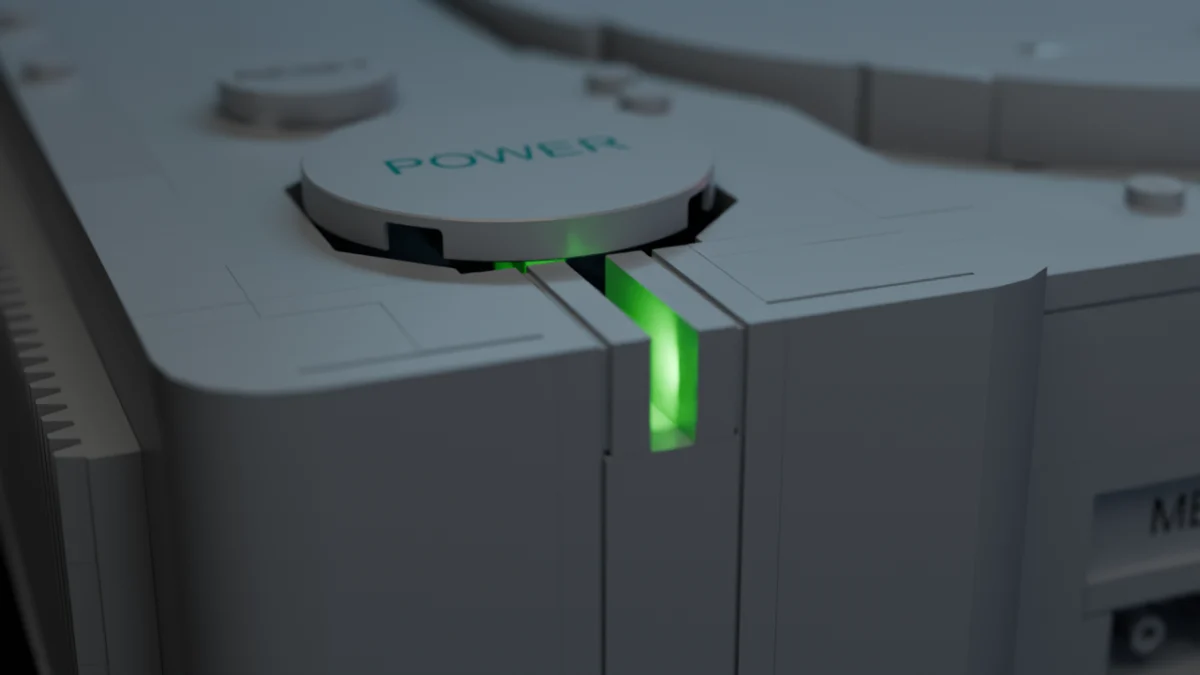
The intersection of modern single-board computing and traditional optical media has yielded a novel piece of hardware engineering, courtesy of an independent hardware modder known online as Emmet. In a project that bridges the gap between contemporary emulation technology and late-20th-century physical media formats, Emmet has designed and constructed a fully functional retro gaming console from scratch. The device relies on compact discs to store and launch digital game ROMs, utilizing a specialized internal architecture to deliver a tactile, physical gaming experience reminiscent of the fifth-generation console era.
The console, whose development and execution were recently highlighted across technical maker communities, utilizes a modern single-board computer equipped with an Intel N150 processor. This hardware choice provides sufficient computational overhead to handle the emulation of numerous classic gaming systems without breaking a sweat. Rather than operating on a standard desktop environment, the console runs Batocera Linux, a dedicated open-source retro gaming operating system widely recognized within the emulation community for its streamlined user interface, comprehensive controller compatibility, and robust emulation core support.
Technical Architecture and Media Integration
At the core of Emmet’s custom hardware build is a deliberate effort to recreate the ritualistic experience of physical media selection. While modern retro handhelds and plug-and-play emulation boxes rely entirely on internal solid-state storage or MicroSD cards containing thousands of titles, Emmet’s console requires the physical insertion of a custom-burned optical disc to initiate gameplay.
According to technical breakdowns provided by the creator, each optical disc serves a dual purpose. Beyond containing the raw ROM files required for individual titles, the discs are encoded with specific shell scripts. When a disc is inserted into the system’s optical drive, the script executes automatically, directing the Batocera operating system to locate, parse, and integrate the game files into the active library interface. This clever software integration allows the console to read standard rewritable CDs, transforming modern data storage mediums into tangible game cartridges or pressed discs of the past.
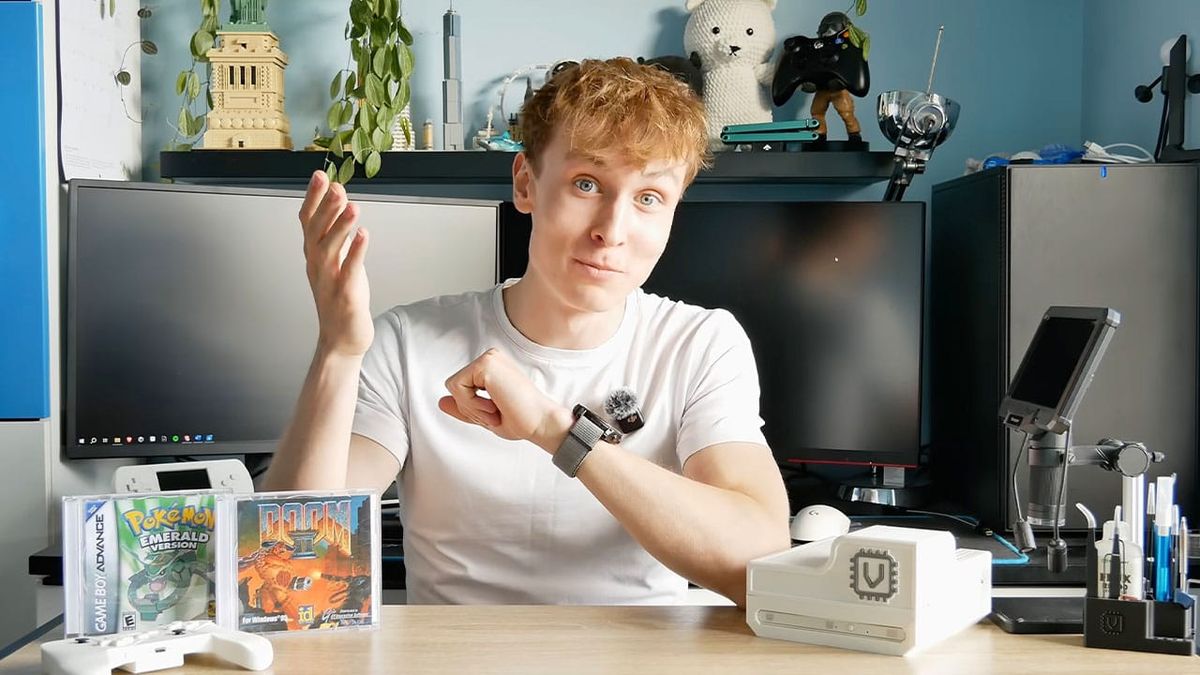
To complete the authentic hardware illusion, Emmet utilized 3D-printing technology to fabricate a custom chassis tailored to house the internal components, optical drive, and power delivery systems. Furthermore, the creator designed bespoke box art, physical CD labels, and custom instruction manuals for individual titles, such as classic Game Boy Advance games like Pokémon Emerald. The physical presentation is rounded out by a custom-engineered wireless gamepad designed specifically for the console, ensuring an integrated input experience.
The Evolution of DIY Hardware Modding
The project represents a continuation of a long-standing tradition within the electronics hobbyist and retro gaming communities. For decades, hardware modders have sought innovative ways to merge legacy gaming paradigms with modern computing power. The rise of affordable single-board computers (SBCs)—exemplified by platforms like Raspberry Pi, Intel-based NUCs, and specialized industrial boards—has radically lowered the barrier to entry for custom console design.
In recent years, the retro gaming landscape has seen a bifurcation. On one end of the spectrum are commercial emulation handhelds and micro-consoles produced by mass-market manufacturers, designed for maximum portability and convenience. On the other end are bespoke, enthusiast-driven projects like the GameTank, an independent 8-bit console featuring its own custom operating system and native software library, and Emmet’s CD-based console. These grassroots endeavors prioritize the tactile rituals of gaming—such as inserting a disc, reading physical packaging, and interacting with dedicated peripheral hardware—over sheer digital efficiency.
Industry observers note that projects like Emmet’s reflect a broader cultural wave of hardware nostalgia. As digital distribution has rendered physical media largely obsolete in mainstream gaming, a subset of enthusiasts continues to champion physical artifacts. The sensation of handling optical media, listening to the mechanical spin-up of a disc drive, and managing a physical collection of games provides psychological rewards that purely digital libraries often fail to replicate.
Software Ecosystem: The Role of Batocera Linux
The choice of Batocera Linux as the underlying operating system is a critical factor in the console’s operational success. Batocera is built upon a customized Linux distribution optimized specifically for retrogaming applications. It incorporates a wide array of standalone emulators and libretro cores, allowing the system to seamlessly transition between platforms ranging from 8-bit home computers to 128-bit fifth- and sixth-generation consoles.

For a project utilizing an Intel N150 single-board computer, Batocera provides an ideal environment. The operating system handles complex configuration tasks automatically, mapping controllers, scaling resolutions, and managing save states without requiring deep command-line interventions from the user. By pairing this robust software environment with a mechanical optical drive, Emmet successfully married the convenience of modern emulation software with the deliberate pacing of physical media loading times.
Broader Implications for the Retro Gaming Market
While commercial manufacturers continue to push the boundaries of high-definition rendering, teraflops of processing power, and all-digital storefronts, the independent hardware scene serves as a laboratory for alternative human-computer interaction models. Projects like Emmet’s custom CD console demonstrate that consumer interest in tangible media remains strong, inspiring manufacturers and independent developers to explore novel ways of packaging digital content.
Furthermore, the mainstream visibility of such DIY projects highlights the maturity of open-source emulation software. The fact that a single enthusiast can design a custom hardware ecosystem capable of parsing optical discs, executing automated shell scripts, and driving a complex Linux-based frontend underscores the democratization of hardware engineering. As components become more efficient and accessible, the boundary between commercial electronics manufacturing and amateur fabrication continues to blur.
Ultimately, whether custom optical disc consoles find a wider commercial audience or remain confined to the realm of bespoke maker projects, they serve as a testament to the enduring appeal of physical interaction in digital entertainment. By turning the loading of a ROM into a mechanical ritual, Emmet’s creation offers a compelling glimpse into how the past and future of gaming can be successfully synthesized through modern ingenuity.