 Vera Clarissa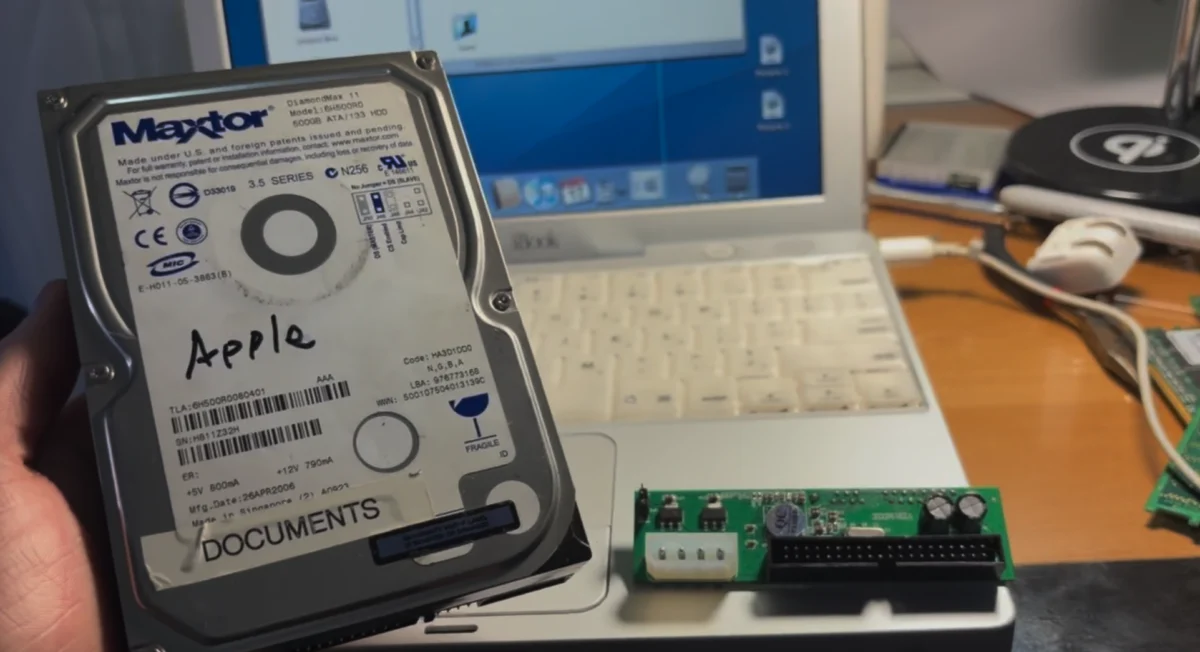
For decades, the legacy of early 2000s computing has been defined by a specific hardware ceiling: the 137GB storage limitation imposed by the ATAPI 6.0 (ATA/100) standard. This bottleneck effectively restricted the storage potential of millions of personal computers, including the iconic Apple Power Mac and iMac G3 series. Recent technical efforts have successfully circumvented this barrier, breathing new life into vintage hardware by enabling the use of modern, high-capacity mechanical drives in systems that were originally designed for significantly smaller storage volumes.
The 128GB Limitation: A Legacy Hardware Constraint
The limitation of 137GB (often referred to as the 128GB barrier due to decimal versus binary conversion discrepancies) was a hallmark of the ATA-6 interface specification. Before the industry-wide transition to 48-bit Logical Block Addressing (LBA), operating systems and BIOS firmware were limited to 28-bit addressing. This restriction meant that any drive capacity exceeding approximately 128 gigabytes would be improperly recognized, leading to data corruption or, more commonly, a failure of the system to recognize the drive’s total capacity.

While later machines, such as the Revision B Quicksilver Dual 1.0 GHz Power Mac G4, were manufactured with logic boards designed to supersede these limitations, many machines from the turn of the millennium—including the popular Summer 2000 Indigo iMac G3—remained tethered to this restriction. It was not until the introduction of the 1 GHz 17-inch iMac in early 2003 that Ultra ATA/100 technology became standard, finally offering native support for larger drive capacities.
Technical Methodology for Capacity Expansion
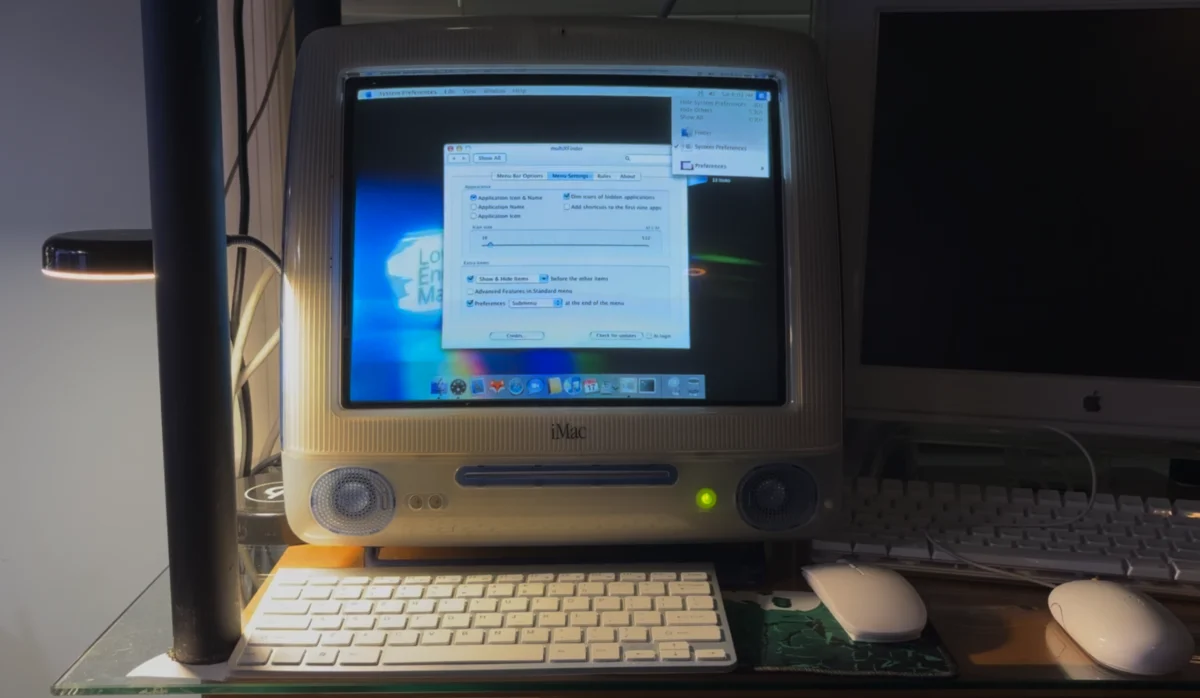
The recent successful integration of a 500GB Maxtor ATA/133 hard drive into an original 400 MHz iMac G3 demonstrates that software-level workarounds can effectively bypass hardware limitations. The process relies on specialized drivers, most notably the SpeedTools Hi-Cap ATA Driver, which acts as an intermediary layer between the hardware firmware and the operating system.
The procedure requires a specific sequence of operations to ensure data integrity:

- Driver Implementation: The Hi-Cap ATA driver must be installed on the host system before any formatting or partitioning occurs. Attempting to interact with a high-capacity drive before the driver is active results in the system failing to mount the volume correctly.
- Target Disk Mode Utilization: By booting from a secondary, compatible machine—such as an iBook G3 running Mac OS X 10.4.11—the target iMac can be placed into Target Disk Mode. This allows the host machine to manage the partitioning and formatting of the new drive via FireWire 400.
- Cloning and Deployment: Utilizing software such as Carbon Copy Cloner, a base installation of Mac OS X Tiger can be transferred to the new drive. In the case of the 400 MHz Indigo iMac, this process involves a multi-hour data transfer, emphasizing the limitations of FireWire 400 bandwidth when handling significant file sets.
Chronology of the Retrofit Project
The project began with the acquisition of legacy hardware, including a 500GB Maxtor drive and a 400 MHz Indigo iMac G3. The iMac, identified by its original Boot ROM version 3.3.0f3, was manufactured in June 2001. The following timeline outlines the transition from a restricted 80GB configuration to an expanded 500GB capacity:
- June 2001: The iMac G3 in question is originally purchased, according to legacy Apple support documentation.
- Late 2026: Acquisition of the 500GB Maxtor ATA/133 drive.
- Initial Setup: The machine is configured with an interim 80GB Western Digital drive to facilitate the installation of the required Hi-Cap ATA drivers.
- Cloning Phase: The system is booted into Target Disk Mode via an iBook G3, initiating a six-hour data migration process to the 500GB volume.
- Final Validation: The iMac successfully boots from the 500GB volume, confirming that the operating system recognizes the full capacity of the drive without additional startup delays.
Broader Implications for the Retro-Computing Community
The ability to expand storage on PowerPC-based machines has significant implications for the growing community of enthusiasts dedicated to preserving and utilizing legacy Apple systems. As modern software developers release new tools for the PowerPC architecture—such as PowerFox for G3, native exFAT support for Mac OS X Tiger, and experimental AI-driven agents—the demand for larger, more reliable storage increases.
The transition from small-capacity, aging mechanical drives to larger, stable storage solutions is essential for users looking to partition their systems for multi-boot environments. While solid-state drive (SSD) solutions, such as mSATA adapters, offer superior performance and lower power consumption, the use of high-capacity mechanical drives remains a cost-effective and period-appropriate choice for enthusiasts seeking to maintain the aesthetic and mechanical character of their vintage machines.

Data Security and Hardware Longevity
The project also highlights the importance of data management in legacy systems. The reliance on older hardware, such as the Maxtor and Western Digital enterprise-grade drives, necessitates a robust backup strategy. While some legacy drives have proven remarkably resilient—with some units operating consistently for over a decade—the inherent risk of mechanical failure remains a primary concern for the preservation of vintage data.
Furthermore, the discovery of discrepancies in Apple’s legacy serial number database—where the machine’s identifier is occasionally misattributed to modern peripherals like AirPods Pro—underscores the degradation of centralized support databases over time. This reinforces the necessity for community-driven documentation, such as the preservation of Boot ROM images on forums like MacRumors. By archiving these files, the community ensures that critical firmware remains available even as official support channels phase out legacy data.
Future Perspectives
As the ecosystem of community-developed software for the PowerPC platform continues to expand, the focus on hardware optimization will likely shift toward finding a balance between performance and historical authenticity. The success of this 500GB retrofit confirms that the G3 architecture, while technologically eclipsed, remains capable of handling modern storage requirements when paired with appropriate driver support.

For the enthusiast community, these projects are more than mere technical exercises; they are essential efforts in the ongoing stewardship of computer history. By ensuring that these systems remain functional and capable of running modern-adjacent workloads, users are effectively extending the lifespan of hardware that would otherwise be discarded. As high-capacity IDE storage continues to be a bottleneck, the combination of specialized drivers and high-density, legacy-compatible mechanical drives provides a clear, documented path for those looking to maximize the potential of their PowerPC-based collections.