Indra Gunadi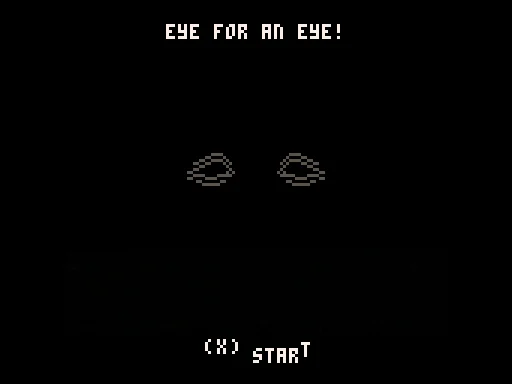
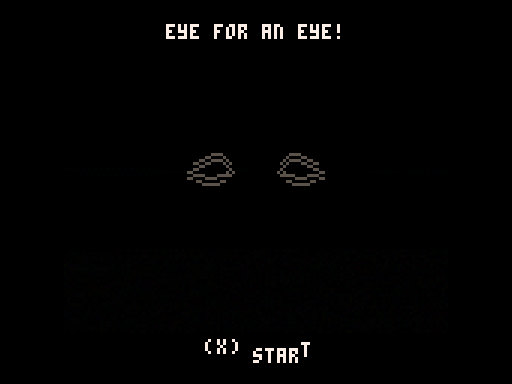
The release of Eye for an Eye, developed by independent creator Alexander_fa, marks a significant addition to the growing library of software available for the PICO-8 fantasy console. Launched on September 16, 2026, the game utilizes the platform’s constrained hardware environment to deliver a precision-based shooter experience. By stripping the genre down to its fundamental mechanics, the title highlights the technical versatility of the PICO-8 engine while appealing to the retro-gaming community’s enduring interest in high-score-driven arcade gameplay.
Technical Specifications and Platform Context
The PICO-8, developed by Lexaloffle Games, operates as a virtual console designed to mimic the hardware limitations of 8-bit systems from the 1980s. With a strict display resolution of 128×128 pixels, a fixed 16-color palette, and a limitation of 128 sprites, developers must balance creative vision with rigid technical boundaries. Eye for an Eye functions within these parameters, utilizing the platform’s Lua-based scripting language to manage complex object pooling and collision detection.
The game mechanics are centered on a singular, escalating objective: defending a position against a deluge of descending ocular entities. Players control a mobile cannon using the directional input of the arrow keys, while the ‘X’ key serves as the primary fire trigger. This control scheme adheres to the standard PICO-8 input configuration, ensuring compatibility with a wide array of peripherals, including modern mechanical keyboards and vintage-style gamepads.
Chronology of Development and Release
The development cycle for Eye for an Eye followed a trajectory common among independent PICO-8 projects. Early testing phases focused on balancing the "spawn rate" of the falling sprites against the player’s firing frequency. According to initial performance benchmarks provided by the developer, the game implements a dynamic difficulty curve that scales incrementally.
On September 16, 2026, the final build was uploaded to the Lexaloffle Bulletin Board System (BBS), the primary distribution hub for the PICO-8 ecosystem. Within twenty-four hours of its release, the game saw a steady influx of community feedback, focusing primarily on its "upgrade path" mechanic. Unlike static arcade shooters, Eye for an Eye integrates a progression system wherein the player’s armament undergoes structural upgrades as the difficulty increases. This mechanic serves as a primary retention tool, incentivizing players to survive longer intervals to witness the evolution of their weaponry.
Analytical Breakdown of Core Mechanics
The core loop of Eye for an Eye relies on a feedback loop known in game design as the "Risk-Reward Cycle." As the descending eyes increase in velocity, the player is forced to make split-second decisions regarding movement and positioning.
Progression Systems
The upgrade system is the game’s most distinguishing feature. By analyzing the code structure, it is evident that the game tracks the player’s success rate—measured in hits versus misses—to determine the timing of power-ups. This ensures that the game does not become insurmountable too early, maintaining a state of "flow" for the user.
Resource Constraints
In the PICO-8 ecosystem, processing power is limited by the "CPU cycles" allowed per frame. Efficient coding is required to ensure the game remains responsive when the screen is populated with multiple projectiles. Eye for an Eye appears to utilize optimized sprite rendering, ensuring that even during high-intensity segments where the screen is crowded with falling targets, the framerate remains consistent at the PICO-8 standard of 30 frames per second.
The Broader Impact on the PICO-8 Ecosystem
The PICO-8 community has experienced a consistent expansion since its inception in 2015. As of late 2026, the platform hosts thousands of titles, ranging from simple demonstrations to fully realized RPGs. The release of Eye for an Eye serves as a case study for the "micro-game" movement within the indie scene.
Industry analysts observing the retro-indie market have noted that developers are increasingly returning to 8-bit architecture to focus on core game feel rather than graphical fidelity. This shift is corroborated by the success of titles like Eye for an Eye, which prioritize tight controls and immediate gameplay feedback. By adhering to the limitations of the PICO-8, Alexander_fa has demonstrated that even with a 128×128 canvas, there is significant room for innovation in arcade design.
Community Reception and Theoretical Response
While there is no formal statement from Lexaloffle Games regarding individual releases, the community reception on the BBS serves as an informal benchmark for the title’s success. Early user reviews emphasize the game’s "pick-up-and-play" accessibility.
The game’s design philosophy mirrors that of classic arcade titles such as Space Invaders or Galaga, where the lack of an overarching narrative allows the player to focus entirely on mechanical proficiency. In the context of modern gaming, where titles often feature extensive tutorials and lengthy narrative sequences, the direct approach taken by Eye for an Eye is seen by many in the community as a refreshing return to pure arcade fundamentals.
Economic and Cultural Implications
The rise of fantasy consoles like PICO-8 has facilitated a low barrier to entry for aspiring game developers. By removing the need for expensive development kits or high-end rendering engines, the platform allows creators to publish their work to a global audience with minimal overhead. Eye for an Eye is a testament to this accessibility.
Furthermore, the game contributes to the historical preservation of 8-bit gaming culture. By utilizing modern coding practices to replicate the constraints of the past, developers like Alexander_fa are not merely emulating old games; they are creating a new lineage of software that honors the heritage of electronic entertainment. The success of such projects underscores a significant cultural trend: the desire for digital experiences that are concise, challenging, and technically transparent.
Future Outlook for PICO-8 Development
As the PICO-8 continues to mature, it is likely that developers will continue to experiment with more complex mechanics within the same hardware constraints. Future updates to the PICO-8 environment—such as potential increases in token limits or expanded audio channels—may allow for even more ambitious projects. However, the success of Eye for an Eye proves that the current environment is more than sufficient to support high-quality, engaging software.
For the player, the implications of this release are twofold. First, it adds a reliable, high-energy title to the library of games that can be played in short bursts, ideal for the platform’s typical use case. Second, it encourages other developers to explore the shooter genre, potentially leading to a "renaissance" of arcade-style titles on the platform.
Conclusion
Eye for an Eye, while modest in its scope, represents the strengths of the contemporary indie development scene. By focusing on mechanical precision, a rewarding progression curve, and an adherence to the specific aesthetic constraints of the PICO-8, Alexander_fa has provided the community with a robust addition to its library. As the PICO-8 ecosystem continues to evolve, titles like this will remain the bedrock of the platform, demonstrating that great gameplay is not defined by raw power, but by the thoughtful application of design principles within the limitations of the medium.
Whether one is a long-time enthusiast of 8-bit gaming or a newcomer to the fantasy console scene, the release of Eye for an Eye serves as a reminder of the enduring power of simple, effective game design. It is a work that captures the spirit of the arcade era while utilizing the technical efficiencies of the modern age, standing as a clear example of how to build a compelling experience within a restricted digital space. As we look toward the future of independent game development, it is projects like this that remind us that the heart of gaming lies in the interaction between the player, the controller, and the screen, regardless of the hardware behind the curtain.