Hartono Sudibyo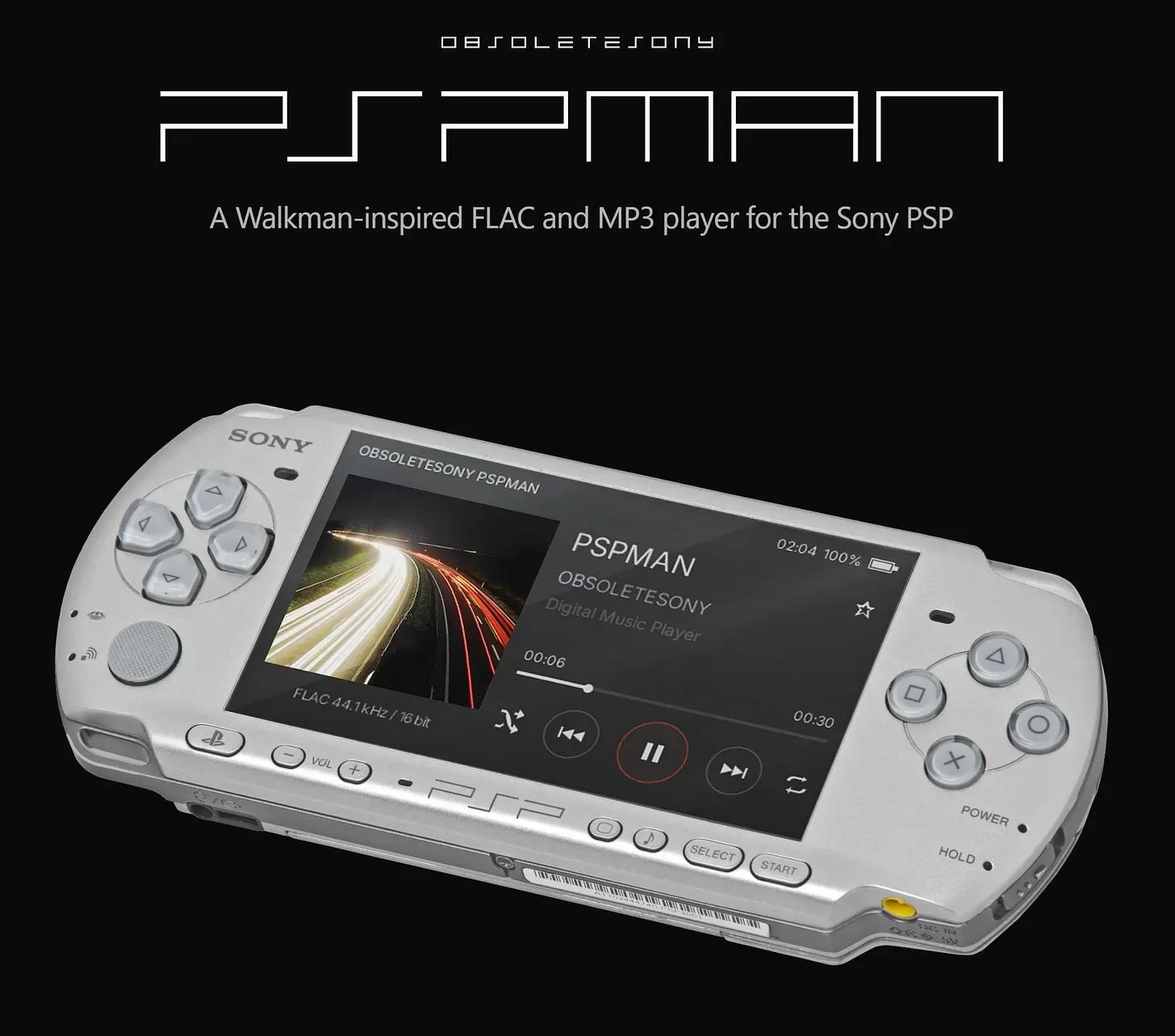
The Sony PlayStation Portable (PSP), a landmark handheld gaming device that initially debuted over two decades ago, is experiencing an unexpected renaissance in the modern digital landscape. Driven by a growing consumer pushback against the industry-wide shift toward purely digital ecosystems and the discontinuation of physical media formats, retro gaming enthusiasts and homebrew developers are continually finding new ways to extract value from legacy hardware. The latest manifestation of this nostalgic revival is PSPMAN, a newly released homebrew application that transforms Sony’s vintage handheld into a fully functional, high-fidelity portable music player inspired by the company’s iconic Walkman lineage.
Developed by the Sony-focused preservation publication Obsolete Sony, PSPMAN is engineered to breathe new life into the aging portable console by offering sophisticated local audio playback directly from the device’s Memory Stick storage. As contemporary tech consumers increasingly seek out dedicated, distraction-free devices to escape smartphone fatigue, this homebrew utility arrives at a time when vintage personal audio and retro gaming intersect more visibly than ever before.
Chronology and Development of the PSPMAN Project
The conceptualization and execution of PSPMAN reflect a deep technical understanding of the PSP’s hardware architecture, which was remarkably advanced for its mid-2000s commercial window. The project was spearheaded by Eddie of Obsolete Sony—an entity well-known within the vintage technology community for its meticulous documentation of classic Sony hardware, recently complemented by the release of physical literature dedicated to the brand’s history.
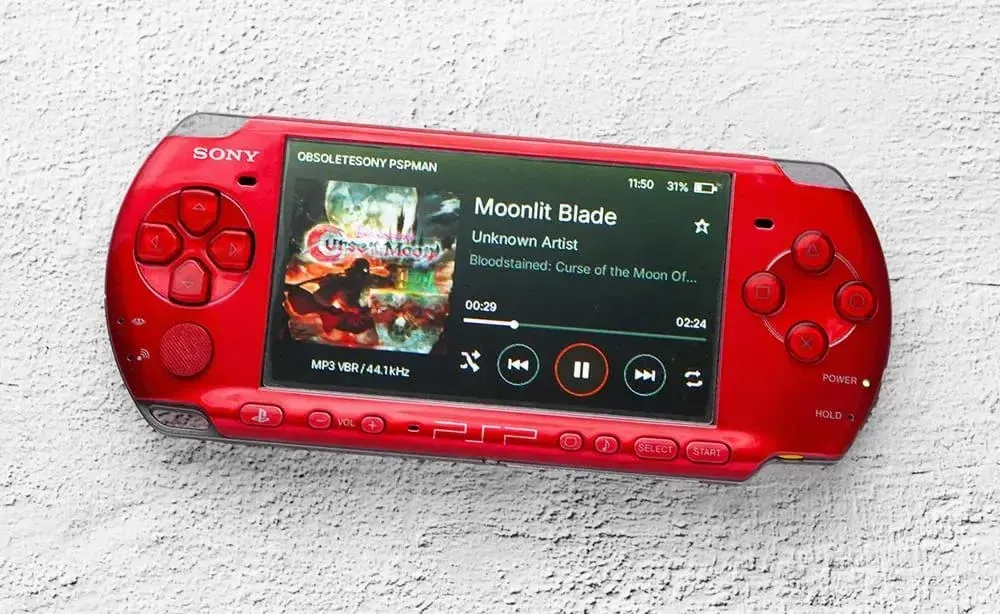
The development phase focused heavily on creating an interface that felt native to the PSP operating environment rather than a rushed port of modern software. By studying the user experience design of later-generation Sony Walkman portable media players, the creator mapped fluid navigation commands directly to the PSP’s physical layout, utilizing the directional pad, face buttons, and shoulder triggers.
Upon entering its public alpha phase, the software quickly gained traction across online retro-gaming forums and social media channels. Within a remarkably short timeframe, over 5e3 users downloaded the application, effectively repurposing their legacy gaming consoles into dedicated, offline audio companions. The developer made the public alpha build available directly through Obsolete Sony’s digital channels, prompting a new wave of hardware adaptation for both standard PSP models and the sliding-screen PSP Go.
Technical Specifications and Feature Set
Despite running on hardware that is more than twenty years old, PSPMAN delivers a surprisingly robust set of features tailored for audiophiles who appreciate physical media aesthetics alongside digital convenience.
Unlike the native media player bundled with original PSP firmware—which offered rudimentary audio playback restricted largely to basic ATRAC and standard MP3 codecs—PSPMAN introduces native support for high-quality audio formats. The current public alpha release supports:

- Stereo 16-bit / 44.1 kHz FLAC (Free Lossless Audio Codec) files, catering to users demanding uncompressed audio fidelity.
- Constant Bitrate (CBR) and Variable Bitrate (VBR) MP3 files encoded at up to 320 kbps.
- Full reading and parsing of standard M3U and M3U8 playlist formats.
- Automated extraction and rendering of embedded JPEG and PNG album cover artwork.
Furthermore, the application features an advanced local library management system capable of indexing up to 1,000 distinct tracks. Users can seamlessly sort and filter their audio collections across multiple parameters, including individual songs, complete albums, contributing artists, directory folders, designated favorites, recently played tracks, and custom playlists.
One of the project’s most celebrated design choices is its meticulous physical scaling, exemplified by the inclusion of a specialized "Cassette Mode." Noting that a standard compact cassette tape measures approximately 100 millimeters in width—closely matching the physical display dimensions of the PSP-2000 and PSP-3000 models, which measure roughly 95 millimeters across—the developer engineered a near life-size visual simulation. While music plays, the virtual cassette reels physically rotate on screen. Users can even cycle through five distinct cassette colorways simply by toggling the directional pad.
Broader Impact and Implications for Retro Hardware
The emergence of sophisticated software like PSPMAN highlights a broader cultural and technological shift regarding electronic waste, right-to-repair philosophies, and the longevity of consumer electronics. As major technology conglomerates pivot exclusively toward cloud-based streaming and discard physical media slots on modern smartphones and tablets, consumers are increasingly looking backward to find autonomy over their media libraries.
The Sony PSP occupies a unique historical niche in this movement. Released globally between 2004 and 2005, the console shipped over 80 million units during its lifetime. It utilized Universal Media Discs (UMDs) for games and Memory Stick Duo media for expandable storage, serving as an early multi-media device capable of playing movies, displaying digital photos, and browsing the internet alongside running video games. Because millions of these units remain functional in closets and collector display cases worldwide, the barrier to entry for homebrew exploration is exceptionally low.
Industry analysts note that the popularity of projects like PSPMAN underscores a growing market demand for "dumb" or single-purpose hardware. In an era dominated by hyper-connected smartphones that constantly ping users with notifications, utilizing a 21-year-old gaming handheld exclusively for localized music playback offers a deliberate psychological escape. By combining modern audio codecs like FLAC with the tactile nostalgia of physical buttons and mechanical styling, homebrew developers are successfully bridging the gap between historical hardware capabilities and contemporary listening habits.
Availability and Future Outlook
The public alpha version of PSPMAN is currently available for download via the official Obsolete Sony web portal. Installation requires a compatible Sony PSP console equipped with a functioning Memory Stick and sufficient storage capacity to house the user’s digital music library.
As the developer continues to refine the application based on community feedback, future updates are expected to expand track indexing limits, optimize battery consumption during extended playback sessions, and introduce further customization options for the user interface. For now, the successful deployment of a high-performance FLAC and MP3 player on two-decade-old silicon serves as a testament to both the enduring engineering quality of Sony’s historic handheld line and the enduring ingenuity of the global homebrew community.