Retno Hari Mulyono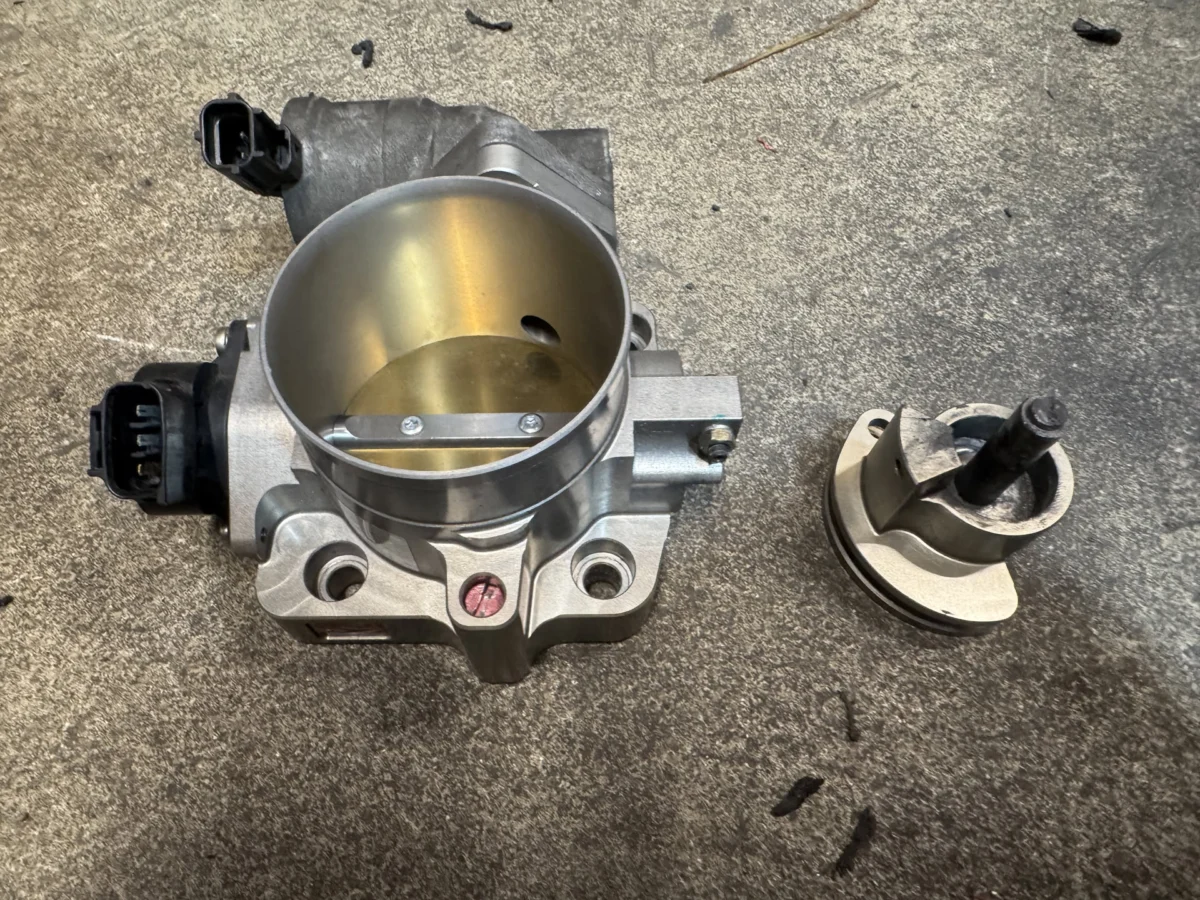
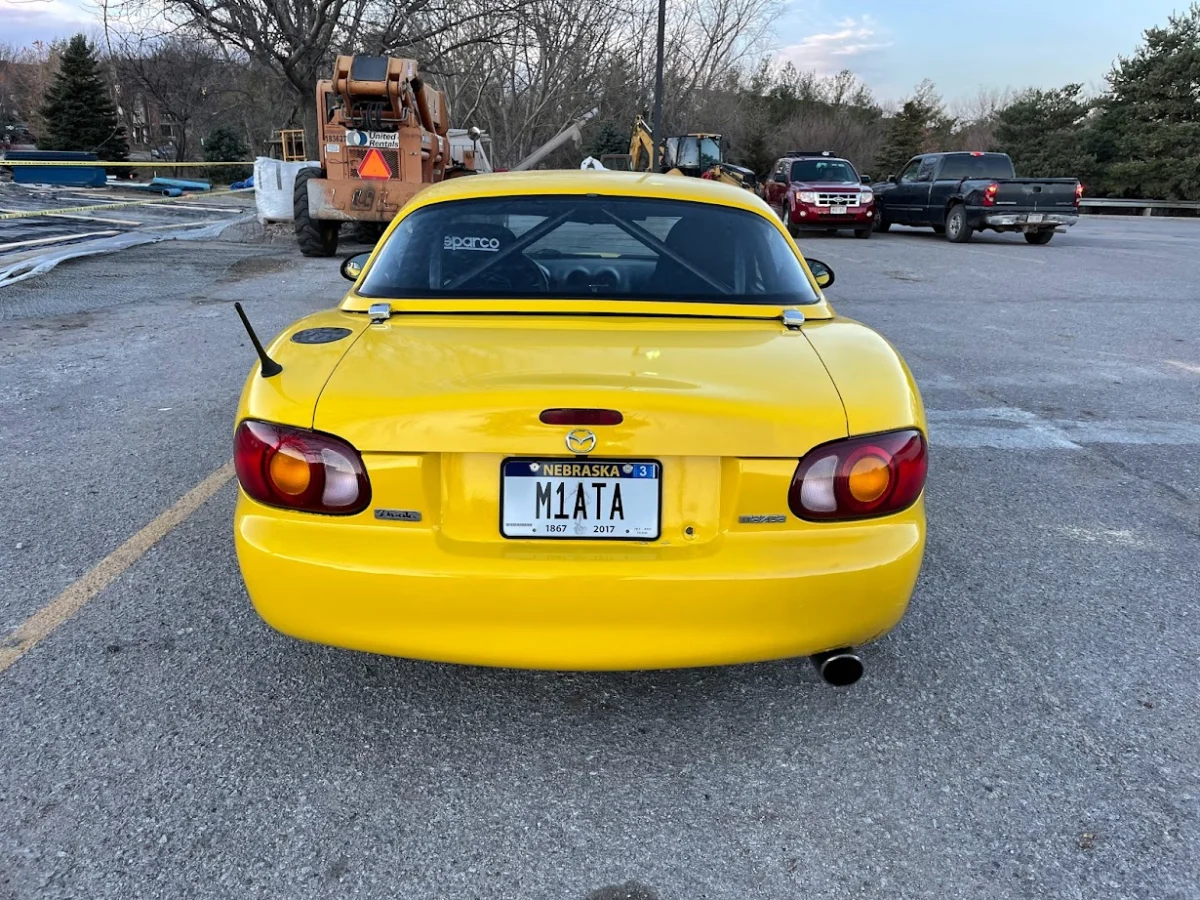
The pursuit of automotive reliability on the racetrack often pushes enthusiasts to re-engineer factory systems. For one track-day enthusiast running an NB-generation Mazda Miata equipped with an MS3Pro Evo standalone engine control unit (ECU), persistent mechanical failures with aftermarket cable-driven throttle bodies served as the catalyst for a complete conversion to an electronic throttle body, commonly known as drive-by-wire (DBW).
Over the course of a competitive racing season, the vehicle experienced two distinct throttle body failures utilizing popular aftermarket components. The most severe incident involved a catastrophic mechanical fracture of the throttle shaft itself. These failures highlight a broader engineering challenge within the enthusiast community regarding the reliability of mechanical throttle actuation under high-stress track conditions, prompting a technological shift toward modern electronic engine management systems.
Background and the Problem with Cable-Driven Systems
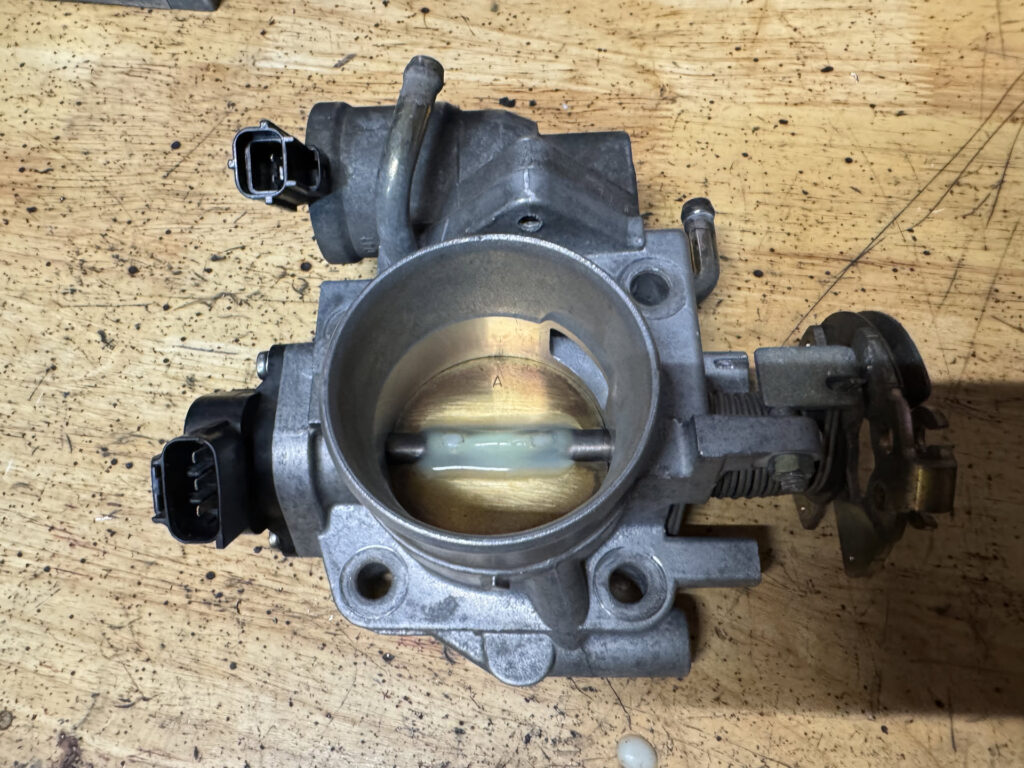
For decades, the Mazda Miata NA and NB platforms—spanning model years 1989 through 2005—have relied exclusively on mechanical, cable-driven throttle bodies. Millions of these vehicles operate daily using a physical steel cable connecting the accelerator pedal directly to the throttle valve. However, as modified engines produce higher horsepower, increased exhaust temperatures, and sustained high-RPM vibrations, the limitations of aftermarket and aging factory components become apparent.
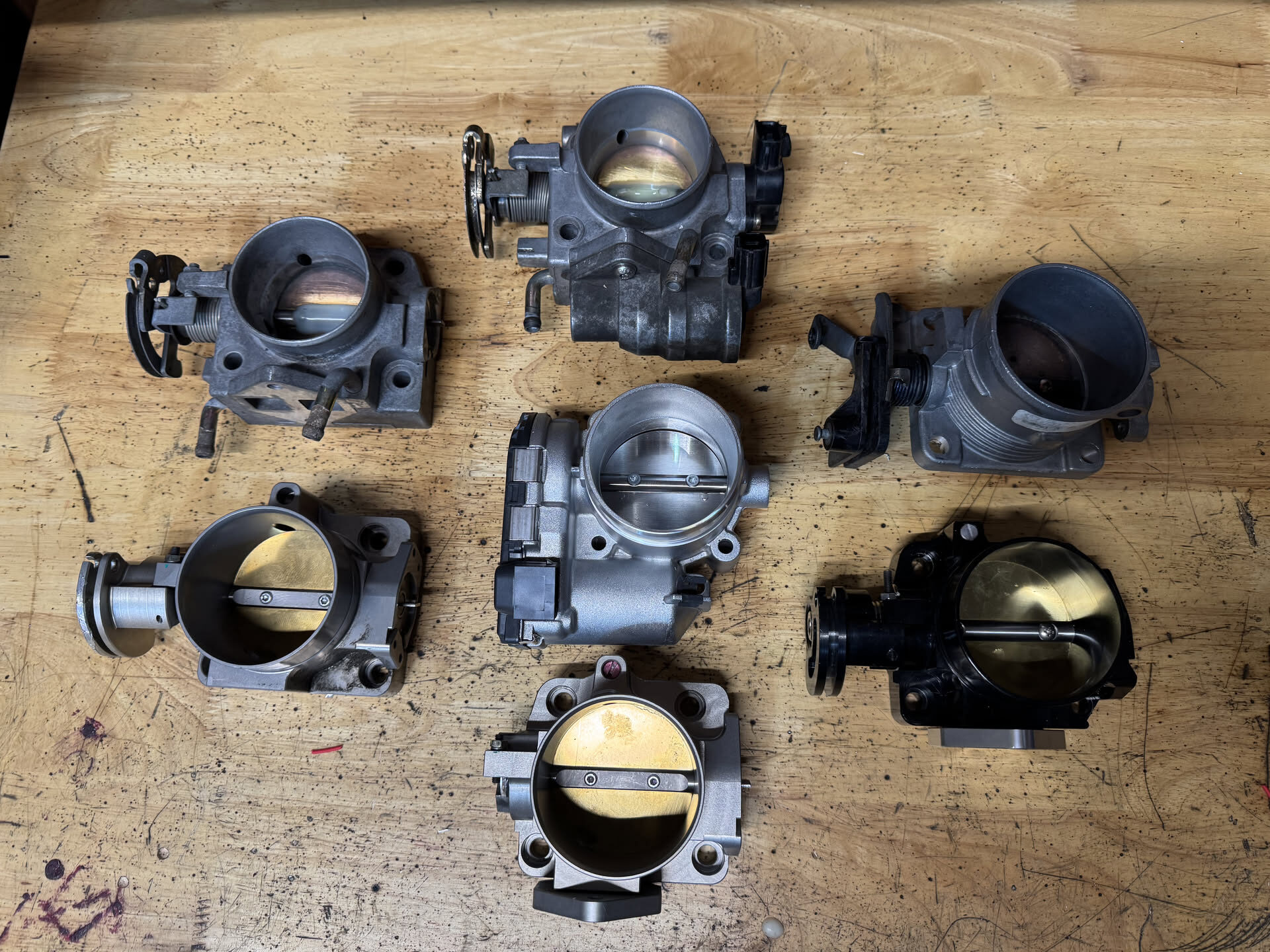
The subject vehicle had utilized an aftermarket Skunk2 throttle body for several years. While designed to improve airflow on modified naturally aspirated and forced-induction engines, this component has frequently faced criticism within enthusiast forums. Common complaints cite premature mechanical wear, butterfly valves sticking partially open—which introduces erratic high idle conditions—and structural integrity concerns.

Following two separate on-track failures during the racing season, interim mitigation required reverting to a factory stock throttle body secured with specialized high-temperature industrial epoxy, specifically 3M DP420, applied to the throttle shaft and blade screws to prevent loosening. While factory throttle bodies are generally robust, documented historical failures include throttle blade screws backing out or shafts snapping entirely. Either failure mode presents a catastrophic risk of foreign object ingestion into the combustion chamber, resulting in severe engine destruction.
Exploring alternative cable-driven options proved difficult. The marketplace lacks a diverse selection of reputable, off-the-shelf aftermarket cable throttle bodies for the Miata platform. While low-cost overseas clones of popular aftermarket units exist, questions regarding metallurgy and quality control render them unsuitable for competitive track environments. Adapting a large-displacement OEM throttle body—such as a unit sourced from a Ford 4.6L V8—remains technically feasible with minor machining of the mounting flange, but introduces secondary complications. These include the necessity of fabricating a custom throttle cable and integrating a standalone external idle air control (IAC) valve to maintain stable idle parameters.
The Engineering Rationale for Drive-by-Wire Conversion
Transitioning to a drive-by-wire architecture eliminates the physical linkage between the driver’s foot and the engine’s intake tract. Instead, an electronic control module interprets accelerator pedal position sensor (APPS) data and commands an electric servo motor attached to the throttle plate. This methodology offers several engineering advantages:
- Elimination of Mechanical Failure Points: Removing the physical throttle cable, mechanical pulleys, and auxiliary idle air control valves significantly reduces points of potential mechanical failure in high-vibration racing environments.
- Advanced Engine Management Integration: Electronic throttles enable sophisticated safety features, including rapid throttle closure during traction control events or engine over-speed conditions.
- Programmable Throttle Mapping: Engineers can decouple pedal position from throttle plate opening angle. This allows for customized pedal sensitivity curves, such as linear progression for track precision or progressive mapping for slick surfaces.
- Ancillary Comfort and Performance Features: DBW systems lay the technological groundwork for implementing advanced software-driven features like automated downshift throttle blipping (auto-blip), electronic cruise control, and seamless idle speed stabilization regardless of electrical or mechanical accessory loads.
Integration Challenges with Megasquirt Engine Management
While many contemporary motorsport ECUs—such as systems produced by Haltech or MaxxECU—feature native, out-of-the-box drive-by-wire management capabilities, the Megasquirt MS3Pro Evo platform utilized in this project does not natively control electronic throttle actuators within its primary hardware housing. Replacing an otherwise high-performing ECU solely for native DBW support was economically unfeasible.

Recent advancements in Megasquirt MS3 firmware have addressed this limitation by introducing support for external drive-by-wire controllers communicating via Controller Area Network (CAN) bus protocols. This development allows the primary ECU to broadcast engine parameters and safety flags while delegating the low-level closed-loop PID (Proportional-Integral-Derivative) control of the electronic throttle motor to a dedicated secondary processor.
Landscape of Megasquirt-Compatible CAN Drive-by-Wire Controllers
By late 2025, the market for Megasquirt-compatible CAN bus DBW controllers expanded to include several viable options catering to different budget tiers and functional requirements.

DBWX2 Drive-by-Wire Controller
Introduced around 2019, the DBWX2 established itself as an early pioneer in the aftermarket Megasquirt DBW integration space. Retailing at approximately $500, it remains the most expensive option evaluated. Its defining architectural feature is the ability to independently control two separate electronic throttle bodies. This capability serves specialized forced-induction setups, such as dual-throttle configurations for hot-side supercharger installations or precision boost control actuators.
LD Performance Drive-by-Wire Controller
Positioned in the mid-tier price bracket at roughly $200, the LD Performance unit offers standard CAN communication capabilities. However, feedback from integration specialists notes several limitations. The controller lacks configuration support through TunerStudio—the primary software interface for Megasquirt systems—requiring alternative configuration methods. Additionally, the physical enclosure and wiring connectors lack IP-rated weatherproofing, necessitating protected cabin installation.
SPTronics Drive-by-Wire Controller
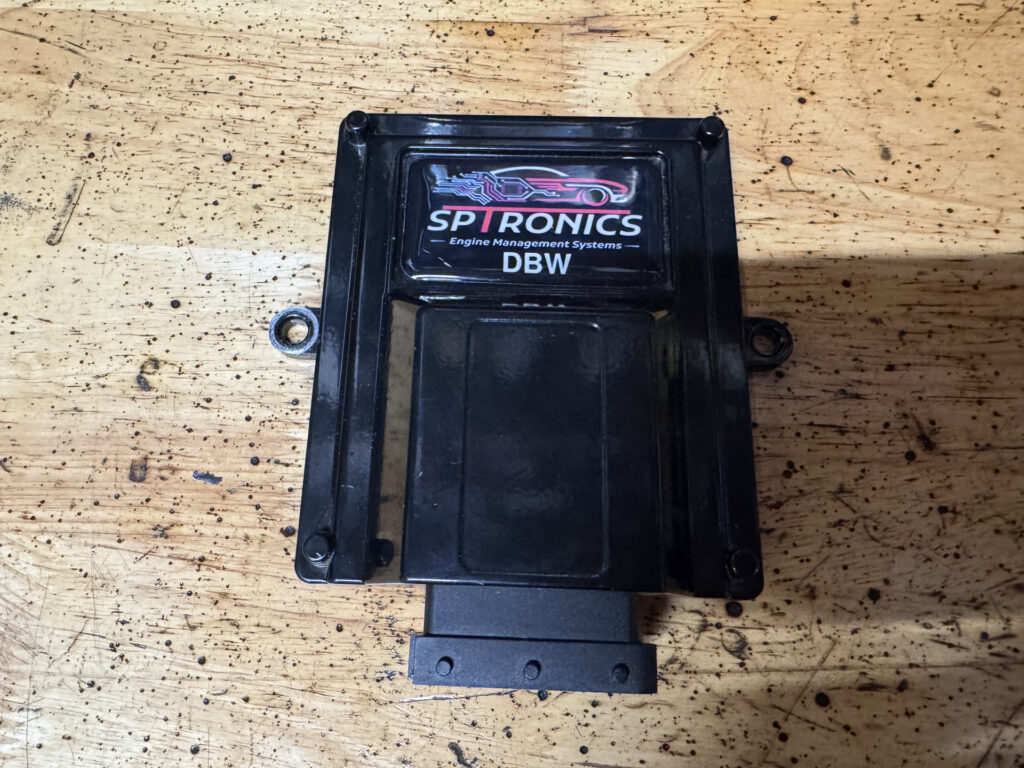
At an accessible price point of approximately $150, the SPTronics controller delivers high value for budget-conscious builders. Available in single- and dual-channel configurations, it allows multi-throttle control under unified mapping. However, compromises accompany its lower cost, including fixed firmware update paths, a non-configurable internal CAN bus termination resistor, and restricted user-adjustable PID tuning parameters.

MS Labs Drive-by-Wire Controller
Developed by recognized figures in the Miata aftermarket ECU tuning community, the MS Labs controller sits at the higher end of the pricing spectrum. Engineered with comprehensive feature integration, it supports advanced throttle mapping tables, sophisticated idle control algorithms, and native auto-blip functionality for manual transmissions. Regional distribution limitations, however, have historically restricted retail availability within the United States market.
AMP EFI Drive-by-Wire Controller
Released to the market in October 2025, the AMP EFI controller represents the newest entry in the ecosystem. Priced competitively at approximately $300, it bridges the gap between cost and advanced functionality. Notable engineering attributes include dual-mode operation, permitting the unit to function as a fully standalone DBW safety controller via dedicated analog TPS output and idle input pins, alongside native hardware pins configured to accept clutch and brake pedal inputs for auto-blip downshift logic.
Hardware Selection and Implementation Strategy

Executing the conversion on the 2000 Mazda NB Miata required sourcing specific mechanical and electronic components to ensure OEM-level reliability and seamless integration with the MS3Pro Evo ECU.
Throttle Body and Manifold Adaptation
The selected electronic throttle body is the Bosch Motorsports 60mm unit. Widely utilized across various European and domestic automotive OEM applications, these units offer high production standards, long service life, and retail availability at approximately $150. They are manufactured in bore sizes ranging from 32mm to 82mm, making the 60mm variant an appropriate match for a naturally aspirated or mildly modified Miata engine displacing 1.8 liters and producing roughly 140 wheel horsepower.
Because the bolt pattern of the Bosch electronic throttle body differs from the factory Mazda intake manifold flange, a transition adapter is required. While custom computer-aided design (CAD) and CNC machining remain options, established aftermarket suppliers offer ready-made solutions. Outsider Garage manufactures an aluminum adapter priced at $150, while ChathamCNC offers a comparable machined adapter retailing at $95.
Evaluation of DBW Controllers
To determine optimal long-term reliability and performance, comparative testing was initiated utilizing three distinct CAN-compatible controllers: the SPTronics unit, the DBWX2, and the newly released AMP EFI controller. Each system will undergo physical installation, electrical bench testing, and on-track validation to assess communication stability, failsafe responsiveness, and tuning granularity before selecting a permanent hardware solution.
Accelerator Pedal Position Sensor (APPS) Integration
Converting the cabin controls from a physical cable to an electronic signal required an appropriate pedal position sensor. While retrofitting a complete electronic accelerator pedal assembly from a modern donor vehicle is common, such modifications often require extensive custom fabrication, cutting, and welding beneath the dashboard.
To minimize interior modification and preserve tactile familiarity, the project utilizes a remote-mounted cable-driven accelerator pedal position sensor sourced from Honda. Specifically, vehicles such as the 2003–2007 Honda Accord V6 and contemporary Acura V6 models utilize an engine-bay or firewall-mounted sensor featuring an internal return spring and a mechanical pulley that accepts a standard throttle cable.

This design allows the original Miata accelerator pedal and interior cable to remain completely untouched. The physical cable actuates the Honda sensor located under the hood, which converts mechanical movement into redundant electronic position signals for the DBW controller. An additional benefit of this mechanical retention method is the preservation of factory cruise control hardware and the retention of the physical pedal weight and resistance characteristics familiar to drivers accustomed to cable throttles. Furthermore, identical aftermarket replacement sensors are readily available through automotive suppliers and online retail platforms.
Broader Implications and Next Steps
The systematic documentation of this conversion highlights the evolving landscape of aftermarket engine management. As older performance platforms like the Mazda Miata continue to be campaigned in modern motorsport environments, bridging legacy mechanical systems with contemporary electronic architecture becomes essential for safety and reliability.

Subsequent phases of this technical project will feature in-depth, empirical evaluations of the SPTronics, DBWX2, and AMP EFI controllers. These reports will detail software configuration workflows, CAN bus integration hurdles, tuning stability under dynamic track conditions, and final performance conclusions regarding the long-term viability of retrofit drive-by-wire systems in vintage and enthusiast sports cars.