Cecilia Chamidah Nur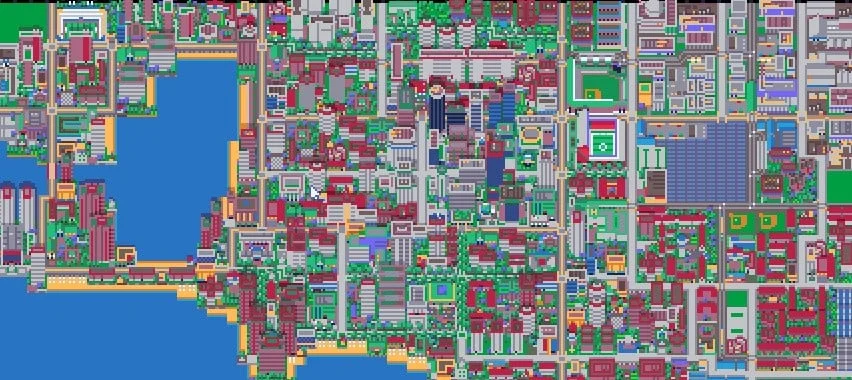
A place is only as good as the people in it, a philosophy that sits at the core of the newly released city-building simulation Urbanitas. Developed by the indie studio The Plush Girls, this project represents a significant technical achievement in the realm of constrained software development. Built for the Picotron fantasy workstation—a platform designed to emulate the limitations and charm of early computing environments—Urbanitas challenges players to transform randomly generated landmasses into thriving, functional metropolitan hubs. The title is currently available for browser-based play via itch.io, as well as through the Picotron Splore interface.
Technical Architecture and The Picotron Constraint
The development of Urbanitas is intrinsically linked to the capabilities of the Picotron fantasy workstation. Unlike modern game engines that benefit from virtually unlimited processing power and memory, Picotron imposes strict architectural boundaries. The Plush Girls have engineered Urbanitas to function within a 256KB compressed environment, a testament to the efficiency of their code.

This technical limitation is not merely a restriction but a design philosophy. By operating within the Picotron environment, the developers have forced a focus on algorithmic density rather than graphical fidelity. The game manages to simulate complex socio-economic systems, infrastructure management, and population dynamics without requiring high-end hardware, making it accessible to a broad audience regardless of their computer specifications. This adherence to "small-footprint" programming mirrors the history of early home computing, where developers had to master assembly language and efficient memory management to produce meaningful interactive experiences.
Chronology of Development and Studio Evolution
Urbanitas serves as the latest iteration in a clear evolutionary line of city-building projects from The Plush Girls. The studio first garnered attention within the niche but passionate Picotron and PICO-8 communities with the release of PicoMayor. That initial project established the baseline mechanics for urban management, such as basic zoning and rudimentary budgetary oversight.
Following the positive reception of PicoMayor, the studio expanded its scope with Urbanity. This project introduced more nuanced layers of city planning, testing the feasibility of more complex simulations on the limited hardware. Urbanitas is the culmination of these earlier experiments, integrating the lessons learned from both predecessors. While PicoMayor was an exercise in proof-of-concept, and Urbanity served as a structural refinement, Urbanitas represents a full-featured simulation that attempts to capture the depth of traditional PC city builders like SimCity or Cities: Skylines, albeit on a much smaller, more concentrated scale.

Gameplay Mechanics: Balancing the Municipal Ledger
The gameplay loop of Urbanitas is centered on the interplay between physical development and economic sustainability. Players are tasked with managing over 500 distinct building types. These assets are categorized into residential, commercial, industrial, and service-oriented sectors. The challenge lies in the "living, breathing" nature of the city, where population growth is directly tied to the availability of amenities, healthcare, and entertainment.
A standout feature is the game’s deep analytics system. Rather than providing static visuals, the game generates intricate reports on the specific needs of the populace. These data points cover critical metrics such as tax revenue, utility consumption, and service coverage. The player must reconcile these demands with a finite budget, necessitating a careful balancing act between the tax burden on citizens and the capital required to fund essential infrastructure. Failure to balance the books results in a cascading effect of municipal decay, demonstrating the game’s commitment to reflecting the harsh realities of urban planning.
Socio-Economic Implications of Small-Scale Simulation
Urbanitas offers more than just entertainment; it provides a simplified but accurate model of urban dynamics. In the field of urban planning, simulations are often used to predict the outcomes of zoning changes or infrastructure investments. By modeling these behaviors in a game format, The Plush Girls have created a pedagogical tool that highlights the interdependency of municipal systems.

The inclusion of cultural and scientific advancement as a progression metric suggests that the simulation is not static. As players meet the needs of their citizens, they unlock more sophisticated structures and services. This advancement cycle mimics the historical development of cities, where early agricultural settlements evolve into industrial centers and eventually into modern, service-based economies. The game effectively forces the player to consider the "opportunity cost" of every building placed, a fundamental concept in economic theory. If a player allocates too much capital to early-game residential development without providing the necessary industrial support, the city’s economy will inevitably stagnate.
Industry Reception and the Role of Indie Development
The release of Urbanitas has been met with enthusiasm within the indie development sphere. By utilizing the Picotron platform, The Plush Girls have demonstrated that innovation in game design does not always require massive budgets or AAA infrastructure. Instead, the focus on "constrained creativity" has allowed the studio to carve out a distinct identity.
Analysts following the independent gaming sector suggest that projects like Urbanitas are vital for the health of the industry. They demonstrate a high level of competency in optimization and system design, skills that are highly transferable to larger commercial projects. Furthermore, by distributing the game via itch.io, the developers have bypassed traditional publishing hurdles, allowing for a direct relationship with their user base. This model of distribution, combined with the open nature of the Picotron community, fosters a cycle of feedback that likely contributed to the polish seen in Urbanitas compared to the studio’s earlier titles.

Future Prospects and Ongoing Support
As of the current release, Urbanitas stands as a complete, albeit challenging, simulation experience. The reliance on random landmass generation ensures that no two cities are identical, providing a high degree of replayability. The developers have indicated that the focus remains on ensuring the stability of the current build, particularly regarding the complex data reporting systems that define the player’s interaction with the city.
The broader implications of this project are clear: the demand for deep, complex management simulations persists, even as hardware becomes more powerful. There remains a significant audience for titles that prioritize depth of simulation over graphical realism. The Plush Girls have successfully tapped into this market by providing a dense, rewarding experience that respects the player’s intelligence.
For those interested in the technical aspects, the availability of the code within the Picotron environment provides a unique opportunity for aspiring developers to study how the studio achieved such complexity within the 256KB constraint. As Urbanitas continues to circulate, it is likely to be studied as a primary example of how fantasy consoles can be used to push the boundaries of what is possible within limited computational parameters. Whether for the casual player looking to solve complex budgetary problems or the technical enthusiast interested in the limits of retro-style architecture, Urbanitas offers a significant addition to the city-building genre.