Farhan hamdan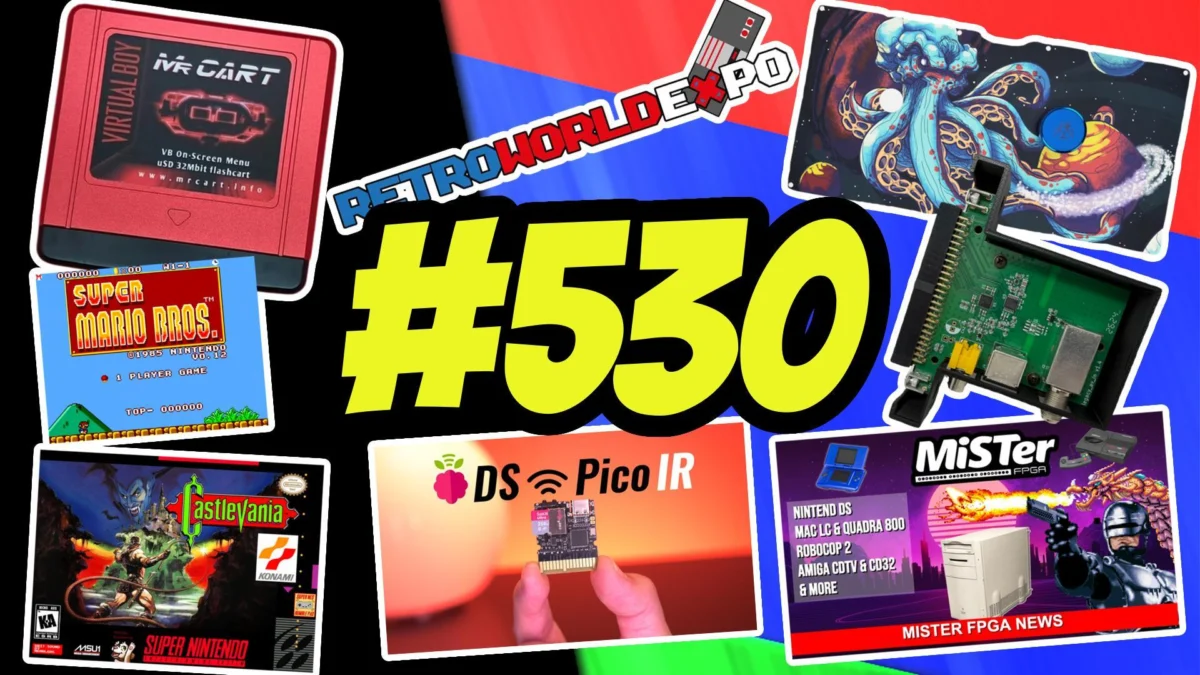
The retro gaming community continues to experience a prolific era of hardware modification, software preservation, and community-driven development, as highlighted in the latest comprehensive weekly broadcast. Spanning classic conventions, FPGA architecture updates, custom flash cartridges, and impressive homebrew downgrades and ports, the landscape of retro video game preservation and hardware enhancement shows no signs of slowing down. Enthusiasts and engineers alike are pushing legacy hardware past its original design limitations, breathing new life into systems that defined generations of electronic entertainment. This week’s developments range from physical hardware accessories like custom enclosures for high-end video processors to sophisticated software conversions that bridge the gap between competing 8-bit ecosystems.
Main Facts and Event Overview
The latest aggregation of retro gaming news, released on September 9, 2026, details several major milestones across multiple hardware and software platforms. Central to this week’s briefing is the ongoing evolution of FPGA-based emulation through MiSTer updates, new hardware availability for notoriously difficult-to-develop-for systems like the Nintendo Virtual Boy, and creative homebrew feats that see classic Nintendo Entertainment System titles ported to the Sega Master System. Additionally, physical modifications, convention recaps, and innovative input devices have captured the attention of preservationists and casual enthusiasts alike.
The convergence of modern fabrication techniques—such as 3D printing and custom PCB manufacturing—with vintage computing architecture allows independent developers to deliver professional-grade solutions. Consumers and hobbyists now have access to robust development tools and accessories that were once restricted to industrial electronics laboratories or expensive commercial ventures.
Chronology and Historical Context
The resurgence of interest in retro gaming hardware is not a sudden phenomenon, but rather the culmination of over a decade of grassroots engineering and growing frustration with the ephemeral nature of modern digital storefronts. Throughout the 2010s, retro gaming primarily focused on simple composite-to-HDMI adapters and basic soft-modding of consoles. However, as original components began to fail due to aging capacitors and degraded laser assemblies, the community pivoted toward preservation hardware.
In recent years, the maturation of open-source FPGA (Field Programmable Gate Array) technology, spearheaded by projects like the MiSTer platform, fundamentally changed the paradigm. Instead of relying on software emulation, which can introduce input latency and cycle-inaccurate behavior, FPGA chips replicate the physical silicon circuitry of original processors and custom graphics chips. This historical shift from software emulation to hardware-level recreation has elevated the standards of retro gaming preservation. Concurrently, the rise of affordable surface-mount component manufacturing and rapid prototyping has empowered solo developers to design, manufacture, and distribute specialized cartridges, adapters, and peripheral controllers on a global scale.
Detailed Breakdown of This Week’s Major Developments
Retro World Expo and Community Gatherings
The week’s reporting begins with a comprehensive look at the recent Retro World Expo, an annual gathering that serves as a focal point for collectors, developers, and competitive players. Events of this magnitude play a critical role in the ecosystem by providing a physical venue for hardware developers to demonstrate prototypes, foster face-to-face collaboration, and engage directly with the consumer base. Industry analysts note that physical conventions have experienced a post-pandemic rebound, serving as vital economic hubs for independent merchants dealing in physical media, restored hardware, and custom modifications.
Hardware Innovation: Kraken Spinner and Custom Fight Sticks
Input methodology remains a cornerstone of the retro and arcade preservation communities. The introduction of the Kraken Spinner and specialized octopus fight stick configurations addresses the specific physical demands of classic arcade titles that relied on rotary controls rather than traditional 360-degree joysticks or digital directional pads. Games originally designed for arcade cabinets utilizing spinners—such as Tempest or Ikari Warriors—often suffer significantly when played on standard modern controllers. By engineering accessible, high-precision spinning mechanisms compatible with modern fight stick chassis, hardware modders ensure that authentic arcade physics and control fidelity are preserved for contemporary players.
Virtual Boy ROM Cartridges and Niche Preservation
Perhaps one of the most challenging platforms for hardware preservation is Nintendo’s ill-fated 1995 stereoscopic tabletop console, the Virtual Boy. Due to its commercial failure and extremely limited software library, developing hardware solutions for the system has historically been financially unviable for mainstream manufacturers. However, the recent availability of the Virtual Boy Mr. Cart in-stock inventory marks a significant victory for dedicated preservationists. Flash cartridges of this nature allow researchers and enthusiasts to load entire software libraries, unreleased prototypes, and homebrew translations onto original hardware, safeguarding software that might otherwise be lost to physical media degradation.

Cross-Platform Software Feats: Super Mario Bros. NES to SMS Port
In the realm of software engineering, cross-platform porting between rival hardware architectures of the same generation remains a fascinating intellectual exercise. The release of version 1 of the Super Mario Bros. port from the Nintendo Entertainment System (NES) to the Sega Master System (SMS) highlights the technical ingenuity of modern homebrew developers. Because the NES and Sega Master System utilized different processor architectures (MOS Technology 6502 versus Zilog Z80, respectively) and distinct graphics handling systems, direct code conversion is impossible. Developers must painstakingly decompile, adapt, and optimize the game logic to run within the hardware constraints of competing legacy systems, demonstrating a mastery of retro assembly language.
MiSTer FPGA Advancements: Taito F3 and Computer Cores
The MiSTer FPGA project continues to expand its repertoire, with recent updates introducing support for the Taito F3 arcade hardware system, DVD disc image handling, and advanced computer cores. The inclusion of complex arcade hardware like the Taito F3—known for games such as Bubble Bobble Part 2, RayForce, and Kaiser Knuckle—requires immense FPGA logic resource allocation. Furthermore, the integration of CD-ROM and DVD disc emulation capabilities broadens the scope of the platform, allowing users to experience optical-media-based systems without the mechanical failure risks associated with aging laser assemblies.
Custom Enclosures and Accessories: OSSC Pro RF Case
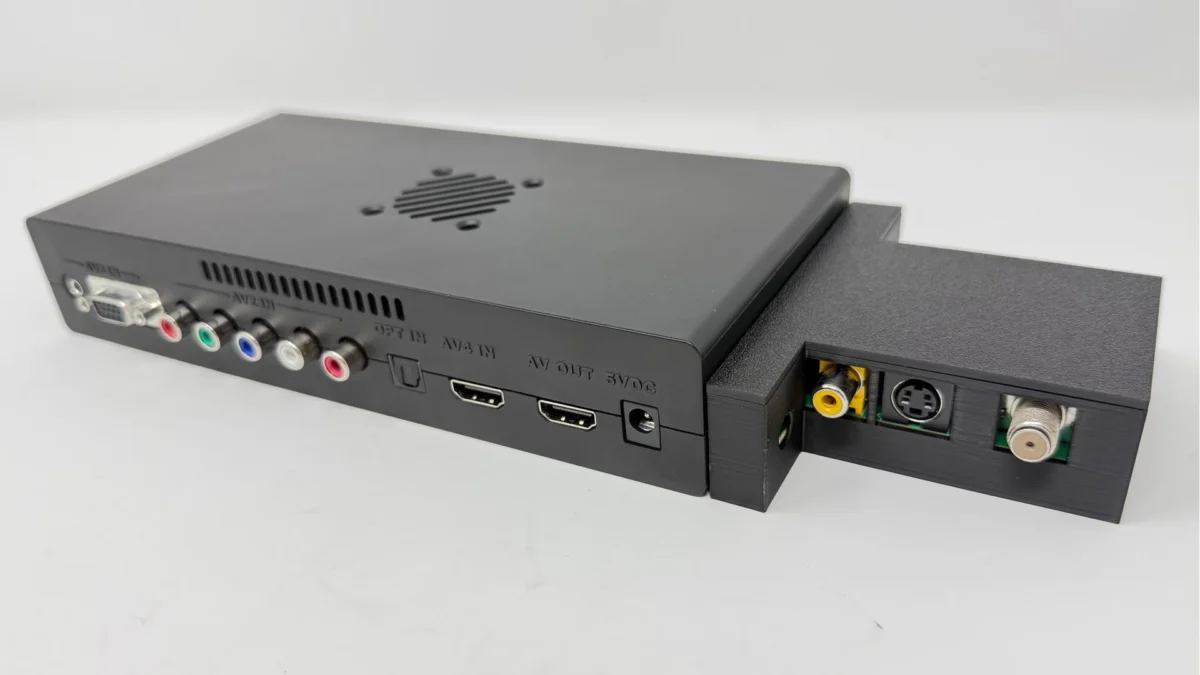
Video processing hardware has become increasingly sophisticated, with devices like the OSSC Pro (Open Source Scan Converter) setting the standard for upscaling standard-definition analog video signals to modern high-resolution displays. To accommodate users who still rely on legacy RF (Radio Frequency) and composite audio-visual equipment, developers have introduced custom 3D-printed RF cases for the OSSC Pro legacy AV inputs. This development underscores the modular nature of the modern retro gaming accessory market, where open-source hardware designs are rapidly supplemented by community-fabricated physical enclosures tailored to niche user requirements.
Graphics Enhancements and Flash Cart Technology
The trend of retro-modern hybridization is further exemplified by projects that inject 16-bit graphical assets into 8-bit software, such as the adaptation of Castlevania for the NES utilizing enhanced visual styles. By decoupling original game logic from native asset limitations, developers explore hypothetical scenarios of how classic franchises might have evolved if hardware constraints had been lifted. Simultaneously, innovations in flash cartridge technology, such as the DS Pico IR flash cart for the Nintendo DS, demonstrate that modern microcontroller platforms—specifically the Raspberry Pi RP2040 ecosystem—are increasingly being utilized to streamline data transfer, infrared communication, and storage management for dual-screen handheld architectures.
Broader Impact and Industry Implications
The continuous stream of hardware releases, software ports, and architectural updates documented in Weekly Roundup #530 carries several broader implications for the video game industry and cultural preservation sectors.
First, the commercial viability of boutique hardware manufacturing demonstrates that a passionate consumer base is willing to invest in high-end, premium preservation tools. Unlike mass-market consumer electronics designed for planned obsolescence, retro gaming hardware is engineered for longevity, repairability, and modularity. This philosophy stands in stark contrast to modern corporate trends favoring closed ecosystems and digital-only distribution models.
Second, the legal and ethical framework surrounding abandonware and homebrew development continues to evolve. While copyright laws regarding original game ROMs remain stringent, the creation of hardware clones, FPGA cores, and custom physical cartridges operates in a gray area that prioritizes cultural access over corporate monopoly. Academic institutions and digital libraries increasingly look to community-driven hardware projects as models for sustainable digital preservation, recognizing that physical hardware durability is just as vital as data backup.
Finally, the technical skills demonstrated by independent developers—ranging from low-level assembly programming and HDL (Hardware Description Language) coding to advanced computer-aided design (CAD) for manufacturing—highlight a thriving ecosystem of applied engineering education. Hobbyists who begin by modifying vintage consoles frequently develop professional competencies in electrical engineering, software architecture, and industrial design.
Conclusion
As retro gaming preservation moves further into the 21st century, weekly aggregations like the September 9, 2026 report serve as vital chronicles of an industrious community refusing to let digital history fade. Through the synergy of open-source FPGA development, advanced flash cartridge engineering, and creative software adaptation, legacy video games remain active, playable, and culturally relevant. The ongoing dedication of developers, hardware modders, and enthusiasts ensures that the foundational eras of electronic entertainment will be preserved, analyzed, and enjoyed by future generations of players and engineers alike.