Cecilia Chamidah Nur
When The Super Mario Bros. Super Show! debuted in 1989, it marked a significant milestone for Nintendo’s burgeoning franchise, introducing the beloved characters to a vast Western audience beyond the confines of their pixelated adventures. While Mario and Luigi had made sporadic appearances in animated projects prior, this syndicated television series, a unique blend of live-action skits and animated segments, became the definitive introduction for an entire generation to the personalities of the Mushroom Kingdom. Its creative decisions, often born out of necessity and a desire for distinct characterization, would, perhaps inadvertently, lay groundwork for how these iconic figures would be perceived and developed for decades to come, culminating in their modern portrayals in both video games and cinematic adaptations.
A Pivotal Moment for Video Game Adaptations in the Late 1980s
The late 1980s represented a dynamic period for children’s entertainment, particularly in the realm of syndicated animation. With the success of properties like He-Man and the Masters of the Universe and Transformers, studios were actively seeking popular intellectual properties to translate into animated series. Nintendo, having revitalized the video game industry with the Nintendo Entertainment System (NES) and the phenomenal success of Super Mario Bros., was a prime candidate. However, adapting video games into compelling narratives for television presented a unique set of challenges. Early video games, especially those from the 8-bit era, often prioritized gameplay mechanics over intricate character backstories or complex lore. Characters like Mario, Luigi, Princess Toadstool, and Bowser (King Koopa) were largely defined by their roles within the game’s objectives – a plumber saving a princess from a turtle king. Their personalities, motivations, and relationships were, at best, rudimentary, leaving a significant void for animators and writers to fill.
DIC Entertainment, a prolific animation studio headed by chairman and CEO Andy Heyward, took on this ambitious task. Known for producing a string of popular animated shows, including Inspector Gadget and Heathcliff, DIC was well-versed in developing high-volume animation for daily syndication. The format of The Super Mario Bros. Super Show! – featuring live-action segments starring former professional wrestler Captain Lou Albano as Mario and Danny Wells as Luigi, alongside animated episodes – was a common strategy of the era, offering variety and a distinct hook for viewers. The animated segments, which formed the core narrative, were developed by a team including the father-and-son writing duo Bruce Shelly and Reed Shelly, alongside Bob Forward and Phil Harnage. Their mission was formidable: to interpret Nintendo’s nascent characters from just two games – Super Mario Bros. and Super Mario Bros. 2 (the Western version, originally Doki Doki Panic) – and craft a cast capable of sustaining a demanding 65-episode run.
Crafting Personalities: The Visionaries Behind the Scenes
The creative team faced a blank slate concerning character depth. Phil Harnage, an American television writer and screenwriter instrumental in developing the show’s bible, recently shed light on the process. "There were basically five main characters that they were talking about," Harnage recounted. "They had Koopa, Mario, Luigi, the Princess, and Toad. And each one of those guys had to have a completely distinct personality." This fundamental need for differentiation, Harnage explained, was paramount because "in the game, they don’t. You know, there’s very little personality in the game. So I kind of had to start from scratch, but also stay within the expectation that kids already had."
Mario, already established as the heroic protagonist, was relatively straightforward. "If I met Mario, what would he be like?" Harnage pondered. "Well, he’d probably be a wise-cracking guy full of bravado, playing with his moustache and loving spaghetti. They would expect something like that, and they got that." Captain Lou Albano’s boisterous live-action portrayal and Lou Albano’s voice work in the animation (often uncredited in the animated segments, where Mario was voiced by Albano and Luigi by Danny Wells) further solidified this image, embedding the "It’s-a me, Mario!" catchphrase into the cultural lexicon.
Princess Toadstool, however, presented an opportunity for significant reinterpretation. Traditionally a damsel in distress in the games, the creative team sought to imbue her with agency and strength. Harnage articulated this deliberate choice: "With the princess, we wanted to do something other than making her say ‘Oh, I’m going to faint.’ She was spunky. She always stood up for herself. And often she didn’t even need Mario’s help. So we really tried to go against the cliché there." This proactive portrayal was evident from the earliest episodes. In "The Bird! The Bird!", the inaugural animated segment, Princess Toadstool is not only critical of Birdo’s kidnapping of Toad but actively convinces Mario to undertake the rescue mission. Her capabilities are further highlighted in "King Mario of Cramalot," where she directly confronts King Koopa’s minions without immediate assistance, showcasing her bravery and resourcefulness. This departure from the typical "helpless princess" trope was a forward-thinking decision for a children’s program of that era.
Toad, the Mushroom Kingdom’s loyal resident, was characterized as an enthusiastic and supportive companion. "Toad was just such a great sidekick. He was always ready to jump in and go with Mario," Harnage noted, positioning him as the eager, adventurous foil to Luigi’s caution and the Princess’s steadfastness. King Koopa, the overarching antagonist, was naturally cast as the distinct villain, though his personality was more broadly defined by his nefarious schemes and blustering demeanor rather than nuanced internal traits.
Luigi’s Transformation: From Palette Swap to "Nervous Nelly"
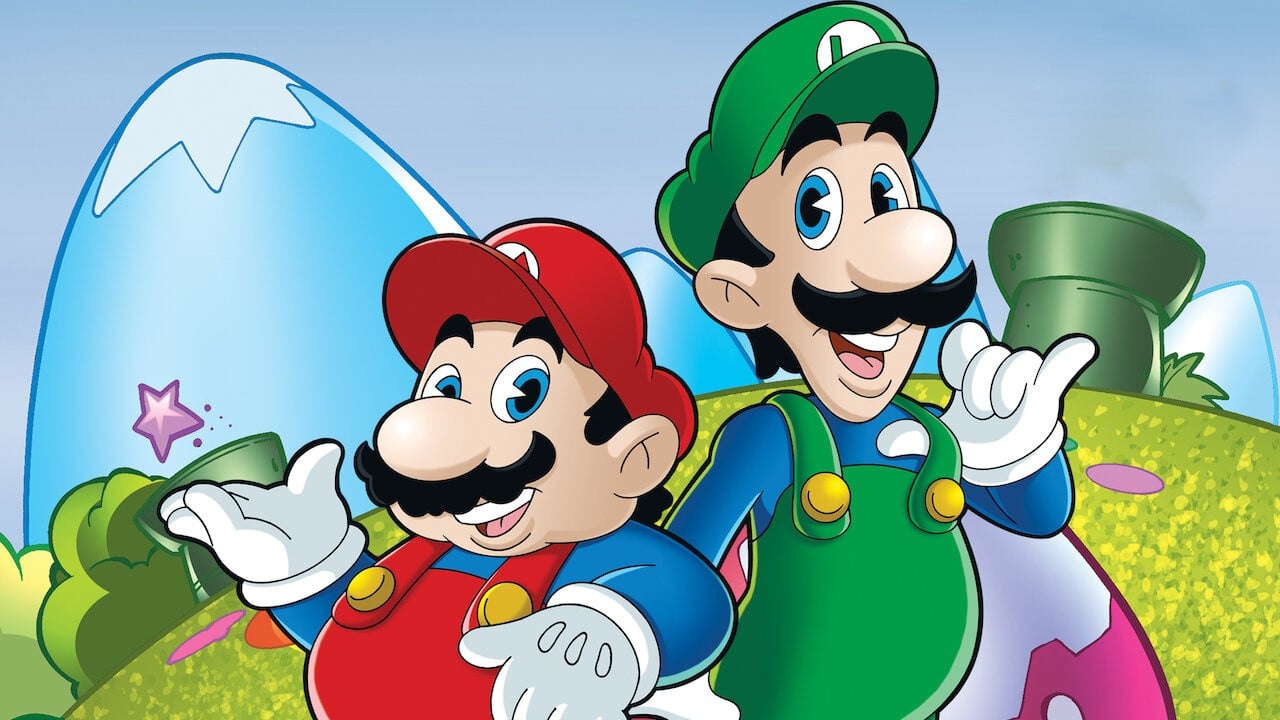
Perhaps the most enduring and influential characterization borne from The Super Mario Bros. Super Show! was that of Luigi. Prior to the series, Luigi’s identity was largely defined by his role as Mario’s palette-swapped companion, often serving as a second player character with minor, if any, distinguishing traits beyond his green attire. While some earlier media, such as a live-action advertisement for the Atari versions of Mario Bros., might have briefly depicted him as more timid, Phil Harnage confirms that the show’s decision to make him a "scaredy-cat" was not directly inspired by such fleeting portrayals. Instead, it stemmed from the fundamental requirement to give each of the five main characters a unique and identifiable personality.
"At the same time, Luigi was just a cypher; he just seemed to be in the background all the time," Harnage explained. "So we made him a nervous nelly. He was the guy who always said, ‘Well, I don’t know, maybe we should wait.’" This creative choice transformed Luigi from a mere echo of his brother into a character with his own distinct emotional landscape. Danny Wells’s voice acting for Luigi, both in the live-action segments and the animated portions, perfectly captured this newfound timidity, often delivering lines with a trembling inflection that became instantly recognizable. This character trait provided a rich source of comedic situations and allowed for a dynamic interplay between the brothers, contrasting Mario’s bravado with Luigi’s cautious apprehension.
Beyond the "Super Show!": Expanding the Animated Universe and Memetic Impact
The success of The Super Mario Bros. Super Show! paved the way for subsequent animated series that further explored the Mario universe. DIC Entertainment continued its collaboration with Nintendo, producing The Adventures of Super Mario Bros. 3 (1990) and Super Mario World (1991), both of which continued to develop the characterizations established in the original show. Phil Harnage remained involved in these follow-up projects, contributing to their scripts and further solidifying the animated personas.
It was during the Super Mario World animated series that one of the most unexpected and enduring cultural phenomena associated with Luigi emerged: the "Mama Luigi" meme. Harnage fondly recalled its origin: "I also did Super Mario World with Yoshi. And if you Google the line, ‘That’s Mama Luigi to you,’ you will find tons of references to that. Because for some reason that became kind of an underground meme. I didn’t even notice for years. And it was just a great line I got to toss in when Luigi was egg-sitting. And lo and behold, Yoshi popped out of the shell and called him, ‘Mama.’ Everybody made fun of him. But he said, ‘Well, that’s Mama Luigi to you.’" This seemingly innocuous line, delivered by Luigi in a moment of exasperated pride, transcended the show’s original run to become a widely shared and recognized internet meme, a testament to the character’s unique appeal and the lasting impact of these animated portrayals.
Another iconic contribution from The Super Mario Bros. Super Show! was the catchy, if somewhat bizarre, "Do The Mario" dance. Featured in the live-action segments, this instructional dance sequence, led by Captain Lou Albano, became a memorable piece of retro television culture. While the UK releases of the show famously omitted the live-action skits, they retained "Do The Mario," highlighting its singular appeal and cementing its place in the show’s legacy. These elements, whether intentional or accidental, contributed significantly to the show’s enduring presence in popular culture, extending its influence far beyond its initial broadcast.
An Unforeseen Legacy: Echoes in Nintendo’s Modern Era
What is truly fascinating about the characterizations developed for The Super Mario Bros. Super Show! is how closely they align with, or perhaps even influenced, Nintendo’s subsequent official depictions of these characters in video games and other media. This convergence is particularly noteworthy given that Nintendo of America’s involvement in the creative process for the show was, by most accounts, limited. This suggests that the DIC creative team, given significant freedom, stumbled upon archetypes that resonated deeply with the characters’ inherent potential and later became canonical.
Princess Peach, for instance, has undergone a remarkable transformation in recent decades, shedding her stereotypical "damsel-in-distress" image. She has starred in her own games, such as Super Princess Peach (2005) for the Nintendo DS, where she utilized her emotions as powers, and more recently, Princess Peach: Showtime! (2024) for the Nintendo Switch, which positions her as a versatile heroine capable of adopting various roles to save the day. This evolution culminates in her portrayal in Illumination’s The Super Mario Bros. Movie (2023), where she is depicted as a brave, capable, and inspiring leader of the Mushroom Kingdom, actively participating in the fight against Bowser. These modern interpretations bear a striking resemblance to the "spunky" and self-reliant princess first championed by Phil Harnage and his team over three decades ago.
Similarly, Luigi’s "nervous nelly" persona, born out of the necessity for distinct characterization, has become a cornerstone of his identity within the gaming universe. The highly successful Luigi’s Mansion series, which debuted on the GameCube in 2001 and has since seen multiple installments, places Luigi squarely in the spotlight as a ghost hunter whose easily terrified nature is both a source of humor and a driving force behind his reluctant heroism. This characterization was further embraced by Charlie Day’s portrayal of Luigi in The Super Mario Bros. Movie, where his jumpiness and vulnerability are central to his charm and relatability. The path from a character defined by his color to a beloved, distinct personality deeply rooted in his timidity can be directly traced back to the creative choices made for The Super Mario Bros. Super Show!.
In conclusion, The Super Mario Bros. Super Show! stands as more than just a nostalgic relic of 1980s animation. It was a pioneering effort in video game adaptation that, through the insightful and often challenging work of its creative team, forged foundational characterizations for some of gaming’s most iconic figures. The decisions to portray Princess Toadstool as spunky and capable, and Luigi as a distinct, nervous yet heroic sidekick, were not just momentary creative flourishes but deeply influential choices that, whether by direct influence or parallel evolution, profoundly shaped how Nintendo and its partners would come to understand and present these characters to a global audience for generations to come. The show’s enduring legacy is a testament to the power of creative interpretation and its unexpected ability to define a universe.