Indra Gunadi
The Enduring Legacy of the Game Boy Platform
Introduced in 1989, the original Game Boy, with its iconic pea-soup green monochrome screen, revolutionized the gaming industry. Selling over 118 million units across its various iterations (including the Game Boy Color), it became a cultural phenomenon, introducing millions to portable entertainment. Its robust design, impressive battery life, and a stellar library of games like Tetris, Pokémon Red/Blue, and Super Mario Land solidified its place in gaming history. Despite being officially discontinued in 2003, the Game Boy and its successor, the Game Boy Color, have cultivated an enduring legacy that transcends nostalgia. Decades later, a dedicated community of enthusiasts, collectors, and most notably, independent developers, continue to champion the platform. This sustained interest is fueled by several factors: the simplicity and elegance of its hardware, the challenge of working within its limitations, and a deep affection for the console’s distinct aesthetic and gameplay feel. For many developers, creating a game for the Game Boy is a passion project, a way to contribute to a beloved platform’s history, and a technical exercise in optimization and creative problem-solving.
The Rise of the Homebrew Community and Modern Development Tools
The phenomenon of "homebrew" gaming—the creation of new software for existing, often vintage, hardware—has flourished in the 21st century. What began as a niche pursuit by hobbyists coding in assembly language has evolved into a sophisticated subculture, significantly aided by the development of accessible tools. Platforms like GB Studio, a drag-and-drop game builder, have democratized Game Boy development, allowing creators with varying levels of coding expertise to realize their visions. This has led to an explosion of new titles, ranging from experimental art pieces to full-fledged commercial-quality games, all designed to run natively on original Game Boy hardware or emulators.
The digital storefront itch.io has emerged as a crucial hub for the distribution of these homebrew projects. Its flexible pricing models, including pay-what-you-want options, empower independent developers like devgb to share their creations directly with a global audience, bypassing traditional publishing routes. This ecosystem fosters a strong sense of community, where developers share knowledge, assets, and support, collectively pushing the boundaries of what’s possible on hardware designed over three decades ago. The motivation for these developers is often multi-faceted: a desire to learn game development, a personal challenge to master retro hardware, a tribute to childhood memories, and a genuine passion for creating unique interactive experiences for a dedicated audience.
Milo & Miko: Gameplay Mechanics and Design Philosophy
"Milo & Miko: Magic Blocks" is positioned as a co-operative action-puzzle game, a genre that often thrives on the Game Boy’s focused design. Players control the eponymous duo—Milo, the magician pup, and Miko, the clever cat—each likely possessing distinct abilities crucial for navigating the game’s intricate challenges. The core mechanics revolve around classic puzzle elements: pushing blocks to clear paths or activate switches, riding arrow tiles for directional movement, and utilizing teleportation mechanics to traverse complex layouts. The game promises a substantial experience with 100 levels spread across 10 distinct themed worlds, suggesting a gradual increase in complexity and the introduction of new environmental hazards or puzzle elements as players progress.
One of the most intriguing aspects of "Milo & Miko" is its "solo or with a friend sharing the same screen" co-op feature. On a console like the Game Boy, which traditionally relied on Link Cables for multiplayer, implementing a local, single-screen co-op mode presents significant design challenges and opportunities. This could manifest in several ways:
- Character Switching: In solo play, the player might switch between Milo and Miko to solve puzzles sequentially, utilizing each character’s unique skills.
- Simultaneous Control (Shared Controls): For co-op, two players might share a single Game Boy, with one player controlling Milo’s movement and actions via the D-pad and A button, while the other controls Miko via the B button and possibly the Start/Select buttons for context-sensitive actions. This would demand precise coordination and communication, harkening back to early arcade co-op experiences.
- Hot-Seat Co-op: Players could take turns controlling one character at a time, strategizing together for each move.
Regardless of the specific implementation, the emphasis on co-operative play highlights a design choice focused on social interaction and problem-solving, a refreshing approach for a handheld platform often associated with solitary play. The blend of action and puzzle elements, combined with the charm of its protagonists, positions "Milo & Miko" to appeal to fans of classic puzzle series such as Adventures of Lolo or Sokoban, while adding a modern co-op twist. The visual style, as indicated by the released screenshot, embraces the Game Boy’s aesthetic limitations, utilizing clear sprites and environmental details that are easily discernible on a monochrome or limited color palette screen, a testament to effective pixel art design.
Developer Spotlight: devgb and the Indie Spirit
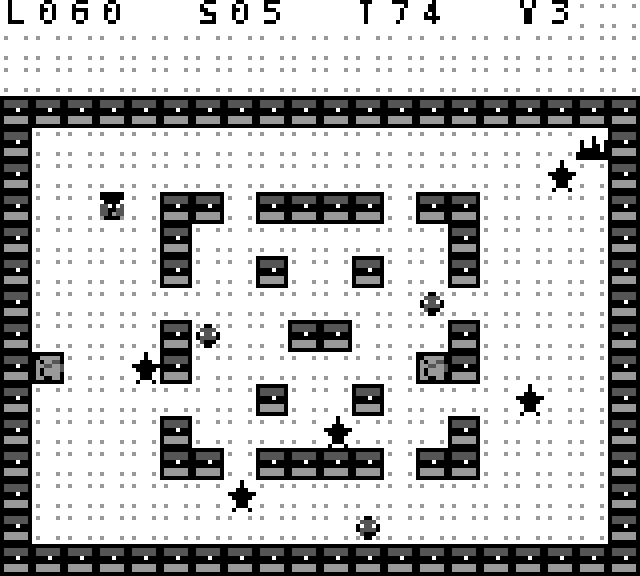
While specific details about "devgb" remain concise, the very act of releasing a new Game Boy title in 2026 speaks volumes about the developer’s passion and dedication. Creating a game for retro hardware requires a unique skill set, combining technical proficiency with a deep understanding of historical console architecture and a commitment to working within tight constraints. Developers often operate with minimal budgets, relying on personal time and resources, making such projects true labors of love.
It can be inferred that devgb, like many homebrew creators, is driven by a desire to contribute meaningfully to the Game Boy’s library, perhaps fulfilling a childhood dream or exploring design concepts not fully realized during the console’s commercial peak. The choice of itch.io as the distribution platform suggests an independent ethos, valuing direct engagement with the player community and control over the creative process. Success for such projects is often measured not just in sales, but in community recognition, positive player feedback, and the satisfaction of bringing a new, playable experience to life on cherished hardware. Statements from similar developers often reflect sentiments of "it’s about the joy of creation" and "keeping the spirit of retro gaming alive for a new generation."
The Broader Context: Retro Gaming Market Trends
The release of "Milo & Miko: Magic Blocks" arrives within a thriving global retro gaming market. Analysts from firms like Grand View Research and Statista have highlighted the substantial and growing value of this segment, driven by nostalgia, game preservation efforts, and the accessibility of emulators and refurbished hardware. The market encompasses everything from vintage console sales and classic game re-releases to merchandise and, crucially, new homebrew titles.
Digital storefronts like itch.io play an increasingly vital role, offering a low-barrier entry point for developers and a diverse catalog for players. Beyond digital downloads, many successful homebrew titles eventually see limited physical cartridge releases, often accompanied by custom boxes and manuals, becoming coveted collector’s items. This blend of digital accessibility and physical collectibility caters to various segments of the retro gaming community. The target audience for "Milo & Miko" is likely diverse, including long-time Game Boy enthusiasts, younger players discovering the platform through emulation or re-releases, and fans of puzzle games seeking unique challenges. The co-op element further broadens its appeal, offering a shared experience that can bridge generational gaps.
Implications for Game Preservation and Innovation
The continued development and release of games like "Milo & Miko: Magic Blocks" carry significant implications for game preservation and innovation. Firstly, homebrew development actively contributes to the preservation of gaming history by demonstrating that classic hardware remains viable for new experiences. It prevents consoles from becoming mere museum pieces, instead treating them as living platforms capable of hosting fresh content. This ongoing activity ensures that the technical knowledge and artistic styles associated with these platforms are maintained and passed on.
Secondly, these projects often push the boundaries of what was thought possible on the original hardware. Working within the Game Boy’s stringent limitations (CPU speed, limited RAM, monochrome display, restricted button input) forces developers to be incredibly creative and efficient. This fosters innovation in game design, forcing a focus on core mechanics, clever level design, and efficient code rather than relying on graphical fidelity or processing power. "Milo & Miko"’s ambition to deliver 100 levels across 10 worlds with a unique shared-screen co-op mechanic on a Game Boy is a prime example of this innovative spirit. Such endeavors serve as a testament to the ingenuity of indie developers and a source of inspiration for future game creators, demonstrating that compelling gameplay can emerge from even the most constrained environments.
Looking Ahead: The Future of Game Boy Homebrew
The trajectory for Game Boy homebrew, and retro console homebrew in general, appears robust. The community continues to grow, attracting new talent and fostering increasingly ambitious projects. As development tools become more sophisticated and accessible, the quality and complexity of homebrew games are likely to continue their upward trend. We can anticipate more titles exploring niche genres, pushing graphical boundaries within the Game Boy’s palette, and experimenting with unique gameplay mechanics like those found in "Milo & Miko." The ongoing interest from players, coupled with the passion of developers, ensures that consoles like the Game Boy will remain active development platforms for the foreseeable future. Events like online game jams, community forums, and dedicated retro gaming conventions will continue to serve as vital platforms for showcasing these new creations and connecting developers with their audience.
In conclusion, "Milo & Miko: Magic Blocks" by devgb is more than just a new game; it is a significant cultural artifact. Its release on the Game Boy in 2026 is a powerful affirmation of the enduring appeal of classic hardware, the vibrant creativity of the homebrew community, and the timeless nature of compelling game design. It stands as a testament to the idea that true innovation can flourish even within the most established frameworks, inviting players to embark on a new adventure with a magician pup and a clever cat, proving that the Game Boy’s magic is far from fading.