Indra Gunadi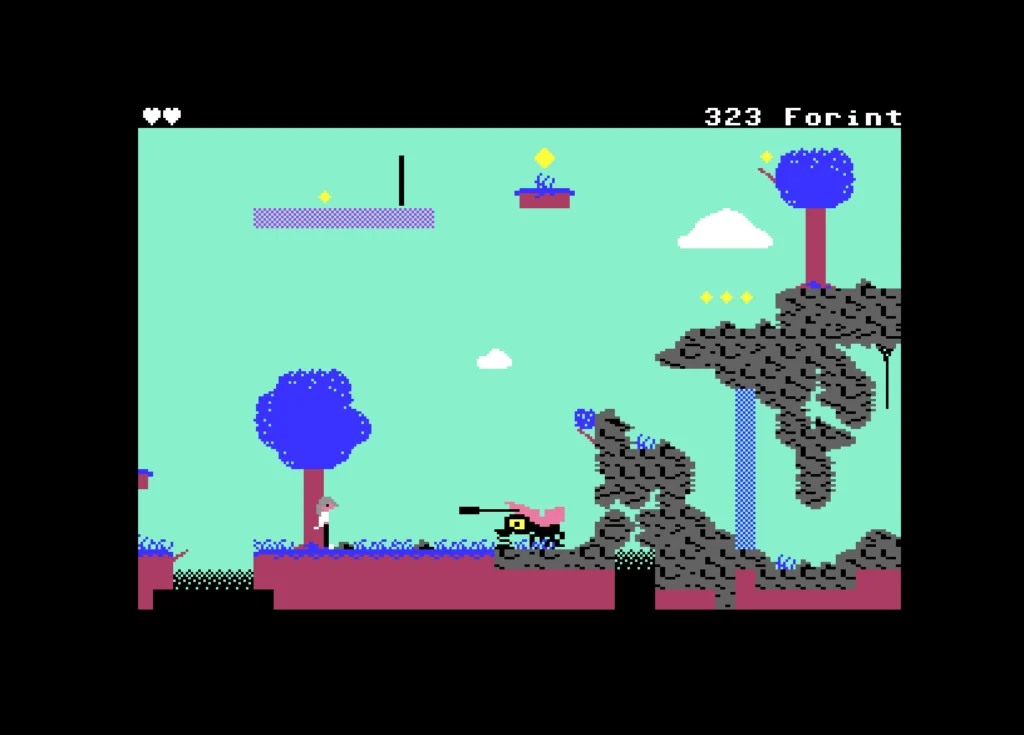
The Enduring Legacy of the Commodore 64 in 2026
The release of a brand-new, high-quality game for the Commodore 64 in 2026 is not merely a nostalgic footnote but a testament to the remarkable longevity and persistent vibrancy of the retro computing community. Introduced by Commodore International in January 1982, the C64 rapidly became the best-selling single computer model of all time, with estimated sales exceeding 12.5 million units worldwide. Its unparalleled success was largely due to its advanced graphics capabilities for its era, driven by the VIC-II chip, and its groundbreaking sound chip, the MOS Technology 6581/8580 SID (Sound Interface Device). These features, combined with its relatively affordable price point, made it a dominant force in the home computing and gaming markets throughout the 1980s.
Decades after its commercial peak, the C64 continues to captivate a dedicated global audience of enthusiasts, programmers, and artists. This community actively preserves the platform’s history, develops new hardware enhancements, and, crucially, creates new software that often surpasses the technical achievements of its commercial era. The phenomenon of new game releases for obsolete platforms highlights a broader trend in digital culture: the appreciation for historical technology as a creative constraint and an artistic medium. Developers like turanszkij are not simply recreating past experiences; they are actively innovating within the C64’s technical parameters, demonstrating what is still possible with its hardware. This continuous output of new content ensures that the C64 is not just a relic, but a living, evolving platform.
turanszkij: Pushing the Boundaries of 8-bit Development
While specific details about turanszkij’s prior works are not explicitly stated in the initial announcement, their contribution of "OGOL (2026)" to the C64 scene, particularly for a high-profile event like Assembly, immediately positions them as a significant talent within the demoscene and retro development community. Developing for the Commodore 64 in the 21st century is a specialized craft, requiring a deep understanding of the system’s architecture, mastery of assembly language programming, and an artistic sensibility for pixel graphics and chiptune music. Modern C64 developers often leverage cross-development tools, emulators, and contemporary coding practices, but the final output must adhere strictly to the original hardware’s limitations.
"OGOL (2026)" stands out due to its promised features: "side-scrolling, fluid animations, and throw-your-blade combat." Fluid animations on the C64 are notoriously challenging to achieve, often requiring sophisticated sprite multiplexing techniques, careful manipulation of character sets, and precise timing to avoid flicker and maintain a smooth visual experience on a system with a limited palette and resolution. The promise of such fluidity suggests a developer highly skilled in optimizing the VIC-II chip’s capabilities.
The "throw-your-blade combat" system introduces an intriguing strategic element. Unlike typical hack-and-slash mechanics, a throwable weapon mechanic would necessitate careful timing, resource management (recovering the blade), and potentially puzzle-solving or environmental interaction. This innovative approach to combat within a side-scrolling format on the C64 could differentiate "OGOL (2026)" significantly from its contemporaries and historical counterparts, offering a fresh gameplay loop for seasoned retro gamers. The atmospheric premise, "a voice in your head, a sword in the ground, and a world you can’t quite recall," further hints at a narrative depth often found in modern indie titles, proving that compelling storytelling is not exclusive to high-fidelity graphics.
Chronology: From Assembly’s Ärok Party to Public Release
The journey of "OGOL (2026)" from its inception to public availability is rooted in the vibrant demoscene culture, specifically the "Ärok party in Assembly." Assembly is one of the world’s largest and oldest demoparties, an annual digital arts festival typically held in Finland. It serves as a crucial gathering point for programmers, musicians, and graphic artists who create "demos" – non-interactive audio-visual presentations – and various other digital artworks for different computer platforms, both modern and retro. These events often include competitions across various categories, encouraging innovation and technical prowess.
The "Ärok party" likely refers to a specific competition or sub-category within the broader Assembly event, potentially focusing on new games for retro platforms like the C64, or perhaps a theme-based challenge. For a game like "OGOL (2026)" to be developed for such an event implies a rigorous development schedule, often culminating in a last-minute submission to meet the party’s deadlines. These party releases are often first looks or beta versions, designed to showcase technical capabilities and garner immediate community feedback.
The public release on July 20, 2026, via turanszkij’s itch.io page (https://turanszkij.itch.io/ogol), signifies the transition from a demoparty showcase to broader accessibility. This timeline suggests that following its debut at Assembly, the developer likely refined the game, addressed any initial feedback, and prepared it for a wider audience. This staggered release model is common in the demoscene, where the initial "party version" serves as a proof of concept or competition entry, followed by a more polished public release. This strategic rollout maximizes both immediate community engagement and subsequent market reach.
Technical Deep Dive: Innovation on 8-bit Hardware
The technical achievements implied by "OGOL (2026)" on the Commodore 64 are substantial. Achieving "fluid animations" on the C64’s VIC-II chip, which operates with a native resolution of 320×200 pixels and a 16-color palette, is a masterclass in optimization. The VIC-II can display up to eight hardware sprites simultaneously without flicker. To achieve more, developers typically employ sprite multiplexing – rapidly changing the sprite data or position during horizontal blanking intervals – or use custom character sets to create larger, more detailed animated elements. The description suggests a smooth visual experience that would have been exceptional even during the C64’s commercial heyday, rivaling the best examples of the platform’s animated games.
The "throw-your-blade combat" system would also require careful implementation given the C64’s input limitations, typically a single joystick. A robust system would need intuitive controls for movement, jumping, and the precise throwing and retrieval of the blade. This might involve context-sensitive actions, directional input for throwing trajectory, and potentially a dedicated action button for summoning the blade back. The physics of the blade’s trajectory and its interaction with enemies and the environment would demand sophisticated collision detection and movement routines, all within the C64’s 1MHz 6510 processor and 64KB of RAM.
Sound design, often overlooked, is crucial for atmospheric games. The SID chip, renowned for its distinctive, rich sound, would be instrumental in crafting the mysterious ambiance of "OGOL (2026)." A skilled composer could utilize the SID’s three programmable voices to create haunting melodies, subtle ambient effects, and impactful combat sounds, enhancing the player’s immersion in the game’s "unrecalled world" and emphasizing the enigmatic "voice in your head."
Supporting Data and Community Engagement
The continued development for the C64 is part of a larger trend in retro gaming. The market for retro consoles and games has seen substantial growth, with platforms like itch.io serving as vital distribution channels for independent developers creating content for both modern and vintage systems. Statistics from various gaming analytics firms indicate a consistent interest in retro gaming, driven by nostalgia, the challenge of old-school mechanics, and the artistic appreciation for pixel art and chiptune music. This niche, while smaller than mainstream gaming, is highly dedicated and financially supportive.
The availability of sophisticated modern development tools has significantly lowered the barrier to entry for C64 development. Cross-compilers (like cc65), powerful integrated development environments (IDEs) with C64 debugging capabilities, and highly accurate emulators (such as VICE) allow developers to work efficiently on contemporary machines while targeting the vintage hardware. This technological bridge facilitates the creation of complex projects like "OGOL (2026)" without requiring developers to exclusively use original, often cumbersome, 1980s development setups.
The C64 community, known for its passionate engagement, is anticipated to react positively to "OGOL (2026)." New, innovative games are always highly celebrated, often leading to extensive discussions on forums, dedicated reviews on retro gaming websites, and playthroughs on streaming platforms. Such releases reinvigorate the community, inspiring new generations of enthusiasts to explore the platform and potentially contribute their own creations. The game’s hosting on itch.io, a platform popular with indie and experimental developers, ensures easy access and fosters direct interaction between turanszkij and the player base, allowing for feedback and community building.
Anticipated Statements and Reactions
While no official statements from turanszkij or Assembly organizers have been released regarding "OGOL (2026)" beyond the game’s description, informed speculation suggests certain sentiments.
A hypothetical statement from turanszkij might articulate the challenges and rewards of developing for the C64: "Bringing ‘OGOL (2026)’ to life on the Commodore 64 has been a journey of passion and technical exploration. Our goal was to craft an experience that feels both familiar and entirely new, pushing the C64’s capabilities for fluid animation and introducing a unique combat dynamic. The ‘Ärok party in Assembly’ provided an incredible platform to showcase our vision, and we are thrilled to now share the full adventure with the global C64 community. It’s an honor to contribute to the enduring legacy of this iconic machine."
From the perspective of Assembly organizers or demoscene critics, "OGOL (2026)" would likely be lauded as an exemplary entry. A representative might comment: "The ‘Ärok party’ consistently highlights groundbreaking creativity on various platforms, and turanszkij’s ‘OGOL (2026)’ was a standout. Its innovative gameplay and impressive technical execution demonstrate the continued artistic and technical vitality within the retro demoscene. Such projects are vital for inspiring new talent and showcasing the endless possibilities within defined creative constraints."
C64 enthusiasts are expected to express widespread excitement. Social media channels and dedicated retro forums would likely be abuzz with discussions. One hypothetical fan post might read: "Just downloaded OGOL! The animations are ridiculously smooth for a C64 game, and the ‘throw-your-blade’ mechanic is brilliant – really makes you think about every move. It’s fantastic to see developers still pushing the boundaries on our beloved breadbin. This is definitely one for the history books!"
Broader Impact and Implications
The release of "OGOL (2026)" has broader implications for the retro gaming landscape and the preservation of digital heritage. It reinforces the idea that classic hardware is not merely for emulation or historical study but remains a viable platform for active creative development. This sustained output of new, high-quality games helps to keep the Commodore 64 relevant to new generations, introducing them to the charm and challenges of 8-bit computing.
Projects like "OGOL (2026)" serve as an inspiration for aspiring developers, demonstrating that significant impact can be made outside of the mainstream gaming industry. It champions the spirit of indie development, where passion and technical skill can overcome commercial pressures and hardware limitations to create compelling experiences. This fosters a vibrant ecosystem of creators who are driven by artistic expression and community engagement rather than solely by market trends.
Furthermore, the game’s existence underscores the cultural and economic viability of niche markets. While the C64 user base is not in the millions, it represents a dedicated segment willing to support new content. This demonstrates a sustainable model for retro development, where creators can find an appreciative audience and even generate modest income from their passion projects. It also contributes to the ongoing documentation and understanding of the C64’s capabilities, pushing the collective knowledge of what can be achieved on the platform.
In conclusion, "OGOL (2026)" by turanszkij is more than just another game release; it is a significant event in the Commodore 64’s ongoing narrative. It stands as a testament to the platform’s enduring appeal, the unwavering dedication of its community, and the boundless creativity of developers who continue to innovate within its classic framework. With its unique combat, fluid animations, and enigmatic storyline, "OGOL (2026)" is poised to become a celebrated addition to the C64 library, further cementing the legacy of this iconic 8-bit machine in the annals of computing history.