Indra Gunadi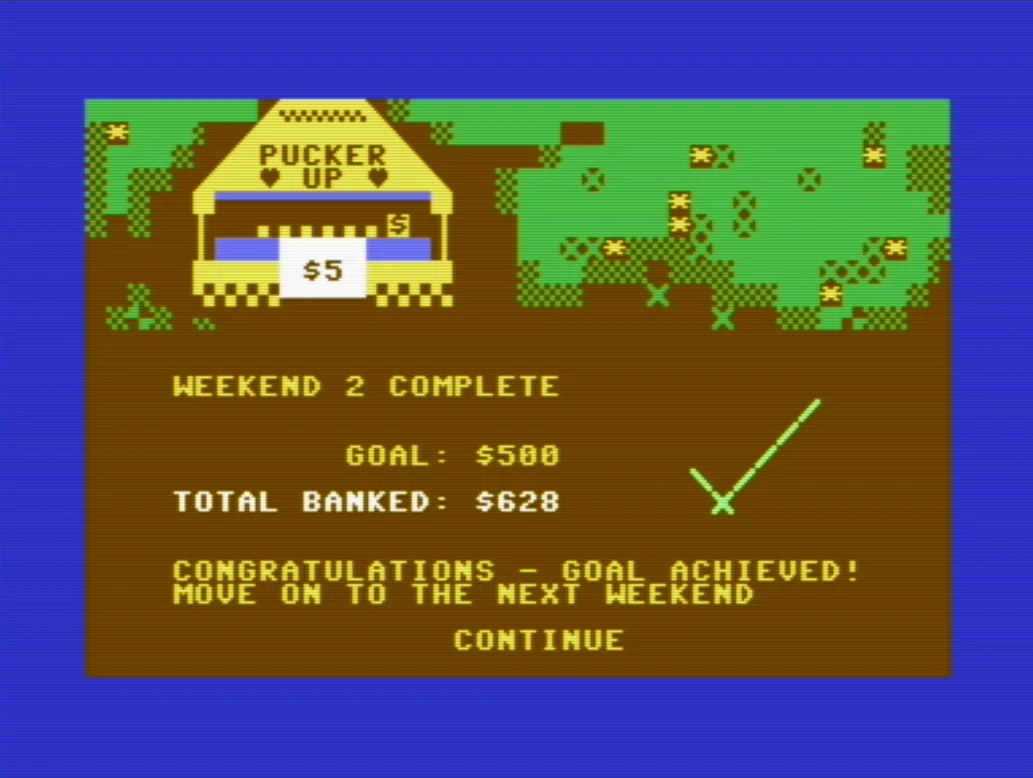
The highly anticipated new title for the venerable Commodore 64 home computer, Pucker Up, officially launched on July 18, 2026. Developed by the independent creator sumiguchi, the game introduces a distinctive blend of time management and economic strategy, challenging players to navigate a virtual summer season with specific objectives and a pressing financial goal. Its release underscores the continued vitality and creative output within the global retro computing community, proving that platforms from the 1980s still offer fertile ground for innovative game design. Available via Itch.io, Pucker Up is poised to captivate a dedicated audience of Commodore 64 enthusiasts and retro gaming aficionados.
A Fresh Challenge for a Classic Machine
At its core, Pucker Up presents a deceptively simple premise that quickly unfolds into a complex strategic endeavor. Players are given the equivalent of ten summer weekends, a finite period within which they must achieve two primary goals: visit every designated park and festival location, and accumulate a substantial sum of $10,000. This dual objective necessitates careful planning, efficient resource management, and strategic decision-making, as players must balance exploration with income generation. The game’s title itself, "Pucker Up," hints at the intensity and potential frustrations players might face as they strive to meet these demanding targets before the virtual summer concludes.
The gameplay loop is expected to involve navigating a map or selection screen, choosing which events or locations to visit, and engaging in activities that both contribute to the exploration goal and generate income. Earning $10,000 in such a short timeframe suggests various avenues for monetary gain, which could range from completing mini-games at festivals, engaging in trading or bartering, or perhaps even performing tasks for non-player characters encountered at these venues. The constraint of "ten summer weekends" implies a strict time limit, where each weekend represents a turn or a block of available actions, forcing players to prioritize and make tough choices. Missing a festival or failing to generate sufficient income could lead to a game over, adding a layer of tension and replayability as players refine their strategies.
The Enduring Legacy of the Commodore 64
The release of a new, commercially viable game for the Commodore 64 in 2026 is a testament to the platform’s enduring appeal and the dedicated global community that continues to support it. Launched in January 1982, the C64 quickly became the best-selling single personal computer model of all time, with estimated sales ranging from 12.5 million to 17 million units worldwide. Its success was largely attributed to its advanced graphics and sound capabilities for its era, driven by the custom VIC-II graphics chip and the iconic SID (Sound Interface Device) sound chip, which allowed for sophisticated sprites, scrolling, and a rich musical palette. These features made it a dominant force in the nascent home computer gaming market throughout the 1980s.
A Brief History and Impact
The Commodore 64 represented a significant leap forward from its predecessors and competitors, offering color graphics, multi-voice sound, and a generous 64 kilobytes of RAM at a competitive price. This combination made it accessible to millions, fostering a generation of programmers, artists, and musicians who pushed its technical boundaries. Thousands of games were released for the platform during its active lifespan, covering virtually every genre imaginable, from arcade conversions to complex role-playing games and simulations. Even after its discontinuation in 1994, the C64 retained a passionate following. Emulators, hardware replicas like TheC64 Mini and Maxi, and new peripheral developments have kept the spirit of the machine alive, allowing new generations to experience its unique charm.
The Modern Retro Renaissance
The phenomenon of developing new software for vintage hardware, often referred to as "retro development" or "homebrew," has seen a significant resurgence in the 21st century. This movement is driven by several factors: nostalgia among those who grew up with these systems, the technical challenge of working within severe hardware constraints, and the desire to explore untapped creative potential on platforms that were once limited by commercial pressures and technological capabilities of their time. The C64, with its well-documented architecture, robust developer tools (both vintage and modern cross-compilers), and an active demoscene, has become a particularly fertile ground for this renaissance. Developers like sumiguchi are not merely recreating past experiences but are actively pushing the boundaries of what was thought possible on the machine, often leveraging modern coding techniques and development environments to achieve results that might have been unattainable or prohibitively time-consuming in the 1980s.
Pucker Up: Gameplay and Design Philosophy
Pucker Up‘s design philosophy appears to be deeply rooted in leveraging the C64’s strengths while crafting an experience that feels fresh and engaging. The game’s core mechanics suggest a strategic depth that goes beyond simple arcade action, requiring players to think several steps ahead.
Navigating Summer Weekends
The game’s structure around "ten summer weekends" implies a finite resource: time. Each weekend likely presents a series of choices: which park or festival to attend, what activities to engage in, and how to best allocate limited in-game currency or energy. Players might encounter various mini-games or scenarios at each location, some of which could be crucial for earning money, while others might be necessary to "hit" a location for the exploration objective. The challenge lies in optimizing these choices to fulfill both conditions simultaneously, as an overemphasis on one goal could jeopardize the other. For instance, spending too much time earning money might mean missing out on certain festivals, while prioritizing exploration might leave the player financially short.
Economic Strategy and Time Management
The $10,000 monetary goal is a significant figure within the context of a retro game, suggesting that earning mechanisms will be varied and potentially require careful investment or risk-taking. Players might need to identify the most lucrative activities, understand market fluctuations (if any), or even engage in a form of in-game commerce. The interplay between time and money is critical: does it cost time to earn money, and does it cost money to save time? These are the types of strategic dilemmas that Pucker Up is likely to present. The game’s appeal will, in part, stem from how elegantly it integrates these two distinct yet interdependent objectives into a cohesive and challenging experience.
Technical Craftsmanship on the C64
Developing a game for the Commodore 64 in 2026 involves a unique set of technical considerations. sumiguchi would have meticulously crafted Pucker Up to run within the C64’s memory constraints (64KB RAM, of which much is taken by the Kernal and BASIC ROMs, leaving significantly less for program data) and its specific hardware capabilities. This means efficient use of the VIC-II for graphics—likely employing sprites and character-mode graphics—and the SID chip for atmospheric chiptune music and sound effects. The visual style is expected to be pixel-art driven, embracing the C64’s distinctive color palette. The audio, critical to the C64 experience, would feature characteristic chiptunes, enhancing the nostalgic feel while providing an engaging backdrop to the strategic gameplay. The commitment to developing for such a platform showcases a deep understanding of its architecture and a passion for its unique aesthetic and sound.
The Developer Behind the Pixels: sumiguchi
While specific details about sumiguchi’s background are not extensively publicized, their decision to develop for the Commodore 64 speaks volumes about their likely motivations and place within the retro gaming ecosystem. Developers who create new titles for vintage platforms are often driven by a profound appreciation for the hardware, a desire to contribute to its ongoing legacy, and an enjoyment of the technical challenges inherent in such development. sumiguchi is likely an active participant in the C64 demoscene or homebrew community, areas known for their collaborative spirit and dedication to pushing the boundaries of the machine.
The choice of Pucker Up as a concept suggests a creator interested in interactive storytelling and strategic gameplay rather than purely technical demonstrations. Their work contributes significantly to the modern C64 library, enriching it with fresh ideas and showcasing the platform’s versatility beyond its historical output. This dedication helps to inspire other aspiring retro developers and ensures that the C64 continues to be a platform for new creative expression, not just historical preservation.
Distribution and Accessibility in the Digital Age
The distribution method for Pucker Up—primarily through Itch.io and listed on pdroms.de—highlights modern avenues for retro game accessibility. Itch.io has become a prominent platform for independent game developers, offering flexible hosting and payment options, making it an ideal hub for niche markets like retro homebrew. This allows sumiguchi to directly reach their target audience without the traditional barriers of publishing.
pdroms.de, a well-known repository and news site for retro ROMs and new releases, plays a crucial role in disseminating information about new titles like Pucker Up to the dedicated C64 community. Its mention of the game on July 18, 2026, serves as a digital announcement, directing interested players to the official download source. This dual distribution strategy ensures that the game is both easily discoverable by enthusiasts and readily available for download, often in formats compatible with C64 emulators (like .d64 disk images) or for flashing onto modern C64 cartridge solutions. This blend of traditional community platforms and modern indie distribution channels is characteristic of the retro development scene today.
Community Reception and Broader Implications
The release of Pucker Up is expected to generate significant interest and discussion within the Commodore 64 and broader retro gaming communities. New game releases are always a cause for celebration, demonstrating the platform’s ongoing relevance and the vibrancy of its dedicated followers. Early reactions are likely to focus on the game’s innovative concept, its execution within the C64’s technical limits, and its overall replayability. Reviewers and players will scrutinize its pixel art, chiptune soundtrack, and the fairness and depth of its strategic elements.
Fueling the C64 Scene
Each new C64 game acts as a catalyst, reigniting conversations, encouraging hardware sales (e.g., modern C64 clones or peripherals), and inspiring other developers. Pucker Up contributes to the ever-growing library of "new old games," solidifying the idea that the C64 is not just a relic of the past but a living, breathing platform. This continuous influx of new content helps to attract new enthusiasts to the scene, ensuring its longevity for decades to come. The game’s unique premise also showcases the C64’s versatility, proving that it can host complex strategic titles alongside its more common arcade-style offerings.
The Future of Retro Development
Beyond the immediate C64 community, Pucker Up‘s release has broader implications for the retro development landscape. It serves as a strong indicator that the market for new games on vintage platforms is sustainable and continues to grow. This encourages other developers to explore similar ventures, potentially leading to more diverse and ambitious projects across various classic systems. The success of titles like Pucker Up reinforces the idea that passion projects, even for niche audiences, can find a receptive market and contribute significantly to the cultural preservation and evolution of gaming history. It highlights a future where digital archaeology meets creative innovation, where the constraints of old technology become springboards for novel artistic expression.
Conclusion
Pucker Up by sumiguchi, released for the Commodore 64 on July 18, 2026, represents a fascinating intersection of nostalgic appeal and contemporary game design. Its challenging blend of time management and economic strategy, set against the backdrop of ten crucial summer weekends, promises an engaging experience for players. This release not only adds a compelling new title to the Commodore 64’s ever-expanding library but also vividly illustrates the enduring legacy of this iconic machine and the vibrant, creative spirit of its global community. As players pucker up for the demanding summer ahead, they embark on an adventure that bridges decades of computing history, affirming the timeless appeal of well-crafted interactive experiences, regardless of the hardware they run on.