Farhan hamdan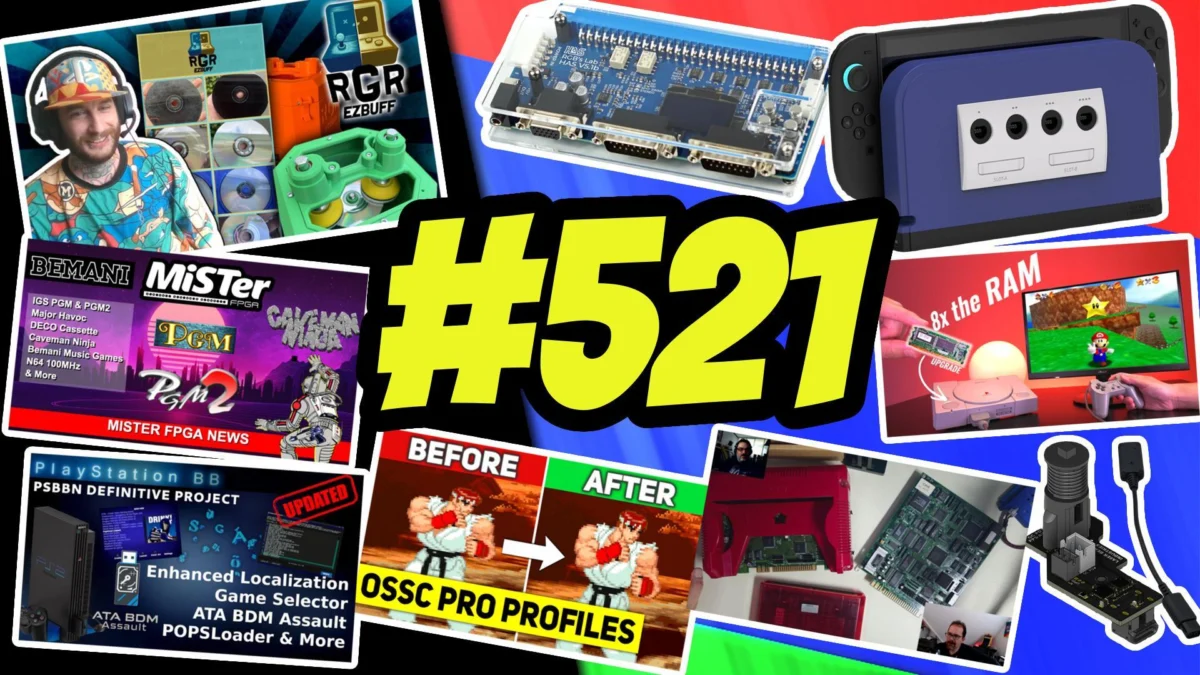
The retro gaming community experienced a week rich with significant advancements in hardware innovation, preservation efforts, and community-driven projects, culminating in the July 8th, 2026 edition of Weekly Roundup #521. Enthusiasts witnessed the unveiling of open-source solutions for media restoration, crucial updates to high-fidelity video scalers, and an expansion of the highly acclaimed MiSTer FPGA platform. Further developments included modernized power solutions for classic consoles, ambitious memory upgrades for the original PlayStation, and insightful interviews with key developers, underscoring the vibrant and ever-evolving landscape of retro gaming.
Retro Hardware Innovations: Disc Polishing and Console Mods
A standout development for media preservationists was the introduction of the RGR EZBuff, an open-source disc polisher and resurfacer. Scratched game discs often render beloved titles unplayable, leading to frustration and the potential loss of physical media. The RGR EZBuff addresses this pervasive issue by offering a DIY, community-driven solution for disc restoration. Unlike proprietary and often expensive professional disc repair machines, the open-source nature of the EZBuff allows for greater accessibility, affordability, and customization for hobbyists. This initiative reflects a growing trend within the retro gaming sphere to empower individuals with the tools and knowledge to maintain and extend the life of their cherished collections, fostering self-sufficiency and reducing reliance on external services. The implications are substantial, potentially saving countless discs from obsolescence and making rare titles more playable for a broader audience.
Beyond disc restoration, several hardware modifications emerged to modernize classic consoles. The GameCube received notable attention with the release of the Retro Fighters Battle Dock, a Switch-style dock designed for Nintendo’s iconic purple cube. This accessory offers a streamlined solution for connecting the GameCube to modern displays, potentially reducing cable clutter and enhancing convenience. Complementing this, internal and external USB-C power supply unit (PSU) replacements for the GameCube were introduced. These mods address the aging power bricks of original consoles, providing a more robust, modern, and energy-efficient power solution, which is particularly relevant as original components approach end-of-life or suffer from degradation. The shift to USB-C also offers universal compatibility with contemporary power adapters, simplifying setup for users.
Perhaps one of the most ambitious hardware modifications reported was a 16MB RAM mod for the original PlayStation. The PlayStation, with its relatively limited native RAM, has always presented challenges for developers pushing its boundaries. While details regarding the specific applications and compatibility of this mod are still emerging, an increase in system RAM of this magnitude could unlock new possibilities for homebrew development, allow for larger texture caches in certain games (if software support can be retrofitted or created), or potentially even enable more complex fan-made translations or enhancements. This modification represents a significant technical undertaking and highlights the ingenuity of the retro hardware community in pushing the capabilities of vintage systems far beyond their original design parameters.
Advanced Video Scaling and Display: OSSC Pro and Wobbling Pixels
The pursuit of pristine visual fidelity for retro games on modern displays remains a cornerstone of the community’s efforts. The latest update to Wobbling Pixels’ OSSC Pro profile pack underscores the continuous refinement in upscaling technology. The Open Source Scan Converter (OSSC) Pro is a sophisticated device designed to connect vintage gaming systems to high-definition televisions and monitors with minimal latency and superior image quality. Custom profiles, such as those provided by Wobbling Pixels, are meticulously crafted configurations that optimize the OSSC Pro’s settings for specific consoles and games, ensuring accurate aspect ratios, precise scanline emulation, and vibrant color reproduction. This iterative development ensures that retro gamers can experience their classic titles with unparalleled clarity and authenticity, bridging the technological gap between archaic analog signals and modern digital displays. The ongoing support and refinement of these profiles are critical for maintaining the OSSC Pro’s position as a leading solution in the retro video signal processing landscape.
The Expanding World of MiSTer FPGA: Arcade and Console Cores
The MiSTer FPGA platform, a cornerstone of hardware-accurate emulation and preservation, continued its impressive trajectory with a flurry of new core developments spearheaded by Lu’s updates. Field-Programmable Gate Arrays (FPGAs) offer a method of recreating original console and arcade hardware at a transistor level, providing an unparalleled level of accuracy compared to traditional software emulation. This week’s notable additions included comprehensive support for iconic Bemani music games, a genre renowned for its precise timing and unique control schemes. The integration of IGS PGM and PGM2 arcade systems cores also marked a significant milestone, preserving these often-overlooked arcade platforms that host a variety of beloved fighting games and beat ’em ups. Furthermore, classic titles like Caveman Ninja (Joe & Mac) and many more received dedicated core support, expanding the MiSTer’s already vast library.

These developments are not merely about playing old games; they are vital acts of digital preservation. Many arcade cabinets and their custom hardware are prone to failure and difficult to maintain. By meticulously reverse-engineering and implementing these systems on FPGA, the MiSTer community ensures that these pieces of gaming history remain accessible and playable for future generations, free from the degradation of original hardware or the inaccuracies of software emulation. The release of an interview with Wickerwaka, the creator of the IGS PGM core, provided invaluable insight into the complex and often challenging process of developing these highly accurate recreations, highlighting the dedication and technical expertise required for such ambitious projects. These interviews serve to demystify the development process, inspire new contributors, and document the intricate journey of digital preservation.
Modernizing Classic Consoles: GameCube and PlayStation Enhancements
Beyond the broad strokes of FPGA and video scaling, specific console enhancements continued to push the boundaries of what is possible with vintage hardware. As previously mentioned, the GameCube received practical upgrades through USB-C PSU replacements, addressing common issues with aging power supplies. The availability of both internal and external options caters to different user preferences, with internal mods offering a cleaner aesthetic and external options providing ease of installation. This trend towards modernizing power delivery is a critical step in making older consoles more reliable and convenient for contemporary use, mitigating the risk of power-related failures that can plague vintage electronics.
The PlayStation’s 16MB RAM mod, while technically demanding, signifies a deep dive into hardware modification. The original PlayStation was designed with a specific memory architecture that, while groundbreaking for its time, pales in comparison to modern systems. An expanded RAM pool could potentially allow for more complex homebrew applications, improved loading times for certain custom software, or even open avenues for advanced graphics modifications within the limitations of the console’s GPU. Such modifications are often the result of extensive reverse engineering and a profound understanding of the console’s internal workings, demonstrating the technical prowess present within the retro community.
Preservation Efforts and Digital Archives
The ongoing commitment to preserving gaming history extends beyond hardware recreation to software and online services. The July 2026 update to the PlayStation Broadband Navigator (PSBBN) further exemplifies this dedication. The PSBBN was a unique online service for the PlayStation 2 in Japan, offering internet browsing, email, and specific game functionalities. While the official service has long been defunct, community-led projects are working tirelessly to revive and archive its functionalities. Updates like this are crucial for digital archeology, ensuring that the ephemeral online experiences of past gaming eras are not lost to time. These efforts provide a comprehensive look into the technological and cultural context of gaming, allowing researchers and enthusiasts to explore features that were once region-locked or time-limited.
Availability and Market Trends in Retro Gaming Gear
The demand for specialized retro gaming hardware continues to drive market activity. The announcement that the Home Arcade System (HAS) and RECO were back in stock provided an important update for enthusiasts looking to acquire high-quality, pre-built arcade solutions. These systems often feature custom-designed PCBs, authentic arcade controls, and robust enclosures, offering a premium experience for playing arcade classics. The availability of such specialized products indicates a healthy market for bespoke retro gaming gear, where quality and authenticity are highly valued. These products cater to a segment of the community that seeks a more plug-and-play, high-end experience compared to DIY solutions, reflecting the diverse preferences within the retro gaming landscape.
Beyond Gaming: Diverse Content and Community Support
While primarily focused on gaming hardware and software, the weekly roundup also featured a "Swim Goggle Shootout," showcasing the diverse interests and practical consumer advice offered by the channel. This segment, though seemingly unrelated to retro gaming, demonstrates a broader commitment to objective product reviews and helpful content for the community. It underscores the multi-faceted nature of content creation within the hobby, where creators often share personal interests and practical insights that resonate with their audience.
The continued existence and growth of these community-driven projects, hardware innovations, and preservation efforts are largely sustained by community support. The call for monthly support services, tips, and affiliate link usage highlights the economic realities behind independent content creation and development in this niche. This model allows creators and developers to continue their invaluable work, pushing the boundaries of what is possible in retro gaming and ensuring that its rich history remains accessible and vibrant for generations to come. The collective engagement, both financial and participatory, is the bedrock upon which the retro gaming ecosystem thrives, fostering an environment of continuous innovation and shared passion.