Jia Lissa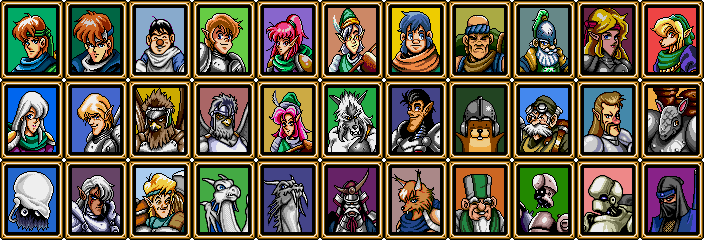
Following the commercial success of Shining in the Darkness in March 1991, Climax Entertainment found itself at a pivotal crossroads. While the studio’s debut title for the Sega Genesis had successfully established a new RPG franchise, the team’s next move would not be a conventional sequel. Instead, the development of Shining Force would fundamentally reshape the role-playing landscape, transitioning the series from a first-person dungeon crawler to a sprawling tactical RPG. This shift was not merely a creative choice but a calculated business maneuver involving a complex joint venture with Sega, internal studio divisions, and a drive to overcome the technical limitations of 16-bit hardware.
The Business of RPGs: The Formation of Sonic Co. Ltd.
By the early 1990s, Sega of Japan recognized a growing demand for role-playing games, a genre previously dominated by Nintendo’s third-party partners. To compete, Sega sought to expand its internal capabilities. Following the success of Shining in the Darkness, which exceeded sales expectations particularly in Western markets, Sega entered into a strategic partnership with Climax founder Hiroyuki Takahashi.
In June 1991, this collaboration resulted in the founding of Sonic Co. Ltd. The new entity was established with a capital investment of 40 million yen. Sega held a dominant 85 percent stake, while Climax and Takahashi held the remaining shares. The company was named after Sega’s burgeoning mascot, Sonic the Hedgehog, beating out alternative names based on characters like Alex Kidd or Opa-Opa.
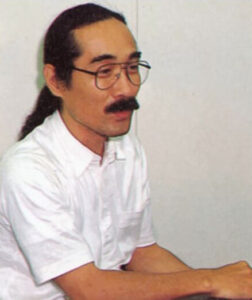
Sonic Co. Ltd. was designed to streamline the labor-intensive process of RPG creation. By hiring specialists from the manga and editorial industries, such as Director Kenji Orimo, the studio aimed to integrate high-level storytelling and professional artistry directly into the development pipeline. This organizational structure allowed Climax to work on multiple high-profile projects simultaneously, including Shining Force and the isometric action-adventure Landstalker.
Philosophical Origins: Redefining the Strategy Genre
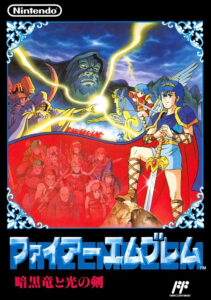
The conceptual framework for Shining Force originated with Hiroyuki Takahashi’s dissatisfaction with the prevailing strategy games of the era. During his tenure at Enix and Chunsoft, Takahashi found titles like Fire Emblem and Famicom Wars to be sluggish, often feeling like literal translations of board games rather than dynamic software experiences.
Takahashi sought to marry the tactical depth of simulation games with the character-driven drama of the Dragon Quest series. His breakthrough came after playing Silver Ghost (1988), a PC-88 title by Kure Software Koubou. Silver Ghost’s management of multiple units inspired Takahashi to introduce the concept of "distance" to the RPG combat loop. By moving away from static, face-to-face turn-based battles, he realized that formations, terrain advantages, and spacing could significantly expand the player’s tactical repertoire.
Technical Milestones: The 12-Megabit Frontier
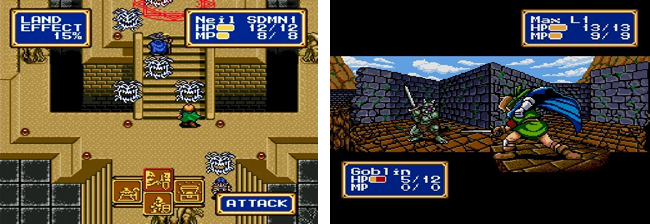
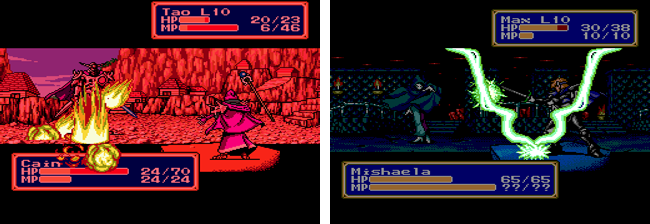
At the time of its development, Shining Force was one of the most ambitious projects on the Sega Genesis. The game eventually occupied a 12-megabit (1.5 MB) cartridge, making it the largest game on the console at that time. This memory capacity was essential to accommodate the game’s signature feature: cinematic, fully animated battle sequences.
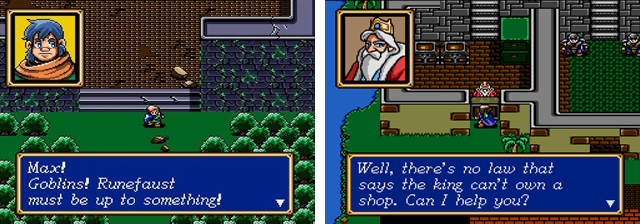
Takahashi insisted that combat move quickly to avoid the "sluggish" feel of other strategy games. This led to the development of what the team called "Columbus’s Egg" AI—a reference to a simple solution for a complex problem. The programming team, led by Yoshinori Tagawa, developed routines that allowed enemies to calculate their entire turn, including movement and action, in less than one second.
To fit the massive amount of animation data onto the cartridge, Climax utilized advanced compression techniques. While standard compression usually yielded a 50 percent reduction, the team’s proprietary routines achieved an impressive 22 percent compression rate. This allowed for dozens of unique character classes, each with distinct attack animations, promotions, and magical effects, to be rendered without sacrificing visual fidelity.
Narrative and Artistic Direction: Expanding the Shining Universe
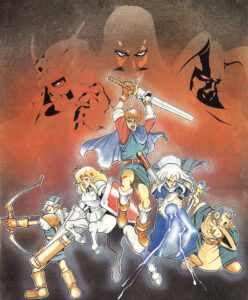
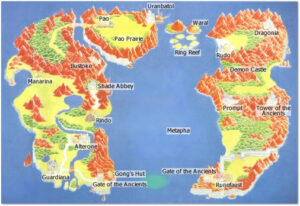
While Shining Force was a mechanical departure from its predecessor, it was narratively designed as a prequel. Set on the dual continents of East and West Rune, the story follows Max, a silent protagonist who assembles the "Shining Force" to prevent the sorcerer Darksol from resurrecting the Dark Dragon.
The artistic direction, led by Yoshitaka Tamaki, moved away from the "Disney-like" caricatures of Shining in the Darkness toward a more grounded, though still fantastical, manga style. This shift reflected the game’s darker themes of war and geopolitical strife. Tamaki was responsible for designing over 30 playable characters across 10 different races, including centaurs, birdmen, and the fan-favorite "wolfling" Zylo.
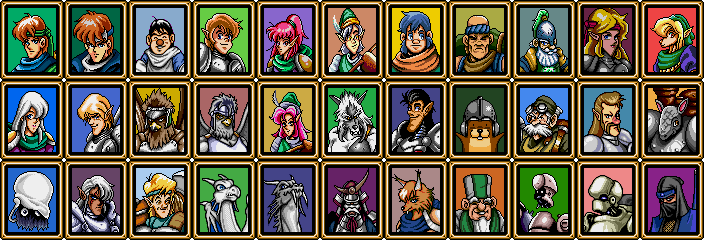
The development also saw the creation of Jogurt (Yogurt in Japan), a hamster-like creature that began as a programming placeholder. The character’s inclusion as a hidden recruit became a recurring inside joke for the studio, eventually appearing in multiple sequels and spinoffs.
Timeline of Development and Release
The production of Shining Force was marked by a rigorous "crunch" period to meet international trade show deadlines.
- March 1991: Project officially moves to the Mega Drive after being deemed too large for the Game Gear.
- June 1991: Formation of Sonic Co. Ltd. to oversee RPG planning.
- August 1991: Sega officially announces the title at a press conference in Tokyo.
- September 1991: Climax moves to a larger office to accommodate the growing staff for Shining Force and Landstalker.
- December 1991: Final ROM submission to Sega for production.
- January 1992: Shining Force showcased at the Winter Consumer Electronics Show (CES) in Las Vegas.
- February 1992: "Shining Force First Party" preview events held in Tokyo and Osaka.
- March 27, 1992: Official release in Japan.
- July 1993: Official release in North America.
Market Reception and Sales Data
Upon its release, Shining Force received universal acclaim from the gaming press. Reviewers praised its accessibility, noting that it stripped away the intimidating complexity usually associated with strategy games while maintaining deep tactical options.
However, official sales data suggests a more complex story. According to retrospective data provided by Sega producer Yoichi Shimozato, the original game sold approximately 200,000 units worldwide. While these numbers were respectable for the early 1990s, they were notably lower than the 300,000+ units moved by Shining in the Darkness. Analysts attribute this to the niche status of the strategy genre in Western markets at the time and the subtle narrative links between the two games, which may have led some consumers to view them as unrelated products.

The Fracture: Relationship with Sega
Despite the critical success of the Shining franchise, the relationship between Climax and Sega began to deteriorate during the mid-1990s. Hiroyuki Takahashi later revealed that as Sega grew into a global powerhouse, its management became increasingly focused on profit margins over creative autonomy.
The budgets for the Shining games remained stagnant despite their high production values. Takahashi noted that Climax was eventually viewed as an "unruly subsidiary," leading to a gradual distancing between the two companies. This friction eventually resulted in the Saturn masterpiece Shining Force III being split into three scenarios, only the first of which was localized for Western audiences—a decision that remains a point of contention for fans of the series.
Legacy and Long-term Impact
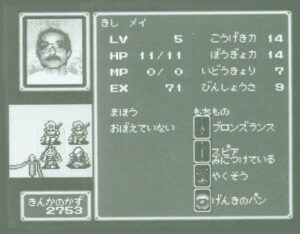
Shining Force’s influence on the tactical RPG genre cannot be overstated. It served as the blueprint for the series’ expansion onto the Game Gear (the Gaiden sub-series), the Sega CD (Shining Force CD), and the Sega Saturn. The game’s "Headquarters" system and its approach to character promotion became staples of the genre, influencing later titles across the industry.
In 2004, the game was remade for the Game Boy Advance as Shining Force: Resurrection of the Dark Dragon, introducing new characters and expanded plot points. Today, the original 16-bit title is frequently included in Sega’s "Greatest Hits" compilations and remains a top-tier recommendation for retro gaming enthusiasts.
By merging the accessibility of traditional RPGs with the strategic depth of simulation games, Climax Entertainment and Sonic Co. Ltd. created more than just a hit game; they established a legacy of innovation that continues to be celebrated decades after the Dark Dragon was first defeated on the fields of Rune.