Jia Lissa
In the early 1990s, the 16-bit console wars were defined not only by hardware specifications but by the creative ingenuity of third-party developers pushing silicon to its absolute limits. Among the most ambitious projects of this era was Landstalker: The Treasures of King Nole, a title that would redefine the action-RPG genre on the Sega Mega Drive. Developed by Climax Entertainment, Landstalker represented a radical departure from the studio’s established "Shining" franchise, introducing a complex isometric perspective and a focus on platforming that challenged both the hardware of the time and the dexterity of the players.
A Strategic Pivot in Development Philosophy
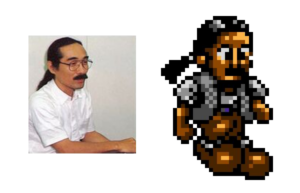
By mid-1991, Climax Entertainment had established itself as a premier RPG developer following the success of Shining in the Darkness. However, the internal culture of the studio was one of constant evolution. While Hiroyuki Takahashi led the development of the strategy-heavy Shining Force, co-founder and lead programmer Kan Naito sought to explore the possibilities of three-dimensional space.
Naito’s obsession with 3D environments was not a new development; his earlier work on the MSX computer and the first-person corridors of Shining in the Darkness hinted at a desire to break free from traditional 2D top-down constraints. The formation of Sonic Co., Ltd., a joint venture between Climax and Sega in June 1991, provided the necessary "breathing room" for the studio to split into sub-teams. This allowed Naito to spearhead a project tentatively titled "Hero Lancelot: Legend of Shining," which would eventually shed its "Shining" branding to become Landstalker.

The Geometry of Immersion: The DDS520 Engine
The defining characteristic of Landstalker was its "Diamond-Shaped Dimension System 520" (DDS520). The inspiration for this system famously came to Naito while he was observing traffic and pedestrians from his 10th-floor apartment window. The diagonal, elevated perspective provided a sense of depth and realism that Naito likened to a miniature diorama or the "Licca-chan" dollhouses popular in Japan.
Implementing this vision on the Mega Drive was a monumental technical challenge. Unlike modern hardware, the Mega Drive was not designed for oblique geometry. Standard VRAM structures were strictly horizontal and vertical, making diagonal scrolling and the layering of "height" data extremely memory-intensive. Naito spent months in isolation, perfecting a system that used diamond-shaped panels (64×64 pixels) as the fundamental building blocks of the game world.
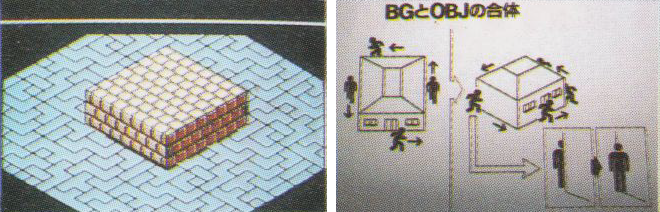
To maintain performance, Naito developed vector-based formulas to represent these diamonds, ensuring the 7.67 MHz Motorola 68000 processor could handle the calculations required for four-way diagonal movement and screen scrolling without significant slowdown. The final engine supported a staggering 850 maps, a massive increase from the initial goal of 200, effectively creating a world that Naito estimated would be the size of the Tokyo Dome if laid out in a single plane.
The Ohori Influence and the "Arcade Research Group"
While the technical foundation was being laid, the creative side of the project faced stagnation. The team of map designers, led by Kenji Orimo, struggled to fill Naito’s vast engine with engaging content. The turning point arrived in the autumn of 1991 with the recruitment of Yasuhiro Ohori as external production staff.

Ohori, who would later co-found Matrix Software and create the PlayStation classic Alundra, brought a veteran’s perspective to the project. Having gained fame in the Japanese fanzine scene and through his work on titles like Sanrio Carnival, Ohori infused the team with new energy. He famously organized the "Arcade Game Research Group," taking the staff to local game centers to study the movement patterns of monsters in Capcom’s fantasy fighting games.
This research was critical in solving the "combat in 3D" problem. Because the isometric view made spatial awareness difficult, the team had to ensure that enemy hitboxes and movement patterns felt fair. They utilized a low-tech but effective solution: transparent plastic wrap placed over diamond-grid blueprints to simulate character movement on a TV screen. This meticulous planning allowed them to create complex puzzles and traps that utilized the verticality of the DDS520 engine.

Character Design and the Departure from the Shining Lore
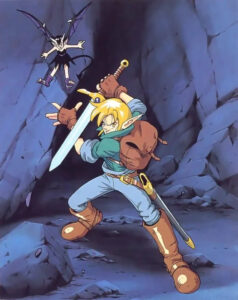
Artist Yoshitaka Tamaki was tasked with creating a protagonist who embodied the spirit of a "free-spirited adventurer" in the vein of Indiana Jones. His early sketches of a "cat Gandalf" were discarded in favor of Nigel (Lyle in Japan), a forest elf treasure hunter. Nigel was designed to be a "romantic" who lived by his own code, a sharp contrast to the traditional "hero" archetype found in the Shining series.
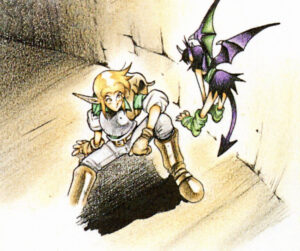
Accompanying Nigel was Friday, a nymph from Mercator Island. Friday served not only as a narrative foil but also as a functional gameplay mechanic, reviving Nigel using "Eke Eke" plants. This duo provided a lighthearted, character-driven narrative that differentiated the game from the more serious political dramas of Shining Force.

Internal records and statements from staff like sound programmer Yasuhiro Taguchi and composer Motoaki Takenouchi suggest that the game was originally titled "Shining Rogue." However, as the DDS520 engine evolved and the gameplay shifted toward action-platforming, the decision was made to brand it as a new franchise. This decision remains a point of historical debate, with some staff hinting at internal friction between Naito and Takahashi, leading to a creative schism that saw Landstalker forge its own identity.
A Cinematic and Orchestral Soundscape
The audio for Landstalker was composed by Motoaki Takenouchi, a protege of the legendary Koichi Sugiyama. Takenouchi sought to push the Mega Drive’s Yamaha YM2612 sound chip beyond its usual "metallic" constraints. By mixing orchestral arrangements with rhythmic elements, he created a 40-track score that reacted to the game’s various environments.
Takenouchi’s commitment to the project was such that he refused to use data compression for key pieces, such as "A Ballad for Princess Loria." This track, a two-minute piano-style composition, was intended for players to simply put down their controllers and listen. His work on Landstalker established a high bar for RPG music on the platform, blending melody and atmosphere to enhance the "diorama" feel of Naito’s world.
Release, Reception, and Commercial Impact
Landstalker: The Treasures of King Nole was released in Japan on October 30, 1992. It was a commercial success, selling approximately 35,000 units in its debut week—a strong figure for a new IP on the Mega Drive. Critics praised the game’s visual depth and the ingenuity of its puzzles, though some noted the inherent difficulty of diagonal platforming without character shadows.
Naito had experimented with adding shadows to clarify Nigel’s position in the air, but the Mega Drive’s processing power could not maintain a stable frame rate with the additional sprites and transparency effects. Naito ultimately chose "world detail" over "platforming precision," a decision that gave the game its lush, crowded environments but also its reputation for being notoriously difficult.
The game eventually reached North American and European markets in 1993, where it was marketed as a rival to Nintendo’s The Legend of Zelda: A Link to the Past. While the comparison was inevitable, Landstalker offered a more vertical and puzzle-focused experience that set it apart from its 16-bit contemporaries.

Legacy and the Unfinished Quest
Despite its success, Landstalker never received a direct sequel. The creative paths of Naito and Takahashi continued to diverge, with Takahashi focusing on the Shining series (and later Golden Sun at Camelot) while Naito explored isometric RPGs on the Saturn with Dark Savior.
A spiritual successor, Ladystalker, was released on the Super Famicom in 1995, but it lacked the platforming depth and jumping mechanics of the original. In 2005, a full 3D remake of Landstalker was announced for the Sony PlayStation Portable (PSP), with a demo shown at the Tokyo Game Show. However, the project was quietly canceled, and Climax Entertainment eventually ceased operations in 2014.

Today, Landstalker is remembered as a pinnacle of 16-bit engineering. Its inclusion in various Sega "Mini" consoles and digital collections ensures that new generations of gamers can experience the island of Mercator. The game stands as a testament to a time when developers weren’t afraid to invent entirely new geometric systems to fulfill a creative vision, proving that sometimes, the greatest treasures in gaming are the innovations found along the way.