Cecilia Chamidah Nur
In a significant move for retro gaming enthusiasts and digital preservation efforts, Hamster Corporation has announced the imminent release of two classic Taito titles: Space Cyclone for its established Arcade Archives series and the Nintendo Famicom/NES port of Legend of Kage as part of its emerging Console Archives collection. These announcements, unfolding over two days, underscore Hamster’s continued dedication to bringing historically significant video games to contemporary platforms, ensuring their accessibility for new generations and seasoned players alike.
Space Cyclone: Rediscovering a Forgotten Taito Gem
The initial revelation from Hamster on Tuesday, June 16th, 2026, centered on Space Cyclone, an often-overlooked shoot ’em up from Taito, slated for release across a wide array of modern consoles including Nintendo Switch, Switch 2, PlayStation 4, PlayStation 5, and Xbox Series X|S. The game will be available through both the Arcade Archives and Arcade Archives 2 ranges, reflecting Hamster’s tiered approach to its digital releases.
Space Cyclone originally debuted in arcades in 1980, merely two years after its monumental predecessor, Space Invaders. Both titles share a crucial link: their designer, Tomohiro Nishikado, the visionary behind the game that arguably ignited the golden age of arcade gaming. Built on the same hardware board as Space Invaders, Space Cyclone naturally shared fundamental gameplay mechanics with its world-famous relative, yet introduced distinctive elements that set it apart.
A Precursor to Modern Shoot ’em Ups
While Space Invaders placed players in command of a cannon defending Earth from descending alien formations in the void of space, Space Cyclone shifted the battleground dramatically. Instead of a cosmic backdrop, the action unfolds on the surface of a planet, a subtle yet impactful change that influenced the game’s unique enemy behavior. Players control a ship positioned at the bottom of the screen, tasked with strafing left and right to unleash fire upon incoming adversaries. This core mechanic was a direct inheritance from Space Invaders, demonstrating the foundational influence of Nishikado’s earlier work on subsequent designs.
However, the "twist" in Space Cyclone lies in the nature of its antagonists and their approach. The game’s enemies, described as "insect cyborgs" known as BEMS, do not descend in rigid, uniform rows and columns characteristic of Space Invaders. Instead, they traverse the screen on clouds, diving erratically towards the planetary surface. The player’s primary objective is to prevent these BEMS from successfully landing. Each alien that bypasses the player’s defenses contributes to the construction of a menacing robot on the left side of the screen. Once complete, this robot launches skyward, retaliating with powerful "deadly Cyclone Shots," adding an escalating layer of threat and strategic urgency to the gameplay. This mechanic subtly pushed the boundaries of fixed-shooter design, introducing a consequence for missed targets beyond simply losing a life.
The Vision of Tomohiro Nishikado
Tomohiro Nishikado’s role in Space Cyclone‘s development highlights his continuous experimentation following the unprecedented success of Space Invaders. While Space Invaders became a global phenomenon, spawning countless imitators and solidifying the video game industry, Nishikado did not rest on his laurels. Space Cyclone represents his attempt to iterate on his own formula, introducing new visual themes and gameplay dynamics while retaining the addictive core of his previous hit. Despite sharing a common lineage and hardware, Space Cyclone never achieved the same widespread recognition or cultural impact as Space Invaders. This could be attributed to a rapidly evolving arcade market, the sheer dominance of its predecessor, or perhaps its somewhat more complex, albeit innovative, mechanics. Its relative obscurity makes its re-release through Arcade Archives all the more significant for game historians and preservationists.
Historical Context and Obscurity
In the early 1980s, the arcade scene was a vibrant crucible of innovation. Following Space Invaders, the market was flooded with various shoot ’em ups and new genres emerging rapidly. Taito itself continued to produce a diverse range of titles, but few could replicate the sheer cultural penetration of its 1978 masterpiece. Space Cyclone, while technically proficient for its time and offering a fresh take on established mechanics, faced an uphill battle for attention in a crowded and competitive environment. Its initial run was respectable but did not achieve the legendary status of other Taito hits like Darius or Bubble Bobble that would follow later in the decade.
The game’s limited reissuance history further cemented its status as a cult classic rather than a mainstream staple. Prior to this Hamster announcement, Space Cyclone was notably included in the Space Invaders Invincible Collection for the Nintendo Switch. However, beyond this collection, its presence on modern platforms or even retrospective compilations has been minimal, making its dedicated Arcade Archives release a pivotal moment for its digital longevity.
Availability and Pricing for Arcade Archives
Space Cyclone is set to launch globally on Thursday, June 18th, 2026. Pricing will be tiered: the Arcade Archives edition, compatible with PlayStation 4 and Nintendo Switch, will be available for $7.99. The Arcade Archives 2 version, designed for the newer generation consoles including PlayStation 5, Switch 2, and Xbox Series X|S, will retail for $9.99. Recognizing the transition between console generations, Hamster will also offer an upgrade option for $2.99, allowing players who purchased the game on Nintendo Switch to transition to Switch 2, and PS4 players to upgrade to PS5. This pricing strategy reflects Hamster’s commitment to accessibility while acknowledging the enhanced capabilities or potential optimizations for newer hardware.
Legend of Kage: The Ninja’s Enduring Quest
Following the Space Cyclone announcement, Hamster surprised the retro gaming community again on Wednesday, June 17th, 2026, by revealing that Taito’s classic hack-and-slash platformer, Legend of Kage, would be this week’s Console Archives release. Crucially, this release focuses specifically on the Nintendo Famicom/NES port of the game, marking a significant expansion of Hamster’s preservation efforts beyond the arcade realm.
Legend of Kage first made its debut in Japanese arcades in 1985, a period when ninja-themed media was experiencing a surge in popularity across various forms of entertainment. The game immersed players in a feudal Japanese setting, tasking them with controlling Kage, a highly skilled ninja. Armed with a katana and an endless supply of shurikens, Kage embarks on a perilous journey through forests, waterways, and fortresses to rescue the kidnapped Princess Kiri, who has been taken hostage by an evil warlord. The game quickly became known for its fast-paced action, distinct visual style, and Kage’s iconic high-jumping abilities, which allowed for vertical exploration and agile combat maneuvers.
Arcade Origins and 1980s Ninja Craze
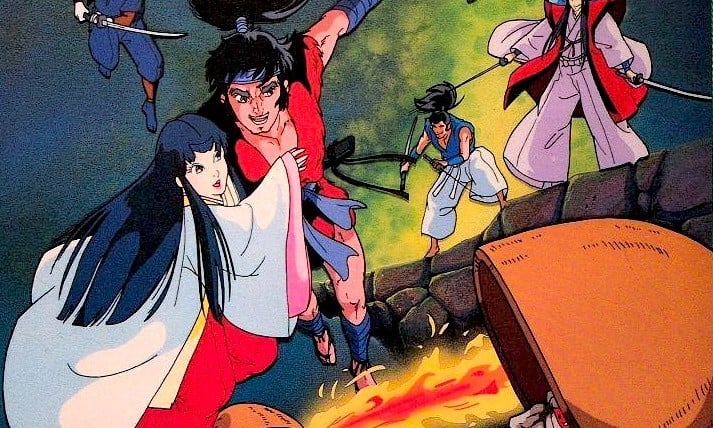
Taito, a prominent force in the arcade industry of the mid-1980s, capitalized on the burgeoning interest in martial arts and Japanese culture, particularly the mystique of the ninja. Legend of Kage stood out with its fluid animation for Kage, the swift projectile attacks, and the relentless onslaught of enemy ninjas and warriors. The game’s challenging difficulty, requiring precise timing and quick reflexes, was a hallmark of arcade titles from that era. Its side-scrolling, multi-directional action, combined with a simple yet engaging narrative, ensured its appeal to a broad audience, securing its place as a memorable arcade experience.
Gameplay Evolution Across Platforms
The success of Legend of Kage in arcades naturally led to its adaptation for various home platforms. The most prominent of these was the Nintendo Famicom version, released in 1986 in Japan. A year later, it made its way to Western markets on the Nintendo Entertainment System (NES). These console ports, while striving to replicate the arcade experience, often necessitated adjustments due to the differing technical specifications and control schemes of home systems. Typically, Famicom/NES versions might feature slightly simplified graphics, altered soundscapes, and sometimes revised level designs or enemy patterns to better suit the home console environment. Despite these changes, the Famicom/NES port faithfully captured the essence of Kage’s high-flying ninja adventure, cementing its place in the memories of a generation of console gamers.
Beyond Nintendo’s platforms, Legend of Kage also saw releases on various home computers, including the Commodore 64, the Amstrad CPC, and MSX-compatible machines. These ports further demonstrated the game’s widespread appeal and Taito’s strategy of maximizing its intellectual property across a diverse computing landscape. Each version presented its own unique interpretation of the game, influenced by the graphical and sound capabilities of the respective hardware.
A History of Re-releases and the Case for Console Archives
The arcade version of Legend of Kage has enjoyed a healthy re-release history, testament to its enduring popularity. It has been featured in several Taito compilations, including the Japanese-exclusive Taito Memories Gekan for the PlayStation 2 and Taito Memories Pocket for the PlayStation Portable. More recently, the arcade iteration has been made available through Hamster’s own Arcade Archives series on PlayStation 4 and Nintendo Switch, as well as on the dedicated retro hardware Taito Egret II Mini, and within the Taito Milestones 2 collection. These re-releases have ensured that the original arcade experience remains accessible and celebrated.
However, the Famicom/NES version, despite its significant cultural footprint, has had a different trajectory. It was previously available on Nintendo’s Virtual Console service across the Wii, Nintendo 3DS, and Wii U platforms. Yet, a notable absence has been its inclusion in Nintendo’s more recent NES Classics library for Nintendo Switch Online subscribers, or on the PlayStation Store. This gap in availability for the console port is precisely what Hamster’s Console Archives series aims to address. By specifically bringing the Famicom/NES iteration to modern platforms, Hamster is not merely re-releasing a classic; it is filling a crucial void in the digital preservation of console-specific experiences, offering a distinct version that differs in subtle yet important ways from its arcade counterpart. This move directly justifies Hamster’s investment in the Console Archives initiative, catering to players who hold particular nostalgia or interest in these home console adaptations.
Launch Details and Accessibility
The Console Archives release of Legend of Kage (Famicom/NES version) is scheduled to launch on June 18th, 2026, coinciding with the Space Cyclone release. It will be available on Switch 2 and PlayStation 5, priced at $7.99. The decision to launch this title on the latest generation of consoles, rather than across all current platforms, suggests a strategic rollout for the Console Archives series, potentially aligning with future plans or specific technical considerations for these newer systems. The affordability of the title ensures that a broad audience can experience this piece of gaming history.
Hamster’s Dual Strategy: Arcade Archives and Console Archives
These dual announcements vividly illustrate Hamster Corporation’s comprehensive strategy in the retro gaming market. For years, the company has been lauded for its Arcade Archives series, which meticulously recreates classic arcade cabinet experiences, often including various regional ROMs, display options, and online leaderboards. The Arcade Archives have become a gold standard for arcade game preservation, offering faithful emulations that capture the original feel and challenge of these coin-operated machines.
The introduction and expansion of the Console Archives series represent a natural and necessary evolution of this mission. While arcade games hold a special place, the vast landscape of console gaming from the 1980s, 90s, and beyond is equally rich with titles that warrant preservation and modern accessibility. Many console ports offered unique experiences, sometimes superior, sometimes different, from their arcade progenitors. By segmenting these efforts into two distinct lines, Hamster acknowledges the nuanced differences between arcade and console game development and player expectations. This dual approach ensures a more thorough and targeted preservation of gaming history.
Pioneering Game Preservation
Hamster’s efforts are not merely commercial ventures; they are pivotal to the broader movement of video game preservation. As physical media degrades and older hardware becomes obsolete, digital re-releases become increasingly vital. By officially licensing and emulating these titles, Hamster provides legitimate avenues for experiencing games that might otherwise be lost to time or confined to expensive, difficult-to-maintain original hardware. The company’s consistent release schedule for both Arcade Archives (with over 300 titles and counting) and now Console Archives demonstrates a long-term commitment to this mission, positioning them as one of the foremost entities in commercial game preservation.
Bridging Generations of Gamers
These releases cater to a diverse audience. For seasoned gamers, they offer a powerful dose of nostalgia, allowing them to revisit cherished memories with the convenience of modern platforms. For younger players, they provide an invaluable opportunity to explore the foundational titles that shaped the video game industry. Understanding the roots of gaming, from the early shoot ’em ups like Space Cyclone to the fast-paced action of Legend of Kage, offers crucial context for appreciating the advancements and innovations of contemporary titles. Hamster’s platforms, with their accessible pricing and wide console support, facilitate this cross-generational engagement.
The Broader Impact on Retro Gaming and Digital Preservation
The implications of Hamster’s expanding Console Archives are far-reaching. It signals a growing recognition within the industry of the distinct value of console ports and original console titles in the historical narrative of video games. This could pave the way for other publishers to delve into their console back catalogs, potentially leading to a richer and more comprehensive library of classic games available on modern systems. Furthermore, the meticulous work involved in emulating these titles, ensuring authenticity and optimal performance, raises the bar for future preservation projects.
The retro gaming market continues to thrive, fueled by both nostalgia and a genuine interest in gaming history. Hamster Corporation, through its strategic and consistent efforts with both Arcade Archives and the burgeoning Console Archives, is not just participating in this market; it is actively shaping its future, ensuring that the legacy of titles like Space Cyclone and Legend of Kage endures for generations to come. With a steady pipeline of classic releases, the future of accessible retro gaming looks brighter than ever, promising an ongoing stream of digital artifacts for both scholarly study and pure entertainment.