Hartono Sudibyo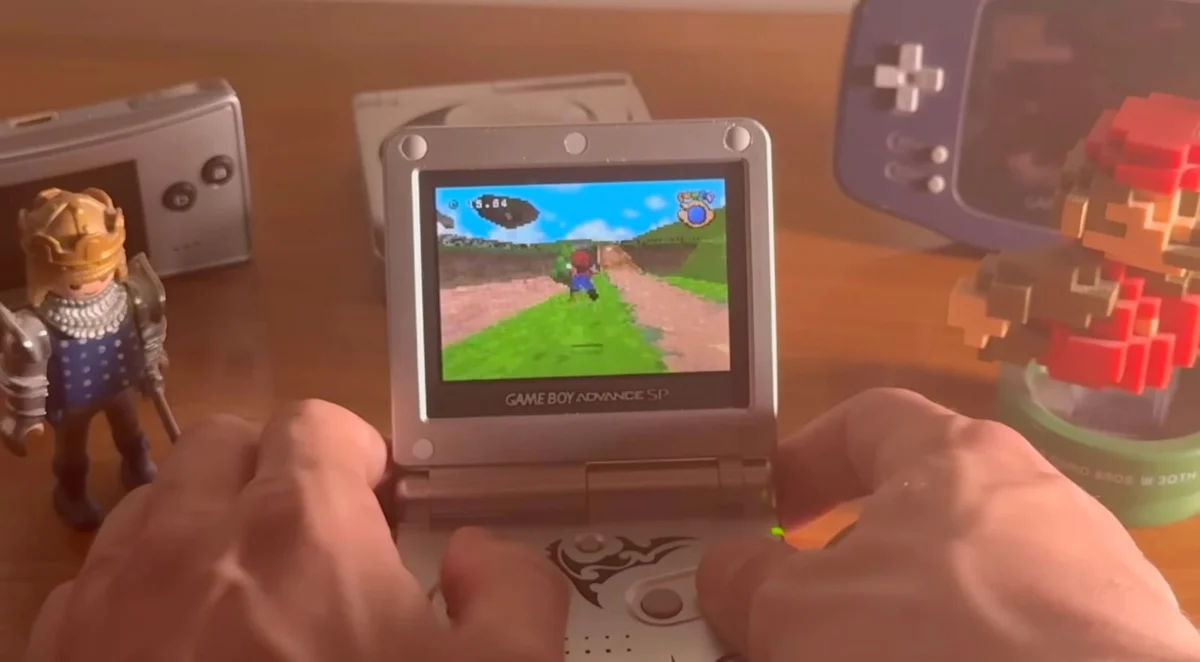
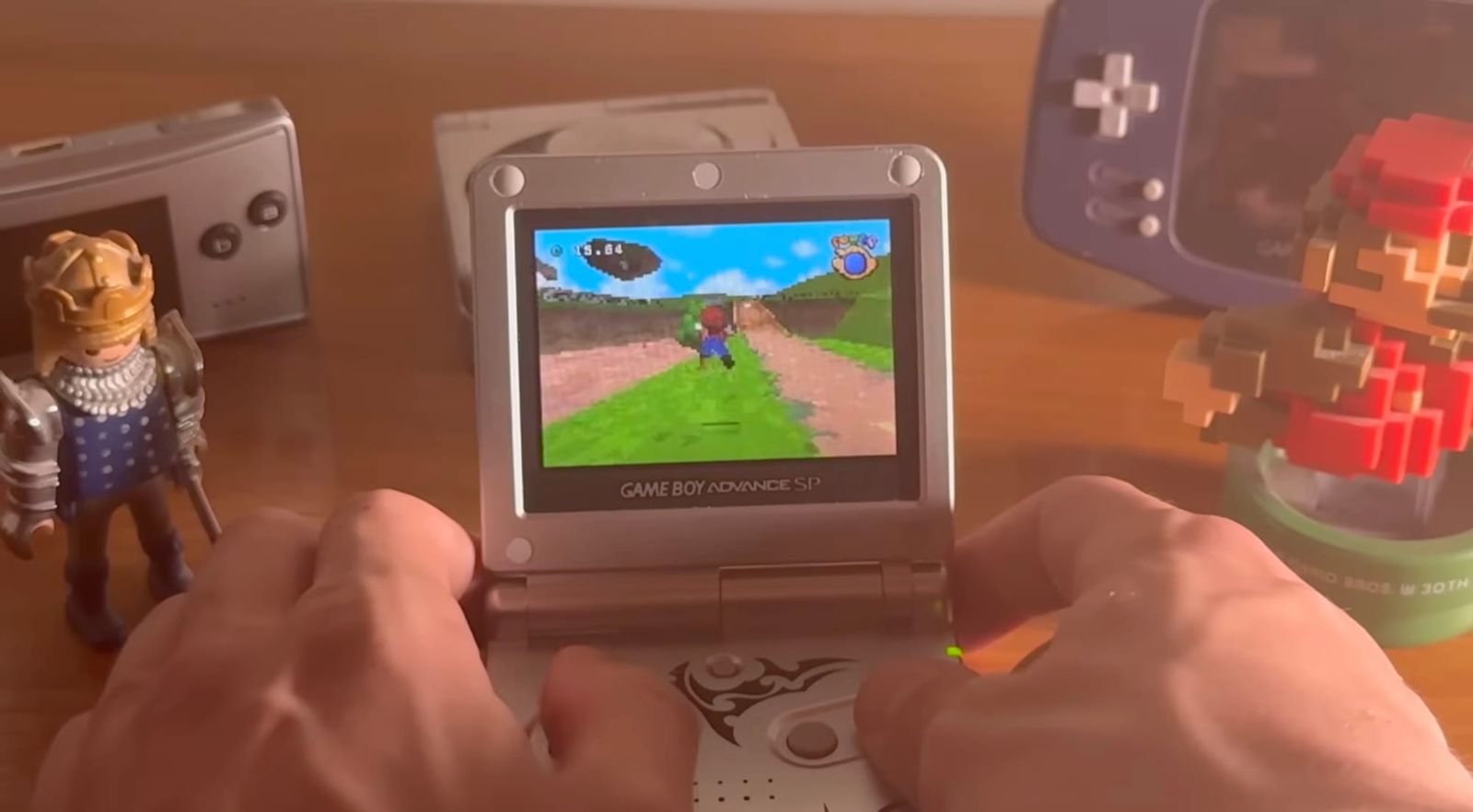
The Game Boy Advance (GBA), a beloved handheld console released in 2001, is primarily celebrated for its extensive library of 2D side-scrolling adventures and top-down role-playing games. Its hardware architecture, optimized for 2D graphics, presented significant limitations for rendering complex 3D environments. Despite these constraints, the GBA has witnessed remarkable feats of emulation and fan-made ports, with the latest being the groundbreaking achievement of running the iconic Nintendo 64 title, Super Mario 64, on the handheld. This ambitious project is spearheaded by independent developer Tobias Friedly, who has been meticulously adapting the original N64 source code to function within the GBA’s technical parameters.
The Genesis of a Groundbreaking Port
The endeavor to bring Super Mario 64 to the Game Boy Advance is not entirely unprecedented. Previously, developer Joshua Barretto garnered attention for creating a "demake" of the game for the GBA, reimagining its visual style and gameplay to suit the handheld’s capabilities. Friedly, citing Barretto’s work as a significant source of inspiration, has taken a different, arguably more challenging, approach. Instead of a reimagining, Friedly’s objective has been to get the original N64 source code to operate on the GBA, a task that inherently pushes the boundaries of the GBA’s processing power and memory.
The GBA’s graphical capabilities, while impressive for its era in 2D, were not designed to handle the demands of true 3D rendering that characterized games like Super Mario 64. The Nintendo 64, released in 1996, possessed a specialized graphics processor capable of handling polygons, textures, and complex lighting effects that were far beyond the scope of the GBA’s hardware. Friedly’s undertaking, therefore, involves not just porting code but fundamentally optimizing and re-engineering it to fit within the GBA’s significantly more constrained environment.
Technical Hurdles and Ingenious Solutions
The core challenge lies in the disparity of computational resources. The N64 offered a robust architecture for 3D gaming, whereas the GBA operated with a much simpler CPU and a more limited graphics pipeline. Friedly has described the process as navigating a complex mathematical landscape, requiring intricate adjustments to the game’s physics, rendering techniques, and overall processing demands.
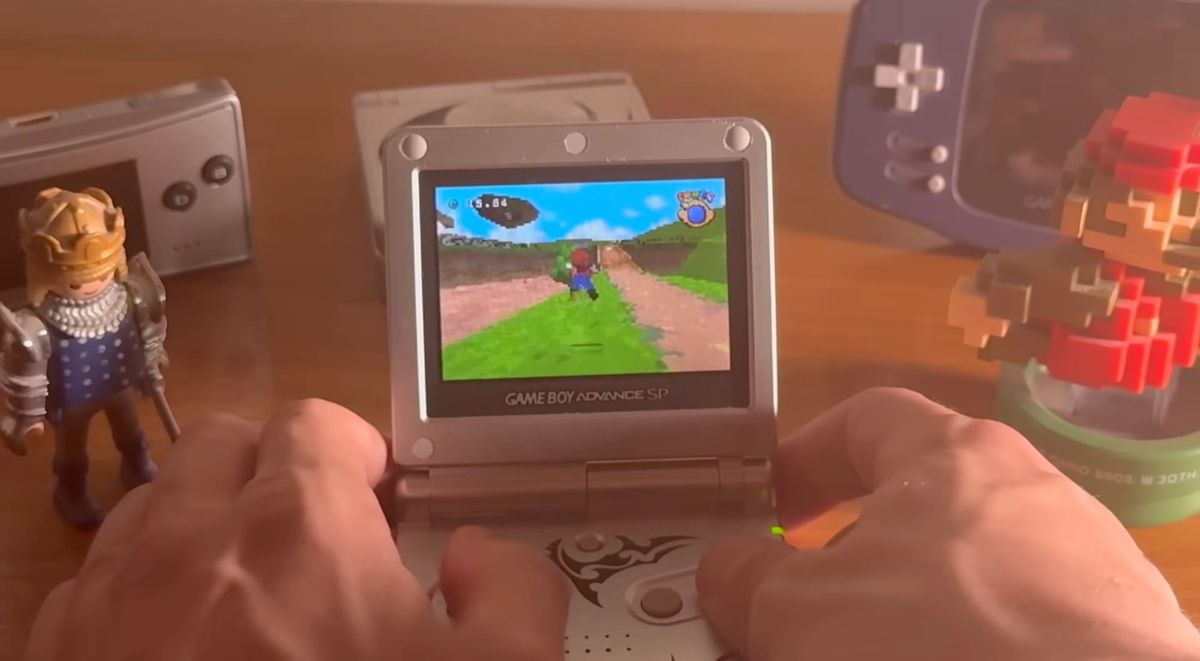
Initially, Friedly aimed to render images at a rate of one frame per second, utilizing approximately 16 million cycles allocated for each frame. This extremely low frame rate highlights the immense computational deficit the GBA faced when attempting to process Super Mario 64‘s engine. However, through persistent effort and innovative problem-solving, Friedly has managed to achieve more playable frame rates, with some levels now running between 5 and 15 frames per second.
This improvement has been facilitated by several key optimizations. Friedly has focused on reducing the precision of floating-point calculations, a common technique in game development to conserve processing power. Floating-point numbers, while offering high precision, are computationally intensive. By using less precise representations, Friedly can reduce the load on the GBA’s CPU. Furthermore, adapting the physics of Mario’s movement has been crucial. The original game’s physics engine is finely tuned for the N64’s capabilities, and translating these complex interactions to a slower system requires significant recalibration to maintain a semblance of responsiveness without overwhelming the hardware. This process involves extensive "crazy maths," as Friedly puts it, to ensure that character movement, collision detection, and environmental interactions function correctly within the GBA’s limitations.
A Chronology of Progress
While specific dates for every milestone are not publicly detailed, the development of this port can be understood as a progression through distinct phases:

- Inspiration and Initial Research: Following the visibility of other fan projects like Joshua Barretto’s demake, Tobias Friedly began exploring the feasibility of a more direct port of the N64 Super Mario 64 code. This phase likely involved extensive reverse-engineering and analysis of the original game’s architecture.
- Core Engine Adaptation: The primary focus would have been on getting the foundational elements of the Super Mario 64 engine to execute on the GBA. This would involve tackling the most demanding aspects, such as 3D rendering and basic character control, likely at extremely low frame rates.
- Optimization and Frame Rate Improvement: Once a rudimentary version of the game was running, Friedly dedicated significant effort to optimizing the code and improving performance. This is the phase where techniques for reducing computational load and adapting physics were most intensely applied, leading to the current playable frame rates.
- Level Implementation and Testing: As optimizations progressed, Friedly began implementing and testing specific levels from the game. This involves ensuring that each level’s unique geometry, enemies, and interactive elements are rendered and function correctly on the GBA.
- Public Demonstration and Sharing: The culmination of Friedly’s work is often shared through video demonstrations, allowing the retro gaming community to witness the progress and appreciate the technical achievement. The inclusion of a YouTube video within the original reporting serves as a direct demonstration of the game in action.
Supporting Data and Context
The Game Boy Advance, a successor to the Game Boy Color, featured a 32-bit ARM7TDMI processor running at approximately 16.8 MHz. It also included a dedicated graphics chip capable of handling up to 512 sprites on screen and a resolution of 240×160 pixels. In contrast, the Nintendo 64 boasted a 64-bit MIPS R4300i CPU clocked at 93.75 MHz and a specialized Reality Coprocessor for graphics, enabling it to render games at resolutions like 320×240 or 640×480 with significantly more complex visual fidelity.
The difference in processing power is stark: the N64’s CPU was roughly five times faster than the GBA’s, and its graphics capabilities were orders of magnitude more advanced. This fundamental disparity underscores the magnitude of Friedly’s achievement. Bringing a game designed for such a powerful console to a much weaker handheld is a testament to deep technical understanding and creative problem-solving.
The Asterix and Obelix XXL series, mentioned in the original context as an example of 3D games on the GBA, utilized simplified 3D models and environments specifically designed for the console’s limitations. Super Mario 64, on the other hand, was a flagship title that pushed the N64 to its limits, showcasing a vast, explorable 3D world with dynamic camera controls.
Reactions and Community Impact
While no direct official statements from Nintendo or other developers have been released regarding Friedly’s project, the reaction from the retro gaming community has been overwhelmingly positive and appreciative. Independent developers like Friedly are often celebrated for their dedication to preserving and extending the life of classic games, pushing the boundaries of what is considered possible on older hardware.
The broader implication of such fan projects is the revitalization of interest in retro gaming hardware and software. They demonstrate the enduring appeal of classic titles and inspire a new generation of players and developers to engage with gaming history. Furthermore, these efforts contribute to the preservation of game data and the understanding of game development techniques from different eras.
Broader Impact and Future Implications
Tobias Friedly’s work on Super Mario 64 for the GBA is more than just a technical curiosity; it represents a significant achievement in the field of homebrew game development and emulation. It highlights the ingenuity of developers who can overcome hardware limitations through clever programming and optimization.
The success of this project could potentially inspire further attempts to port other N64 titles or similarly demanding games to less powerful hardware, opening up new avenues for experiencing beloved classics on different platforms. While the current iteration may not offer the seamless experience of the original, it serves as a powerful proof-of-concept, demonstrating that with sufficient dedication and expertise, even the most ambitious ports can become a reality.
The ongoing development by Friedly underscores the passionate community surrounding retro gaming, a community that actively engages with, preserves, and innovates upon the gaming experiences of the past. The journey of Super Mario 64 on the Game Boy Advance is a compelling narrative of technical prowess, creative problem-solving, and the enduring love for video game history. The project is a vivid example of how fan-driven initiatives continue to enrich and expand the landscape of classic gaming.