Chalid Lutfie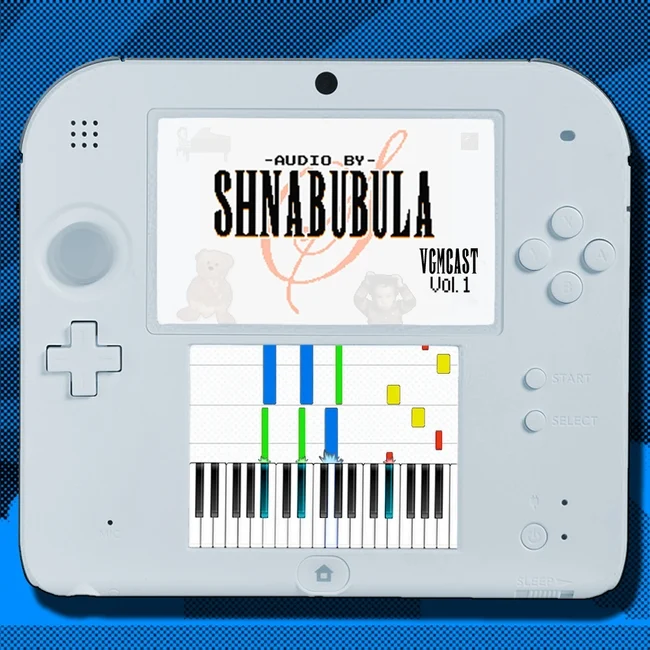
On May 18, 2015, the video game music (VGM) community witnessed the inception of a rigorous performance experiment spearheaded by Sam, known professionally as Shnabubula. The project represents a significant departure from traditional musical practice, shifting the focus from months of preparation and rehearsal to a compressed, live-streamed learning environment. By leveraging the interactive capabilities of the Hitbox streaming platform, the artist has established a recurring workflow that challenges the technical limitations of piano arrangement and sight-reading under professional pressure.
The Mechanism of the Weekly Challenge
The structure of Shnabubula’s project is defined by a strict bi-weekly cadence designed to maximize both audience engagement and the artist’s professional development. Every Friday, the artist conducts an eight-and-a-half-hour livestream, commencing at 12:00 PM EST and concluding at 8:30 PM EST. During these sessions, viewers provide song requests in real time. Shnabubula is tasked with transcribing, arranging, and internalizing these pieces on the spot.
The second phase of this process occurs on Sunday at 4:00 PM EST. At this time, the artist performs a formal setlist comprised entirely of the material mastered during the previous Friday session. This two-day turnaround necessitates a high level of technical proficiency, as the artist must move from initial exposure to performance-ready execution within a 48-hour window. This schedule not only serves as an educational exercise for the performer but also provides a transparent view of the labor-intensive process behind video game music arrangement.
Historical Context and the Evolution of VGM Performance
The rise of video game music as a legitimate genre for live performance has been documented over the past decade, moving from niche internet forums to orchestral concert halls. In the early 2000s, performances were largely restricted to pre-arranged, heavily rehearsed suites performed by ensembles. However, the rise of streaming platforms such as Twitch and Hitbox allowed individual performers to democratize the genre.
Shnabubula has long been a fixture in this ecosystem, known for a style that emphasizes complex jazz-fusion influences applied to classic 8-bit and 16-bit soundtracks. By formalizing this new "on-demand" project, he is participating in a broader trend of "live-service" content creation. This methodology mirrors the rapid-iteration cycles seen in software development, where the product is built, tested, and deployed in real time. For the VGM community, this marks a shift toward valuing the "process" of musical mastery as much as the final output.
Data Analysis: The Cognitive Load of Rapid Arrangement
The technical requirements for such a project are substantial. To perform 14 songs—as recorded during the inaugural session—within a single weekend requires a deep understanding of music theory, specifically in the areas of harmonic analysis, structural reduction, and improvisational filler.
From a musicological perspective, the ability to transcribe a melody and its corresponding bassline while simultaneously determining the harmonic progression in real time requires the performer to engage in "aural mapping." This is a high-cognitive-load activity. By analyzing the recording of his first 14-song set, one can observe that Shnabubula utilizes a blend of rote memory and established stylistic "templates." When the harmonic structure of a request is complex, the performer relies on his existing vocabulary of jazz chords and rhythmic syncopation to bridge the gap between the original source material and the piano arrangement. This demonstrates an advanced degree of musical fluency that is rarely displayed in such a public, unedited format.
Reaction and Community Engagement
The reaction from the VGM community has been largely positive, characterized by a sense of collaborative investment. In the digital age, audience participation has moved beyond passive consumption to active contribution. By requesting specific, often obscure, tracks from retro titles, the audience functions as a collaborative curator.
Industry observers note that this model creates a feedback loop that benefits both the creator and the audience. For the artist, the variety of requests forces him to step outside his comfort zone, preventing stylistic stagnation. For the audience, the value lies in the authenticity of the performance. Unlike studio recordings, which allow for "punch-in" edits and production polish, the live-streamed nature of this project ensures that mistakes—and the subsequent recovery from those mistakes—are part of the performance. This transparency builds trust and highlights the human element of computer-assisted music.
Implications for Streaming and Performance Arts
The project has broader implications for the future of live streaming as a venue for professional musicians. Traditionally, professional musicians have viewed streaming as a promotional tool rather than a primary performance space. Shnabubula’s experiment challenges this hierarchy by treating the stream as the primary "concert venue."
The economic model of this project relies on micro-transactions and viewer support, which is common in the streaming economy. However, by providing a high-value, educational, and entertaining service, the artist is essentially treating his subscribers as patrons of a residency. This shifts the focus away from album sales and toward the monetization of expertise and time.
Furthermore, the pedagogical value of this project cannot be overstated. Aspiring musicians who watch these streams are receiving a masterclass in sight-reading and arrangement. By documenting his struggles with specific passages, the artist demystifies the creative process, potentially inspiring a new generation of performers to pursue similar paths of technical self-improvement.
Technical Challenges and Future Outlook
While the current schedule is manageable, the long-term sustainability of such a project faces several challenges. The primary concern is the physical and mental toll of such high-intensity performance. Performing for eight hours on a Friday, followed by a formal concert on Sunday, requires significant stamina. Additionally, the risk of "creative burnout" is high when the repertoire is dictated entirely by external requests rather than internal artistic inspiration.
However, the current format appears to have reached a equilibrium. The inclusion of an archive—such as the recording of the 14-song set—allows for a digital footprint that persists long after the stream has concluded. This ensures that the work produced during these sessions can be reviewed, studied, and enjoyed by those who were not present for the live event.
Looking ahead, the success of this project could encourage other musicians to adopt similar live-learning models. If the demand for interactive performance continues to grow, we may see a professionalization of the "live-streamed masterclass." Platforms like Hitbox provide the necessary infrastructure for this, offering low-latency communication that is essential for the call-and-response nature of these sessions.
Conclusion
The project undertaken by Shnabubula is more than a mere showcase of skill; it is an exploration of the boundaries of live musical performance. By integrating the unpredictability of live requests with the rigorous demands of professional arrangement, he has created a unique space for musical evolution.
Whether this project serves as a template for future performers or remains a singular experiment in the capabilities of the digital age, it underscores a critical point: the relationship between the performer and the audience is undergoing a fundamental transformation. In this new landscape, the value of a performance is no longer tethered solely to the perfection of the recording, but to the honesty and dexterity displayed in the act of creation itself. As of mid-2015, the community continues to monitor these sessions with interest, awaiting to see how this constant influx of new material will influence the artist’s future repertoire and the broader genre of video game music performance.