Farhan hamdan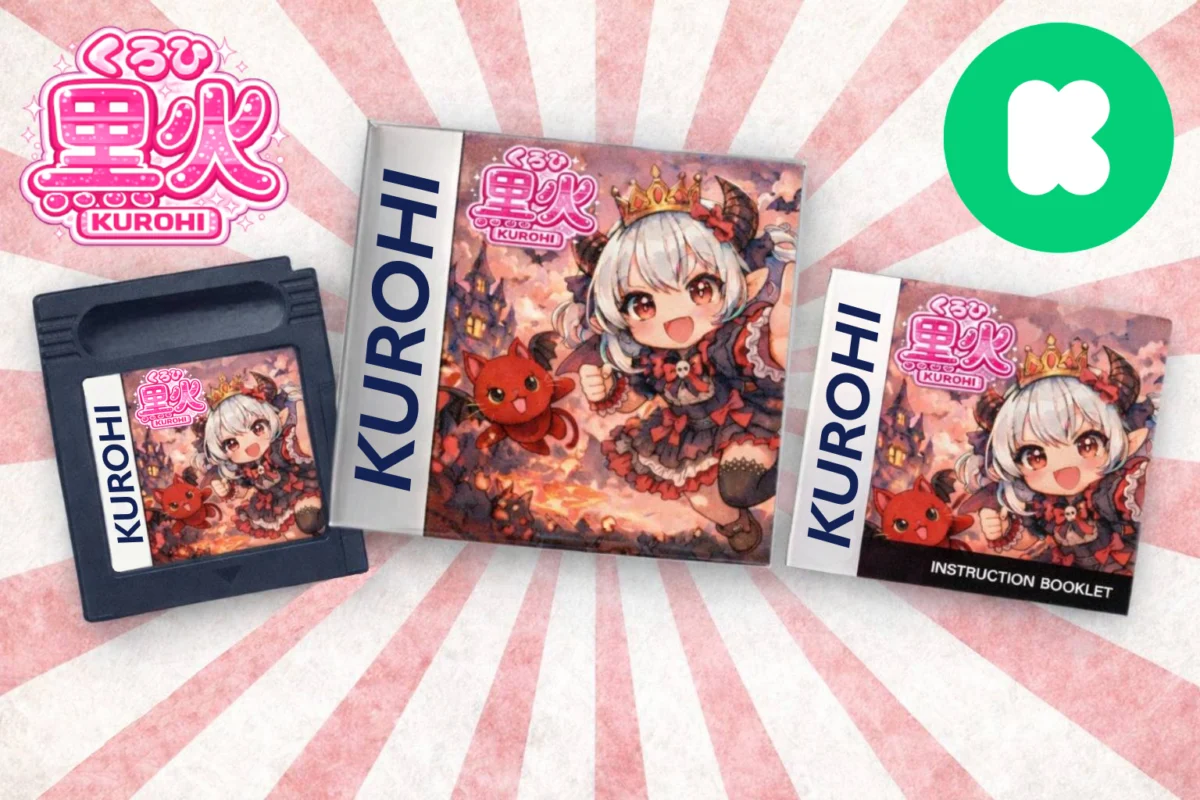
Sergio Elisondo, a name synonymous with pushing the boundaries of vintage gaming hardware, has once again captured the attention of the retro gaming community with his latest endeavor: KUROHI (黒火), a brand-new game for the Game Boy Color. This announcement follows a series of remarkable projects that have consistently redefined what is possible on classic consoles, cementing Elisondo’s reputation as a visionary developer. The Kickstarter campaign for KUROHI mirrored the success of his previous ventures, funding in a mere nine hours and quickly surpassing its initial goals, with several days still remaining. This rapid endorsement underscores the widespread trust and excitement Elisondo generates among enthusiasts eager for innovative experiences on beloved platforms.
A Legacy of Innovation: Redefining Retro Hardware Capabilities
Elisondo’s journey in the retro gaming scene is marked by a history of audacious projects that challenge conventional wisdom regarding the limitations of old hardware. Many within the community first encountered his pioneering work through A Winner Is You, the inaugural digital audio album ever released on an NES cartridge. This ambitious undertaking was a one-man symphony, with Elisondo single-handedly performing, recording, mixing, and mastering every element across a diverse array of instruments including drums, guitar, bass, synth, ukulele, banjo, mandolin, French horn, and flute. This demonstration of musical and technical prowess immediately set him apart.

Beyond audio innovation, Elisondo has also explored visual possibilities. His contributions include the Ninja I & II games and the unique live hologram performance project, Sergio and the Holograms. However, it was his 2021 Kickstarter campaign for You Are Error that truly solidified his reputation for groundbreaking technical achievements. This project accomplished the seemingly impossible: playing full-motion video and digital audio seamlessly on an unmodified, standard NES console. The technological feat captivated the retro hardware community, demonstrating an unprecedented capability for the 8-bit system. The campaign’s swift success, funding in just seven hours, highlighted the community’s keen interest in exploring the untapped potential of classic consoles.
Reflecting on the You Are Error project, Elisondo expressed immense pride in the collaborative achievement. "I’m most definitely proud of the fact that we were able to get full motion video and digital audio working all on native NES hardware (no mods) seamlessly – with our team being the first to do so on physical hardware," he stated. Despite facing external challenges, such as chip shortages during the COVID-19 pandemic that delayed board production, Elisondo lauded the team’s resilience and the unwavering support of backers. "Now that I think of it, I’m also proud of the fact that despite the long wait for the boards, everyone still got their rewards," he added, acknowledging the vital contributions of collaborators Shiru and RetroUSB. He emphasized the project’s lasting impact, noting, "It means a lot to me that people believed in the project and in us. Because of that, this NES video cart exists today, which is now part of NES history." The successful completion of You Are Error not only delivered on its ambitious promise but also inspired Elisondo to continue pushing the boundaries with subsequent projects.
KUROHI: A New Benchmark for Game Boy Color Development
Building on this foundation of innovation, Elisondo now introduces KUROHI (黒火), which translates to "black fire" – a name that reflects the protagonist’s fiery yet compassionate nature. This new title represents perhaps Elisondo’s most ambitious undertaking to date, aiming to deliver an expansive and varied experience within the constraints of the Game Boy Color hardware. KUROHI is not merely a single-genre game; it ingeniously combines three distinct gameplay styles into a cohesive experience on a single GBC cartridge. Players will navigate Metroidvania-style platforming segments, engage in overhead Zelda-esque exploration, and participate in arcade space shooter sequences.

The game’s scope is impressive for the platform, unfolding across eight diverse worlds, each contributing to a rich narrative and expansive environment. A central hub town serves as a crucial nexus, offering opportunities for interaction with non-player characters (NPCs), managing currency, purchasing upgrades from shops, and delving deeper into the game’s lore. Elisondo, a prolific musician, has also composed the entire soundtrack for KUROHI, meticulously crafting distinct auditory landscapes that complement each of the three gameplay modes. The game is nearing completion, with the Kickstarter primarily focused on funding the production of physical cartridges and a digital release on Steam, with stretch goals designed to further expand the in-game world.
Artistic Vision and Technical Acumen within GBC Limitations
The visual presentation of KUROHI is immediately striking, characterized by a detailed chibi aesthetic that manages to be both expressive and visually rich, a significant achievement given the Game Boy Color’s limited color palette and screen resolution. The world design is remarkably varied, transporting players from the foreboding grandeur of dark gothic castles and torchlit dungeons to the serene beauty of bamboo forests with Mount Fuji as a backdrop, and the intricate architecture of ornate Japanese temples. This visual diversity creates a compelling and immersive environment.
The protagonist, KUROHI, embodies a sense of mystery with her distinctive spiky hair, crown, and subtle demon horns – a stylistic callback to an earlier conceptualization of the character. This unique design immediately draws the player into her story. Elisondo, whose personal connection to the Bay Area gaming scene has allowed the interviewer to witness his work evolve firsthand, has taken a direct role in shaping KUROHI‘s visual identity. "I had a vision for the world of KUROHI and so I took on a direct role in shaping the visual identity," he explained. This involved collaborating with multiple artists, commissioning pieces for backgrounds, assets, platform areas, town art, character designs, and animations. He emphasized providing clear directions and feedback while also allowing room for artistic interpretation, ensuring that the final output was both cohesive with his vision and elevated by the artists’ unique talents. This balanced approach, Elisondo believes, was crucial in achieving the game’s appealing and tough, yet cute, aesthetic.

The Sound of Retro: Music as an Emotional Core
Music has always been an integral component of Elisondo’s creative output, and KUROHI is no exception. As a "big music guy," he composed the entire soundtrack, which dynamically adapts to the game’s distinct gameplay modes. He revealed his methodical approach to composition: "There are certain chord progressions, drum patterns, harmonic structures, and tempos that I choose depending on the type of gameplay." He also incorporates a signature "bleepy" fade-out, a personal touch found across many of his musical projects.
For KUROHI, the musical energy shifts deliberately to match the player’s experience. Early stages feature a "chill vibe," designed to acclimate players to the new environment, allowing them to absorb NPC interactions and controls without immediate high-intensity pressure. The central hub town, in contrast, offers "upbeat mysterious, yet groovy exploring" vibes, fostering a sense of adventure and discovery. Elisondo firmly believes that music and sound effects are indispensable to the overall experience. "I think the music and SFX absolutely adds to the overall experience and would not be the same without it," he asserted. "Sure, the game would still ‘feel’ mechanically fun but the emotional experience wouldn’t be there." This underscores his commitment to creating a holistic and emotionally resonant gaming experience.
Overcoming Hardware Constraints: The GB Studio Advantage

The development of KUROHI positions Elisondo within a rich lineage of developers who have historically pushed simple Nintendo hardware beyond its perceived limits. The Game Boy and Game Boy Color were platforms frequently home to titles that far exceeded their intended performance envelopes. With KUROHI‘s ambitious combination of three gameplay modes and eight worlds, Elisondo faced significant technical challenges inherent to GBC development.
To navigate these complexities, Elisondo leveraged the GB Studio engine, a modern tool that provides robust documentation and strong community support. "What was really awesome about the development of KUROHI was being able to leverage the GB Studio engine," he explained. "There’s a lot of well-written documentation and strong community support behind it, along with plenty of helpful tutorials on YouTube." When encountering complex mechanics or unexpected issues, he relied on various forums and community resources.
A key challenge was ensuring seamless transitions between the distinct gameplay styles and making controls intuitive for players as modes shifted. Elisondo meticulously considered "key points during game play that were taken into consideration as better transition points over others, so that shifting the play style was not jarring." He also dedicated considerable effort to fine-tuning core mechanics, such as the player’s jump arc and movement speed, ensuring they felt balanced with the level design. Furthermore, creative writing played a crucial role in crafting witty and insightful dialogue for NPCs, imbuing each interaction with character personality and providing players with both information and entertainment. The potential integration of a fourth play style—a point-and-click adventure—is also being carefully considered, with the same thoughtful approach to integration.
From Bay Area Roots to Global Reach: A Developer’s Journey

Elisondo’s personal journey has deeply influenced his perspective on gaming and its culture. Born and raised in San Jose, California, he was immersed in the vibrant Bay Area gaming scene until his move to Portland, Oregon, five years ago. While the Bay Area remains his "home in many ways," his relocation brought a new appreciation for online gaming. "When your friends are living in a different state, online gaming became essential for me," he shared. This shift not only provided a fun way to stay connected but also fostered a sense of continuity with his past friendships, demonstrating the enduring power of gaming to bridge geographical distances. While still a "console guy," online multiplayer now holds a special place in his heart.
The Crowdfunding Phenomenon and Future Outlook
The rapid success of KUROHI‘s Kickstarter, funded in just nine hours, is a testament to Elisondo’s consistent delivery of quality and innovation. The campaign’s primary objective is to fund the physical production of Game Boy Color cartridges and facilitate a Steam release, with stretch goals designed to expand the game’s content and world. For backers eagerly anticipating the game, Elisondo projects a realistic delivery timeline of August 2026, assuming all plans, including stretch goal updates, proceed smoothly. He expressed enthusiasm for players to experience KUROHI on original hardware or via Steam, highlighting that backers will "be holding a Game Boy Color title that pushes the system in ways you don’t often see," a feeling he believes they will immediately recognize upon powering it on.
Reflections on Gaming: Inspirations and Legacy

When asked about a game that got something exactly right but might not have received enough credit, or held deep personal significance, Elisondo immediately pointed to the Kunio Kun series, particularly Downtown Nekketsu Monogatari, known in the West as River City Ransom. He lauded the series for its comprehensive appeal—music, art, stories, and mechanics—calling it a game he could be "stuck on an island with." River City Ransom stood out to him as one of the first beat-em-ups he played as a child that uniquely integrated RPG elements such as currency, shops, buffs, and stat building. This pioneering blend of two distinct gameplay styles deeply impressed him, showing him that "combining different gaming elements can mesh well."
Elisondo also took a moment to honor Yoshihisa Kishimoto, the recently deceased creator of Double Dragon and Kunio Kun. "While I’m deeply saddened by his loss, I’m incredibly grateful for the unforgettable games and the worlds he created," Elisondo conveyed, expressing hope that Kishimoto’s legacy would continue to inspire future generations of game developers and players.
His work, situated at the intersection of music, technology, and a profound love for the medium, invites fans to explore his influences. For those who appreciate his musical compositions, Elisondo recommends checking out Ichika Nito’s "Metaphor feat. Feryquitous," offering a glimpse into the sounds that resonate with his artistic sensibilities.
Community and Connection: A Return to Roots

Looking forward to his next visit to the Bay Area, the place where his gaming journey began and where he connects with his retro gaming group, Elisondo eagerly anticipates catching up with friends and family. He also plans to attend local events, such as "Genesis in San Jose," whenever possible. A significant highlight of his returns is always the local culinary scene. "The Bay Area has got some of the best food I’ve ever had," he affirmed, listing ramen, pho, tacos, and pizza as must-haves. He gave a special shout-out to Donut Wheel in Cupertino for "the best cake donuts and old fashioneds" he has ever tasted, encouraging others to experience them.
Sergio Elisondo continues to be a driving force in the retro gaming community, not just through his innovative technical feats but also through his holistic approach to game development, where music, art, and gameplay converge into unique and compelling experiences. With KUROHI, he is not merely releasing another Game Boy Color title; he is once again setting a new standard for what can be achieved on classic hardware, enriching the legacy of retro gaming for both seasoned enthusiasts and new players alike.