Cecilia Chamidah Nur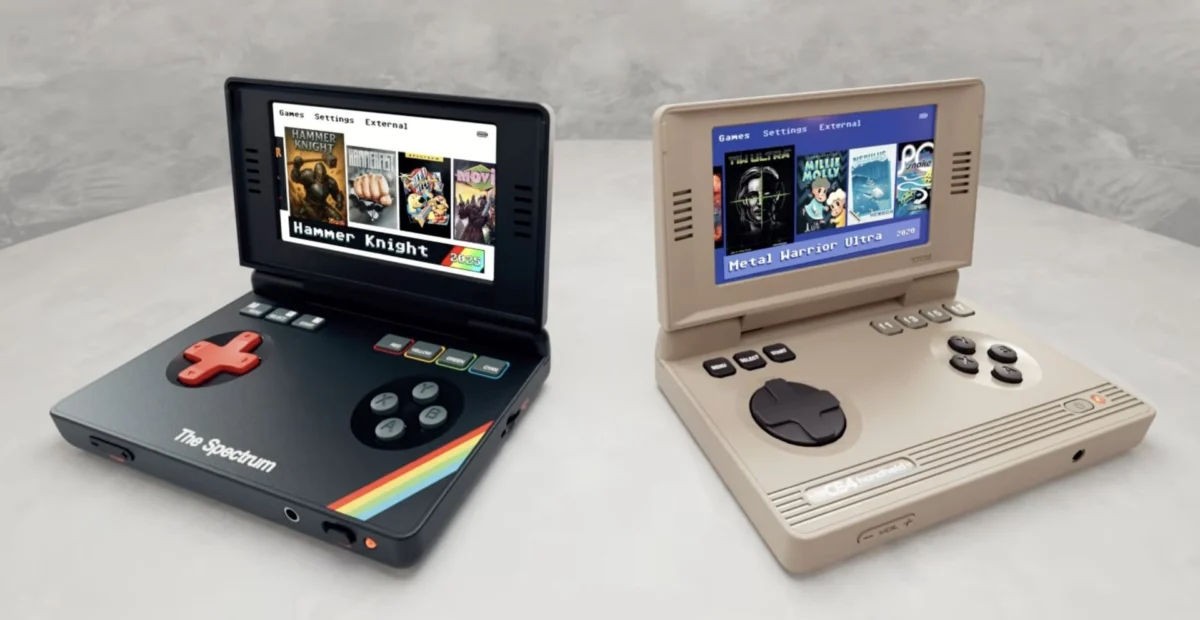
The world of retro gaming has once again proven its enduring vitality this week, marked by a fascinating confluence of hardware innovations, historical revelations, and a burgeoning debate over artificial intelligence in game development. From the definitive answer to a decades-old Star Fox mystery to the launch of accessible new upscalers and the reimagining of iconic home computers as portable devices, the scene continues to evolve at a rapid pace, engaging both long-time enthusiasts and new generations of players.
The Enigmatic Star Fox Puppets: A Decades-Old Mystery Solved by a Godzilla Minus One Director
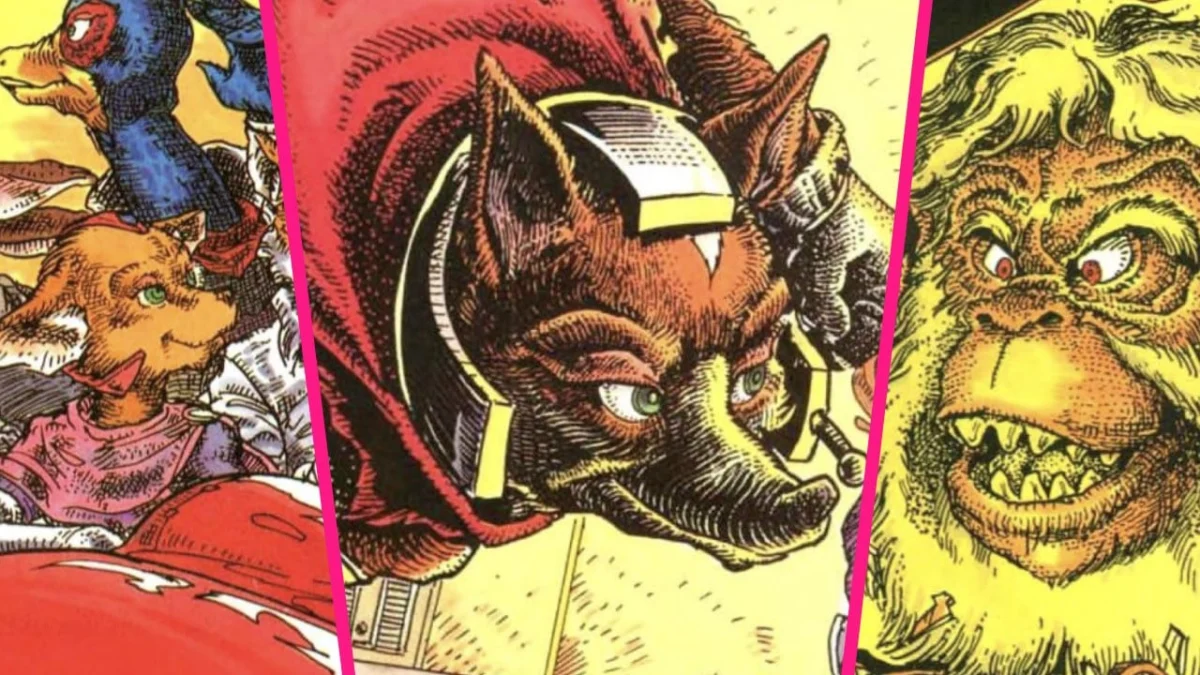
One of the most enduring curiosities surrounding the marketing of Nintendo’s seminal Super Nintendo Entertainment System (SNES) title, Star Fox (released in 1993), has finally been laid to rest. For decades, fans have pondered the fate of the intricate puppets used in the game’s original promotional materials—a question that has sparked countless discussions across forums and social media. This week, the definitive answer emerged from an unexpected source: Takashi Yamazaki, the acclaimed director behind the Oscar-winning film Godzilla Minus One.
Star Fox, developed by Nintendo and Argonaut Software, was a groundbreaking title for its time, utilizing the Super FX chip to deliver impressive 3D polygonal graphics on the SNES, a feat previously thought impossible for the 16-bit console. Its innovative gameplay, featuring an anthropomorphic animal crew piloting advanced spacecraft through a besieged Lylat system, captivated audiences worldwide. The marketing campaign for Star Fox was particularly memorable, featuring high-quality physical puppets of Fox McCloud and his team, designed to bring the characters to life beyond their pixelated forms. These puppets became iconic, ingrained in the collective memory of early 90s gamers, yet their whereabouts post-campaign remained a persistent enigma, often fueling speculation about their potential preservation or unfortunate disposal.
Takashi Yamazaki, a known retro gaming enthusiast, revealed that the puppets were indeed salvaged and have been in his possession, cared for and preserved. While the exact details of how they came into his ownership are still emerging, Yamazaki’s revelation has been met with widespread relief and excitement within the retro gaming community. This disclosure not only provides closure to a long-standing mystery but also highlights the cultural significance of these physical artifacts, which serve as tangible links to a pivotal moment in video game history. The preservation of such items is crucial for historical archiving and educational purposes, offering insights into early game marketing strategies and the tangible craft involved in pre-digital promotional materials. The fact that a figure of Yamazaki’s stature is safeguarding these pieces further underscores their artistic and historical value, drawing parallels between the artistry of filmmaking and the meticulous craft behind video game promotion.
Commodore International Reaffirms Legacy with C64C Ultimate FPGA Recreation
In a significant development for retro computing enthusiasts, Commodore International has announced its latest FPGA-based recreation: the Commodore 64C Ultimate. This announcement follows the successful launch of last year’s highly acclaimed Commodore 64 Ultimate, which set a new benchmark for faithful retro computer revivals. The new C64C Ultimate aims to meticulously replicate the 1986 iteration of the original Commodore 64, specifically focusing on its sleeker, redesigned chassis.
The original Commodore 64, launched in 1982, quickly became the best-selling single computer model of all time, with estimated sales ranging from 12.5 to 17 million units worldwide. Its distinctive "breadbin" design is instantly recognizable. However, in 1986, Commodore introduced the Commodore 64C, which housed the same internal hardware within a more compact and aesthetically modern case, drawing design cues from the 1985 Commodore 128. This design refresh aimed to give the C64 a more contemporary appeal, defining a form factor that influenced personal computer aesthetics for years to come.
The C64C Ultimate leverages Field-Programmable Gate Array (FPGA) technology, a sophisticated method that allows hardware to be reconfigured to precisely mimic the original circuitry of vintage systems. Unlike software emulation, FPGA recreations operate at a hardware level, offering unparalleled accuracy and compatibility with original peripherals, providing an authentic user experience without the inherent inaccuracies or latency introduced by software-based solutions. Commodore International emphasized their commitment to authenticity, stating, "The slimline Commodore 64C Ultimate trades the breadbin appearance of 1982 for the Commodore 64’s sleeker 1986-1994 look that helped define the form factor of personal computers well into the future. We’ve ensured that this recreation is complete with the original 1986 imperfections, offering an unparalleled level of historical accuracy." This dedication to "imperfections" suggests a meticulous process of reverse-engineering and a desire to capture every nuance of the original hardware, from subtle timing quirks to specific chip behaviors, which are often critical for the accurate playback of certain games and software.
The success of FPGA-based retro hardware revivals, such as the Analogue Pocket and the MiSTer FPGA project, demonstrates a robust market for high-fidelity classic experiences. These devices cater to a growing demographic of enthusiasts who seek the authentic feel of original hardware without the fragility, maintenance, or connectivity challenges of actual vintage machines. The C64C Ultimate, by focusing on a specific, beloved revision of the C64, positions itself as a premium offering for collectors and users who appreciate the subtle historical distinctions within the Commodore lineage.
Pixel FX Introduces the Affordable Morph 2K Upscaler for Retro Visuals
Addressing the persistent challenge of connecting vintage gaming consoles to modern high-definition displays, Pixel FX has unveiled its new Morph 2K upscaler, priced at an accessible $199.99. This device is designed to provide sharp, clean visuals from retro hardware without requiring a significant financial outlay, positioning itself as a compelling alternative to more premium solutions on the market.
The transition from CRT televisions to LCD, LED, and OLED displays has created a compatibility gap for classic consoles. Retro consoles typically output analog signals (composite, S-video, component) at resolutions far below modern standards (e.g., 240p, 480i). Connecting these directly to contemporary displays often results in blurry images, incorrect aspect ratios, input lag, and a generally suboptimal experience due to the displays’ internal processing, which is not optimized for low-resolution interlaced or progressive scan signals. Dedicated upscalers like the Morph 2K convert these analog signals to digital HDMI, scaling them to higher resolutions and applying various video enhancements to improve picture quality.
The Morph 2K’s HDMI output tops out at 1080p / 60Hz. This specification makes it a practical choice for a broad range of users who primarily game on 1080p televisions or monitors, or for whom a 4K signal is not a priority. In contrast, the much-lauded RetroTINK 4K, while offering unparalleled features and true 4K output, comes with a substantially higher price tag, placing it out of reach for many casual retro gamers. Pixel FX’s strategy with the Morph 2K appears to be democratizing access to high-quality retro visuals, making a significant upgrade accessible to a wider audience. "Our goal with the Morph 2K was to strike a balance between performance and affordability," stated a Pixel FX representative. "We understand that not everyone needs or can afford a 4K solution, but everyone deserves a fantastic retro gaming experience on their modern TV. The Morph 2K delivers razor-sharp 1080p visuals, elevating the classic gaming experience for hundreds of thousands of enthusiasts." This move reflects a maturing market for retro display solutions, with manufacturers now segmenting their offerings to cater to different budgets and technical requirements.
Classic Home Computers Reimagined as Clamshell Handhelds by Blaze and Retro Games Ltd
In a remarkable convergence of retro computing and portable gaming, Blaze Entertainment, creators of the popular Evercade retro cartridge-based handhelds, has announced a partnership with Retro Games Ltd to develop two new clamshell handheld devices. These innovative units will be based on two of Europe’s most beloved 8-bit home computers: the ZX Spectrum and the Commodore 64.
The ZX Spectrum, launched in 1982 by Sinclair Research, was instrumental in popularizing home computing in the UK and across Europe. Known for its rubber-key keyboard and vibrant color palette, it fostered a generation of programmers and gamers. Similarly, the Commodore 64, as previously noted, achieved global dominance, particularly in North America and Europe, with its robust sound chip (SID) and extensive game library. Both machines hold immense nostalgic value and are cultural touchstones for millions.
The new devices, dubbed THEC64 Handheld and The Spectrum Handheld, represent a significant departure from traditional retro handhelds, adopting a Nintendo DS-style clamshell design. This form factor offers enhanced portability and screen protection, while also allowing for a larger screen-to-device ratio when open. Each unit will boast a 4.3-inch IPS display, promising vibrant colors and wide viewing angles, crucial for showcasing the diverse graphics of these 8-bit classics. To address the inherent challenge of adapting keyboard-centric computer games to a handheld, the devices feature simplified controls. However, acknowledging the deep customization and programming potential of the original machines, both handhelds will include a USB-A I/O port, enabling users to connect an external USB keyboard. This feature is a nod to purists and modders, ensuring that the full functionality of the original computers, beyond just gaming, remains accessible.
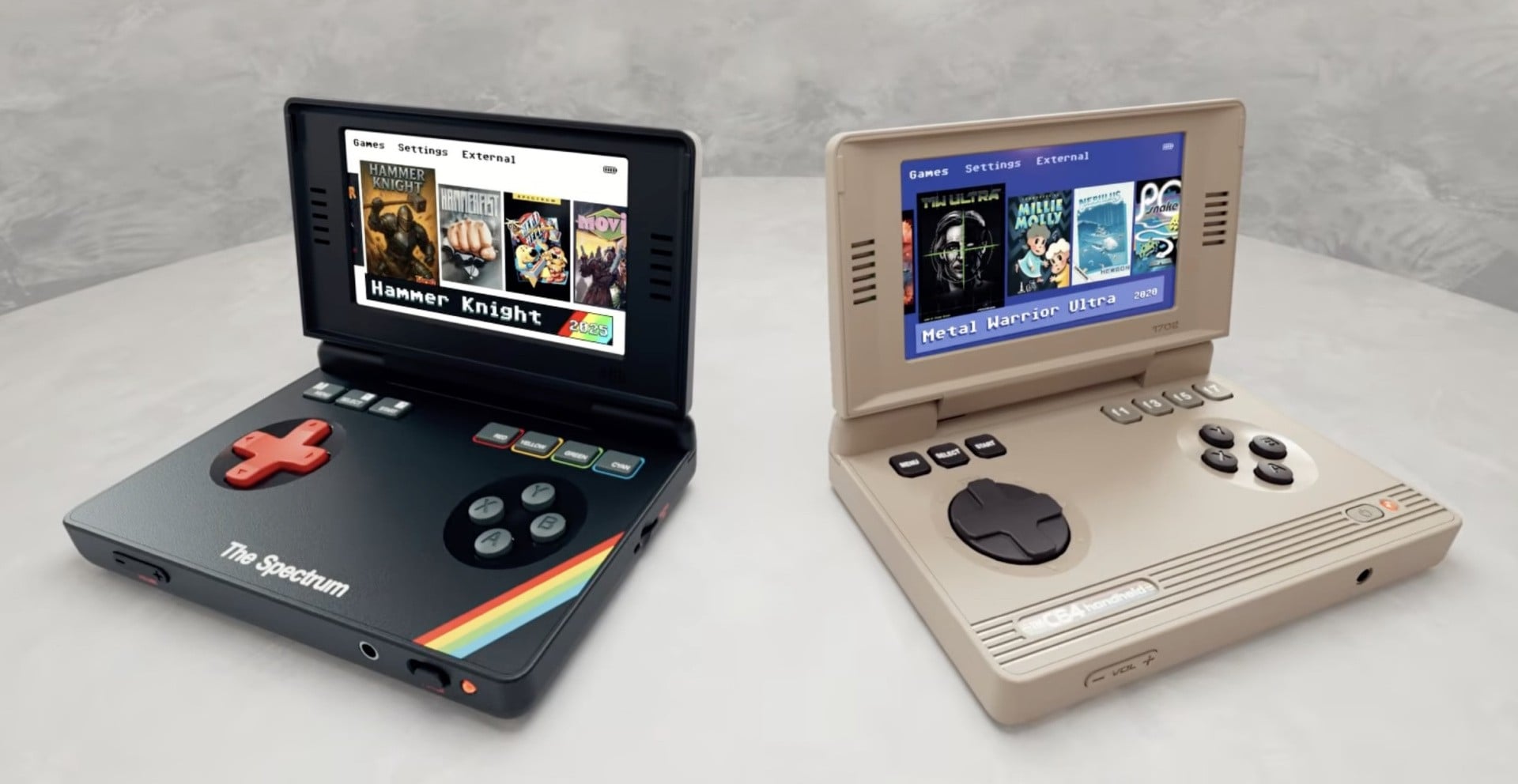
Each handheld will come preloaded with 25 curated games, offering an immediate library of classic titles. Furthermore, users will have the ability to load their own games via a MicroSD card, catering to the vast libraries of software available for both platforms and fostering a strong community around homebrew and archival efforts. The collaboration between Blaze, known for its expertise in modern retro hardware, and Retro Games Ltd, recognized for its C64 Mini and THEC64 full-size console recreations, suggests a product designed with both authenticity and user experience in mind. This move taps into the burgeoning market for dedicated retro handhelds, offering a unique blend of historical reverence and modern convenience, allowing classic computer gaming to be experienced in a truly portable format for the first time for many.
Controversy Ignites Over ‘100% AI-Generated’ Super Smash Bros. PC Port
The retro gaming community finds itself at the center of a burgeoning ethical debate following the release of a native PC port of the Nintendo 64 classic, Super Smash Bros. While the prospect of a high-fidelity, natively running version of the beloved fighting game on PC would typically be met with widespread enthusiasm, this particular port has come under intense scrutiny due to its developer’s explicit claim: it is "100% AI-generated."
Super Smash Bros., originally released in 1999, was a revolutionary title that brought together an eclectic roster of Nintendo characters for chaotic, multiplayer brawling. Its simple yet deep mechanics and iconic status have cemented its place as one of the most influential fighting games of all time, spawning a hugely successful franchise. The idea of a native PC port, offering potentially enhanced graphics, frame rates, and modding capabilities, is a tantalizing one for many fans who typically rely on emulation to play the N64 original.
However, the developer, known as TheWizWiki, has been remarkably transparent about the methodology used, stating on social media that the port was created with the assistance of advanced AI models. TheWizWiki detailed the process: "100% Al-generated… it took a little over 25 days, with me, Opus 4.6, Opus 4.7, and GPT 5.5 as the only contributors… At many points, agents were dispatched and worked to build and test autonomously while I did other things." This admission has sparked a heated debate within the retro gaming community and the broader game development landscape.
Critics immediately raised concerns about the ethical implications of using AI to generate game code, particularly for a title based on intellectual property (IP) owned by Nintendo. Questions about originality, copyright, and the role of human creativity in game development have dominated discussions. Many fear that such AI-driven development, if it relies on training data derived from existing games without proper licensing or attribution, could lead to a wave of legally ambiguous "ports" or remakes that undermine traditional development processes and IP rights. There is also a philosophical discussion about whether a "100% AI-generated" project truly constitutes a creative endeavor or merely a sophisticated act of replication. Supporters, however, argue that AI tools are simply advanced instruments that can accelerate development and open new possibilities, much like any other technological advancement. They view it as a demonstration of AI’s burgeoning capabilities in complex problem-solving and code generation. The controversy highlights the rapidly evolving landscape of AI in creative industries and the urgent need for clear ethical guidelines and legal frameworks to address its impact on intellectual property and artistic integrity.
Legendary Castlevania Composer Michiru Yamane Confirms Absence from New Titles, Presence at Retro Barcelona
Fans of the iconic Castlevania series, renowned not only for its challenging gameplay and gothic aesthetic but also for its unparalleled musical scores, received mixed news regarding the involvement of legendary composer Michiru Yamane. Yamane, whose compositions have defined the atmospheric and dramatic soundscapes of numerous Castlevania titles, including the seminal Symphony of the Night, confirmed her non-involvement in two anticipated upcoming titles but announced her presence at a major retro gaming event.
Yamane has been a cornerstone of the Castlevania franchise’s sonic identity for decades, her signature blend of classical, rock, and electronic music elevating the gameplay experience to an art form. Her distinct style has left an indelible mark on players, making her one of the most celebrated composers in video game history. This week, she sadly confirmed that she is not contributing to the soundtracks for Castlevania: Belmont’s Curse or Bloodstained: The Scarlet Engagement. The Bloodstained series, spiritual successors to Castlevania led by Koji Igarashi, has previously featured Yamane’s work prominently, making her absence from The Scarlet Engagement particularly notable for fans. While her reasons for not participating in these specific projects were not detailed, her announcement has undoubtedly tempered some of the anticipation surrounding their musical direction.
However, Yamane did offer exciting news for her admirers: she will be attending Retro Barcelona. This event provides a rare opportunity for fans to meet the legendary composer in person. Adding to the excitement, Yamane confirmed she would be joined by fellow esteemed video game composer Yoko Shimomura. Shimomura, known for her diverse and powerful scores for titles such as Final Fight, Street Fighter II, and the Kingdom Hearts series, is another titan in the realm of video game music. The joint appearance of two such influential figures at a retro gaming festival underscores the growing recognition and celebration of video game music as a significant art form, attracting both industry legends and a dedicated fanbase eager to connect with the creators behind their favorite soundtracks. Their presence at Retro Barcelona will undoubtedly be a highlight, offering a unique opportunity for attendees to engage with two of the most important voices in the history of game audio.
Xbox Co-Founder Ed Fries Reflects on the Industry-Shaking Rare Acquisition
Ed Fries, a pivotal figure in the early days of Xbox and a former Microsoft vice president of gaming, has offered new insights into one of the most impactful acquisitions in gaming history: Microsoft’s purchase of Rare. While Fries is widely recognized for his instrumental role in launching the Xbox console in the early 2000s, his career in the video game industry spans much further, encompassing various developmental and executive capacities that predate Microsoft’s foray into console hardware.
Microsoft’s acquisition of Rare in 2002 for a reported $375 million was a strategic move aimed at bolstering the Xbox’s first-party game library against formidable competitors like Sony’s PlayStation 2 and Nintendo’s GameCube. Rare, an acclaimed British developer, had a storied history of creating some of Nintendo’s most beloved and commercially successful titles, particularly during the Nintendo 64 era. Their portfolio included critically lauded and best-selling games such as GoldenEye 007, which redefined the console first-person shooter genre; Banjo-Kazooie, a vibrant and imaginative 3D platformer; and Perfect Dark, a spiritual successor to GoldenEye. These titles were not only commercial successes but also demonstrated Rare’s exceptional talent for innovation, technical prowess, and distinctive art direction.
Fries, in a recent interview, delved into the intricacies of the acquisition, shedding light on the motivations and strategic considerations that drove Microsoft to pursue the developer. He explained that securing a developer with Rare’s pedigree was seen as crucial for the Xbox’s long-term success, providing exclusive content that could differentiate the platform and attract a broader audience. The deal was complex, involving negotiations with Nintendo, who held a significant minority stake in Rare. Fries’s account provides a rare glimpse into the high-stakes corporate maneuvering that shaped the modern gaming landscape. The acquisition had profound implications for all parties: for Rare, it meant a new creative direction under Microsoft; for Nintendo, it meant losing a key second-party developer; and for Xbox, it represented a bold statement of intent in the console wars, signaling Microsoft’s commitment to building a robust first-party ecosystem. Fries’s reflections underscore the strategic importance of content ownership and developer talent in the highly competitive video game industry.
Unsung Heroes: A Chat with Capcom Veteran Takuya "Tom" Shiraiwa
In an industry often dominated by public-facing personalities and celebrated directors, the contributions of many talented individuals who work behind the scenes can sometimes go unnoticed. This week, attention was brought to one such individual: Takuya "Tom" Shiraiwa, a veteran developer whose name likely scrolled past countless players’ screens during the credit sequences of iconic Capcom titles throughout the 1990s and early 2000s.
Capcom, a Japanese developer and publisher, rose to prominence during this era, producing an unparalleled string of arcade and console hits that defined genres. Titles like Street Fighter II, Resident Evil, Mega Man, and Devil May Cry became global phenomena, establishing Capcom as a creative powerhouse. Behind these blockbusters were teams of dedicated artists, programmers, designers, and sound engineers, many of whom, like Shiraiwa, played crucial roles in bringing these worlds to life. While Shiraiwa’s specific credits were not detailed in the original summary, his presence in the credits of numerous Capcom games from that period implies a significant, albeit often unheralded, contribution to the company’s golden age.
Interviews with developers like Shiraiwa are invaluable for preserving the rich history of video games. They offer unique perspectives on the development process, the challenges faced by teams, the creative culture within studios, and the personal stories behind the games that millions have cherished. Such conversations provide a more complete picture of how games are made, moving beyond surface-level analyses to explore the human effort and ingenuity involved. By shining a light on these often-unsung heroes, the gaming community gains a deeper appreciation for the collaborative nature of game development and the collective talent that shapes the industry’s most enduring legacies. Shiraiwa’s story is a reminder that while marquee names often capture headlines, the bedrock of the industry is built upon the consistent, often anonymous, dedication of individuals whose passion for gaming translates into unforgettable experiences for players worldwide.